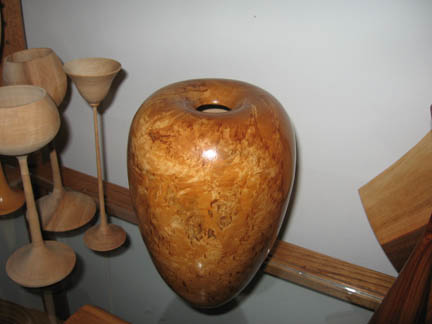
So after reading that India ink was the best way to get a 'good black' on turnings, I tried it, but only after false starts with dyes and non-pigmented version of India ink. Happy with the black, I then tried a shellac top coat (brushed) and "duh" it bled over to other areas. I should have expected that, but did not. This is on a piece of hard maple that I wanted to selectively color.
My next go at a top coat was going to be a solvent based lacquer or polyurethane, or perhaps a spray shellac.
Before I go through countless iterations/attempts/experiments/trials, are there tried and true means of stopping the bleeding of India ink when applying a top coat?
The ink you used may have been alcohol based. Shellac which is alcohol based might disolve the ink. I have had the ink run onto the rags that I use when I apply lacquer with a rub on technique. I will usually spray these turnings first if I can. That coat seals it and since I'm not rubbing the finish it doesn't smear it.
India ink consists of lampblack (elemental carbon), water and often a bit of shellac as a binder. Coating it with more shellac or other alcohol-based finish can be expected to soften and spread the original carbon/shellac mixture. You need to apply a sealing layer of something that will not dissolve shellac.
I have done a few pieces using india ink as ebonizing. I use fixatiff or Kryon matte or clear coat to seal the ink and keep it from smearing. Probably work as a base for subsequent surface finishes as well, though I haven't tried that yet.
.....I use Fiebing's (USMC Black) Boot Dye (one or two coats as needed), and then, when it is completely dry, I use spray lacquer (Deft) to seal the dye into the wood.
I do a fair number of collars and finials, and this method works particularly well, especially when costs of African blackwood continue to increase and the availability of it is decreasing.