1. Won't work with wet/damp wood. Piece needs to be dry as water/moisture will prevent absorption.
2. Try to treat the sample from both directions/sides. In the case of a hollowform as pictured, leave extra wood on the bottom to turn off but still be able to reapply the resin in case it doesn't soak all the way through.
3. If you add DNA to further thin the mix, make sure that all the mix is absorbed into the wood, do not add more than 10 percent alcohol by volume, and try to keep the piece cool to prevent the reaction heat from boiling the alcohol.
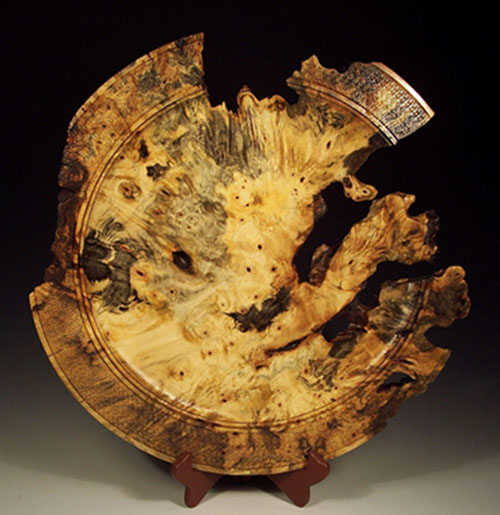
I had two incidents with a punky wood piece. The first one was when trying to mix 3 squirts from the West System pump as the 29" x 4" platter was to need lots and lots of it.
Mistake!
Epoxy is exothermic (generates quite a bit of heat when is setting), I hardly had started brushing it into the piece when it started smoking, my quick reaction was to grab the mason jar where I mix it and dash out of the shop, as soon as I was outdoors it burst into flame and the jar cracked. If I stay inside my so called shop probably would have burn down.
So mix one squirt at a time and keep doing it until the job is done, now I use a tin can for the mix.
Then when it I started turning, the epoxy added so much extra weight that the piece acted as a flywheel, when I turned the lathe off, the platter kept on spinning and unscrewed the chuck from the spindle. Inertia.
I realized what was happening and managed to grab the piece before it came out. Now I only use the stronghold chuck to mount big pieces and tighten up the set screw, it is messing up the spindle of the 3520 Powermatic, too soft, someday I will have to replace it with a hardened one.
For longer pot life and better penetration, you want to be using medium or slow catalyst and use a mixing container that is wide open like a bowl form. The reaction heat will dissipate better and you'll get a more even mix in any event.
For platters and other plate forms try this:
1. paint the back side of the wood with Anchorseal wax emulsion
2. while the wax is still wet, cover the wax with Saran or other stretch wrap
3. when the wax has dried, flip the piece and pour the epoxy over the surface, brushing the excess into the cracks and crevices until they won't take anymore.
4 when the resin has set peel off the plastic wrap then scrap and rise off the wax with warm water. Anchorseal contains an emulsifier that stays in the wax coating after the water has dried. Rewet it and it will rinse off the wood with a bit of soap and water.