Threading with Steve
steven antonucci
Shot a video on how to make a threading tool and use it...
I really need to go to film school or at least buy a tripod.
S
Knowledge You Can Build On — Est. 1998

Threading with Steve
steven antonucci
Shot a video on how to make a threading tool and use it...
I really need to go to film school or at least buy a tripod.
S
Re: Threading with Steve
Mitch
Steve
Nice job on the threading tool. Did I miss something or did you havve the steel threaded then grind half the diameter down and polish it, or how did you get the rod threaded? I have a thread cutter from Beall but it's too much of a hassel to use. I would like to make some threaded jam chucks if I could get a piece of tool steel threaded for me with the proper thread to fit my lathe. Just wondering why don't you use the beeswax soon as the tool starts the threads and wouldn't it help cut the thread easier? Just wondering, and again good job and don't be so hard on yourself we all have that problem with a camera. Thanks for a job well done.
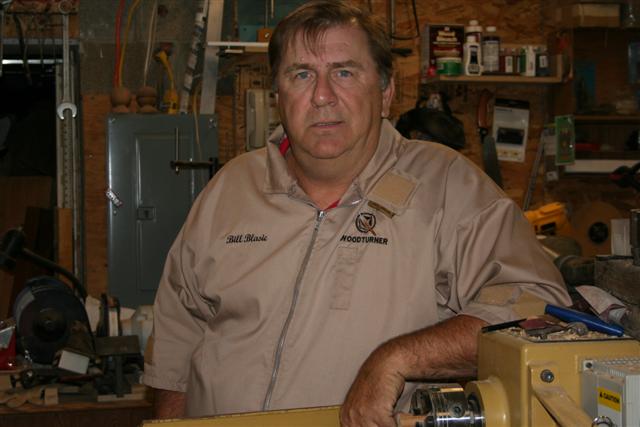
Re: Threading with Steve
Bill Blasic
Steve,
Tripod is a good idea but no matter the idea comes across. Well done!
Bill
Answer
steven antonucci
The video starts with a blurry and somewhat unclear background on what that rod is and how it got there.
If you were in a hurry, you could use any bolt. The better grades of steel bolts like a grade 8 bolt have better threads. Potentially, you could run a die over the bolt to clean up the threads.
I used a piece of 1095 steel in another one that I made. It's a good tool steel, but I had to cut all of my own threads. once I was done threading the rod, I was essentially at the same spot as a bolt.
You can grind, hacksaw, or file your way down to that profile. The key is to make the top flat, and then polish it. I don't think it's necessary to do the bottom relief, but do it anyway. You can add wax at any point in the process to aid with cutting the threads, but I just do it at the end when the fit is close.
As far as threading for your spindle, this is probably not how you'll do it. Beall makes something for that. This is for small threaded boxes and such.
Steve

Re: Threading with Steve
Alan Zenreich
Very good information Steve. Thanks for taking the time to make and post this.
Great video Steve
Mike Foster
Never thought about doing any thread chasing, but now you've got me interested. I may have to spend a little time on it today to give it a try. Video makes it really clear how to make and use the tool. Thanks!
Re: Threading with Steve
Galen Vetterick
Thanks for posting Steve.
You made it look easy and one handed to boot.
Did I miss what size of rod and in turn TPI you used? 3/4"-10NC?
Still trying to figure out how I can slow my Jet 1220 (500 rpm) to hand thread.
If I knew how much power I needed, was thinking a sewing machine motor mounted off the headstock and run the spindle through the belt door. That or spin the motor off the fan shroud end with another low speed motor.

Very nice
Steve Kubien
Ok, so you are not a cinematographer. No matter because your message is received loud and clear. You make this look easy.
On a side note, I have noticed that most threading tools for wood come as two tools, one for male threads, one for female threads. I have often wondered why one tool wouldn't be sufficient and you have shown what I long thought...one tool is good enough.
Thanks for doing this!
Ho da door . . . !
Mark Mandell - Gone Round In Jersey
Youz tryin' to tell me I doesn't has ta fork over 80 small for the lates't wiz-bang from doz catalog dudes just soz I ken make t'reads?
Youz serius, right?
Wutz da catch? [Not dat dare's anyting rong witdat]
It works!
Mike Foster
Had to go out and make one today just for fun. What do you know, it works just like Steve's. I never bothered looking into threading of any sort, mechanical or hand chasing. Just didn't seem like something I wanted to invest money in the tools as I see it as a really limited application in the type of work I like to do. But making your own tool? I had a piece of 3/8 drill rod laying around and decided why not. I didn't even get it into a handle and had to try it out. Took a little playing around to figure out how to get it to cut threads instead of multiple grooves, but now I've got a couple of ugly square maple blocks screwed together. Took me more that a 1/2 hour to make, but that's probably the learning curve.
Thanks Steve.
I'll make you one for $35
steven antonucci
Join NJ Woodturners and come up to my toolmaking workshop in May. Making these, and some hook tools, and a couple of other surprises...
Steve
If it was any easier, it would be criminal
steven antonucci
If you have access to some better woods that can take a nice thread, it's pretty darn easy to make a thread so sharp it will cut you. Mountain Mahogany is one such wood.
Blackwood also threads, but I'm not messing with it (I was going to make two threaded boxes, but after the last time...no thanks)
Steve
Speeds and feeds
steven antonucci
500 RPM is fine for threading. My lathe is set at about 240 in the video, and the only difference is how fast the cutter will advance. Once the thread starts, you are not pushing it as much as the thread is pulling the cutter in. Very manageable at 500 RPM.
As far as the diameter of the rod, it doesn't matter. I think that one is a 1/2", but it's the thread that matters. A coarse thread is easier to cut than a fine thread because there is more material left, but a finer thread advances much more slowly.
You can grind any standard bolt like this and see for yourself. No need to cut your own steel if you don't have it.
Steve
Why 2 vs. 1.
steven antonucci
With one like I make, you only have to master one motion. However, you are limited by the depth you can thread. I don't care since I only thread box lids.
If I had a two piece tool, the second cutter can be used along the entire length of the workpiece, i.e., you can make a long wooden screw like in a woodclamp.
Either way, it's not hard to do.
Steve

Practice Material for Threading
Rob Wallace
I am by no means an expert hand-chasing style threader, but when I need to practice, I see whatever pieces of the following materials I have laying around.
All of these have been reported to be good threading materials:
hard maple
boxwood
osage orange (incl. Argentine Osage - Maclura tinctoria)
yellowheart
African blackwood (which Steve notes is a rosewood; Dalbergia melanoxylon)
bocote
Schedule 40 PVC pipe (i.e. DWV)
corian
Phenolic plastics
polycarbonate plastics [e.g. Lexan(tm)]
Of course there may be others, but these should work fairly well....
......thread-on!
BTW - INTERESTING THREAD STEVE! ! ! (Pun intended) 
Rob Wallace

Re: Threading with Steve
Leo Cuellar
Hey, Steve, a great little how to vid! Still have yet to figure out my software to convert from digital tape to digital  Tripods though are usually very cheap at flea markets & second hand stores, even for good ones. If your camera won't thread onto it, or the adapter is missing, it is easy to make an adapter with the correct bolt, a small chunk of plywood & some epoxy.
I'm going to get COARSE with you if you pun again!
steven antonucci
Don't get me spun up! I might have a screw loose...
S
Have one, even know where it is...
steven antonucci
but I'd have to move too much stuff to get to it!
The internal thread is cut with the camera mounted to the tailstock. I used a spring clamp and a bolt in the mount. Debating making a more elegant tailstock mount for me and the club, since we have this issue there too.
S
Re: Threading with Steve
john lucas
Steve Most interesting. Good job explaining it. Video not so good but I know you know that. You can jury rig a boom arm to hold the camera over the lathe. Look up homemade boom arms on the web. If you can't find one e-mail me and I'll make you a sketch. If there's anyway possible go to manual focus do so. Then you will actually be able to focus on the tool and it will stay at that point. personally I hate auto focus. It should be called seldom focus.
I have made a tool like that and tried it out. I prefer the orginal styles. They are easier to get straight threads. On the harder woods it's also easier to push the tool into the work instead of parallel to it. However of all the thread chasers I've made that is about the easiest. I did hear this weekend that you can by taps that have 2 flutes. Those would probably be really good.
I have an article coming out, I think, in the next issue of Woodturning Design on how to make your own Thread chasers. It's more involved but you end up with a thread chaser that more closely resembles the factory chasers.


