Home Articles Forums Gallery Marketplace Videos

WoodCentral Forums

Knowledge You Can Build On — Est. 1998

Nearly 100 Exotic Wood Species, Direct-Imported Since 1972. Shop Slabs & Turning Stock.

Vacuum Chuck... *LINK*

Posts

Vacuum Chuck... *LINK*

#1

Brian McKearney

Vacuum Chuck... *LINK*

Brian McKearney

I'm in the process of putting together a vacuum system for vacuum chucking on the lathe. I have gathered all the parts, including a Gast vac pump, misc plumbing, shop-made rotary adapter and a vac chuck from JT Turning Tools.

My question is regarding the vac chuck from JT Turning Tools - I received it in the mail last night and threaded it on to my Oneway 1640 just to be sure that it fit. I was surprised that when I screwed it onto the spindle, that it didn't screw all the way so that it seats against the bushing at the end of the spindle. The web site says that they recommend using a plastic washer with aluminum chucks, and I did purchase a couple, but they are just a bit undersized so that I can't fit them on my spindle.

Looking at the chuck more closely, it looks like the plastic washer, which is 1/16" thick would be just enough so if that were in place, then the chuck would fit well.

I'm planning to make my own plastic washer so that I can give the system a try this weekend, but does this sound correct? Seems like the chuck should seat firmly against the spindle hub, but it appears as if it were made to require a plastic spindle washer.

Any comments?

Brian


Vacuum Chuck

Re: Vacuum Chuck... *LINK*

#2

Re: Vacuum Chuck...

Bill Howatt

Lathe accessories should thread all the way on and register against the shoulder of the spindle. That's what places them true on the spindle - not sitting on the threads.

I made my own drum chucks out of black ABS and threaded MDF for my General. I would have had to undercut the thread for it to thread right to the shoulder but I made a washer out of 1/4" MDF instead and it works just fine.

Make your plastic washers or perhaps you can open up the ones they supplied.

When you get the chuck and other components set up, put something that you know is impervious to air leak and seal the chuck with it and take a vacuum reading. This reading will be the "best you can get" with your setup.

Bill

Re: Vacuum Chuck... *LINK*

#3

Chuck

Mark Mandell - Gone Round In Jersey

They make a very pretty chuck, but state that it seals to the spindle shoulder with "O" rings. While I'm not a fan of washers, in this case they should never be necessary given the ring seals. I also do not like mountings that bottom out on the spindle before making contact with the shoulder. In my view it should be the other way around [female section should be deeper than the spindle threads] to allow proper tightening. Washers always introduce the opportunity for increased run-out. Were I you, I'd call them with the problem.

Re: Vacuum Chuck... *LINK*

#4

Re: Vacuum Chuck...

Greg Haugen

Brian,

I know this won't be a popular post, but it's my two cents.

I haven't used JT's system or seen it before this post. I just looked through the link that you provided. I've never been a fan of, or recommend, washers of any type on Lathe spindles. There are some lathe manufacturers that say warranties will be compromised if they find out one was used. Between spindle locks and the levers that come with the accessories, nothing more should needed. A loose accessory on a lathe will seat harder and tighter in use than one that was applied appropriately. If an accessory or chuck is applied correctly-and snug before use, there shouldn't be an issue. Metal to metal is the best and most efficient joint for lathe accessories. The "give" that a washer can provide can damage the threads on the spindle as well as the bearings. I don't know if their recommendation is coming from the softness of aluminum compared to the steel spindle thread or what exactly, but I'd be cautious with this.

When I've made a vacuum system, I like to use a faceplate, two layers of 3/4" MDF that's sealed with lacquer or epoxy, and a PVC coupler. Oneway's system is also nice and very handy as well.

Any time a spindle doesn't thread to the spindle hub or a washer is recommended, it's a red flag for me.

Re: Vacuum Chuck... *LINK*

#5

Re: Vacuum Chuck...

Barry Irby

I built my own system using faceplates. Homemade face plates. to seal them to the shoulder on the shaft I tried O rings. Bought theme at the Borg in the plumbing department. They fit loosely on the shaft and the faceplate tried to compress them against the shoulder. They ended up letting the drum shuck wobble because they were too thick. (about and 1/8") I bought some rubber sheet meant to go in the bottom of tool drawers and cut washers out of that. Works well. Its very thin and does not allow for "much" wobble. (much being a relative term, meaning not enough to notice, I have never measure run-out with calipers or anything else.) I suggest you contact eh makers and see what they say. In the mean time, perhaps you can find a filler that is "just right". An O ring might work for you if you have a small gap to fill. Some devices register off the end of the shaft and some against the shoulder.

Re: Vacuum Chuck... *LINK*

#6

My washer opinion

Bill Howatt

I agree that a washerless metal-to-metal connection is the best for maintaing the truest running at the outboard end of the accessory assuming it was properly made. Usually the issue is reducing vibration with a washerless contact.

However, in this case we are dealing with vacuum chucking which usually means taking a light-weight, finished bowl and lightly cleaning up the bottom end. I suggest that the remounting of the bowl on the drum chuck will swamp out any comparatively trivial runout introduced by a flat washer.

BTW - just what is your gasket interface with the bowl bottom? Hard metal or something a bit more flexible?

Bill

Re: Vacuum Chuck... *LINK*

#7

Re: My washer opinion...Exactly my thought

Barry Irby

Re: Vacuum Chuck... *LINK*

#8

Re: Vacuum Chuck...

John Lucas

First of all I don't' think it needs to bottom out on the spindle flange. I make all of my chucks. I think they seal better if they bottom out on the face of the spindle threads. I get a better seal with less leakage.

Accuracy is not crucial for vacuum chucks because the slop in the rubber seal between the chuck and bowl is going to be greater than the inaccuracy of the chuck to spindle. Even if the chuck runs absolutely true it is rare for me to put bowl on one and not have some wobble or runout.

I can't really answer your questions about this particular chuck but hopefully what I said above will help.

Re: Vacuum Chuck... *LINK*

#9

Re: Vacuum Chuck Seal

Mark Mandell - Gone Round In Jersey

If your spindle shoulder hasn't been abused with dents, dings, etm., you'll get a precise vacuum seal without washers by putting a light smear of Vasolene on the face before mating up the chuck to it.

Re: Vacuum Chuck... *LINK*

#10

Brian McKearney

Re: Vacuum Chuck Seal

Brian McKearney

Thanks for all the responses - as usual, WoodCentral is AWESOME!

I have an inquiry to the manufacturer, but given that it's a vacuum chuck and not a scroll chuck/faceplate, I'm thinking that I should be able to make it work with a plastic washer. I may try to expand the hole in the washers that came with the chuck and if that doesn't work, then perhaps I'll be able to make my own from materials around the shop so that I can give things a try this weekend.

Re: Vacuum Chuck... *LINK*

#11

Alan Zenreich

Re: Chuck

Alan Zenreich

Mark,

"They make a very pretty chuck, but state that it seals to the spindle shoulder with "O" rings."

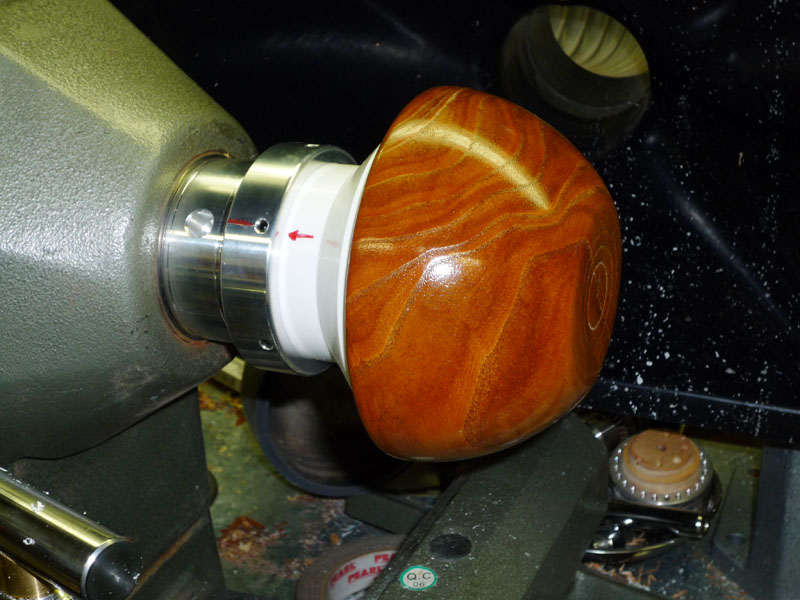
The back end of the adapter is flat... no o-ring.

The only o-ring is the one inset into the groove on the face of the adapter. This is for seating the PVC inserts into the groove, making an air tight seal.


img

Re: Vacuum Chuck... *LINK*

#12

Re: Vacuum Chuck Seal

Bill Howatt

I've made thin plastic washers by drilling a hole the spindle OD with a Forstner bit. I drill a bunch of holes all over the top of a margarine container lid and then cut them out with scissors. To get 1/16th you would probably need about 3.

Bill

Re: Vacuum Chuck... *LINK*

#13

Ah, Thanks

Mark Mandell - Gone Round In Jersey

Guess I misread their description. Too bad, though, an "O" ring would make a better seal that the plastic washer.

Re: Vacuum Chuck... *LINK*

#14

Alan Zenreich

Re: Ah, Thanks

Alan Zenreich

Mark,

From the installation guide:

"The use of a soft plastic spindle washer is recommended when installing aluminum accessories onto steel spindles."

I don't think JT is suggesting that a washer is necessary for an airtight seal. I think it's just his general guideline for attaching aluminum accessories to steel spindles. Many people do not think a washer is necessary (I'm one of those people).

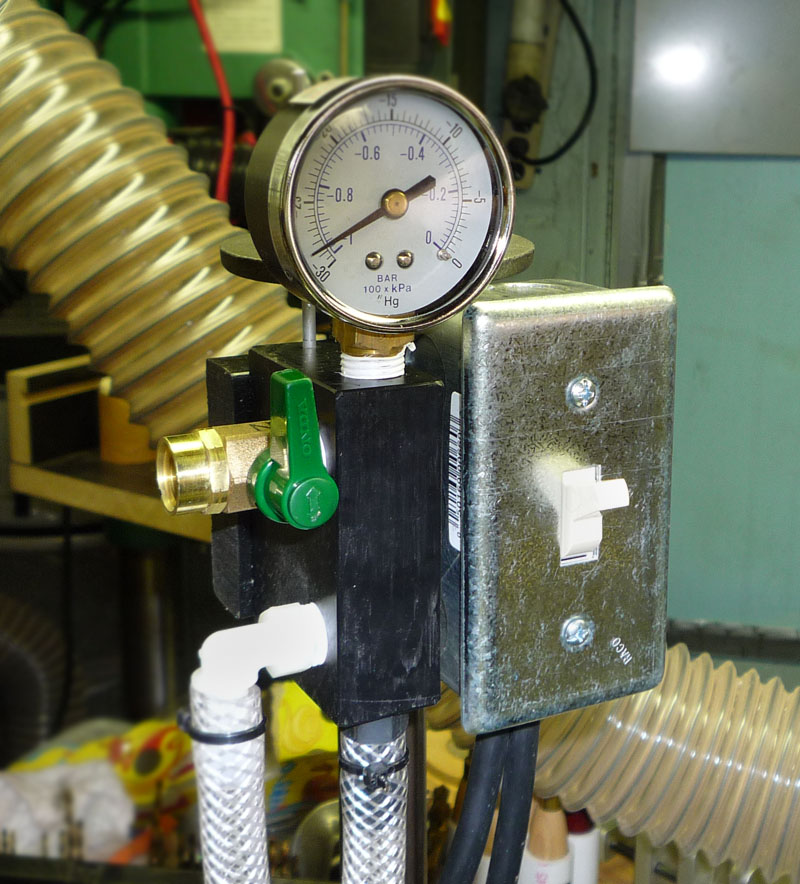
Using this adapter without a washer, I get very good vacuum reading (just under 29" hg). I don't think I can ask for more than that.


img

Re: Vacuum Chuck... *LINK*

#15

28-1/2 Works

Mark Mandell - Gone Round In Jersey

Unless you're spinning 1/8" walls on an 8" bell :D

Re: Vacuum Chuck... *LINK*

#16

Dennis in Southern Oregon

Re: Vacuum Chuck...

Dennis in Southern Oregon

Brian, I can't speak for the 1640 but the spindle on my Oneway 2436 has a bead about 0.4 inches out from the shoulder that is just a bit larger than the thread diameter. When I made my vacuum chucks (using corian end-pieces), I tapped the end-piece and then counter-bored it to just clear the bead. This allowed the end piece to jam firmly against the shoulder. In my opinion, failing to fit the chuck firmly against the shoulder leaves you vulnerable to wobble if the tapped threads are less than perfectly fitted or if they wear over time.

Dennis

Re: Vacuum Chuck... *LINK*

#17

Brian McKearney

Re: Vacuum Chuck...

Brian McKearney

Yes, that's the reason why I asked the question - I wanted to make sure that I wasn't missing something.

Unless I'm told differently by the manufacturer, I think that I'm going to turn a plastic washer to fit over my spindle and as long as it is 1/16"-1/8" thick, then I think that the vacuum hub should snug up tightly against the washer which will be resting on the shoulder and I think that it should work.

I guess that I was just surprised that the threads didn't allow the vacuum hub to be screwed all the way to the point where the hub contacts the shoulder, but if the intent was to require a plastic washer, then perhaps that's the reason?

Re: Vacuum Chuck... *LINK*

#18

Re: Vacuum Chuck...

David Walser

...

I guess that I was just surprised that the threads didn't allow the vacuum hub to be screwed all the way to the point where the hub contacts the shoulder, but if the intent was to require a plastic washer, then perhaps that's the reason?


Brian, I doubt they engineered the chuck to fit with such precision. That would assume all lathes with a particular spindle thread size have spindle's that are exactly the same length (and that all plastic washers are the same thickness). I doubt that's a safe assumption. Instead, I suspect your Oneway has a slightly longer spindle than whatever lathe the vendor used for a reference when designing the chuck.

Re: Vacuum Chuck... *LINK*

#19

Dennis in Southern Oregon

Re: Vacuum Chuck...

Dennis in Southern Oregon

I failed to mention that the "bead" forms a stop for a set screw used in chucks and faceplates to prevent the chuck from loosening when operating in reverse or decelerating rapidly. Not all 33mm spindles (if there are others besides Oneway) necessarily provide this feature.

Dennis

Re: Vacuum Chuck... *LINK*

#20

Re: Ah, Thanks

Doug Trembath

That vac setup's just too pretty...