Home Articles Forums Gallery Marketplace Videos

WoodCentral Forums

Knowledge You Can Build On — Est. 1998

Good Hope Hardwoods - Walnut Slabs & Specialty Hardwood Lumber

Why Just White Light?

Posts

Why Just White Light?

#1

Why Just White Light?

charlie belden

When photographing turnings, blue is the enemy. Day Light is what you shoot for - when shooting pieces.

Some woods fluoresce under ultra violet light and look completely different than when illuminated by day light or incandescent "white" light.

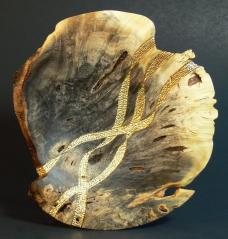
Segmented pieces could, using woods that fluoresce under UV light, make for some even more interesting pieces. One look under "white" light - and a completely different look - under UV light.

Just an idea to think about - or not.

Re: Why Just White Light?

#2

Ellis Walentine

Yet another design dimension

Ellis Walentine

Without light of any kind, turnings wouldn't exist in the visual world. By changing the color temperature and other characteristics of the light, we can alter the visual aspect of any design. Phosphorescence is a property of different woods that could indeed be added to the design palette, say for a display in a blacklight gallery.

Regarding color temperature, I'm not sure it's fair to say categorically that blue is no good; it could conceivably produce the effect you want. Generally, I think that warm-colored wood against a neutral background is the most natural looking.

Ellis

Re: Why Just White Light?

#3

Re: Yet another design dimension

john lucas

Ellis is correct. Blue is only bad if it causes bad colors in the wood. Many amatuers put wood on a blue background and this reflects up into the wood causing it to look unnatural. A blue can enhance certain wood if used correctly. After all when anything is placed outside we often have blue sky background which appears quite natural.

Back in the 70's one of the guys in my barracks in the Air Force painted his room with irridescent paints so that when he had his blacklight on it looked like you were out in space. Maybe he could use a turning that used that affect.

Re: Why Just White Light?

#4

Re: Yet another design dimension

steve worcester

Generally the problem is where would it be seen? You have to alter it to an environment that is replicable to the buyer.

I have an issue with the paints I use with pearls and other reflective characteristics. They need sunlight, or a 5k-6k color temperature to be seen in the manner they were intended. In my shop, or most home lighting they are nice, but don't pop like daylight will do.

It is the same with woods with a lot of figure, like a curl or tiger pattern. Less chatoyance under regular light, but better under daylight.

A phosphorescent wood is interesting, but not near as cool as under a black light. (Are there phosphorescent woods?)

Re: Why Just White Light?

#5

Re: Yet another design dimension

charlie belden

"Are there phosphorescent woods?"

Don't know if there are any that are phosphorescent but I know that there are woods that glow under UV / Black Light - black locust, slippery elm and Kentucky coffee tree

Re: Why Just White Light?

#6

Katherine Kowalski

Re: Why Just White Light?

Katherine Kowalski

There is an artist (painter) on Etsy who creates works specifically designed to be seen in daylight, artificial light, under a "black" light, and in the dark. She uses special photoreactive paints and powders to achieve this effect.

Her customers regularly shop for UV lights in order to enhance the pleasure they receive from observing the painting. It's quite interesting to see how these paintings change composition, (visually), under different lighting schemes.

There's no reason why someone couldn't do the same with sculptural work or woodturnings, even using the natural features of the wood to "play" with light. (Anyone interested in doing the research???) :-)

Katherine

Re: Why Just White Light?

#7

Ellis Walentine

What's the correct term?

Ellis Walentine

Re: Why Just White Light?

#8

Re: What's the correct term?

charlie belden

Phosphorescence

Physics: the emission of radiation in a similar manner to fluorescence but on a longer timescale, so that emission continues after excitation ceases.

Basically, phosphorescent stuff continues to emit light - after the light source that struck it is gone, fluorescent stuff "goes out" when the UV light source does.

Re: Why Just White Light?

#9

Re: What's the correct term?

bill Crommett

In that case, what is the dull glow I see in my compact fluorescent bed lamp

long after the light has been turned off. Is it fluorescence or phosphorescence ?

Re: Why Just White Light?

#10

Re: What's the correct term?

charlie belden

To muddle the waters more - I think the inside of fluorescent bulbs/tubes are coated with - a phosphorous compound.

Maybe the distinction is that one is a SOURCE of light and the other REFLECTED (not absorbed) light off objects the light strikes.

As an aside - apparently there are now LEDs that put out UV light. Changing the form factor for UV light sources to something much smaller, that requires less energy means small UV light sources could be incorporated into the display base for a turning - allowing their use to be a bit more subtle than larger strangely blue tubes - and power source.

Re: Why Just White Light?

#11

Research?

charlie belden

Katherine:

What'dya have in mind for a research project?

I know you can purchase samples of most of the better known woods as a collection. Samples could be digitally photographed under photo floor lights and again under UV light using a time exposure. I'm not

sure though if the samples are big enough to show end grain as well as side grain.

If photos are to be contributed by interested participants, some standard colors card would be needed

to later adjust for various light sources used to come up with a "standardized" collection. The research

team core members should probably include a professional photographer for coming up with methods

to "standardize" contributed images, maybe a biochemist and someone from the wood industry - say

a biologist specializing in trees. Andi Wolfe might provide some suggestions for the knowledge and

skills required on that end.

Wonder if Hoadley could provide some guidance?

Interesting project.

Re: Why Just White Light?

#12

Re: What's the correct term?

john lucas

It's called a pain in the ass. As part of an energy saving venture the University came in and replaced all of our lights with some new What look like Flourescent but work more like the compact flourescent bulbs. Then the smaller lamps were replaced with the compact flourescents. They fog paper and film in the darkroom because they continue to emit light long after they have been turned off. Fortunately I rarely use the wet darkroom anymore but when I do I have to turn the lights off for about 5 minutes and sit in the dark before ever removing film from the can.