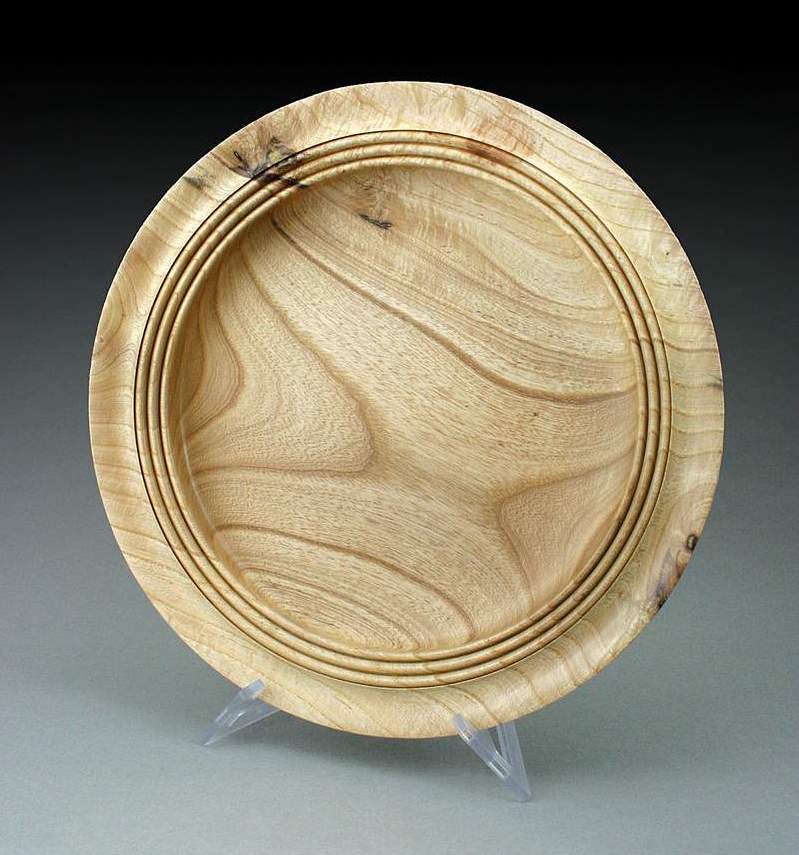
>Hello all, I have a bunch of Spalted Maple I'm doing the finish turning now and some of it I would like to keep the nice contrast of light wood and black lines. How much does lacquer change the color of maple? I have always used oil and or poly and know that color change. Thanks for any help.
I routinely use sprayed lacquer over a blonde shellac sanding sealer coat (applied at 1-pound cut) on light-colored woods (including spalted maple), and I like the results. The lacquer I use (Behlens pre-cat, or nitrocellulose) does not change the color appreciably, as would polyurethane or oil finishes.
I have the same thoughts that you do. I don't like the way that most finishes bring out the yellows in the spalted maple. Here is what works for me: use a 50/50 mix of lacquer and lacquer thinner as a sealing coat. It will soak into the wood, and when it dries there is very little color change, but at the same time the details do pop out. I usually use a couple of coats, lightly sanded after each coat.
After the wood has been sealed, you can follow with the tradition oil finishes on top, and it will not cause the wood to turn yellow. It works for me.
You indicated you have a bunch of the wood, try this technique on some scraps.
I've had good luck with Deft's Clear Wood Finish, which is an oil based lacquer. It dries clear and doesn't yellow. It is available in gloss and semi-gloss. There are some water based lacquers on the market. So far, I prefer the traditional formula Deft. The water based lacquers seem to dry with a slight blue tint and give the wood a cool feeling.
I believe in "Russ's Corner", Russ Fairfield discusses the various types of lacquers available and their various advantages. He has an updated version of this article on his website.
>Water, wax, and lacquer will impart the least color. You can get a preview of what the wax or lacquer will look like by wetting the surface with water.
I have rewritten the lacquer chapter of "Finishing Secrets", and you will find it on my website at:
>...with General Finishes "High Performance" H2O based poly. Fine Woodworking rated it highly in a test of the new generation H2O based finishes, and it dries gin clear on my light colored woods, with no blue as in the old finishes. The poly base dries to a very durable surface, and can be buffed to whatever appearance you desire.
>Of the water-based urethanes I've tried, the General Finishes 'High Performance" gives the best color-retention without becoming bluish or yellowish and doesn't get too 'plastic-looking'. Still not as good as sprayed lacquers, though....