Home Articles Forums Gallery Marketplace Videos

WoodCentral Forums

Knowledge You Can Build On — Est. 1998

Portable Sawmill & Tree Service – Abingdon, VA

General questions re: lathe selection

Posts

General questions re: lathe selection

#1

General questions re: lathe selection

Seth Dolcourt

>Hi,

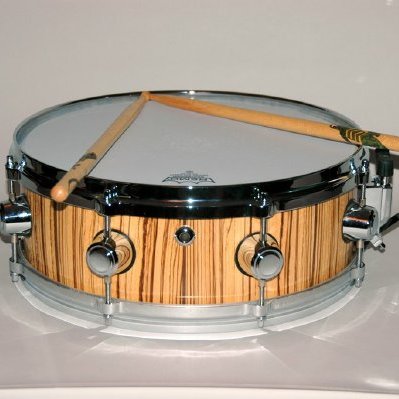
I'm a very new newbie to turning. As a background, my turning projects are going to be stave-constructed drum shells, varying in diameter from 10-20", and in heigth, from 4-18". Generally, the lathe requirements I have are for small footprint, maximum swing capacity and relatively low RPM (200 or so) as a slowest speed. As always, budget is thin, so I'm looking to (safely!) push the limits of less expensive lathes, rather than buying a multi thousand dollar beast.

An opinion at the local Woodcraft suggested buying a lathe where the headstock can slide to the end of the ways, thus allowing outboard turning, rather than relying on turning the headstock 90 degrees for outboard (he cited the amount of fussing needed to re-align head/tail stocks should I want to do spindle turning.) I wasn't sure I wanted to manage a 30-40" long lathe in my small garage shop if all I was turning were drum shells. Generally, what is a common method of supporting tools for outboard turning? I've seen a tripod tool rest system; buy, build, or avoid?

I had in mind buying a Jet 1220 VS, because it's capable of low speeds (270 RPM), which I believe is good for turning a larger shell until it gets rounded, and the 3/4 hp motor seemed like it was up to the task. However, due to the short swing capacity, I wanted to install "riser blocks" between the head/tail stock and the bed, lifting them both up 4-6", to increase swing. Fundamentally, is this a safe way to operate a lathe?

How do you go about mounting a ring shape so you can lathe both the exterior and interior? I've seen 4 jaw chucks, usually no larger than 4" capacity, certainly nothing offered to fit a large object like a 14" snare drum shell.

I have a shop-made rig which turns a shell around a central axis, and a router provides the cutting action. With more head-scratching, I could improve the accuracy of my customized tool, but by then, I'm mostly to the cost of a commercial lathe, I may as well get on board with buying a good tool.

Cheers, and thanks in advance for your comments.

Seth
Re: General questions re: lathe selection

#2

Re: General questions re: lathe selection *LINK*

Fred Holder

>Hello Seth,

Personally, I don't think that the Jet 1220 would handle the type of turning that you want to do even with riser blocks. First, a 3/4 hp motor sounds fairly large, but for swinging things up to 20" in diameter it would really lug down. I've used Nova lathes for years and highly recommend them. The Nova 1624 has a 1-1/2 hp motor and will swing 16" over the bed and up to about 29 inches outboard (you will need to add an outrigger unit to for the 29 inch outboard turning)or make yourself a free standing tool rest. Your cost for the lathe and outrigger would be close to $1500 plus shipping, unless you could purchase it at a local Woodcraft store.

The 1-1/4 inch spindle will better handle the loads that you are likely to place on the spindle. I believe the Nova will go down to about 200 rpm.

You can attach one end of your stave drum blank with glue to a waste block screwed to a faceplateso that you can turn both the inside and outside with the Nova Headstock swiveled to 90 degrees. You can't put riser blocks on the Nova and I think the riser blocks on the Jet would be bad news for that small of a lathe.

One other possibility, which would reduce your footprint, and the overall cost of the lathe would be to make your own lathe. Purchase a replacement spindle for one of the lathes with a 1-1/4" x 8 tpi spindle or larger and build a lathe with a cast concrete cone with the spindle on top supported by two bearings as far apart as possible. You could then use a free standing tool rest that could be moved to where you want it. A friend of mine, Vernon Lebrant, uses a heavy homemade bowl lathe made of concrete with about a two inch spindle and I think a three hp motor to turn bowls up to 36 inches in diameter and larger. This would take a little work on your part, but would allow you to tailor make it to fit your needs.


More Woodturning Website

Re: General questions re: lathe selection

#3

Re: General questions re: lathe selection *LINK*

john lucas

>I don't think the 1220 will even come close to doing what you want to do. You have to remember that a 12" lathe still has a banjo to hold the tool rest and when turning a cylinder line you are discussing this becomes a factor in the swing or maximum diameter you can turn. On a 1220 that would limit you to around 10" or less maximum.

then for the length you have to subtract whatever you are going to use to drive and support the ring. This could easily take 3 to 4" off the length.

In my experience the tripod outrigger tool rests are tricky to use. With experience they aren't bad but you can get some really nasty disastrous catches unless you are pretty comfortable with your tools.

I would suggest looking at the Vega Bowl lathe. You can only support the drum from one end but that can be jury rigged. I've done it when making a birdhouse that was 8" by 12" tall. I honestly don't remember how I mounted it because it was so long ago but I probably just glued it to a wasteblock. The tool rest is very adjustable and will probably let you turn inside and out from a supported too rest which is much safer than a free standing tool rest. It is more expensive than the Jet but I think it will do a better job for you.


http://www.vegawoodworking.com/

Re: General questions re: lathe selection

#4

Richard Allen

Re: General questions re: lathe selection

Richard Allen

>I would suggest a Vega Bowl lathe.

Even at that an 18" tall stave ring would be a challenge on any lathe. I would want a steady rest for anything beyond 10" of height. I might get away with a few Oneway bowl steadies for the extra support. But if I was going to do this on a regular basis I would be looking hard at the Clark steady rest.

Unless there was a compelling reason not to I would make the taller drums out of 2 rings glued together. Still the bearing edge for the drum needs to be turned and 20" is a long way for unsupported wood.

Stave drum makers have jigs that they use to make drums. I can imagine all sorts of ways to securely attach a stave ring to a lathe.

Re: General questions re: lathe selection

#5

Re: General questions re: lathe selection

Seth Dolcourt

>Fred,

Thank you for the comments. I hadn't considered the Nova product, but glad to know about it.

I've been shopping on McMaster Carr's website for lathe type parts to upgrade my shop-made rig. A precision shaft end-threaded with 1" x 8 threads (righty tighty) 12" long and 1.5" diameter is about $70, pillow blocks with ABEC bearings to support the shaft are fairly inexpensive. A pulley at the end opposite the threads, and I have an accurate and beefy turning center.

It's possible that a custom lathe is how this problem gets solved.

Cheers,

Seth

Re: General questions re: lathe selection

#6

Re: General questions re: lathe selection

Seth Dolcourt

>John,

Thank you for the comments about the tripod tool rest. I think you've highlighted its potential problems!

Cheers,

Seth

Re: General questions re: lathe selection

#7

Re: General questions re: lathe selection

Seth Dolcourt

>Hi, Richard,

Currently, I do the bearing edges using a router with a ball bearing guided bit, and mount the router on a custom base plate with two other ball bearing guides. Basically, the base plate exactly follows the circumference of the shell, and bit depth controls how much material gets cut.

As I posted to Fred, I don't have pictures available that shows my current purpose built rig I use to make the shell, but I think the comments I've received guide me to going down the custom jig path, maybe a woodworking lathe wont' work for this application.

Cheers, and thanks.

Seth

Re: General questions re: lathe selection

#8

Re: General questions re: lathe selection

Steven Kubien

>Well, since it's not my money I would throw Stubby into the mix. It's got the capacity you need with loads to spare plus, whenever the right piece of wood comes along, you will be able to turn a shell from a solid piece of wood...no matter how much it weighs.

Steve Kubien

Re: General questions re: lathe selection

#9

Re: General questions re: lathe selection

john lucas

>OK if money wasn't a problem here is what I'd do. Get a lathe with a large swing, Powermatic 2442 comes to mind. You can turn the outside between centers by mounting scrap wood inside the glued up blank. If you mount the scrap piece on the tailstock end about 2" deep you can turn the first 2" of the inside from the tailstock end.

Then make a large wooden faceplate and glue the turned end of the drum to this using hot glue. Then put a steady rest around the outer end of the drum to support this part. You wouldn't need this for short drums but something that hangs out 15 to 20 inches will vibrate easily.

I would use a captured bar system like the Lyle Jamieson system to hollow the Drum. This would require either a long lathe like the 24442 or an attachment to a bowl lathe to hold the secondary tool rest.

When I made my birdhouses I only turned the first inch or so of each end so I could mount my scrap block inside out of the way and turn both ends. I would mount them between centers and turn the tailstock end and then swap end with the piece and turn the inside of the other end.

Re: General questions re: lathe selection

#10

Re: General questions re: lathe selection

davidwalser

>Seth,

You should also consider the good used lathes that are available. As an example, Gary Evans recently put his Woodfast short bed lathe up for sale. (See the Classifieds on WoodCentral.) It has a 20" swing and would need riser blocks turn a 20" diameter drum, but it otherwise seems to meet your needs for $1,500 (plus shipping). Again, I'm not trying to sell the lathe for Gary and don't even know if it's still available, I'm just trying to point out another option. Some top-shelf used iron is available for less than the cost of a new, but lesser quality, lathe.

Re: General questions re: lathe selection

#11

Re: General questions re: lathe selection

Seth Dolcourt

>David,

Thanks for letting me know about the classified ads on Woodcentral.

I've dabbled with looking at OWWM.com and craigslist, too.

Cheers,

Seth

Re: General questions re: lathe selection

#12

Re: General questions re: lathe selection

Seth Dolcourt

>Steven,

Thanks for the idea about the Stubby, I had no idea they existed.

Cheers,

Seth

Re: General questions re: lathe selection

#13

Re: General questions re: lathe selection

Seth Dolcourt

>John,

Thanks for the idea of how to go about mounting the shell for both ex- and in-terior turning.

I had another chat with the Woodcraft guy (he teaches turning at the Redwood City store in the SF Bay Area) to get some ideas. He showed me a Nova 4 jaw chuck and some auxiliary jaws which could grip up to 10" dia, to show the concept.

He has largely agreed with the opinions rendered here, that the Jet 1220 is too small, I need a larger lathe, and don't be shy about taking turning classes! The more I think about it, I probably need to custom build a lathe that is tailored to turning a drum shell; the right sized lathe for this project is out of my budget.

Cheers,

Seth