Re: Crepe myrtle? Good for turning?
Steve Russell
>Hello Mark,
Crepe Myrtle is a mixed bag of tricks, but it's certainly worthy of your efforts. I've turned quite a bit of it over the years, as it grows like a weed down in these parts. It loves to crack as stated by other posters (reminds me of Cedar Elm in that regard), but if you boil it using my protocol, it is generally well behaved.
I've turned pieces up to 12" in diameter, but it normally runs smaller. The smaller limbs (say your arm size) work great for goblets (the stems do strange, unusual and unpredictable things), and smaller projects. This timber turns well, so it's great for practicing your spindle turning skills and getting the hang of the skew chisel.
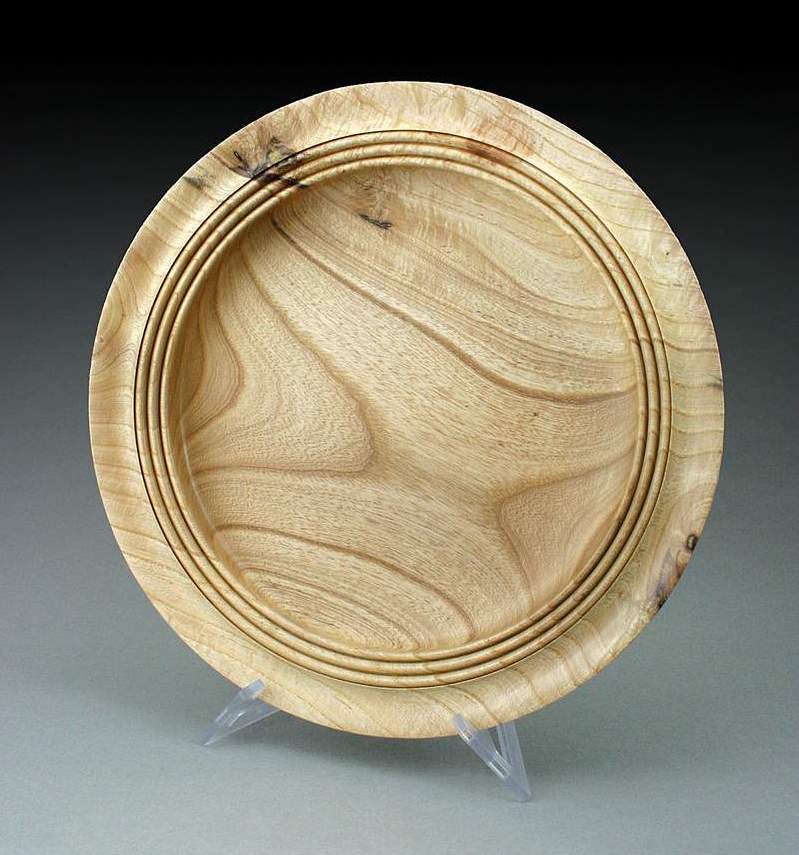
I like to use CM for decorative projects, as it can look like "plain vanilla" at times, but if you get a larger piece it can have excellent figure like curl, wavy grain and even tiny burls. It responds well to burning, piercing and colouring. In addition, it's an excellent "blank canvas" for metal leafing and surface applied adjuncts like beading, metallics, mineralization, patination and similar post lathe "after work" efforts.
If you have the opportunity to get a root ball one day, grab it. The intense swirls and grain patterns are quite provocative and can serve as a creative springboard for you to explore new forms with negative space in your hollow form turning. The turned surface is exceptionally smooth and easy to sand. It can be a bear to dry without adjunctive treatments like boiling or steaming, but it's definately not a "bad boy", just one with behavioral problems that need to be addressed.
Steve Russell
The Woodlands, Texas