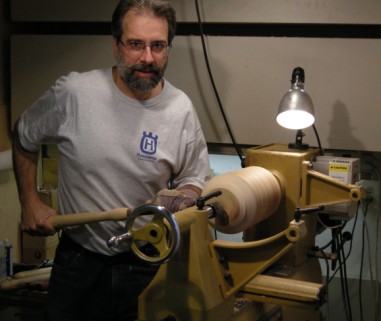
I got that, but not the most important feature?
steve antonucci
>The truth of the matter is that that end of the system really isn't very important. It's a bar with some kind of cutter, and it cuts the exact same way from one system to another to handheld- the wood rotates against the sharp edge and it gets cut!
How that cutting edge gets to the wood is largely driven by the stuff on the outside of the hole, and how easily one can present the cutter to the inside. If you want to really impress a hollow turner with the system, I think it would be a lot more powerful to show how it addresses the four biggest hollowing challenges:
1.) How do you "enter the hole" with the system? Assume that the hole is 1/4" wider than the bar you are using. Can you do it with the lathe on or off? I may have to turn the lathe off more than on to clear shavings and I don't want to have a long procedure for getting in and out.
2.) How does it arrest torque? I think this is largely geared at the newer turners, since torque isn't really a problem if you are cutting correctly. Show an extreme dig in, and how it keeps from blowing up the entry hole.
3.) How does it undercut? If it can support undercut vessels, it can support almost any form.
4.) Measurement. Pehaps the most challenging thing to anyone attempting to hollow is uniform wall thickness. I think the laser system is probably going to do a good job with this one, and I would have some way of demonstrating this. (I'm going to make a laser "caliper" set, but only for measuring with the lathe off")
I'm not trying to be abrasive, but it just strikes me as odd that people focus on the wrong end of the tool.
Steve