Home Articles Forums Gallery Marketplace Videos

WoodCentral Forums

Knowledge You Can Build On — Est. 1998

Need a tree taken down or milled?

large spindle question again.

Posts

large spindle question again.

#1

large spindle question again.

John Lucas

>I drew up the spindle last night and calculated the wood. There are two ways to do it of course, stave and segmented. I'm leaning toward the stave construction but will have to cut 48 3 foot sections with 3.75 degrees on each side. What method would you use to do this. My original thought was the jointer but I'm wondering if it would be more accurate if I make up a jig and run them through the planer. It would be easy to get a tapered stave if I use the jointer. They will be too thick to use the table saw and I'm not sure I can do it accurately enough on the bandsaw. I'm still guessing at how much time it will take to do the assembly. I'm sure I will have to custom cut the last few. I can't imagine I could get 48 cut accurately enough to nail it first try.

Re: large spindle question again.

#2

Re: large spindle question again.

Stuart Johnson

>John, You say it is too thick for the table saw. What is the stock size?

Re: large spindle question again.

#3

Re: large spindle question again.

John Lucas

>Stuart To be on the safe side I need to make the staves 4" "deep". My table saw might do it but it's going to be pretty close.

Re: large spindle question again.

#4

Keith Tompkins

Re: large spindle question again.

keith tompkins

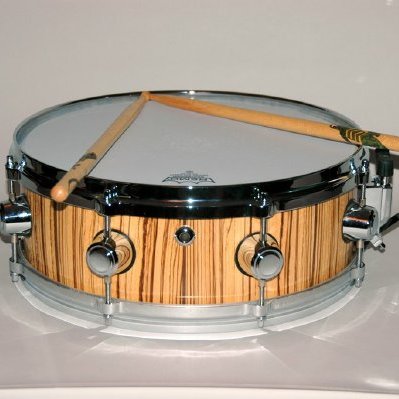
>John, This may be worth a try...it's a technique I use for perfect glue joints. It's nearly impossible to cut 48 staves and have them fit correctly, especially if you attempt to glue them up all at once. My method is to cut them on the table saw slightly oversize, then make one light pass on each side with the jointer...with SHARP blades. Then, glue up in manageable sections using shop-made cauls and bar clamps. If you glue only a few staves at a time, each joint will be perfect. Continue glue-up until you have four quarters of the turning intact. Then, making sure your jointer fence is set to a perfect 90 degrees, run each section through the jointer. Now, you only have 4 glue joints to worry about. I usually glue up two halves, again using cauls and bar clamps. Now, only two halves to join together....if too large in diameter to run through the jointer, plane by hand until both halves fit perfectly...now, it's easy to clamp the halves together....Result....perfect. The piece in the image was done this way.


img

Re: large spindle question again.

#5

Re: large spindle question again.

Stuart Johnson

>Possibly back to the band saw. Tilt the table and use a jig to make sure the pieces stay in alignment. Then use Keith's suggestion about running them through the jointer to clean up the cut.

Re: large spindle question again.

#6

Bird's-Mouth Joinery Bits

Curly Smith

>I'd give these a look:

Bird's-Mouth Joinery Bits

"Historically used in the construction of masts and booms for wooden boats, the bird's-mouth joint is straightforward to make, stronger than a traditional miter and, with nesting joints, easier to glue up without shifting.

With these three cutters, it is a simple matter to make 6, 8, 12 or 16 sided hollow columns, as well as straight or tapered multi-sided planters, bowls, etc., all of which can be left multi-faceted or planed / sanded round. Generally, more sections are required for larger-diameter assemblies to keep the wall thickness to a minimum, and reduce the amount of material to be removed when rounding.

Designed to produce flush joints with material up to 7/8" thick. Thicker material can be used, but will require some dressing after glue-up. Holder included with each bit.

For better safety, this bit should be used in a router table and not used free hand."

Re: large spindle question again.

#7

Re: large spindle questions??.

Mark Mandell - Gone Round In Jersey

>Why so thick? With staves and a colume of 3" in the radial axis, the thing will likely hold up a truck! What's the finished diameter of the colume?

mm

Re: large spindle question again.

#8

Two other thoughts

Curly Smith

>Actually, the same thought with different tools

You've got a router fluting jig. Make a router taper jig with the top angled to whatever angle you want. If desired, you can also taper the length of the stave. A bottom cutting bit and a bunch of passes should do the trick, although conceptually you should be able to rig a sled that would turn the router sideways relative to the angled surface and allow a straight cutting bit.

If you have one of those power planes make a jig and sled for it. It should make short work of your staves if you got them close to start with.

Re: large spindle question again.

#9

Richard Allen

Re: large spindle question again.

Richard Allen

>48 staves! Thats a lot. You can bevel one side of the stave to 7.5 degrees and leave the other at 90 (if you call the other side 7.5 degrees this would be zero degrees). That can simplify the cutting as you only need to get "excited" about one side of the stave. Of course this means that the the variance on the 7.5 degrees is multiplied by 48. Where as the 3.75 degree errors would be multiplied by 96. The assumes that you can cut or joint a predictable 90 degrees.

The down side is that the joint will not be a straight line when turning with a good bit of relief. If the spindle is to be painted then it doesn't matter.

Re: large spindle question again.

#10

Re: large spindle question again.

john lucas

>Keith exactly how I thought I would do it but the boards are to deep for the table saw. thought about the bandsaw and jointer but don't think I can keep both angles parallel from end to end. With the planer I'll have to build an angled table but that will keep the staves the same thickness from end to end.

Re: large spindle question again.

#11

Re: large spindle questions??.

john lucas

>Mark the diameter of the column varies from 12" to 22" so staves might not even be possible. It's supporting a large table top so it has to be fairly heavy.

Re: large spindle question again.

#12

Re: Two other thoughts

john lucas

>Interesting thought Curly. I'll file that away.

Re: large spindle question again.

#13

Re: large spindle question again.

john lucas

>Richard That's a very good thought. I'll have to try it on some scrap to see if it would work. It is to be painted so the lines won't show.

Re: large spindle question again.

#14

Re: In that case

Mark Mandell - Gone Round In Jersey

>I would most definately go with 3" stock on the table saw tilted at 7.5 degrees running a taper jig set for 5" over 30".

mm

Re: large spindle question again.

#15

Re: large spindle question again.

Robin Corell in Atascadero, CA

>I've turned a couple of valve body patterns that were about that size and believe it or not it is easier and faster to just make them solid. it took an afternoon to mill the wood and glue it up with pinch dogs.

I did another similar size turning and made it hollow but the hollow was a stepped square shape. I made a pair of square drives for the blank and bolted one to a face plate. worked really well with a minimum of set up and glue up time.

Robin Corell

Re: large spindle question again.

#16

Re: large spindle question again.

john lucas

>Robin I'm still toying with solid if the customer will accept it. It will require more expense in wood but the trade off in labor will make up the difference. The biggest problem will be mounting it on the lathe if it's solid. I may have to find a big friend to help.

Re: large spindle question again.

#17

Re: large spindle question again.

Russ Fairfield

>John,

I think you are correct in wanting to make a staved construction, but for a different reason. The staved construction will be more stable and less likely to crack later.

If you were to make this from solid wood, it will have to be all heartwood. It there is any sapwood in a large piece, you will be inviting cracking as the wood seasons with age. I don't remember if you said what species you are using, but finding a large piece of all-heartwood can be difficult to impossible these days.

But, I do have to question why you want to use 48 staves. That is a lot of staves. I don't remember ever having to use more than 12 or 16 staves on a complicated assembly. Most architectural and furniture can be done with 8 and quite often only 4. You can use some combination of tapered staves, multiple layers, multiple assemblies, stacked ring sections, and other means to keep the thickness of the staves within a reasonable dimension. There is always the possibility that the column needs to be redesigned into a simpler shape that will be easier to make.

As a last resort, you can always do what I do when confronted with a difficult situation and a redesign is not an option. I tell them to find someone else to do it. There are some jobs that aren't worth the effort.