We value your privacy.
We use cookies to enhance your browsing experience, analyse site traffic, and personalise content.
By clicking “Accept all”, you consent to our use of cookies. You can also choose
“Essential only” or learn more.
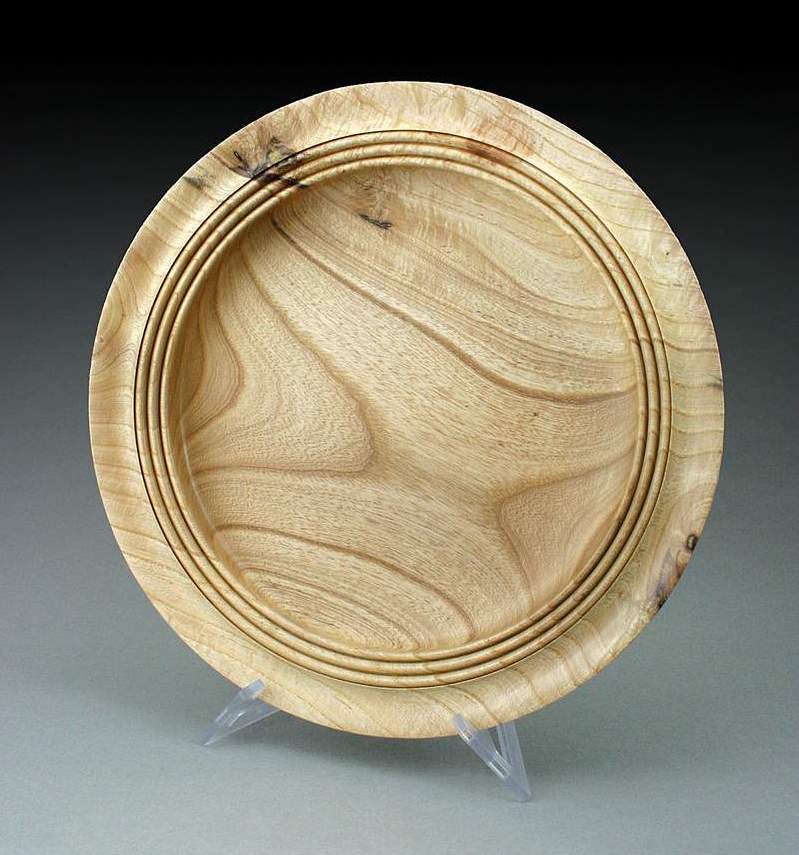
>Query: at what point does a bowl become a vase and at what point does a vase become a hollow form? is it a bowl if the sides are convex and the top open, but a vase if the sides are concave? Does it become a hollow form when the opening gets smaller than the base?
>Adrien I've also wondered when a platter becomes a bowl. Ceramics people call hollow vessels, jars. The only thing I'm really sure of is when a bowl or hollow vessel becomes a funnel. I've got that one down pat.
>I went to a demo that Christian Buchard gave at the Akron Symposium in 1998. He was making a sphere.
Someone asked him: "What's the difference between a ball and a sphere?"
Christian: "About a hundred dollars."
Everyone laughed and then Christian told a story about balls and spheres.
He was at a craft show selling his tunings. As part of his display Christian had a box of wooden balls he had made. The show was crowded and lots of floks were in the isles. A couple came by and the woman paused at Christian's booth. The man continued to troll the show. The woman looked up and caught her husbands attention a couple of booths down. She exclaimed in a loud voice "Hey Harry. You have to come here and see this man's balls!" From then on Christian called them spheres.
>I think a "bowl" is when you can use it for popcorn, candy, salad.
A "platter" is when it won't hold enough popcorn so you put crackers and cheese on it. A vase is used for flowers or weeds. It becomes a hollow form when you take the flowers out. The ceramic people have it right; plate, platter, bowl, jar, box. I think "hollow form" is used by, maybe even started by, woodturners.
I have the most difficulty explaining to people who have no idea what woodturning is, how I make a round box (without using my hands!). A box is square after all.
an open top piece is a bowl if the height is less than half the diameter of the piece unless it is really short which makes it a plate unless it has a large rim which makes it a platter. If the height is equal or greater than the diameter it is a vase unles it has a small diameter top which makes it a hollow form. In between the height of a bowl (half) and the height of a vase (equal to the diam) there is an aukward area where the piece doesn't qualify as a bowl because it is too tall and it is not a vase because it is too short. I avoid this height most of the time because I feel that it is confusing to the eye unless the piece is globe shaped. Generally, if you cannot tell whether a piece is a bowl or a vase you won't like it except for the globe shape I just mentioned as being the exception. There is a lot of gray area in these definitions and, to my knowledge, no definitive rules.