Home Articles Forums Gallery Marketplace Videos

WoodCentral Forums

Knowledge You Can Build On — Est. 1998

Reach the woodworkers who ACTUALLY BUY

Over Sanding

Posts

Over Sanding

#1

Over Sanding

DD

>I am somewhat frustrated with my sanding techniques in that, I find that I tend to "sand out" the details of transitions from one surface to another (the edge of a cove, for example, should be sharp, but tends to get rounded off). When I look at pictures posted here, I am always impressed by the small details turners add to their turnings, the sharpness of an a bead or an edge detail, for example. I find that I constantly tend to dull these details simply because I am over-sanding, either by going through too many stages of sanding, or applying too much pressure. I can cure the latter, but the more I do of the former, the greater the chance I'll kill the details, regardless of how lightly I sand.

I work my way up through the grits, but maybe I simply am going too far. Is it really necessary to to go beyond 800 grit (or is that too high?) or even 400 grit? Any feedback appreciated.

DD
Re: Over Sanding

#2

Re: Over Sanding

T Daniel

>You will not alter the lines with the higher grits. 800 or 1000 grit will not remove enough wood to notice; these finer grits are for removing scratches. To prevent altering the details try reversing the lathe (if possible) between each grit. This will tend to divide the rounding effect to both side of any void which will make it less noticeable. Another tip is to use a rubber sanding block behind the paper so that it will not dip into the voids. If you are power-sanding then you just may have to live with it.

TD

Re: Over Sanding

#3

Re: Over Sanding

Mike Schwing from Md.

>DD, I think this is one of the things that separates the really good turners from the rest of us - they have the skills to actually create those details in such a way that requires less sanding and finishing work in the first place. They therefore don't sand them away/out because they were created with clean surfaces from the start and can immediately work with higher grits. They may be able to use a skew to create a bead that needs almost no sanding, whereas the rest of use use a scraper, for example.

They may have also learned techniques where they first sand, then create the details, and then resort to specialized sanding sticks, wheels, flaps, and lots of hand work to keep the details from sanding away.

The amount of work it takes to create these things is often poorly understood. Keeping a small detail crisp all the way to final product can add an enormous amount of time and effort to a piece and I kind of believe that most people 1...don't realize that, 2...don't have the patience required.

Re: Over Sanding

#4

Mike nailed it.

T Daniel

>

Re: Over Sanding

#5

Re: Over Sanding

John Lucas

>Mike nailed it. Ideally you need to turn the details sharp and crisp so you can sand these with a higher grit. If you can't do that sand like you would when you turn it, always down hill on the grain or in the case of a crisp corner, sand from the corner back. I also find it helpful to crease the sandpaper sharply and use light pressure. In these cases I'm hand sanding without a pad, either under power or with the power off depending on the detail.

As far as how far to sand. That depends on a lot of factors. The wood and the type of finish and the customer are the 3 biggest things to look at. All woods look better on the lathe when sanded to a higher finish. However if you use a high build finish like multiple layers of lacquer of polyeurethane then you may find that sanding beyond 400 is a waste of time. Some woods will look a lot better after finishing this high and some won't. Oil finishes almost always look better with a higher finish quality.

Finally your preference and customer both have a lot to do with how far you finish. For my hand mirrors and christmas ornaments sanding beyond 320 is a waste of time unless that particular wood calls for it. At the price range that I need to sell them I can't justify sanding any higher. I have tried and the customers cannot see the differnce. If I changed my finishing style or the woods that I am using then I would need to re-evaluate this.

The best thing to do is to do a test yourself. Take a typical piece of wood that would use and sand it in sections going up to 1000 grit or so. Then go back and use your favorite finishing technique and see if you can tell a difference. If for example you can't see any difference between 400 and 1000 then you know to stop there. If you can then it's up to you to decide how much time you need to spend on the piece.

Re: Over Sanding

#6

Ric Taylor

Re: Over Sanding

Ric Taylor

>DD,

I have several little pieces of flat plastic and wood in various shapes that I use as mini sanding blocks while working around details and edges.

Ric

Re: Over Sanding

#7

Re: Over Sanding

Carole in VA

>Careful toolwork so you can use fine grits. Don't power sand around delicate details. I use the same method that John mentioned, but this does not work with fine detail and coarser grits because the paper doesn't crease crisply enough. That puts you back to your careful toolwork! LOL

Re: Over Sanding

#8

Re: Over Sanding

DD

>Thanks to all for your input. You have provided me with a whole bunch of things I wasn't doing in the first place. I guess I was sanding because I could! Never thought about not sanding the high detail areas with lower grits. Sounds so simple, so why couldn't I think of that?! Thankfully you are here to help (and speed up) the learning process.

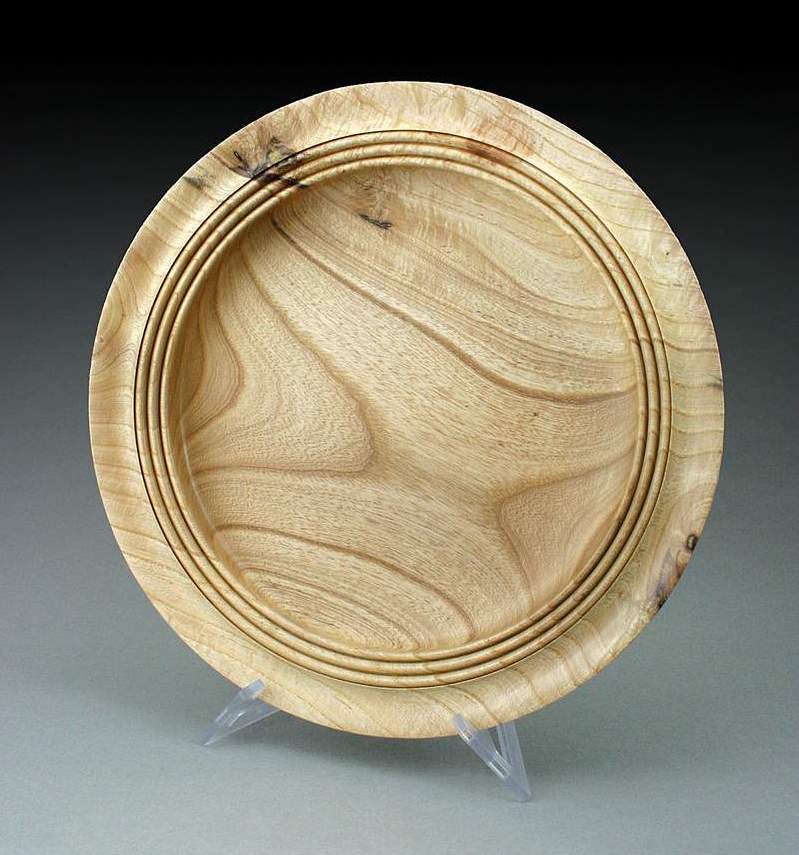
When I talk about details, take a look at the post two below this one where Molly Winter has a picture of a platter. The bead and associated detail around the bowl portion of that platter would never survive my current sanding techniques (or lack thereof).

Thanks again for your advice and guidance. Much appreciated.

Doug

Re: Over Sanding

#9

24 grit doesn't crease ( :

John Lucas

>

Re: Over Sanding

#10

Years ago...

DWR

>... I watched Dennis Stewart use a cabinet scraper on a closed hollow form (at slow speed... he was demo-ing a Hegner Bowl Lathe) and I was amazed at how well it did...

Re: Over Sanding

#11

Re: Years ago...

John Lucas

>I saw clay Foster demonstrating that technique and have used it on some bowls and vessels. The curved cabinet scrapers are good for getting tool marks out of the inside of bowls.

I had to clean up a 100 year old bowl that had been saturated with oil. Sandpaper wouldn't touch it, it just clogged the paper. The bowl had been turned green and was out of round so I couldn't put it on the lathe. I used the flat and curved cabinet scrapers to clean it up. It looked great when I got done.

Re: Over Sanding

#12

Keith Tompkins

Re: Over Sanding

Keith Tompkins

>Hi DD. Good responses here. A couple of more points...the area between a cove and bead is called a fillet. the fillet creates a break between the two features, and creates the shadow line mentioned in some previous posts.

This fillet must be cut exceedingly cleanly, since it cannot be sanded without affecting the detail. A skew or detail gouge will work, but not a parting tool..the cut is too rough. To complicate matters, the necessary cut is an "unsupported" cut...a cut started with no bevel rubbing for support.

when I sand beads or coves, I don't touch any detail or sharp feature at all....it must be turned to size and final finish. The solution is many hours of practice..

Re: Over Sanding

#13

Re: Over Sanding

Ken Grunke from SW WI

>What others said about tool technique, with an exclamation point. Whenever I use anything less than 220 grit, it always creates extra work for me, and sometimes very frustrating it is when you get to the final grit and see sanding scratches from using 150 and you have to start all over again. I was well motivated to practice my tool technique, and try to get a nice finish with the tool itself so I can start with 220 or even 320. Sanding time is cut immensely by having sharp tools and proper technique. I have a way to go, still have trouble with the sharp little details especially since my eyesight isn't as good as it used to be.
