WoodCentral Forums

Est. 1998 — 27 years of woodworking knowledge

Ebonizing

Posts

Ebonizing

#1

Ebonizing

Russ

>The one factor that nobody has mentioned is RUST.

The more rust in the solution, the darker the black. A good solution is half and half steel wool and very rusty nails. The rustier the better.

If there are no rusty nails, Rinse the oil out of the steel wool and leave it outside to rust.

Re: Ebonizing

#2

Re: Ebonizing

Duane C.Leach

>Russ from experience I don't think rusty nails makes any difference. By useing very fine (oooo) steel wool the vinager reacts to more surface area.Disolveing more steel into liquid. Anyway it works for me.

Re: Ebonizing

#3

Re: Ebonizing

Russ

>Try som rust (iron oxide). You might be surprised with the results.

Re: Ebonizing

#4

The hardware guy thought I was crazy !

Fred in NC

>they don't have any rusty nails....

Re: Ebonizing

#5

Re: The hardware guy thought I was crazy !

John Lucas

>Fred

I used salt and lemon juice to make rusty nails. I needed them for another project and then since I had the rusty nails I tried the anodizing on some ash. It only turned the ask dark brown but turned Oak black. I've heard others say ash turns black. That was my only experience with this mixture.

It's funny how I can get a tool to rust in heartbeaat but actually had to work to get the nais to rust.

Re: Ebonizing

#6

Re: The hardware guy thought I was crazy !

John F

>Its my understanding that the mixture needs tanin to react to, if needed I think you can coat the wood with a strong tea mixture to make it darker.

Re: Ebonizing

#7

Re: The hardware guy thought I was crazy !

Fred in NC

>now the grocery clerk will think I am crazy !!!

Re: Ebonizing

#8

Re: The hardware guy thought I was crazy !

Dave MacLuskie

>I can see LOML now.. "Watcha making?", "Oh, just some rusty tea to pour into the new bowls I just made..."

Re: Ebonizing

#9

Re: The hardware guy thought I was crazy !

John F

>I think it would be better to apply the tea to the wood then the rusty vineger solution.

Re: Ebonizing

#10

Is there a good use for

Fred in NC

>cream of chicken soup as a finish?

Maybe will look like bleached wood....

Re: Ebonizing

#11

Re: Ebonizing - Sam Simpson's Advice

Garrett in Victoria BC CA

>Here's a soon-to-be-published WoodCentral article that might help:

"Ebonizing Walnut

By Sam Simpson

A number of home brew dyes work with varying results. Most involve dissolving iron filings in vinegar (or some other acid). Steel wool pads seem to work well. Add a little water to the resulting solution and it will react with the tannic acid in the wood and turn it black.

A much easier way is to buy aniline dye.

My better ebony jobs always include the use of both aniline dye and lamp black in oil. I dye the wood with aniline dye first, then seal with a coat of whatever the finish is to be. Then glaze using oil based glaze. The glaze is made by mixing some of the lamp black in oil with a little varnish and BLO. Aniline dye directly on wood tends not to be evenly colored enough for convincing results and the glaze helps me to get the look just the way I want it.

When the glaze is dry, I finish on a normal schedule of varnish or lacquer, choosing a dead flat sheen for best effect."

Cheers, Garrett
Re: Ebonizing

#12

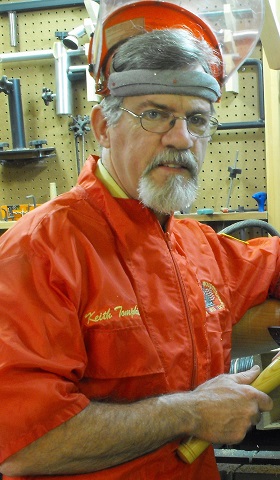
Keith Tompkins

Re: Ebonizing

Keith Tompkins

>ask your mechanic for the shavings from machining brake rotors.....then HE'll think you're crazy too!

Re: Ebonizing

#13

Re: Ebonizing - Sam Simpson's Advice

Duane C.Leach

>You are missing the point of this type of ebonizing. If I wanted a bowl all black I would have started with all black wood. The point here is to start with a light colored wood ( maple or cherry, white oak ) and turn only some of it - at random - black. Streaks of black or dark gray that penetrate from the outside to inside mixed with light wood color. This is not a surface tretment like dyies or stains that are applied to the surface of dry wood. This method if done correctly will some what imatate spalted wood with thin black lines running at random through light colored wood. It's a natural look that can't be darwn in by hand.

👍 This page answered my questions

Your vote helps other woodworkers quickly find the answers and techniques that actually work in the shop.