Home Articles Forums Gallery Marketplace Videos

WoodCentral Forums

Knowledge You Can Build On — Est. 1998

Entry hall table for a niece: Part 11

Posts

Entry hall table for a niece: Part 11

Edited #1

Entry hall table for a niece: Part 11

Derek Cohen (in Perth, Australia)

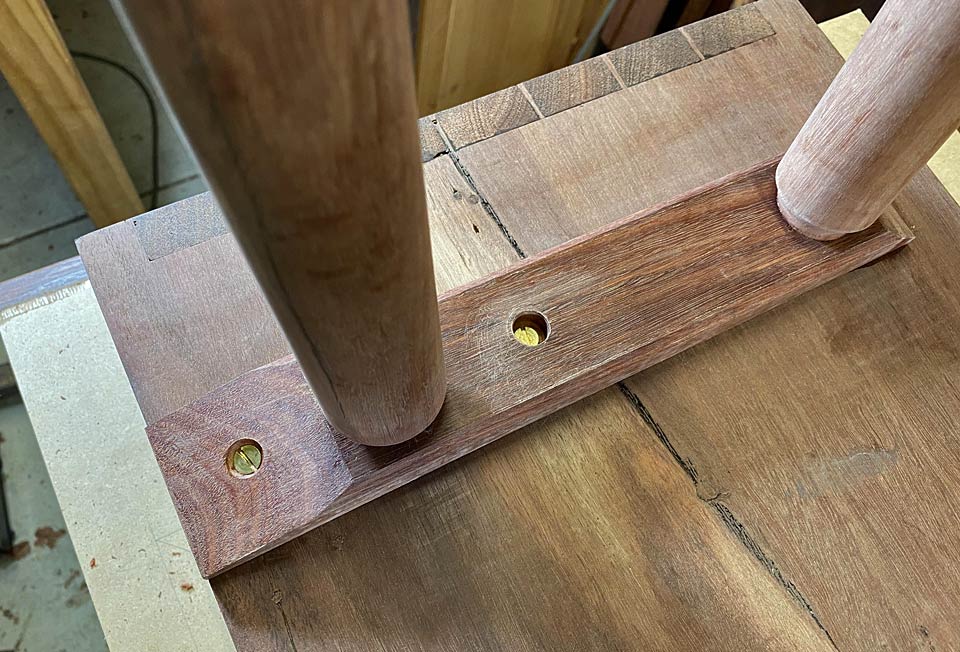
The process of attaching of the legs was completed by the addition of two screws in the sliding dovetail base.

Why add screws? The screws are not to prevent the base sliding back (an elongated hole actually encourages this). It is just to prevent the base twisting in, and breaking out of, the socket since there is no glue there to prevent any lateral movement.

The force comes from the splayed and angled legs. They will want to cant outward, and this becomes more so when the three drawers are filled and a vase of flowers is placed on the top of the table.

I thought that it is worth mentioning the screws used and how they were inserted.

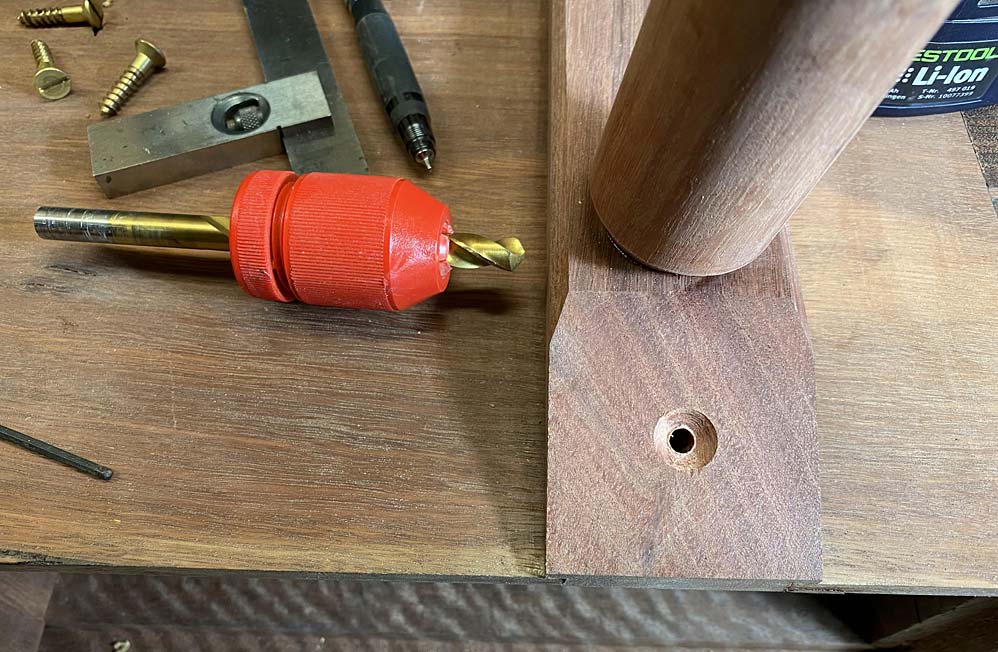
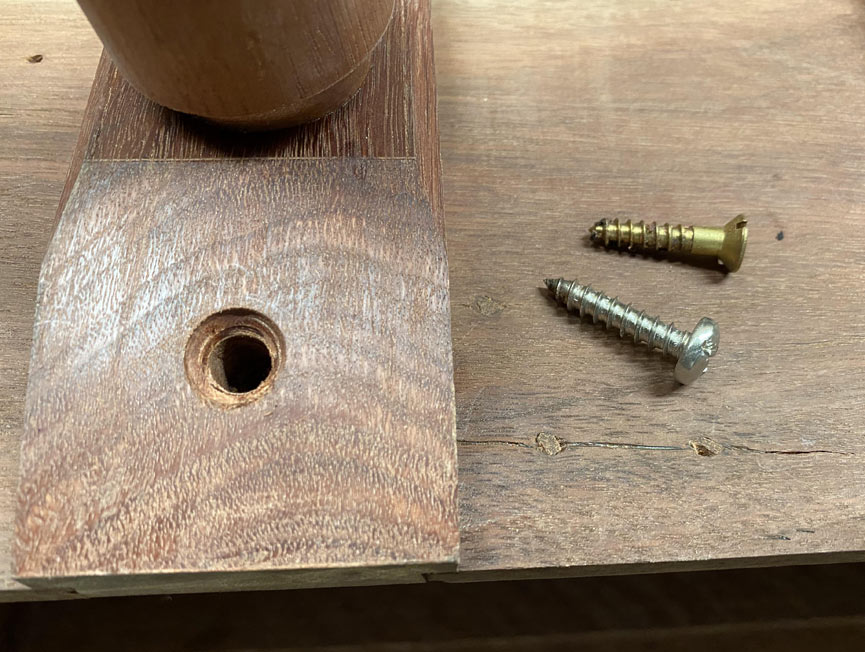
The screws are 1" long brass tapered wood screws. The drill bits are also tapered to match. These ones include a countersink and depth stop.
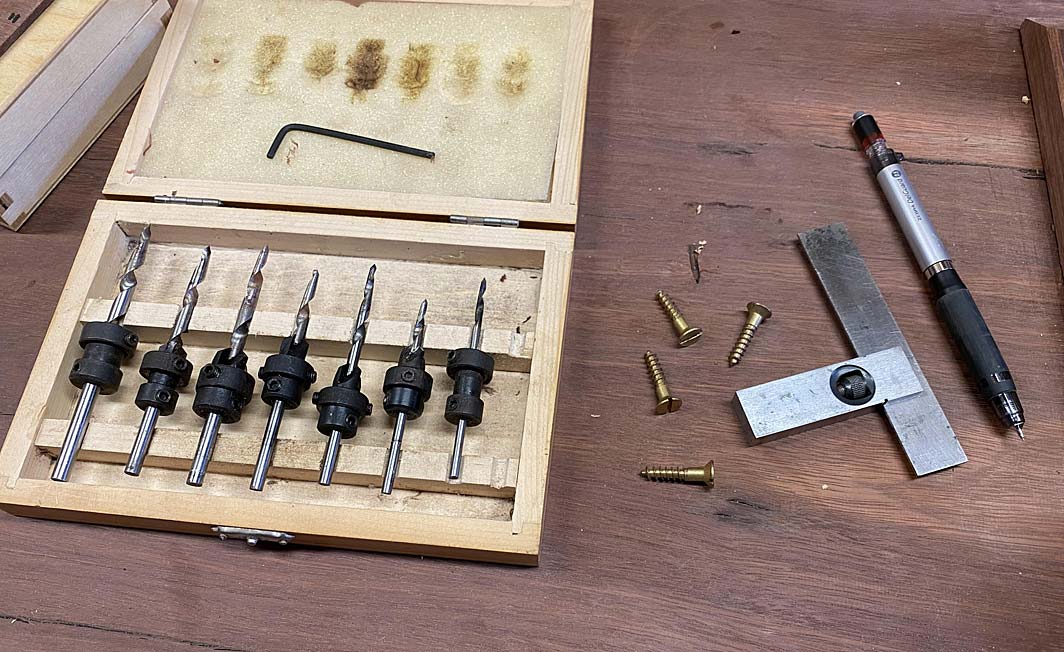

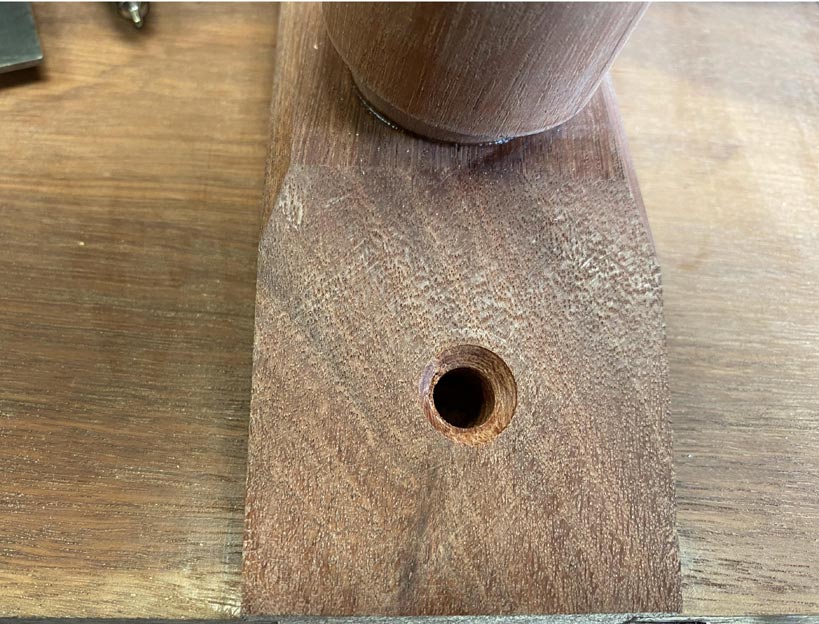
The plan is to drill the hole for the screw through the base and into the case, and then widen the hole in the base. This will permit the base to move with expansion and contraction. In this case 2mm each way.

A wider drill bit (and depth stop) ..

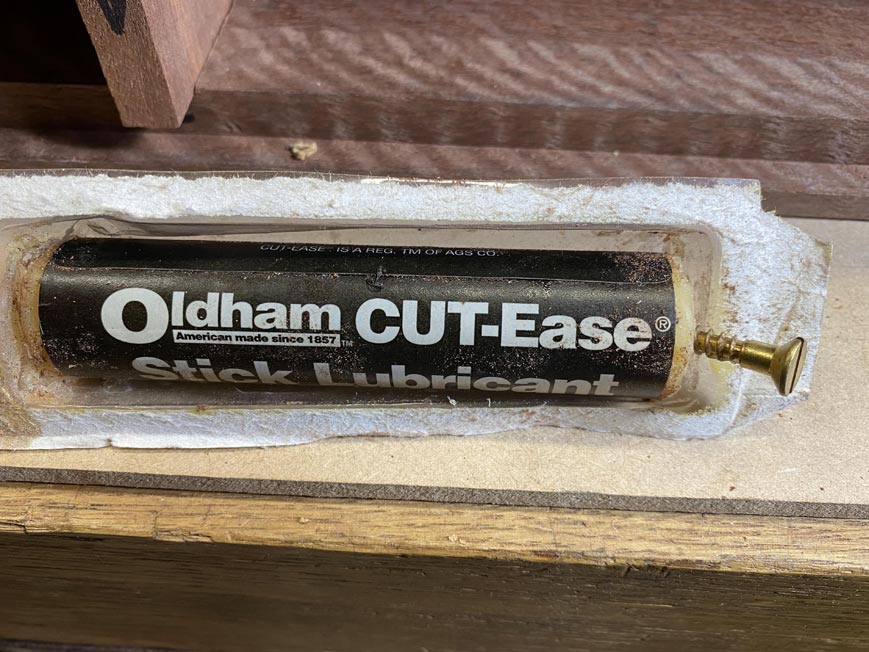
Before inserting a screw, especially brass screws, they are dipped in a little wax. This is wax for lubricating bandsaw blades ...

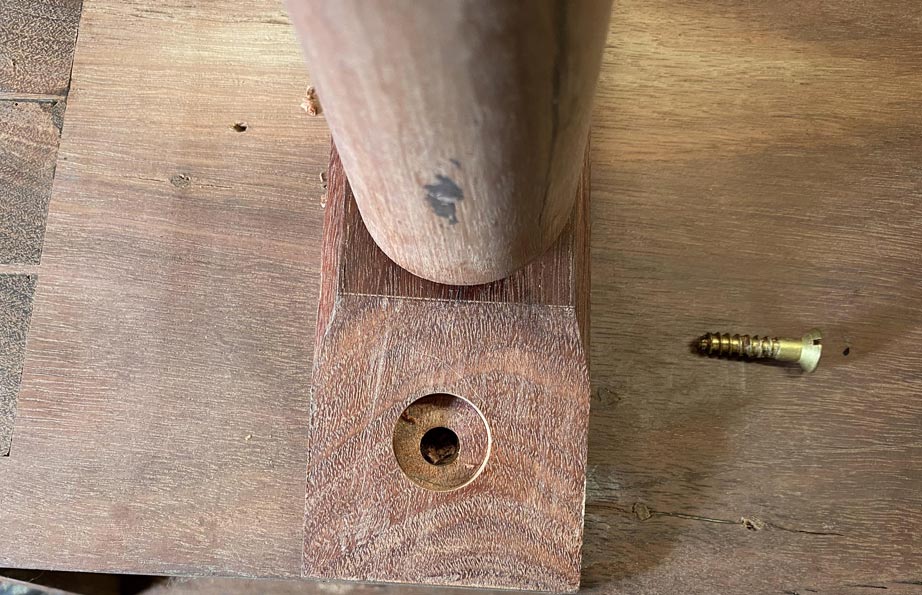
Here is the widened hole ...

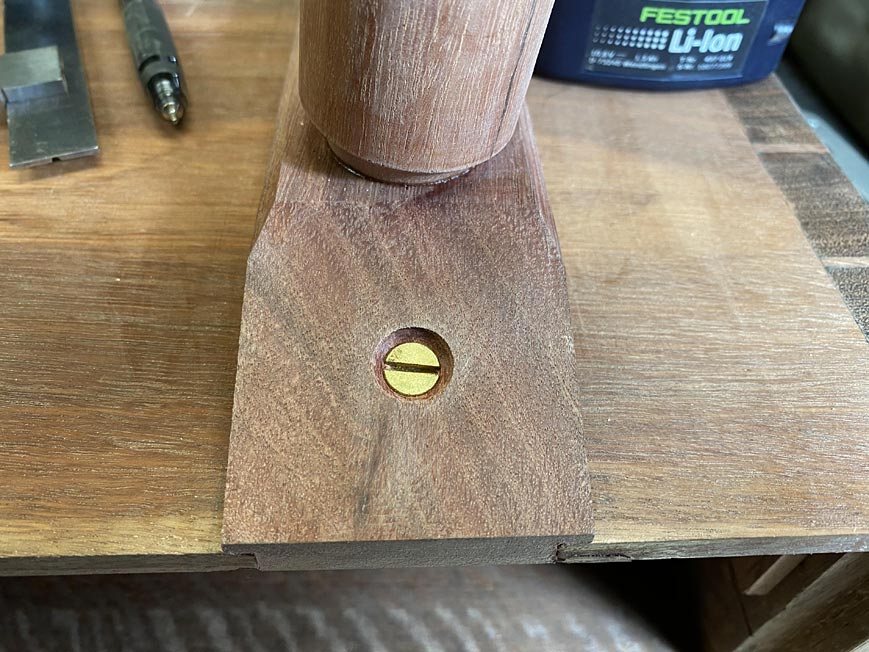
The gap around the screw ...
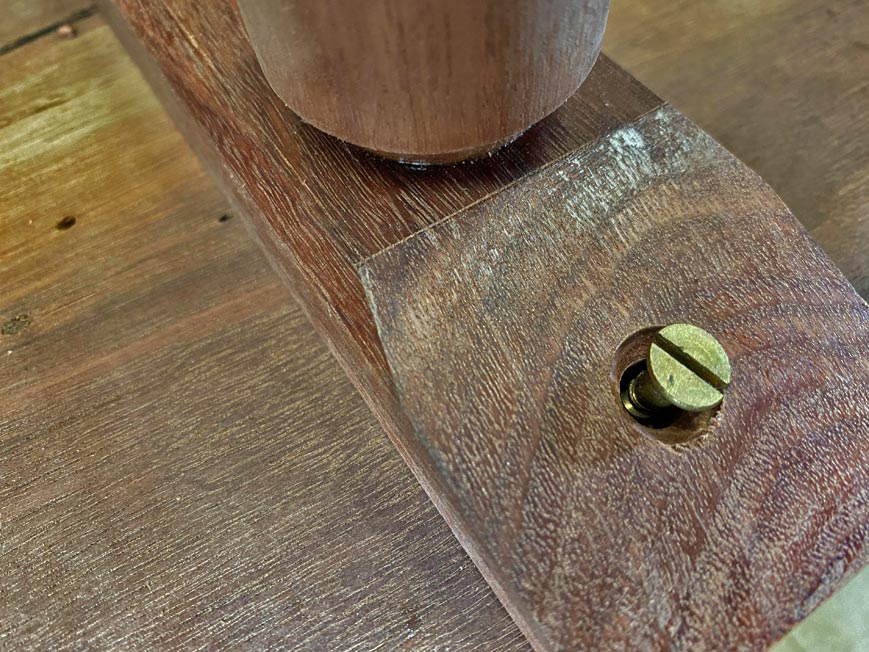


The second screw is on the other side of the leg. This is positioned about half way between the end screw and the glued toe.

Regards from Perth

Derek

#EntryHallTable
Re: Entry hall table for a niece: Part 11

#2

Re: Entry hall table for a niece: Part 11

Wiley Horne

Hi Derek,

All these posts are very interesting, because of the photos and your degree of ‘why’ and ‘how’ detail.

My question: Why use brass screws? Is it because of tannin in the wood, that you don’t want reacting with the iron in steel screws?

Thanks, Wiley

Re: Entry hall table for a niece: Part 11

#3

Re: Entry hall table for a niece: Part 11

Derek Cohen (in Perth, Australia)

Wiley, I am happy to use steel. It just happened that the size/type to hand I believe needed was brass. No one will ever see them, except for the groom’s father, who is a very keen amateur woodworker.

Regards from Perth

Derek

Re: Entry hall table for a niece: Part 11

#4

New screws

Derek Cohen (in Perth, Australia)

Okay, so I decided that the wood screws were a mistake. They would prevent movement rather than permit it. So they had to go.

This is the exchange screw: a 12 gauge stainless steel wood/metal screw with an all-important flat/domed head.


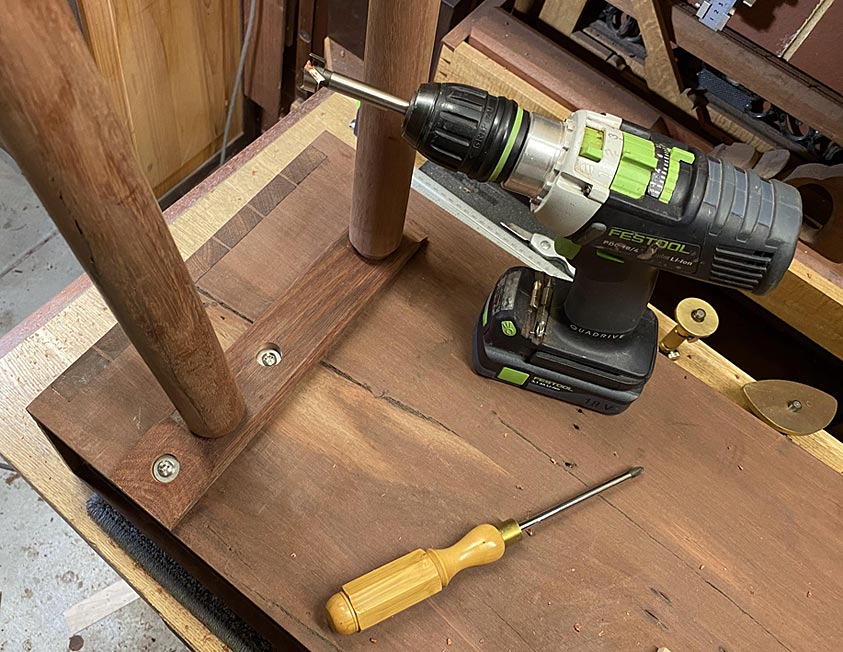
The plan was to use a 3/4" forstner bit. This would leave a wide, flat area for the screw head to move along. The range of movement would be the same as before, about 2mm each side of the screw.

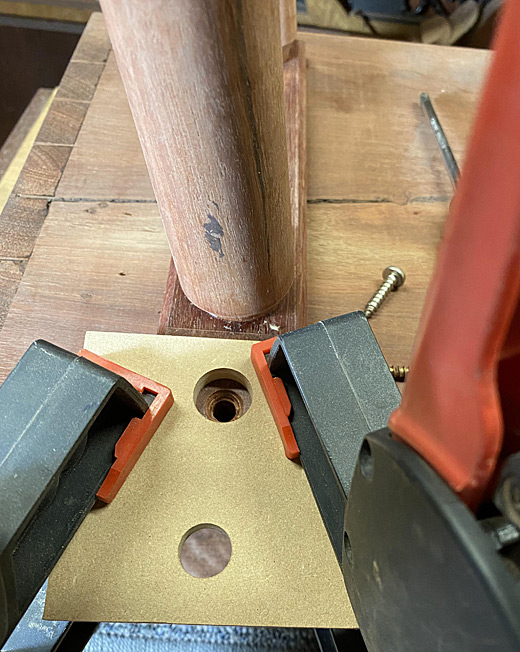
A MDF template was made to guide the forstner bit, as it had no support in view of the existing hole ...


Drilled to depth ...


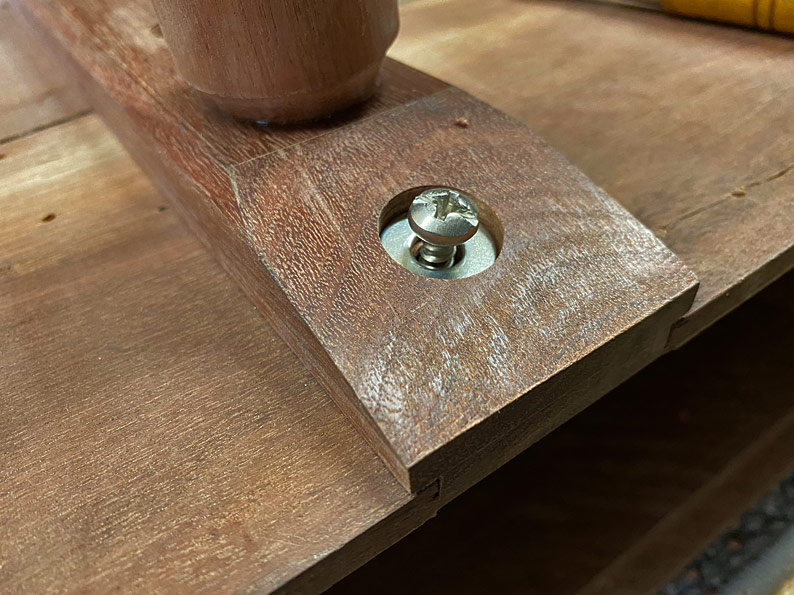
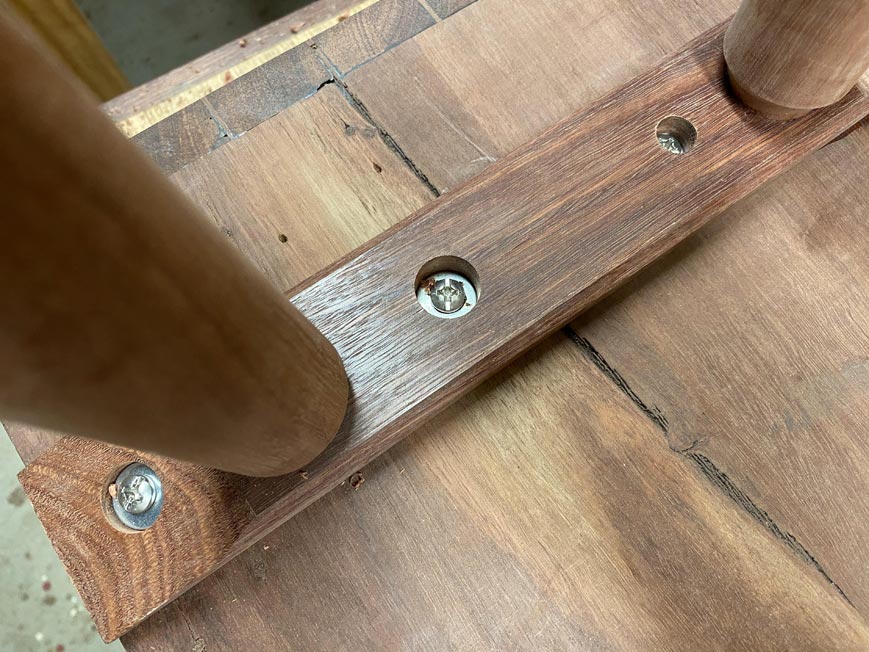
A steel washer added ...


Done ...


I had only 15 minutes after work today, but on the weekend, when I get back to this build, I plan to add a third screw behind the front leg.

Regards from Perth

Derek

Re: Entry hall table for a niece: Part 11

#5

Re: New screws

Les Groeller

So using the same theory as in tabletop movements?

Re: Entry hall table for a niece: Part 11

#7

Re: Entry hall table for a niece: Part 11

Jim Matthews

From the original text,

"Why add screws? The screws are not to prevent the base sliding back (an elongated hole actually encourages this). It is just to prevent the base twisting in, and breaking out of, the socket since there is no glue there to prevent any lateral movement."

Is this concern due to the clearance height? Would "sliders" under the feet alleviate this stress, were the sideboard dragged across the floor?

Brian Boggs provides his kitchen chairs with a leather or PTFE glide.

Re: Entry hall table for a niece: Part 11

#8

Totally screwed

Derek Cohen (in Perth, Australia)

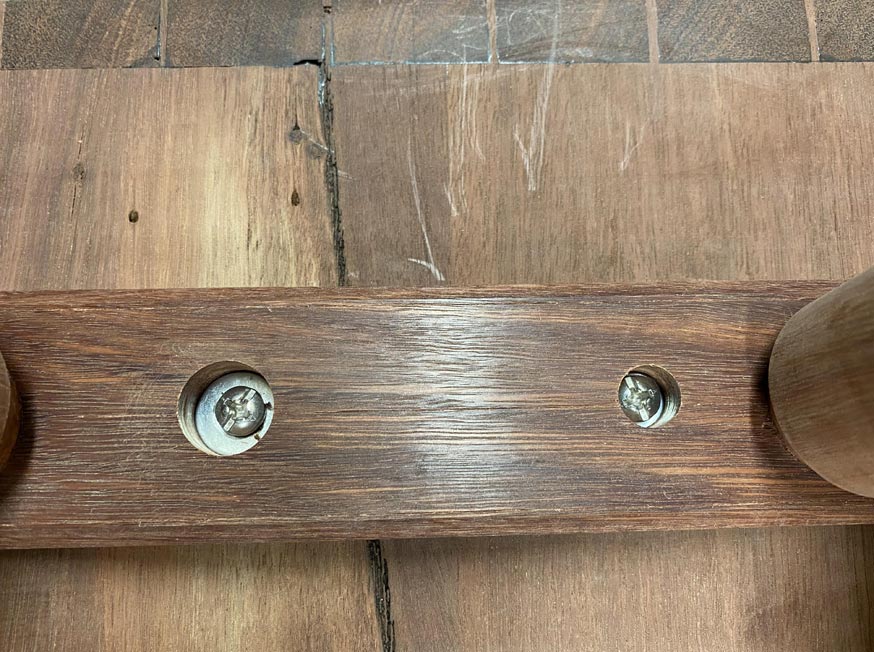
I put the last screws in after work. That will free up this weekend to concentrate on building the drawers.

There are three screws. The one at the toe is fixed and there is no play for any movement. The two at the rear can slide 2mm each way.


Regards from Perth

Derek

Re: Entry hall table for a niece: Part 11

#9

Re: Entry hall table for a niece: Part 11

Derek Cohen (in Perth, Australia)

From the original text,

"Why add screws? The screws are not to prevent the base sliding back (an elongated hole actually encourages this). It is just to prevent the base twisting in, and breaking out of, the socket since there is no glue there to prevent any lateral movement."

Is this concern due to the clearance height? Would "sliders" under the feet alleviate this stress, were the sideboard dragged across the floor?

Brian Boggs provides his kitchen chairs with a leather or PTFE glide.

Jim, the "twisting" I referred to is the leverage placed on the base by the legs, which angle away from the base. Because the legs are very firmly attached to the base, if the legs twist (which is the threat imposed by weight on the table top) they lever the base along with them. While the base is attached with a sliding dovetail, if enough force is applied to it, it could break out sideways (laterally). The screws are to prevent the base twisting over. The base is still free to move along the sliding dovetail (longitudinally), just not free to move laterally.

Regards from Perth

Derek

Re: Entry hall table for a niece: Part 11

#10

Re: New screws

TomD

I prefer screws in wooden cleats that go into slots on the bracket. There a metal cleats but I never liked the look of them, still it all required hardware.