Home Articles Forums Gallery Marketplace Videos

WoodCentral Forums

Knowledge You Can Build On — Est. 1998

Coloring wood

Posts

Coloring wood

#1

Coloring wood

Jeremy Osner

I want to put color on part of this neck. My idea was just to mix dry pigments with turpentine, and paint them on the bare wood. But now I'm wondering if that will work at all. I was thinking the solvent would get the pigment into the wood, and then I could put varnish or Tru-oil on top of that. Will that work? Maybe I should try aniline dye instead. Or maybe should mix the pigments and turpentine with varnish.


img

Re: Coloring wood

#2

Re: Coloring wood

AlanWS

A dye will dissolve in the right solvent, and then can soak into the wood, to later be covered by finish. A pigment remains as particles that do not dissolve; while some of them will lodge in crevices when applied merely with solvent, most would simply fall off. So pigment needs some kind of carrier, like a varnish, to glue it to the surface.

Why would you choose one or the other? A dye will obscure the grain of the wood less, but it is more susceptible to fading over time on exposure to light. Uneven absorption can lead to blotchiness. A pigment is more light stable, but more care is needed to make the surface roughness very even, as it can highlight scratches, open grain, and uneven surface in general.

One way to color evenly without obscuring the grain is toning. You first seal the wood with finish, then apply dye color on top. This avoids any blotch, and can be protected by further finish layers.

Re: Coloring wood

#3

Re: Coloring wood

Jeremy Osner

Thanks! sounds like I should tone the wood with a a coat of clear varnish, then after that dries I can sand it and do a coat with the pigments dissolved and mixed into the varnish. (Could I use Tru-oil in place of varnish?)

Re: Coloring wood

#4

Re: Coloring wood

Jeremy Osner

I made a dye: 1/4 cup strong tea, plus a Tablespoon of turpentine with a pinch of raw umber pigment dissolved in it. Wipe on, let it sit for a couple of minutes, wipe off. It gives the wood a very nice color.


img

Re: Coloring wood

#5

Re: Coloring wood

Jeremy Osner

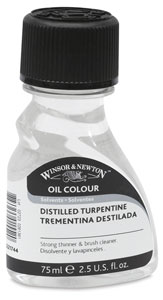
Note -- I used turpentine I got from an art supply store based on advice I found on a luthier forum. Not sure what the diff is from hardware-store turpentine -- purity? Anybody know?


img

Re: Coloring wood

#6

Clint Searl

Price


Re: Coloring wood

#7

Re: Price

Jeremy Osner

1/2 liter for $15, I guess that's a couple of times what turpentine costs in the hardware store...

Re: Coloring wood

#8

Re: Coloring wood

Jeremy Osner

I'm buffing the coats of stain with 400 sandpaper, steel wool and cloth -- it's getting a pretty sheen (interrupted in a couple of places by scratches that I missed in the course of sanding the neck :(


img

Re: Coloring wood

#9

Re: Coloring wood 


img

Re: Coloring wood

#10

Re: Coloring wood

TomD

1) It looks as though the liquid is clear to start with;

2) Is tea light stable and durable as you want it to be.

3) Are you actually conducting this experiment on a finished piece of your project, or did you try it out on scraps first?

Re: Coloring wood

#11

Re: Coloring wood

Jeremy Osner

Tea is not light stable and fades quickly, however the pigment is light stable. Tea is commonly used as a base for dye when coloring violin necks. The brown shade in this photo has already faded over the course of a week to a much lighter color. I'll be interested to see how the reddish brown color that I applied this weekend on the lower portion of the neck fares-- I used a lot more pigment in that dye and many coats.

I rubbed the dye on a piece of scrap before putting it on the cello, that is not really much of a test I guess.

Re: Coloring wood

#12

There are two turpentines

Ian Neuhaus

At a guess, the art supply store's "distilled turpentine" is distilled sap sourced from pine trees.

Turpentine from the hardware store is a petroleum distillate, sometimes described as "mineral turpentine"

Re: Coloring wood

#13

Re: There are two turpentines

John in NM

I would be very surprised by that, just based on smell. The turpentine I've bought at the hardware store has a variety of odors - sometimes absolutely awful, but always piney.... my guess is that its a southern yellow pine distillate, like other turp, just not as refined and thus cheaper.

Re: Coloring wood

#14

Art store turpentine

Bill Houghton, Sebastopol, CA

I had a small container of art store turpentine a while back, and was amazed to find how well it cut grease, compared to mineral spirits.

I haven't looked lately to see if my hardware store even stocks turpentine. They've taken to stocking a mineral spirits substitute that is just awful; I've been buying every can of real mineral spirits I find at yard sales, even if it's only partly full.

Re: Coloring wood

#15

Re: There are two turpentines

Jeremy Osner

The hardware store turp is marked "Pure Gum Spirits of Turpentine", I thought to use that language the product had to be distilled from pine.


img

Re: Coloring wood

#16

Re: There are two turpentines

Jeremy Osner

Now that I think of checking, the art-store product does not have that language on it. So who knows?


img

Re: Coloring wood

#17

Re: There are three turpentines

david weaver

The stuff at home depot is boiled from stumps or something, it smells like a petroleum product.

The stuff from art stores is slightly better, but not similar to old real pure gum spirits of turpentine.

There is a third type that will probably be similar to what some remember as a kid. I have found two sources for it - health food stores (apparently, people put it in their bath water - i have no idea why), and a seller from poland (I thin it was poland) on ebay. This is the only turpentine that smells like fresh pine when you open the container, and it has a persistent smell.

I'm sure the others will clean brushes, etc, and they may even make a decent varnish, but if you're doing something where you need true turpentine, or just want to treat yourself to the type that smells good....well, it's $18 a pint from poland or $35 in the united states (shipped).

Re: Coloring wood

#18

And there's Turpenoid too!

Tony - Memphis

My wife is an artist and she uses turpenoid. Had to look it up. One site says it is mineral spirits (derived from petroleum).

Confusing! If it ain't what it is, it should be called something else!

Re: Coloring wood

#19

Re: And there's Turpenoid too!

John in NM

I bet that is what Ian was originally talking about with the mineral turpentine.

I've had slightly better luck than David with hardware store stuff - some of it smelled pretty normal, then other cans smelled like it was made from logs that sat in a clam flat for a few years. Ugh!

I'm going to have to look in the heath food store (except there aren't any here!).... maybe I can get my sister to look for me, she's in Seattle and would be mildly interested in the question, being an art conservator.

Re: Coloring wood

#20

Re: And there's Turpenoid too!

david weaver

I probably spent about a half hour of time looking for any mainline brand that didn't have people commenting "smells sour, doesn't smell like turpentine from when I was a kid" or "smells like kerosene".

I couldn't find any - some of them had comments back and forth, but nothing consistent...except the really expensive health food stuff.

I just looked in the reviews and now there are people eating it because some blogger said it would kill candida internally :(

I saw the "bathers" talking about it in the version I bought. The unfortunate thing is that one of the people drinking it posted on the kleen strip listing, and i'm sure that's not made with consumption in mind.

A third poster talked about using the expensive stuff for aromatherapy. It does smell good, but I thought it was toxic! If it gets on your fingers, the aroma has serious staying power. If my son manages to get is fingers in it, he's running around smelling his fingers all night. I don't allow that, but he saw me spill some and ran over and put his hands in it right away. I wasn't even in the house - he's definitely not going to be shop safe while he's a minor at the rate he's going.

I misstated the origin of the only reasonable cost "piney" turps that I found - it's portugal, not poland. $18 for half a litre.

not sure what the function of it is in a gum and dammar resin varnish other than as a solvent, and not sure why the varnish makers are so particular about it, but I don't want to waste several hours to find out, just to save $6 or $7 on a $40 batch of varnish.

Re: Coloring wood

#21

Re: And there's Turpenoid too!

John in NM

Strange, I've never had hardware store stuff that smells either sour or like kerosene. I've had a few cans (out of a few more cans, since I don't use it much) that smelled very pungent on top of the pine smell. But that went away quickly on use, leaving the much stronger pine smell that stuck around for a couple hours.

This was KleanStrip or some other normal brand you pick up at Home Depot or whatever the local hardware place is. I'd always assumed that they just did a lot less refining than they used to, in order to skimp on the bottom line, so some of the nastier smelling volatiles were still in there.

I've read that turpentine was some kind of home remedy - after the days of drilling holes in the head to let out evil spirits, but before the days of antibiotics. Reviving stuff like that just proves PT Barnum right - but I still might look around for a more refined version.... if only they had one for feeding to the cows - then I could pick it up at the local feed store with the mineral oil! :D

Re: Coloring wood

#22

Question

John in NM

Did you try some Sunnyside brand? I see it around in some of the rural hardware stores out here, and once saw some raw linseed that one ordered by mistake. A couple years later I realized I should have bought that to play with, after reading Stephen's book on oil & other finishes. They still make stuff like raw linseed and gum spirits, but you have to go through Amazon to get it any more - or talk a hardware store into ordering you a case to try out a can :\

I went and looked on Amazon, and the only negative reviews were from a guy comparing it to herbalist quality stuff (roll eyes) and a guy in California who was using the review to complain about CA regs.

My favorite turp is a can I saved from my Dad's house in Tucson. Its an old can of Standard Brands and smells great - I save that for thinning linseed oil, just to make it fun to use. I also have a dipping bucket of linseed for the little bit of production work I still do - had to get a big can of mineral spirits for that.... maybe I should have ordered a 5 gallon turp from Sunnyside :D damn hindsight, eh?

Re: Coloring wood

#23

Re: Question

david weaver

Our local Do It Best carries sunnyside. It doesn't smell like the turps from portugal or the health food stuff.

It's possible that it may vary, it has more of a distillate smell here. If I ever find a quart or gallon there and it smells like fresh pine, I'll be leaving the store with it.

I've never even bothered with the kleen strip due to suggestions to avoid it, but I'd bet that both sunnyside and kleen strip are fine for cleaning brushes and doing things most people do with turps.

They may even make decent varnish, but I wasn't willing to risk it, and have to admit that the pine scent from the resin and turps is something I don't want to do without on the next batch of varnish.

For anyone thinking of making varnish for anything else, the fact that it needs sunlight to cure might be a real problem with furniture. It's easy to stab a screw somewhere invisible on a guitar body and hang it from a flower pot post in the sun, but getting a bookcase in the sun (and not having a million gnats find it in the first few hours) would be more of a chore. I can see bugs landing on the side of a guitar body, but it's hanging vertical, and there's not enough stick in the varnish for them to get stuck on it.

It sure does cover and build fast, though, and the color is really desirable on cherry - even better than amber shellac and more lively looking (it doesn't penetrate as much).

Re: Coloring wood

#24

Re: Question

John in NM

Now I'm really tempted by that "medicinal" stuff.... I still may track down a quart of Sunnyside to see how it compares to my old can of Standard Brands.

Re: Coloring wood

#25

Re: And there's Turpenoid too!

Don Wagstaff

In fact when my goats get a bad case of worms I mix up a recipe from my old Henley's bible using the sap based turpentine. But look, going now back to my schooling days, the topic here at its foundation is going on and on about two distinct products, one, the older, distilled from tree sap and it is determined that the tree giving the highest quality, this qualification coming from the old violin makers and what they used as finish on their strike instruments, is from Larch, http://eol.org/pages/1061656/overview. The other was first marketed as a cheap alternative by Shell Co. and it a distillate of crude oil. When you get the one it is obvious from the smell, when you get the other and the smell is ambiguous probably that indicates additives meant as extenders to basically cut back on production costs and when you get the good stuff taken from tree sap 100% you know it because it smells so lovely and is in that way somewhat addictive.