New WoodChat!
Home Articles Forums Gallery Marketplace Videos

WoodCentral Forums

Knowledge You Can Build On — Est. 1998

Rare Exotic & Domestic Hardwoods, Milled In-House in Oregon. Browse Unique Stock.

Trestle table continuation

Posts

Trestle table continuation

#1

Trestle table continuation

Brian Holcombe

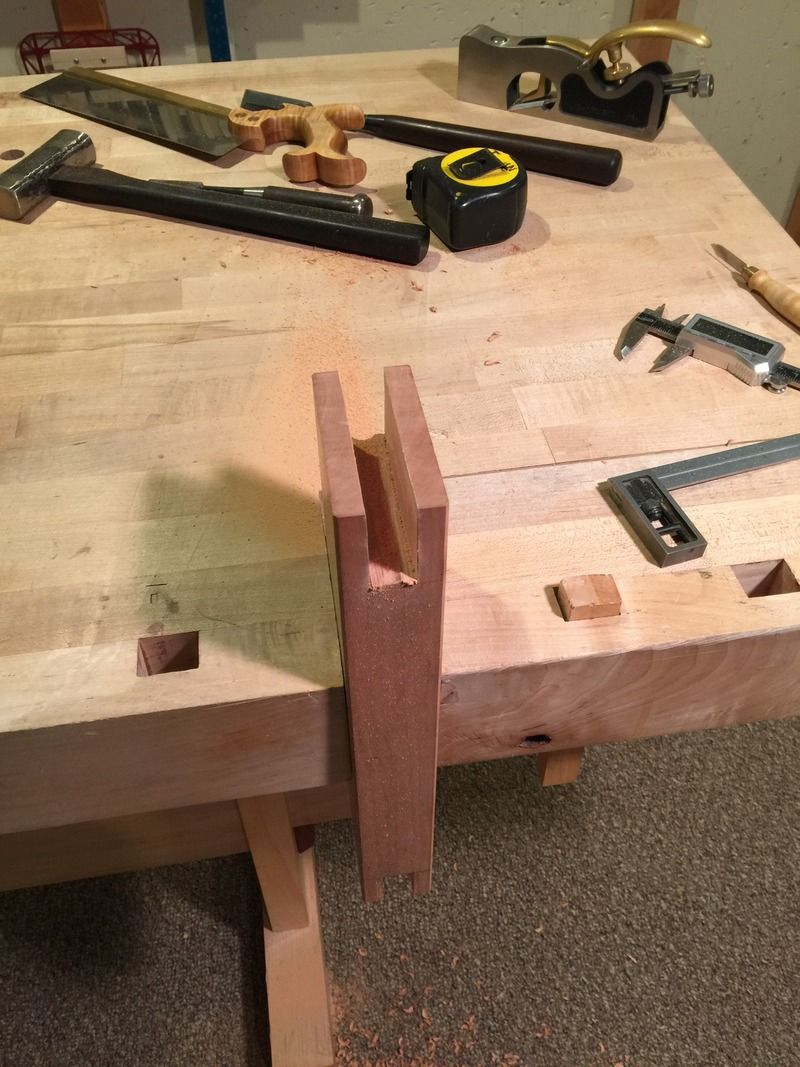
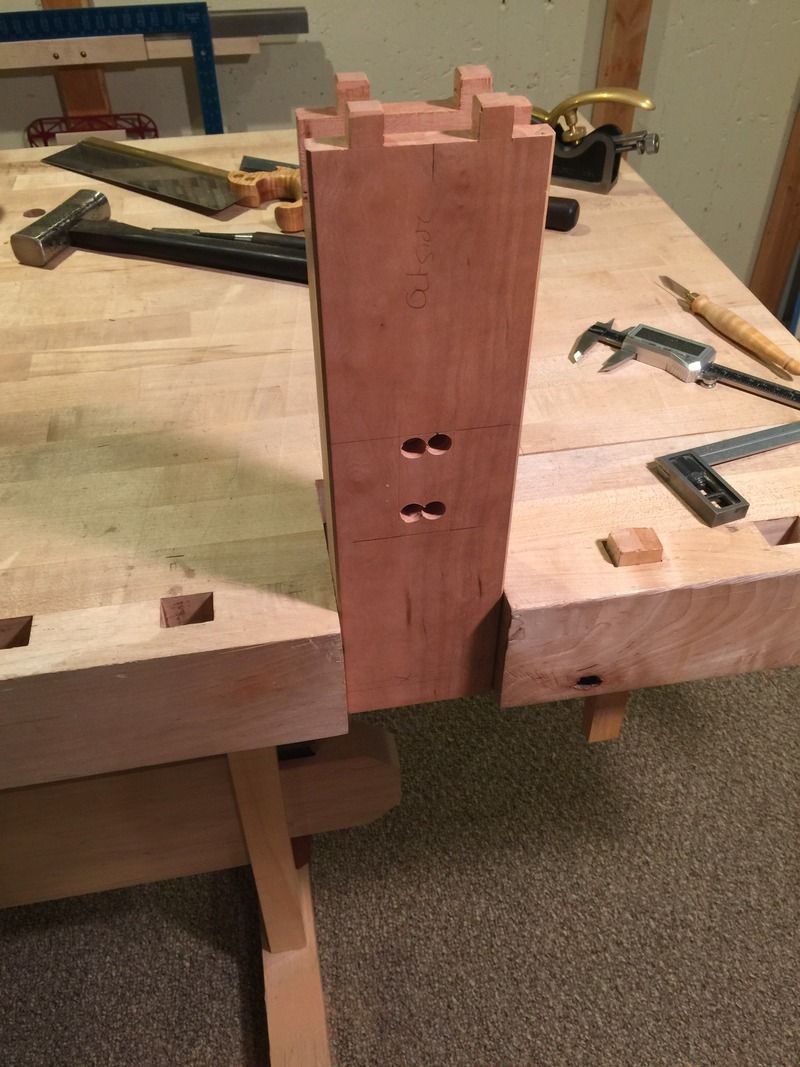
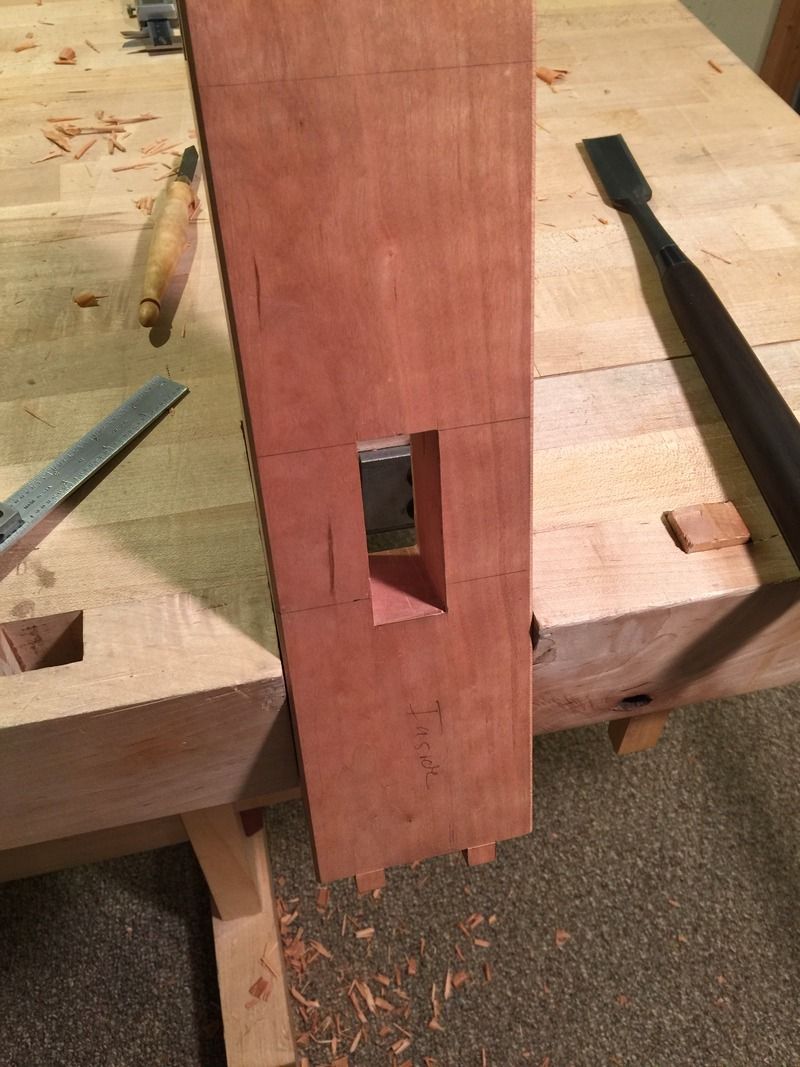
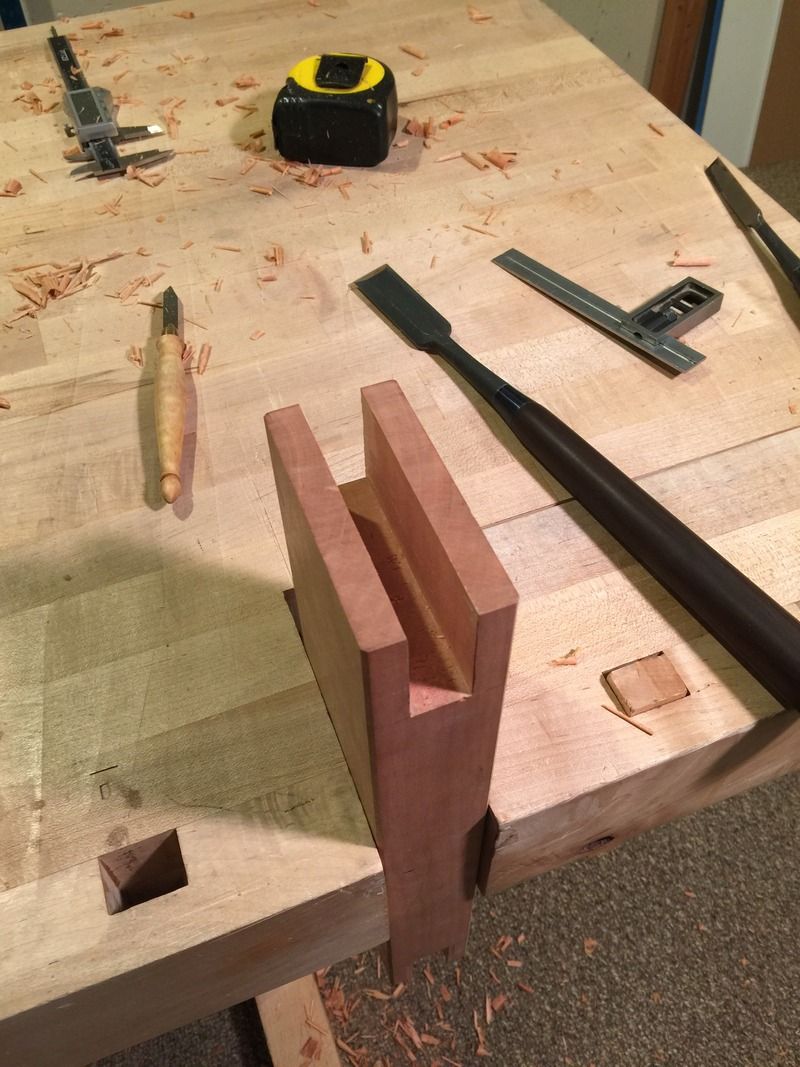
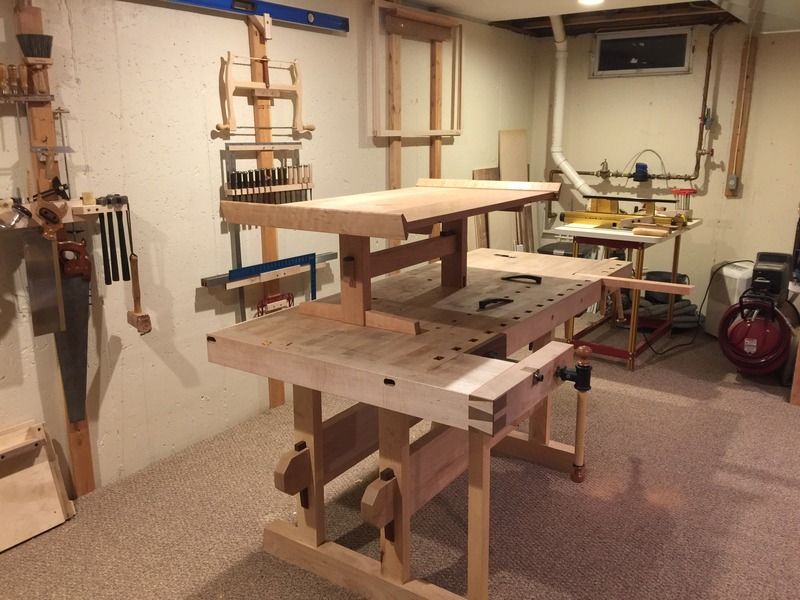
Moving along here with the legs;

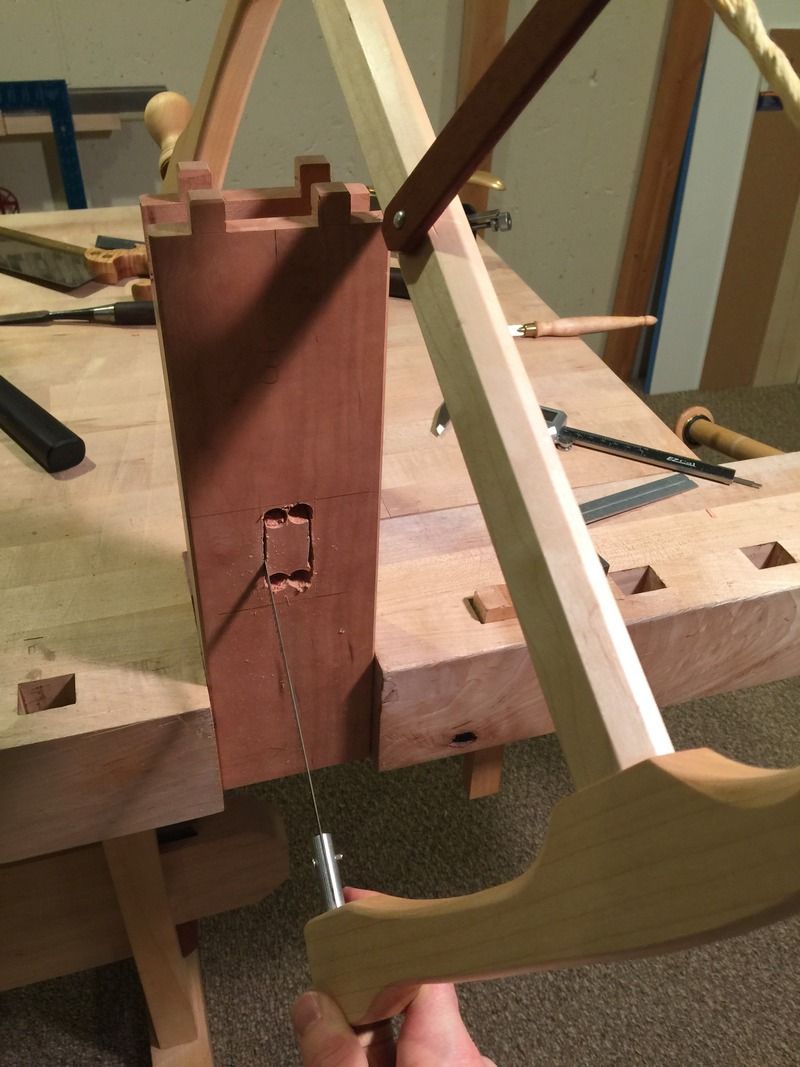
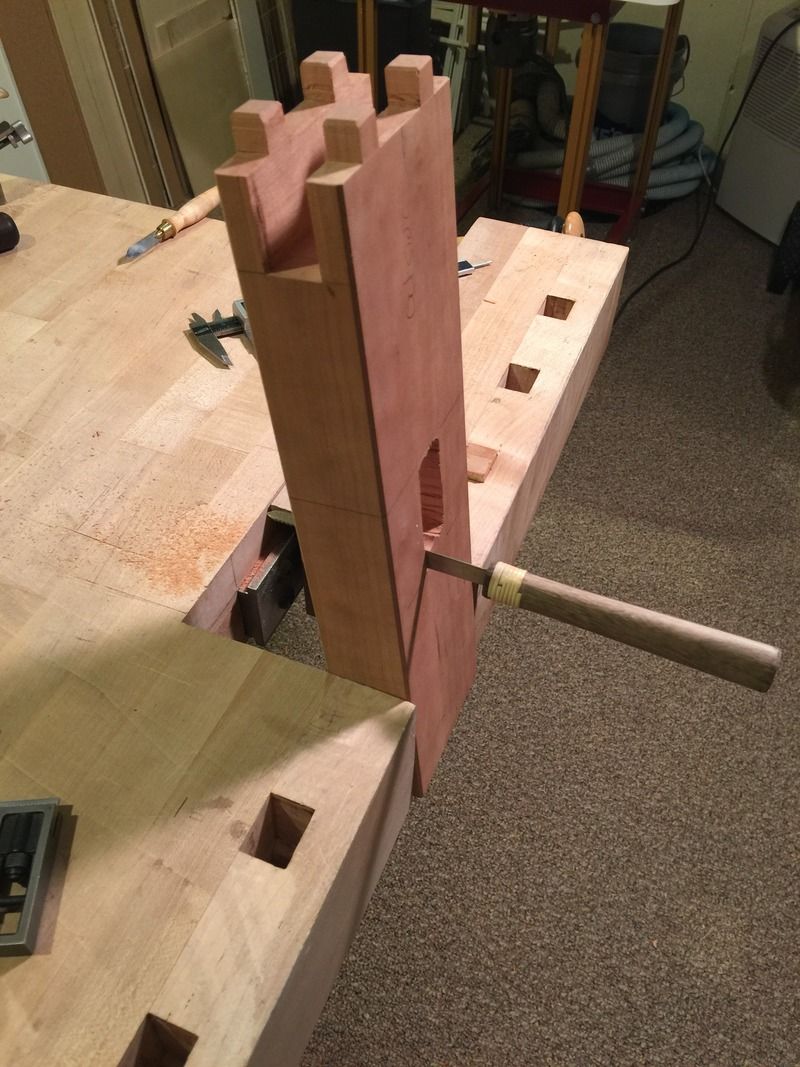
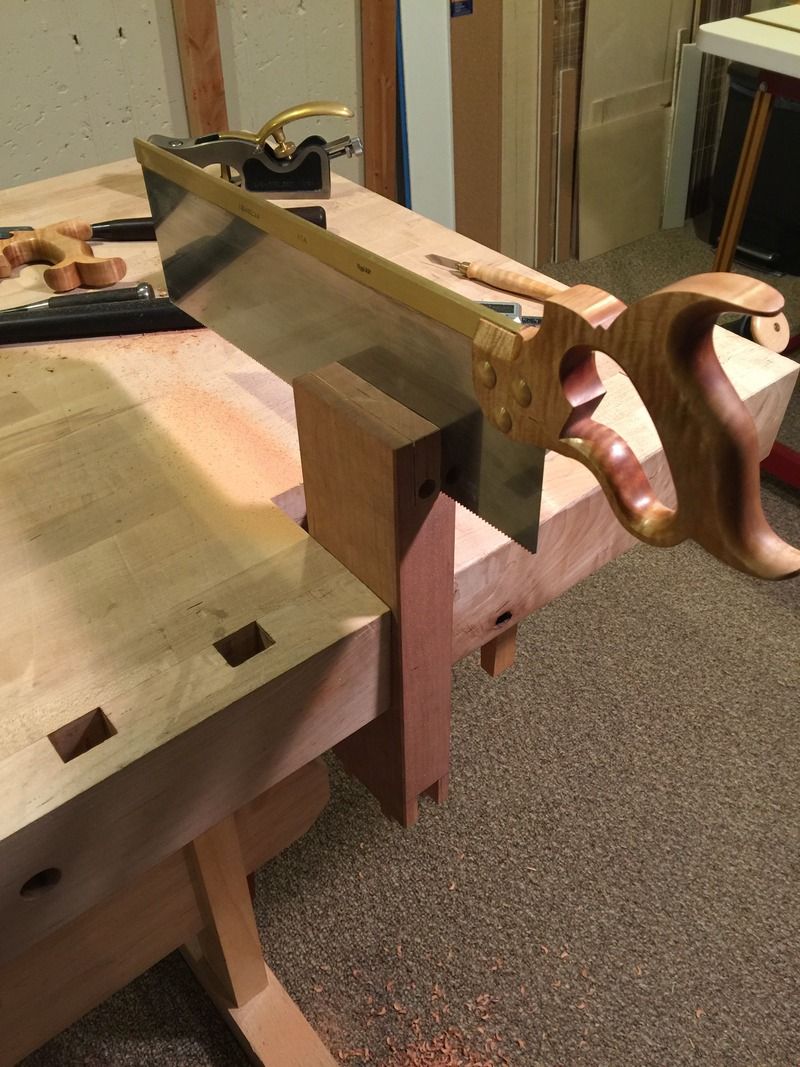
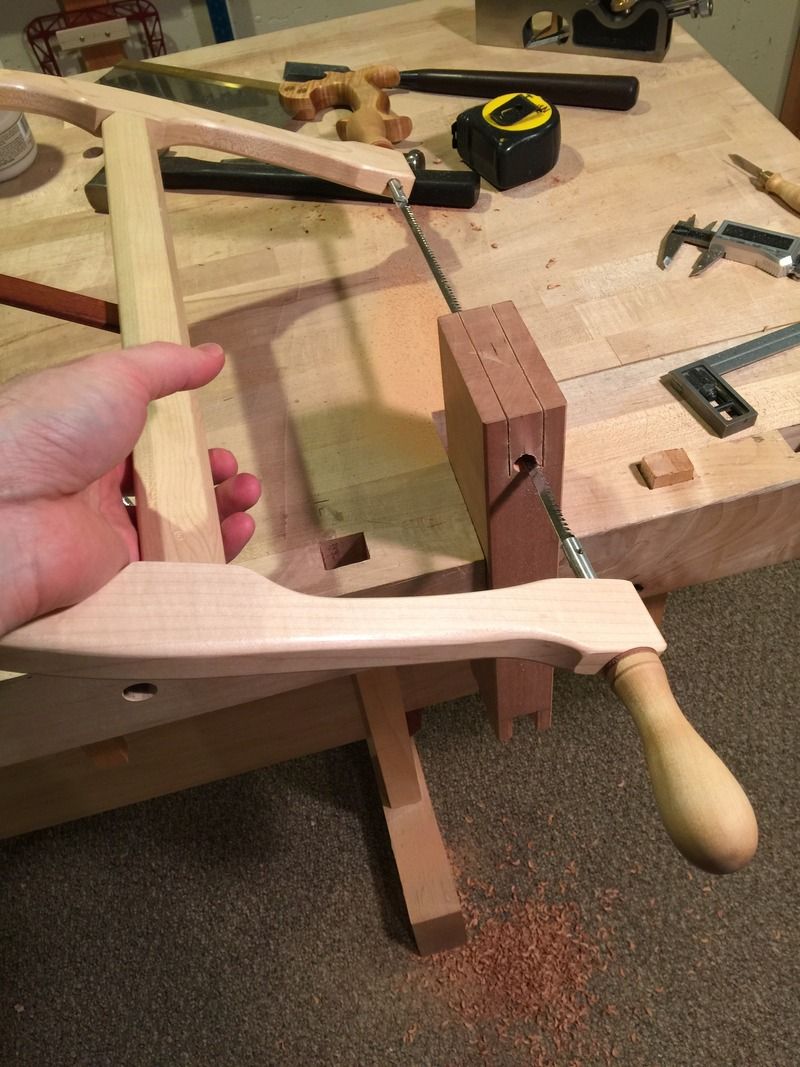
Cutting bridle joints for the feet.....finally figured out that I can drill a hole through the waste and use the bowsaw to knock out most of it


One wedge is left long because I want to knock everything together tight for final assembly, then adjust the wedge to fit the other.

Re: Trestle table continuation

#2

Re: Trestle table continuation

Bill Houghton, Sebastopol, CA

Nice build progress post. Thanks!

Re: Trestle table continuation

#4

Re: Trestle table continuation

Bill Houghton, Sebastopol, CA

I find the "lift" at the ends of the table interesting, a very contemporary expression of that Oriental (Chinese? Japanese? I'm terrible with remembering these things) detail. Were I to make such a table, I would probably adopt the subtle curves on other examples; but I appreciate the creativity of your approach.

Re: Trestle table continuation

#5

Paul Kramer

Question about your bench

Paul Kramer

Brian,

Very nice work! What is the little knob on your shoulder vise attached to the dark colored dovetail?

Paul

Re: Trestle table continuation

#6

Re: Trestle table continuation

Brian Holcombe

Thanks Bill, you may have seen these on Ming alter tables. A subtle curve might be nice.

Re: Trestle table continuation

#7

Re: Question about your bench

Brian Holcombe

Hi Paul,

That is actually a bolt that goes through to the bench, it's for the shoulder vise.

I originally had it pressing against side grain, which it was crushing, so I dovetailed in that small piece so it could press against end grain.

Cheers

Brian

Re: Trestle table continuation

#8

Interesting engineering

Bill Tindall, E.Tn.

Bridle joints aren't something I think of when engineering something. The Demilune was the first time I had ever used this joint. I will be using your engineering on the feet for a future project. I noted the clever waste removal procedure.

Re: Trestle table continuation

#9

Question

Bill Tindall, E.Tn.

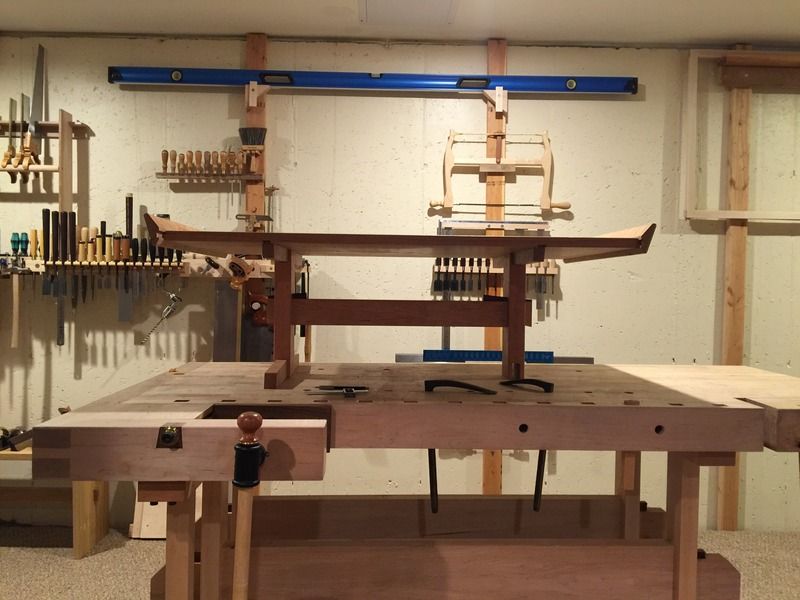
Picture 4.....there seems to be a bridle joint with 4 tenons on its top. Are the tenons what fastens the leg assembly to the top? If not, how is the top attached?

Re: Trestle table continuation

#10

Re: Question

Brian Holcombe

Thanks Bill,

I have taken some notes from various forms of Asian carpentry and furniture work. I noticed on Ming tables that often bridle joints were terminated in the table top with short tenons which prevents splaying on a joint which would not have been glued at the time and makes the joint surprisingly sturdy.

The short tenons do not keep the table top attached, per say, since the battens are affixed to the top via dovetailed grooves, so it is a combination of both.

I will probably finish the assembly with wedging pins or tapering pins to lock it together.

Re: Trestle table continuation

#11

Fascinated by the engineering

Bill Tindall, E.Tn.

I don' t in any way mean the following to be a criticism, as in the context of unfavorable opinion. I find your engineering interesting to study. It seems over engineered by western get-a-serviceable-product-out-the-door standards of western Period Furniture. Are you replicating oriental engineering as in making a reproduction or applying oriental engineering to an inspired work. (I am not smitten by oriental design so I never studied the engineering. Is 2 or 3 layers of engineering redundancy usually built into oriental furniture?)

I saw "horizontal" tusk tenons on tables in Italy and wondered at this application. I still don't understand the advantage. A vertical tusk tenon wedges a shouldered M&T stretcher against the legs and that solves any racking issue, vastly simplifying attachment of a top. For example, a top can then simply be screwed onto some "batten" piece attached to the leg assembly. The top would be engineered soundly just set on some locating pins, as some benches are.

I don't understand the need for dovetailing the battens to the top. Is this feature a design element? It does expose the batten ends at the table edge for better or worse. The top already has what is the equivalent of a bread board end that would aid in keeping a top flat, if needed(I might add, more handsome than the typical bread board which I am not a fan of). That said, I never saw the need for bread boarding to keep a top flat. We don't do it to benches, so why tables?

Re: Trestle table continuation

#12

Re: Fascinated by the engineering

Brian Holcombe

Thanks Bill,

No worries, I enjoy the discussion.

No so much redundancy but less reliance upon glue/screws and when you eliminate them you have to increase the number of surfaces to eliminate racking.

A bridle joint which is not glued will have a tendency to splay and terminating it into the table top eliminates the tendency to splay in all reasonable use.

After all much ming furniture was made to be demountable and moveable. I like that idea because it makes refinishing an easier process than if everything is glued solid and if ever the table is moved, they can knock it down very easily. I built a dining table for them as well, same way it can be knocked down easily.

The dovetailed tenons were a bit of an experiment, and they tighten up square and are incredibly sturdy. They're common in timber frame, not common in furniture. The timberframing joinery I have employed in recent projects has really been interesting to do and rock solid.

Ming tables are often made with dovetailed battens which are not exposed as mine are, but terminated into framing members. There was a Ming masterpiece taken apart and restored (400~ years old) and the top, which is only about 1/2" thick was still flat.

I've been detailing the exposed sections with gaboon ebony inserts.


I like this feature, gives a nod to the construction.

This table has been sitting next to my heater/AC since July without coming out of flat and I could literally hear it shrinking in the fall (creaking noises as it contracted on the battens).

Re: Trestle table continuation

#13

Re: Fascinated by the engineering

Warren in Lancaster, PA

We often see historic Pennsylvania Dutch tables with dovetailed battens. Sometimes these battens are involved with the attachment of the undercarriage. Usually the underside of the table is heavily chamfered so the slot is not so visible from the edge.

Re: Trestle table continuation

#14

Re: Fascinated by the engineering

Brian Holcombe

Thanks Warren, I had been debating rabbeting back from the edge on future projects, but a chamfer is a nice way to do it as well.

Re: Trestle table continuation

#15

Ellis Walentine

Battens

Ellis Walentine

I reproduced a Ming low table many years ago. The original had pine battens dovetailed into a solid burl top about 3/8" thick. The battens ended in tenons into the long rails, which were, in turn joined to the end rails with through-tenoned miter joints. There's a picture of a detail of the table on my Gallery page.

Ellis

Re: Trestle table continuation

#16

Re: Battens

Brian Holcombe

Nice work Ellis, your table is beautiful.

Re: Trestle table continuation

#17

Re: Fascinated by the engineering

TomD

"I don' t in any way mean the following to be a criticism, as in the context of unfavorable opinion. I find your engineering interesting to study. It seems over engineered by western get-a-serviceable-product-out-the-door standards of western Period Furniture. Are you replicating oriental engineering as in making a reproduction or applying oriental engineering to an inspired work. (I am not smitten by oriental design so I never studied the engineering. Is 2 or 3 layers of engineering redundancy usually built into oriental furniture?)"

This is a typical metric as though early furniture didn't ever get covered entirely in gold leaf or intricate carving, there has always been a range of available complexity and cost, though arguably less in the colonies. The flip side is the beefy and over joineried style for the cheap seats, literally and figuratively. Large over-joined pieces are often practical where it reduces the reduction required to make a pieces. An example being Windsor chairs which are both overbuilt, and multi-joined.

"I don't understand the need for dovetailing the battens to the top. Is this feature a design element? It does expose the batten ends at the table edge for better or worse."

I can also be pocketed so that it is not seen from the edges. I don't like cutting away parts of the table top myself, but it may well be a good method.

"The top already has what is the equivalent of a bread board end that would aid in keeping a top flat, if needed(I might add, more handsome than the typical bread board which I am not a fan of). That said, I never saw the need for bread boarding to keep a top flat. We don't do it to benches, so why tables?"

Well tables are much wider. But the idea that it isn't needed, or can even end up causing trouble seems right in this day and age. Whether it was true prior to air conditioned homes, in many regions year round air or humidity conditioned, and modern glues, I don't know.

One possible reason is that there is a prejudice against end grain being visible in woodwork, so to make a table where the lord and master is at the end, and rubbing his elbow on end grain, might not be acceptable. Pure speculation.

Another reason is that if the top is thin relative to loads, like, who knows, sword fighting, the BB may support against splits, pine that is less than one inch, could blow if someone just sat against a corner. We tend to regard BBs as a mater of keeping things flat, but there may be other structural reasons.
Re: Trestle table continuation

#18

thanks for the discussion....

Bill Tindall, E.Tn.

I had not grasped that the table was glueless and screwless . I am clueless about oriental design, but now I understand the engineering more.

Re: Trestle table continuation

#19

Re: thanks for the discussion....

Brian Holcombe

Well...oriental-ish....it's definitely through the western looking glass :D. I tend to lean heavily on Asian joinery and technique, but overall design is probably more shaker/American craft/ect.

I'd love to dive into Ming cabinetry, and may at some point in my life, I really love the work they turned out in that period, especially the master level works kept at the MET.

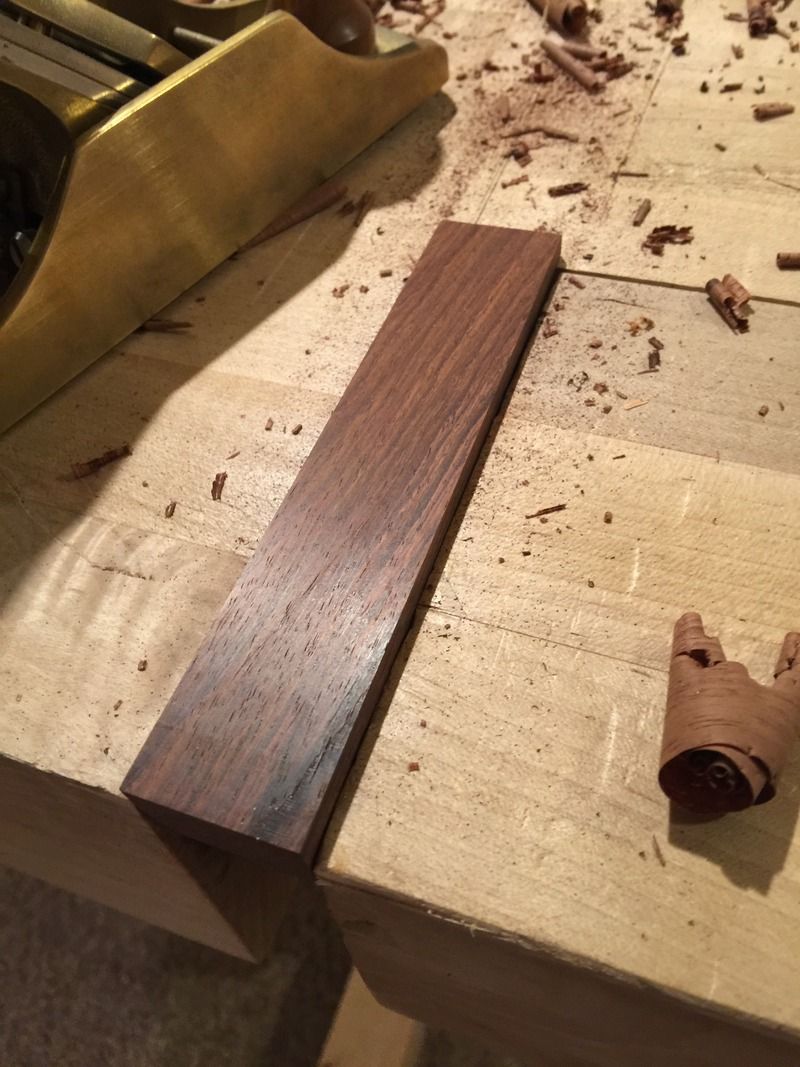
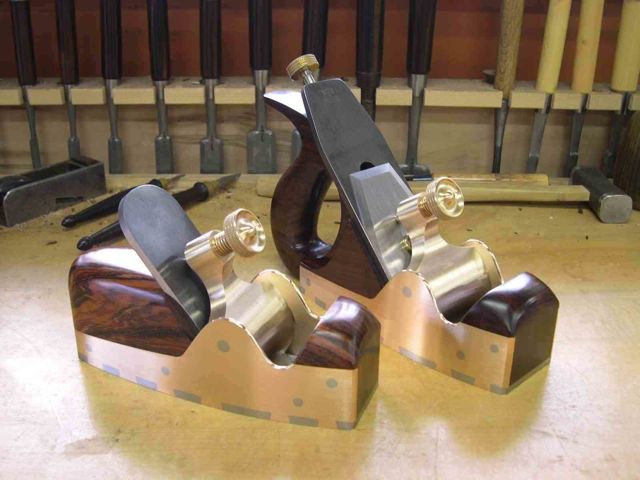
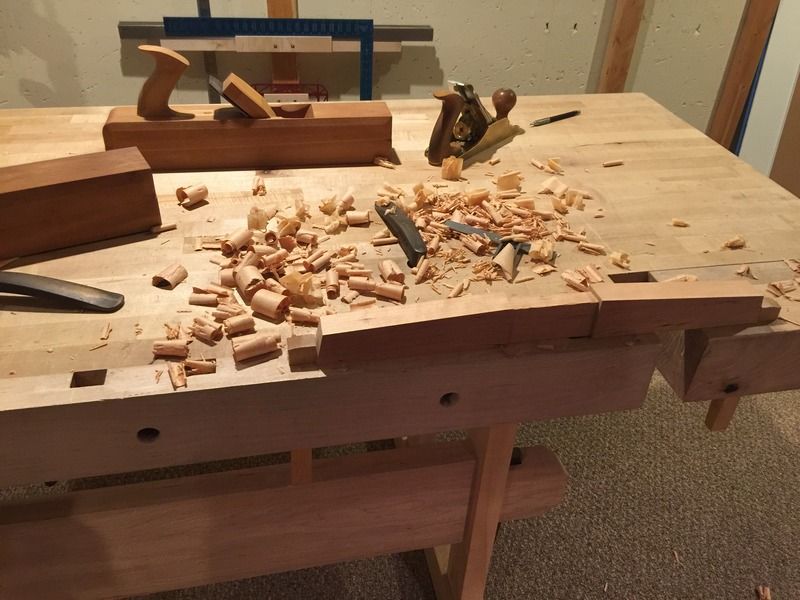
Putting David's planes to good use and finishing up my second foot.


I find roughing those angles out with a jack to be super quick, makes getting the saw seem like a real chore.

Re: Trestle table continuation

#20

Looks like...

John in NM

You are proving Kipling wrong! :D

Re: Trestle table continuation

#21

Re: thanks for the discussion....

Brian Holcombe

When it comes to design inspiration, I think my earliest days had a significant influence on what I gravitate toward.

As a kid I used to roam around a lumber yard around here called Willard Brothers, picking up short little exotic woods to saw up into knife handles, so exposure of interesting wood grain was something I loved immediately, and I'm fairly certain they were building live edge furniture at the time, which stuck with me.

The first thing I ever came to know as 'good' furniture was a Minguren desk built by Ru Amagasu.

Those experiences caused me to follow Japanese aesthetic heavily. Ming, Danish Modernism, ect having had an influence on me later on.

Re: Trestle table continuation

#22

Re: Looks like...

Brian Holcombe

Hah! :D

Re: Trestle table continuation

#23

Chris Scholz

Re: Fascinated by the engineering

Chris Scholz

In the 1600's, maybe earlier, the empirical works de-facto standardized how furniture (temples, etc.) are built, and what aesthetics to be followed (excessive carvings and gold leaf coating is a fluke of history, that, for some strange reason, became the style know to us as Chinese style).

You have some seriously harsh climate in China; hot and humid to dry and cold and anything in between.

The Chinese also had a preference for exotic (to them) types of wood species, like zitan, huangli (certain type of "rosewood"). In short, rare types of wood that came from gnarly old trees and were only available as fairly narrow boards.

So you've got traditional fish/rice glue that does not stick well on oily exotic wood, metal parts that tends to rust quickly in humid climates (no stainless steel in ancient times!) and excruciatingly expensive raw material that is a bear to work (another Chinese favorite: tianmu: Ironwood) and/or comes in very narrow boards.

Combined with a rigorous apprenticeship system, the old Chinese came up with an intricate system of joinery that seems to be well adapted to the local circumstances and made it's way throughout the Chinese sphere of influence (Korea, Vietnam, Japan, ...) but never really to the Western world.

Over engineered for modern times North America? Most certainly. Our own country developed out of a lack of skilled labor. I bet craftsmen were not payed by the hour in ancient times either. Skilled woodworkers in China tend to think that their joinery is not all that complicated.

I applaud Brian for attempting to simplify Chinese joinery to a level where mere mortals might actually be able to build stuff that incorporates Chinese and Western design cues. I for one, have never been all that excited about G&G style furniture.

Curious to see where Brian's work will lead us.

Re: Trestle table continuation

#24

Interesting addition and a quibble

Bill Tindall, E.Tn.

"Our own country developed out of a lack of skilled labor."

I am looking at a book on my book shelf of inspiration, "Connecticut Valley Furniture". There were some wealthy people in colonial times and they afforded skilled labor to build their furniture. One can demonstrate skill in complex joinery or in carving and other embellishments. I would argue that western culture just used their skills in other ways.

Re: Trestle table continuation

#25

Re: Interesting addition and a quibble

Brian Holcombe

There are a few areas of Ming furniture which really standout to me, and are items which I would like to use as my designs allow me to.

One of those is the corner joinery, where the skirt, leg and tabletop framing come together and that reinforcement which I believe translates to 'Giant's Arm' bracing. Chris Hall pointed these spots out on his blog and they really remained with me as something I would like to put to use.

I don't get into the east vs west too much, I tend to cherry pick what I like from both but tend to rely most on Chinese furniture joinery and Japanese timber frame joinery since it all works without glue for the most part.