New WoodChat!
Home Articles Forums Gallery Marketplace Videos

WoodCentral Forums

Knowledge You Can Build On — Est. 1998

Urban Salvaged Hardwood Slabs, Milled In-House from Rare Trees. Shop Unique Walnut Stock.

Japanese plane competition *LINK*

Posts

Japanese plane competition *LINK*

#1

Japanese plane competition *LINK*

mdclor

Many, most, all of you may have seen this before, but it was new to me. Does anyone know what the wood is? How are the irons sharpened? Japanese water stones? What is the procedure, grits used? Any info will be appreciated. Thanks.


9 microns = 0.00035 inches

Re: Japanese plane competition *LINK*

#2

Re: Japanese plane competition

TomD

The wood looks like pine. They have some of their own woods like hinogi, but that looks a lot like pine. Pine certainly works for this kind of thing. When planed like that, the surface on the pine will look like polished bone, and you can read lettering reflected in it. Back in the early 80s, the second Japanese plane I made, which used a blade out of a Japanese scraper plane I was not finding useful, fit rather badly to a white oak block, with that plane I regularly cut shaving of 4 tens, .0004. It was sharpened on normal King stones. Down to 8K, probably used some kind of jig like the old LV. I just mention it because getting shavings like that is no biggie, having the steady hand, surface prep and tool to get a perfect full length one, and to beat the next guy by a titch, is where the competition comes in.

The contestants use whatever stones they like, and there are some that go way the heck down in fineness. They use jigs to hold the blades, and they use microscopes to check the edges (some do). One thing that is not often understood is that each grade of fineness is worked longer than the preceding one, while in the course of regular sharpening one often observes the most time going into the initial setting of the edge, then every subsequent grit being breezed through.

I have no idea where they get them, but the fanciest sharpening jig for plane blades I ever saw was one from Japan, that someone who did this stuff had. There is a bunch of other stuff one can have for working on the planes, taping out, and so forth.

Re: Japanese plane competition *LINK*

#3

Re: Japanese plane competition

Brian Holcombe

Tom,

I'm wondering if it wasn't the Grindtek K2 jig.

I think the world record holder is now 2 micron....just crazy how thin that is.

Re: Japanese plane competition *LINK*

#4

Re: Japanese plane competition

mdclor

Tom, thanks for the info. Can you expand on this:

"One thing that is not often understood is that each grade of fineness is worked longer than the preceding one, while in the course of regular sharpening one often observes the most time going into the initial setting of the edge, then every subsequent grit being breezed through."

I have just looked for a consistent scratch pattern that usually happens pretty fast at the courser grits and for a set time, about a minute, for the finer grits.

Re: Japanese plane competition *LINK*

#5

Re: Japanese plane competition *LINK*

mdclor

Brian, I looked at the Grintec K2, but it apparently only holds plane irons and not chisels. I think the Veritas MK II will be better for me since it holds both. The Grintec may well be the superior product however.


Grintec K2

Re: Japanese plane competition *LINK*

#6

Re: Japanese plane competition

Brian Holcombe

It can't chauffeur me around town either, but it should do a fine job on Japanese plane irons :p

Hehehe, sorry I couldn't resist. It's not a do-all sharpening jig, it's specially built for Japanese plane irons....and basically only those....so it will be all but useless for some and incredibly useful for others.

Re: Japanese plane competition *LINK*

#7

Re: Japanese plane competition *LINK*

Fred Peake

I had the pleasure of attending one of these events in 2005. Their techniques are simply amazing. The attached link contains some wonderful photos from the Daiku Dojo web site.


Kezurou kai 2005

Re: Japanese plane competition *LINK*

#8

Re: Japanese plane competition

Mark Hennebury

It is pretty amazing to watch these guys hand-planing shavings that fine.

It can be done with a finely tuned western handplane and the right wood.

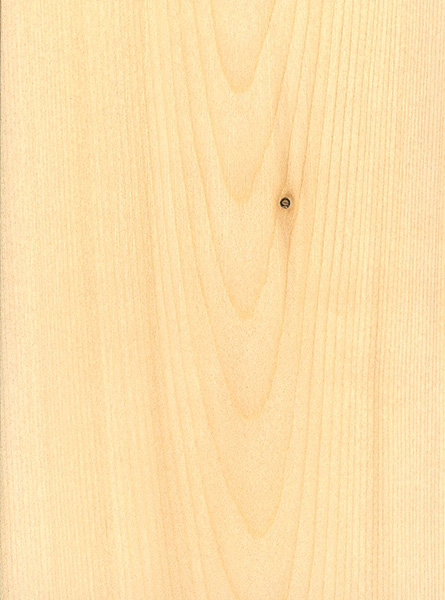
My guess is that they use Yellow Cedar (Chamaecyparis Nootkatensis, Alaskan Yellow Cedar, Nootka Cypress, Cupressus nootkatensis*

*This species has undergone many reclassifications,)

Exceptionally fine even grain. a pure pleasure to plane and smells real spicy.

Photos from The WoodData base


Re: Japanese plane competition *LINK*

#9

Re: Japanese plane competition

mdclor

Fred, this must have been a real treat to see in person. There was even a pic of a boy making a better shaving than I could. :) Thanks for sharing.

Re: Japanese plane competition *LINK*

#10

Re: Japanese plane competition

mdclor

Mark, the link mentions the woods being used at the event Fred attended:

"You will see some daikus making the longest, thinnest, widest shavings from the port orford cedar, hinoki, or other wood."

Re: Japanese plane competition *LINK*

#11

Re: Japanese plane competition

TomD

Wasn't that jig, way more intricate, not sure what all the stuff did.

Veritas jigs have the disadvantage of not being wide enough for some plane blades. I still have the original which I really like, but it was far too narrow. The current one is 73 mm wide, but there are 80 mm blades, and I don't really like the way it works. I use the Japanese one that works with 2 handles, not that great either but I am dancing with the one that I have. I mostly sharpen without a jig, but occasionally I loose the feel of the edge and will jig, or I will have some heavy repair work to do. Like when those *&%^&^% used my large Ouchii chisel as a cold chisel to cut out supports for the oil tank they were removing.

Re: Japanese plane competition *LINK*

#12

Re: Japanese plane competition

TomD

"Tom, thanks for the info. Can you expand on this:

"One thing that is not often understood is that each grade of fineness is worked longer than the preceding one, while in the course of regular sharpening one often observes the most time going into the initial setting of the edge, then every subsequent grit being breezed through."

I have just looked for a consistent scratch pattern that usually happens pretty fast at the courser grits and for a set time, about a minute, for the finer grits."

At the time the reporting was that they would spend huge amounts of time, hours, on some of these grits.

- First, I guess if they were using high resolution microscopes, they might be able to see the progression of the scratch pattern, and know that it had not fully removed the other grits.

- It would come down to cases, how big are the jumps between grits, how effective are different stones, it is my experience that every stone (mostly artificial) that I pick up feels different from other stones or same maker different grit. Do we know the grits exist as the perfect progression, or is it a case of certain grits being available. Are all grits equally efficient at clearing the waste.

- It's my feeling that a lot of finishing takes longer as one polishes to the lower grits. There is a point where one brings up the shine on the surface above the scratches, but to get every last vestige of the earlier grit out, takes a while.

- Seems like one can get really fine shaving off the kind 8K so I have never really felt the need to take it all that far.

- There are some beliefs that are not all that seemingly ration in the Japanese craft, like the idea that if one even once sharpens a blade on a man made stone, one looses the conditioning of years of sharpening on a natural one. I don't know where the evidence is for that, but I wouldn't be able to judge it. These competitions seem more scientific, but I don't know.

Re: Japanese plane competition *LINK*

#13

Re: Japanese plane competition

Brian Holcombe

Ouch, that same person also have to dodge flying lumber after you found out?

Re: Japanese plane competition *LINK*

#14

Re: Japanese plane competition

Paul M

I've been to two of these Kezuro-Kai competitions. One was here in San Diego and the other was on a trip to Japan organized by Hida Tool. In both cases, they were using the straightest grain Alaskan Yellow Cedar for this competition.

Yellow Cedar is the choice for temple restorations now. All of the large trees in Asia have been cut, so they import logs from North America for large timber work.

The participants are all sitting on the floor with various stones on a chunk of plywood and are sharpening their blades free-hand before each competition. No jigs to be found.

Re: Japanese plane competition *LINK*

#15

Re: Japanese plane competition

mdclor

Paul, I find it amazing that they can get that degree of accuracy free hand. However, I am pretty certain that I will need training wheels. :D Thanks for sharing.