New WoodChat!
Home Articles Forums Gallery Marketplace Videos

WoodCentral Forums

Knowledge You Can Build On — Est. 1998

Abingdon, VA – Tree Cutting & Portable Sawmill

A global pinned joint question

Posts

A global pinned joint question

#1

A global pinned joint question

Bill Tindall, E.Tn.

In modern times, where is a practical or necessary place to use a pinned joint? Warren claimed to have made thousands of them. In what application?

Indeed they are Period Correct in some reproductions but that begs the question of why they were used in the first place and whether the reason(s) are relevant today beyond the goal of Period Correct.

A friend that builds reproduction 18th century chairs claims they add strength. This could only be the case for a poorly glued joint, or a failed glue joint. Their area relative to the glued faces of a typical M&T joint just seem irrelevant.

Re: A global pinned joint question

#2

Re: A global pinned joint question

Sgian Dubh

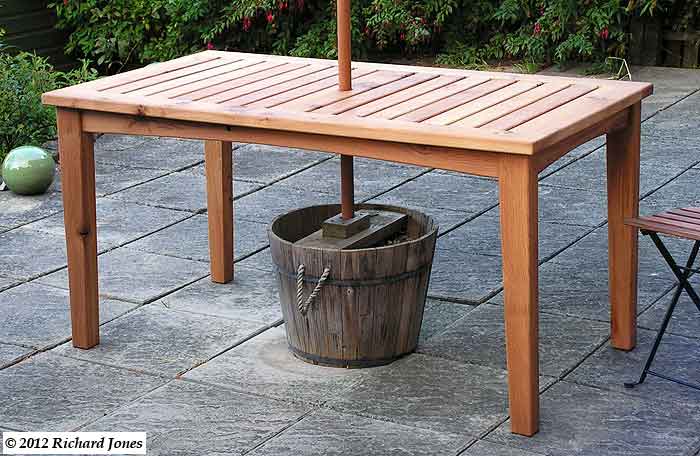
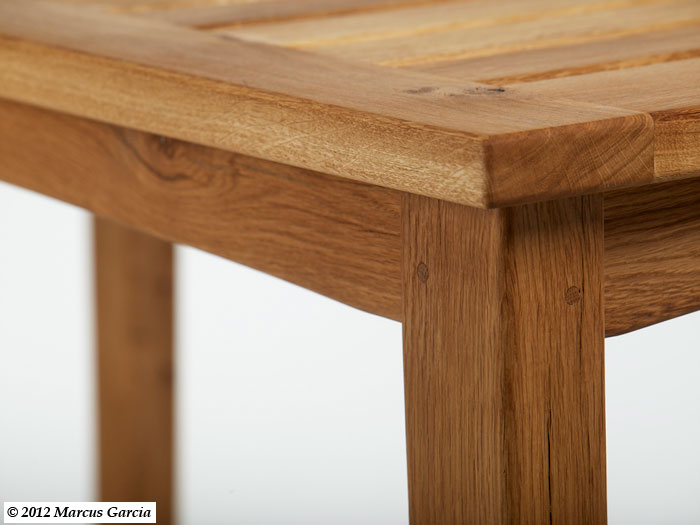
A draw-bored M&T makes sense in joinery destined external locations, such as below Bill. I realise this almost certainly wasn't the main thrust of your question, but it is a legitimate reason for pinning or pegging joints in contemporary work. Slainte.


Re: A global pinned joint question

#3

Re: A global pinned joint question

Larry Barrett

It made sense in green woodworking, where you know there will be movement due to changes in moisture content. Consider a rail, tenoned into a mortise in a post. The tenon is likely to shrink, if not dried before assembly. However, the length of the tenon will not change (much) in length, nor will the position of the shoulder of the tenon as moisture leaves the rail and tenon. But the post will change in width and breadth. The drawbored and pinned joint will keep the shoulder tight against the post.

Re: A global pinned joint question

#4

Re: pinned joints

Mark Mandell - Gone Round In New Jersey

Modern glues notwithstanding, I use pinned tenons where the joint will be subject to racking stress such as tables and seating especially where the piece is liable to travel to a drier climate that will both shrink the tenons with a lower EMC.

Years ago I met a guy in Phoenix who had a nice little business repairing "snowbird" furniture for people who'd retired from Michigan etc. to the sunny Southwest only to find their furniture starting to fall apart. He mentioned that he got very few pieces with loosened pinned joints, and those he just inject some glue and called it done.

Re: A global pinned joint question

#5

Fair enough (I like that table)

Bill Tindall, E.Tn.

Fair enough, an application where glue is likely to fail(is that the reason for pinning?).

I'm looking to learn. It is not a joint I have ever used, maybe because I don't appreciate where it should be used, or it offers no benefit to what I build or how I build, or whatever. Curious minds want to know.

There is a architectural door shop locally and they don't pin M&T joints. They have a dandy clamp rack for assembly and maybe that is why they don't pin? None of my 6-panel house doors are pinned.

Re: A global pinned joint question

#6

Re: A global pinned joint question

Bill Houghton, Sebastopol, CA

I don't know the answer, Bill, but I will comment that the area of the pin seems less relevant than the mechanical structure. The force against the pin will be in shear against the pin itself, rather than in withdrawal of the tenon. If the glue fails but the pin doesn't wiggle out, it will still hold mechanically.

Re: A global pinned joint question

#7

Re: A global pinned joint question

Jeff Heath

With the strength of modern glue's considered, I don't see the necessity of pinning a properly fitted and glued mortise and tenon joint. I must admit that I've done it many times, but my thinking was aesthetics, and not the the table or chair joint needed any added protection against coming apart.

I can't speak to exterior work, as I do very little other than for the loml (nice table, btw, Richard), but for tables and chairs, I've never had a joint come loose.

I certainly understand it's use historically, though. To the best of my knowledge, (and I'm not a historian) I don't believe they had tightbond, epoxy, or plastic resin glue available 200 years ago. ;)

Re: A global pinned joint question

#8

Re: A global pinned joint question

William Duffield

In addition to the valid reasons the others have stated, there are two others (which have been mentioned in other threads):

You can use fewer clamps, which is an advantage in a complicated glue-up where the clamps can get in each other's way.

Installing the pins temporarily before glue-up can help you verify the tightness of your joinery, in particular gaps at the tenon shoulders.

Re: A global pinned joint question

#9

Re: Fair enough (I like that table)

Sgian Dubh

"Fair enough, an application where glue is likely to fail(is that the reason for pinning?)"

It's the main reason Bill because that table is made of air dried European oak, and here in the UK air drying seldom brings wood below about 20% MC, unless the initial air drying (outdoors) is supplemented by further drying in a covered shed. Secondly, apart from an initial wipe over with boiled linseed oil when new just to make the appearance 'prettier' for the snap, the table has never had any kind of finish applied since. The joinery was glued with polyurethane glue which is about the only glue that works on wet wood, i.e., wood with an MC >20%. But how durable polyurethane glue is likely to be over 20 or 30 years is uncertain.

If you look at garden, entry way and farm gates, stiles and the like the joints are commonly reinforced with either trunnels (pegs) or with wedges. The same applies to large architectural joinery of things like barns, old Elizabethan and Tudor houses/ buildings of various sorts. You'll see lots of large M&Ts, chunky dovetail type joints, scarfs and so on, again mostly pegged to help lock it all together, especially to cope with subsequent shrinkage as the wood dries when it's become part of the internal structure of a house.

The architectural door maker you mention probably expects the doors they make to be painted or varnished, which does help protect the wood, so it's not necessarily a good comparison.

Looking at antique and old internal furniture I suspect much of the draw-boring or pegging done was initially inspired by large architectural woodwork as described briefly above. It may also have supplemented less than stellar glue performance, especially in cruder country style furniture knocked out by 'joyners' who frequently doubled as coffin makers, wood frame barn makers, hurdle makers, etc - and not all old hide glue was especially effective. Further, furniture makers over the centuries weren't all innovators, and I suspect much of the pegging that went on in later centuries was done because "We've always done it like that". Slainte.
Re: A global pinned joint question

#10

thank you for the insights

Bill Tindall, E.Tn.

Here in E. TN. there are still many old barns built with pegged M&T joints.

Re: A global pinned joint question

#11

Re: A global pinned joint question

TomD

I don't like them. If the glue is going to fail, I prefer wedges. You don't see pins in high end furniture, I think it is a kludge for situations where the joints aren't good, or the glue. Not an advantage. Of course one can any use them as a design element, like any other quaint thing that gets elevated to a higher use. Like tails and button cuffs on jackets used to be field serviceable wear. Blue jeans are working their way into formal dress.

Re: A global pinned joint question

#12

Re: A global pinned joint question

david weaver

One thing that comes to mind for me is sawing a joint and fitting it straight off the saw, and then pinning it. I'd expect a joint like that to be strong and tight in 200 years. I don't know what I'd expect of a glued joint (though I've made more glued than pegged).

My parents have a lot of furniture in the 150+ year old range, but nothing old like new england 1600s old. A lot of their furniture has pegged joints, and they look quite tasteful if they're done cleanly.

I am not too interested in furniture, and thus only have opinions, but my opinion is they are a joint I would use if I wanted something to last indefinitely through drying cycles and temperature changes. All of the joints that I can recall seeing off of the top of my head are still tight.

Re: A global pinned joint question

#13

Chris Scholz

Don't need pins or glue to make lasting furniture

Chris Scholz

Just run into this table two days ago. This is in the back of the newly re-built old-town Chenzhou (provincial "small town" in Hunan). The photo is from the area that is still to be demolished. A small family shrine is to be re-built and reamin as a cultural relic.

Climate in Chenzhou is mostly hot and humid but also dry with occasional freezes.

No idea how long this table has been sitting out there and obviously the joints are not as crisps as they used to be. Other than that it's rock solid, probably no glue or pins. As always with Chinese furniture it's hard to say how old they really are. It might be a very good and well aged replica or might we a few hundred years old. Given that this was a very poor part of town, it is unlikely that this is a replica.


Re: A global pinned joint question

#14

Re: A global pinned joint question

Tony

C Schwarz in his DVD 'Forgotten Handtools' (IIRC) makes the point that modern PVA glues (and other even more recent glues) have only been around since following the Second World War. Their track record is thus no longer than that whereas examples of pinned or draw bored pieces are fairly abundant in the 400 year old range with some pieces substantially older. Modern glues may survive hundreds of years but rwe don't know - and I rather doubt.

It's kinda cool for me to imagine my humble pieces surviving long after I cease to care for such things.

Re: A global pinned joint question

#15

Re: Don't need pins or glue to make lasting furnit

wilbur

You’re right in that there are probably no pins or glue in that table. But without seeing it in person, all the joinery in that table probably have interlocking parts, which is how the table holds together. The interlocking aspect of a pinned or drawbored mortise and tenon joint is what makes it stronger than a basic mortise and tenon.

For me, the issue isn’t pin or no pin. It’s whether the joint has interlocking components to it or not.