New WoodChat!
Home Articles Forums Gallery Marketplace Videos

WoodCentral Forums

Knowledge You Can Build On — Est. 1998

Compare cordless drills on the numbers that matter

Lee Valley Chipbreaker

Posts

Lee Valley Chipbreaker

#1

Lee Valley Chipbreaker

Derek Cohen (in Perth, Australia)

There has been much re-newed interest in the use of the chipbreaker in tuning a plane. We no longer hold the belief that the chipbreaker is simply to support or stiffen the blade. Indeed, the very first review I wrote was on the, then, newly released LN chipbreaker. That must have been about 10 years ago. Today the chipbreaker is seen to be an important factor when tuning a smoother.

Very recently I ordered a couple of Lee Valley chipbreakers. One was for a Stanley #3 I had restored, and the other was for a #4 1/2. There were also PM-V11 blades to go with them.

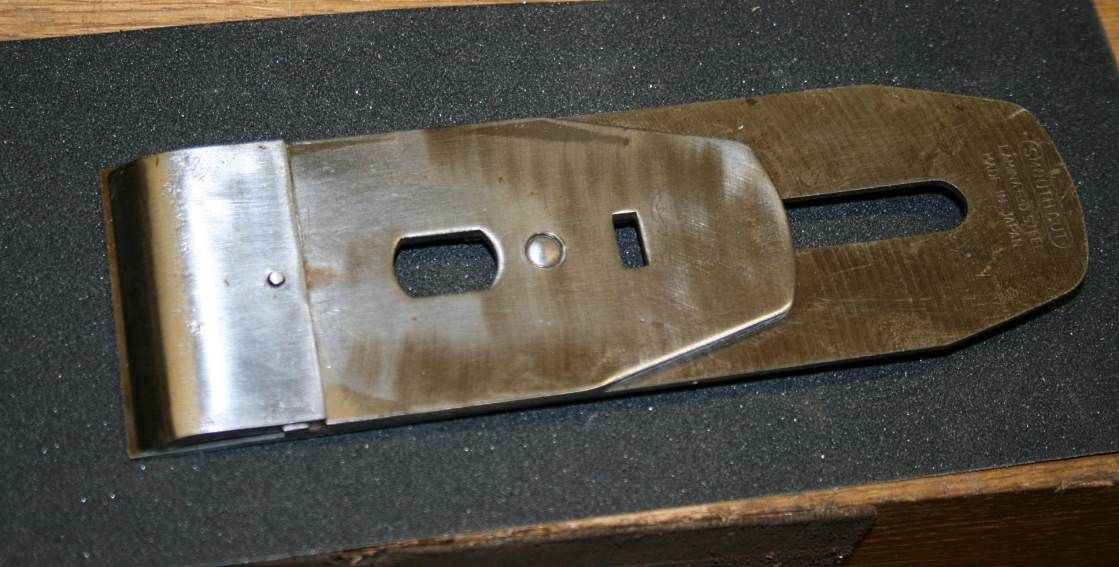
Today I had the thought to take some photos and thereby share with others my observations about this purchase. For contrast I shall use #3 chipbreaker/blade combinations from Lee Valley, Lie-Nielsen, and Stanley.

LV, LN, Stanley
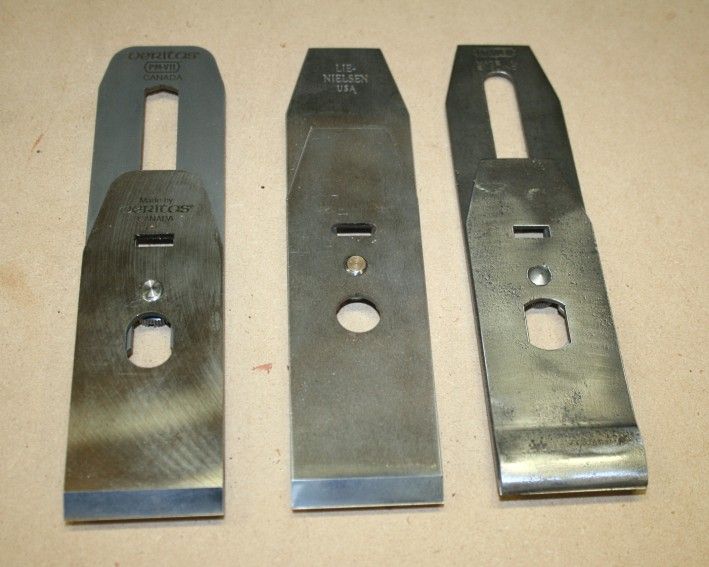

At first glance the LV and LN chipbreakers are similar in shape and design. The LV is shorter than the LN.

The LV sits firmly on the blade, is a perfect match ...

... as is the LN combination ...

Both have just enough flex to pull down firmly onto the blade.

The Stanley ...
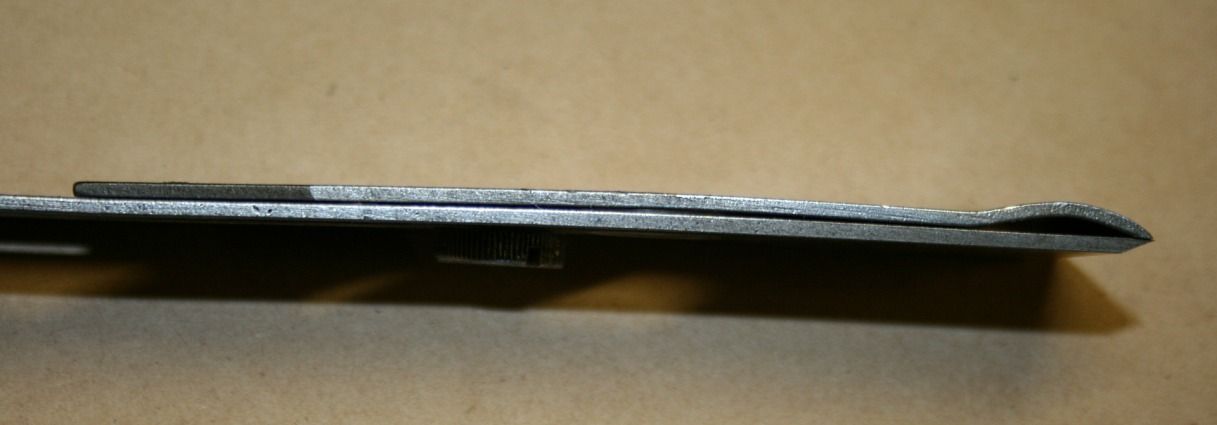

... needed a little extra bend in the body to create a tight bond. The thin steel is very flexible, too much so. What happens is that when it is set close to the edge of the blade, and then tightened, the chipbreaker will "stretch" over the position desired (if not careful, over the edge of the blade).

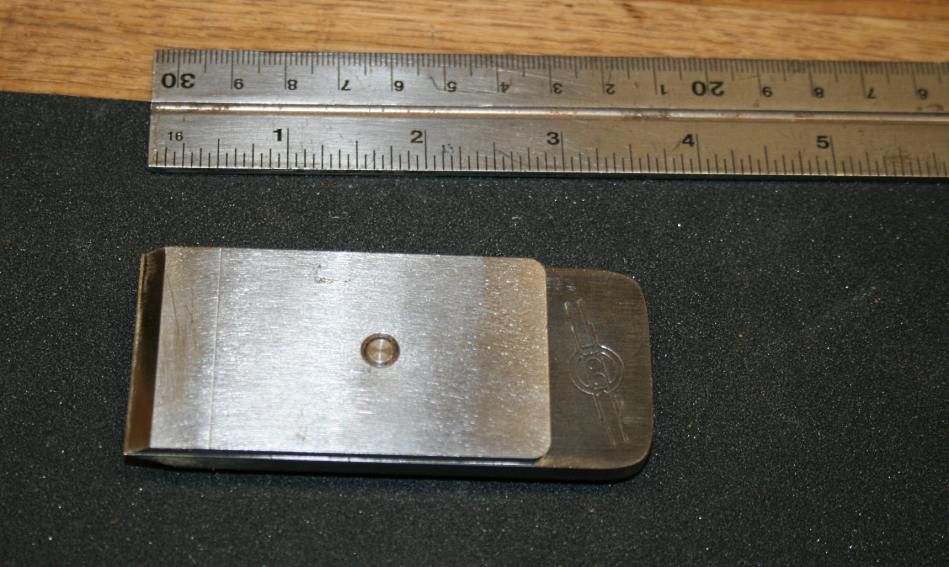
The similar designs of the LV and LN are also evident on the reverse side ..
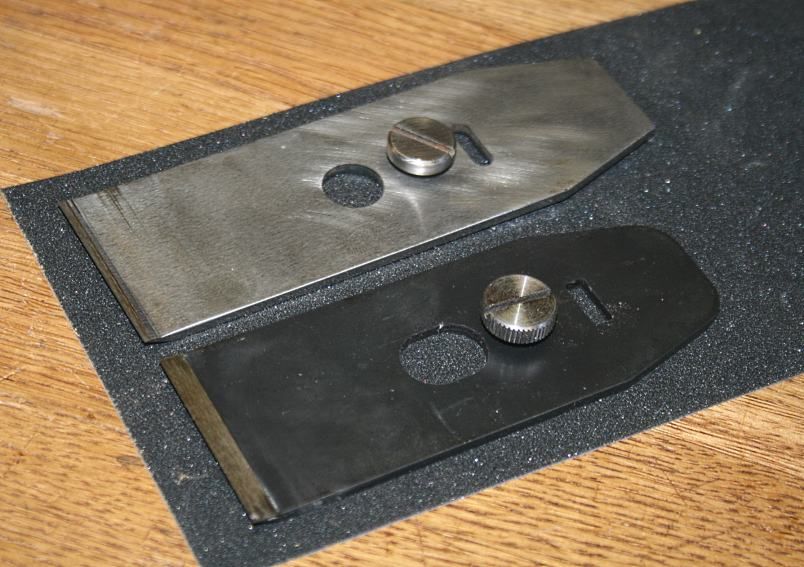

There is a little more support at the front of the LV. This is not significant once in use as the front of the chipbreaker rests on the leading edge and not the flat. However the wide support of the LV did make it easier to balance on the medium when lapped flat (which does need to be done ever now-and-then).

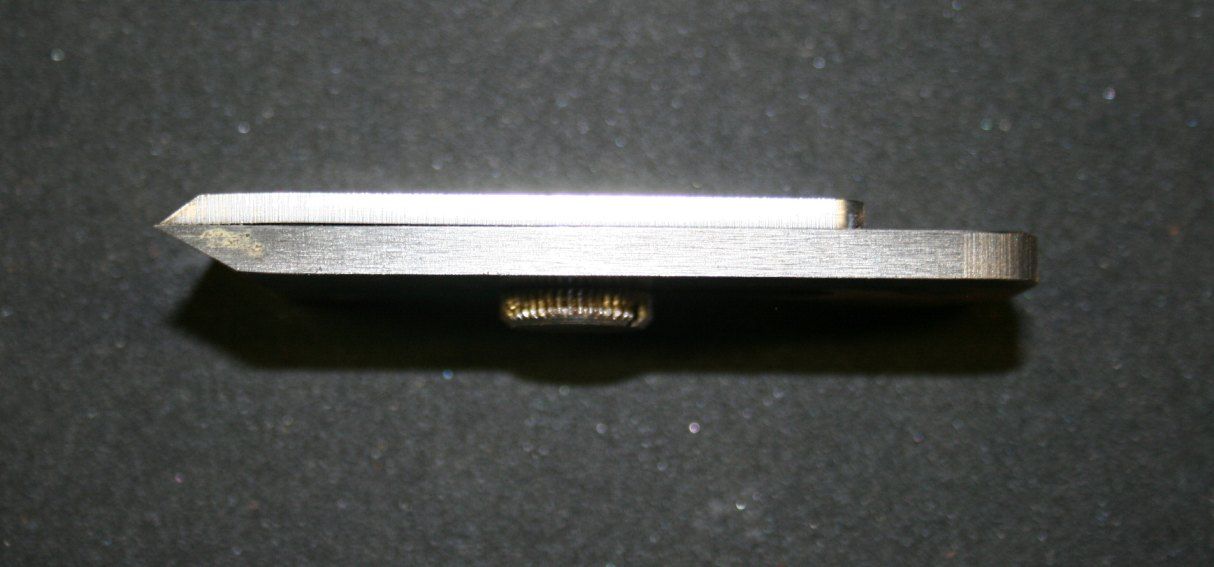
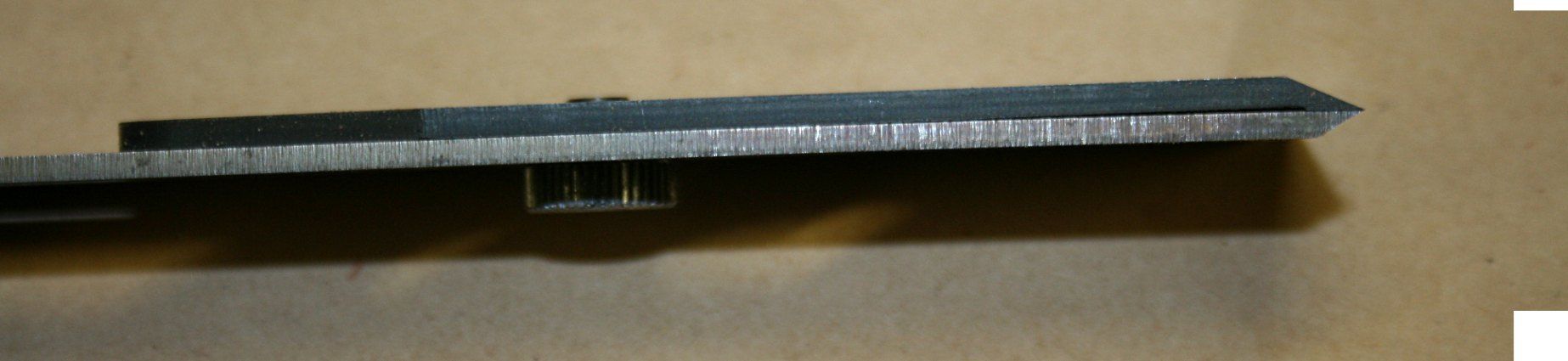
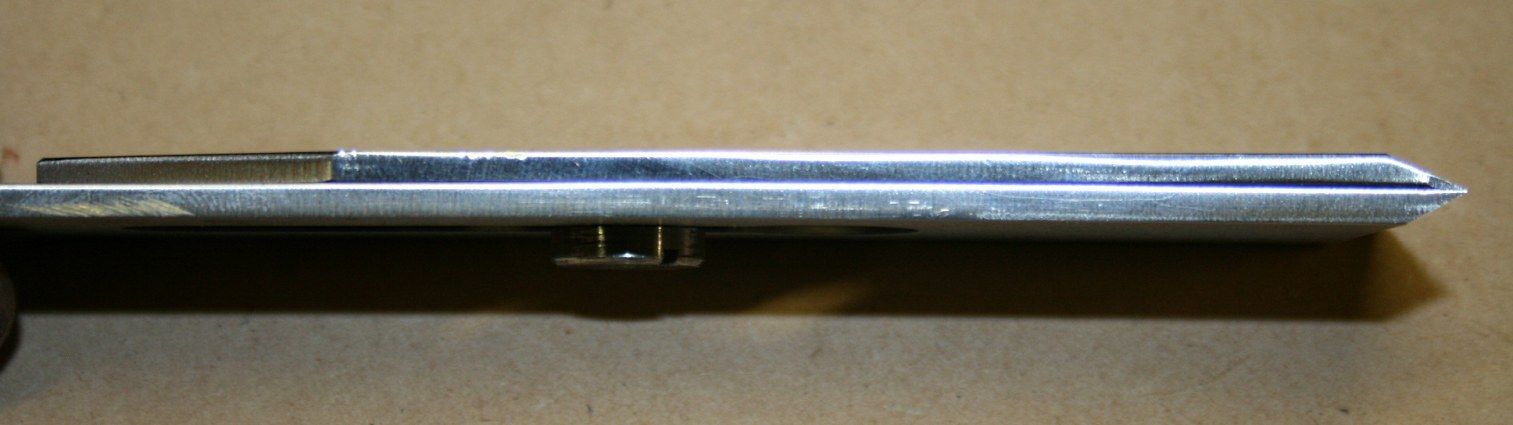
Now the important side I want to show is the other side - the chipbreaker screw ...
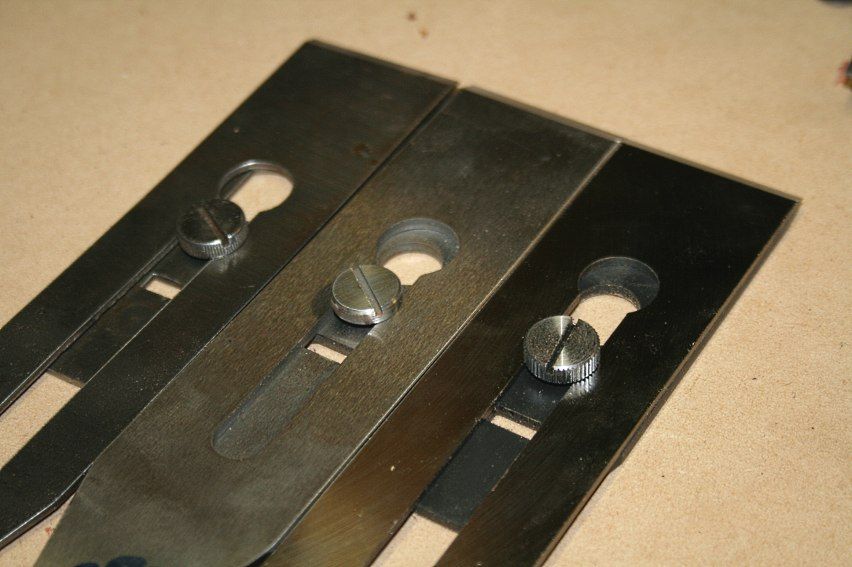

What you will notice is that the LV screw is knurled and the LN is flat. The LV screw is also significantly thicker (The Stanley screw is also knurled, but it is the same thickness as the LN).
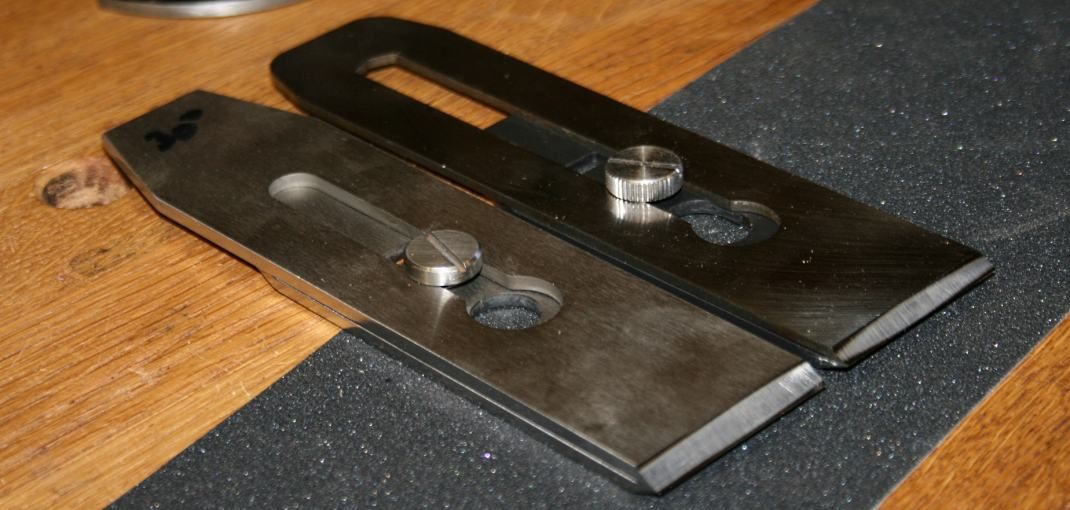
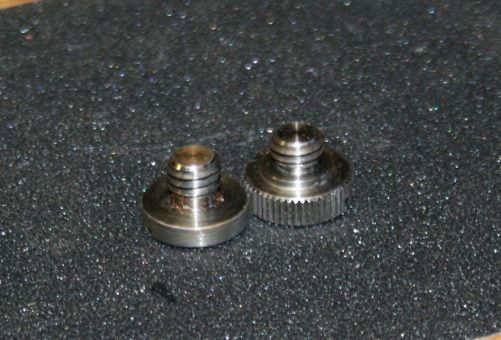

Why is this so relevant?

Because the LV screw can be tightened with finger tips and both the others cannot. Finger tightening enables the chipbreaker to be set much more easily at the edge of the blade - set it, finger tighten it, and use a screwdriver to finish when happy.

Here is the LV being adjusted ..
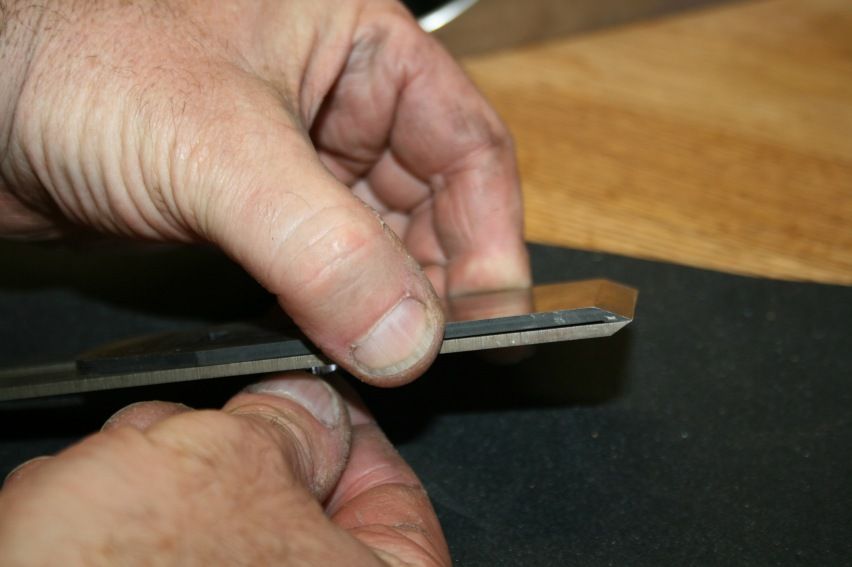

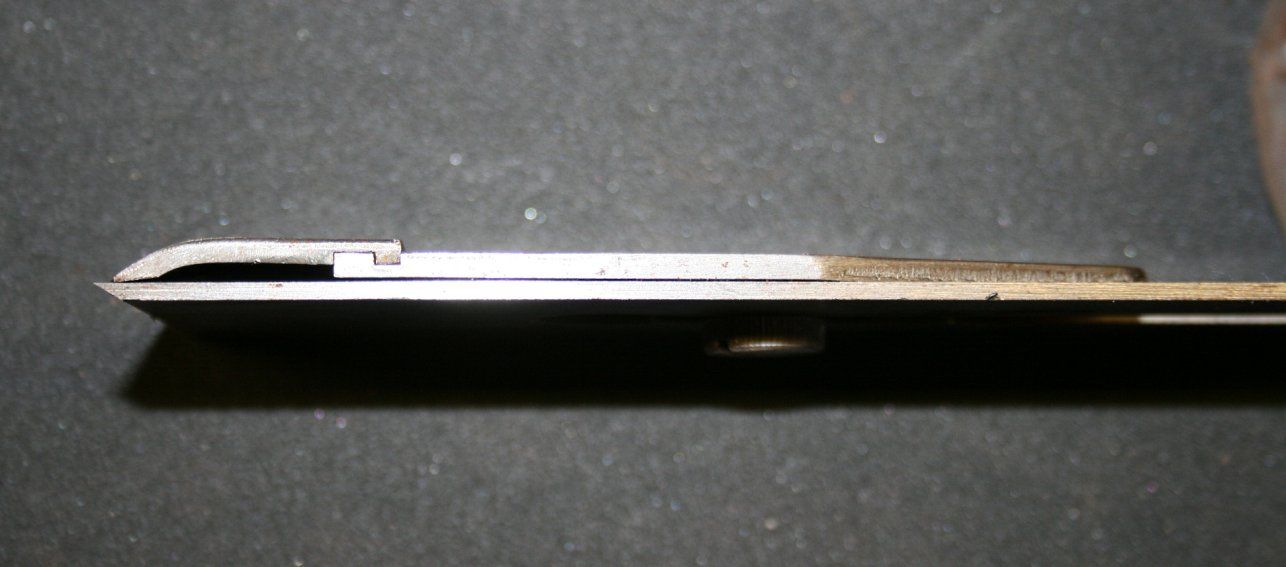
The other item that may simply pass by unnoticed is the hole for the frog screw. The LV is long, and this enables one to use a screwdriver blade as a hammer to adjust it rearwards.
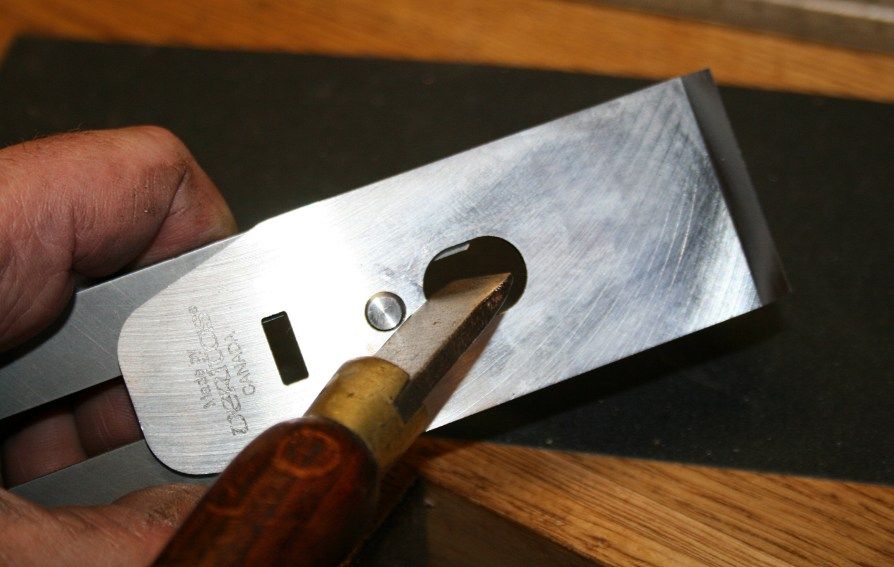

The LN has a small round hole - very neat, but it makes it difficult to adjust in the same way.
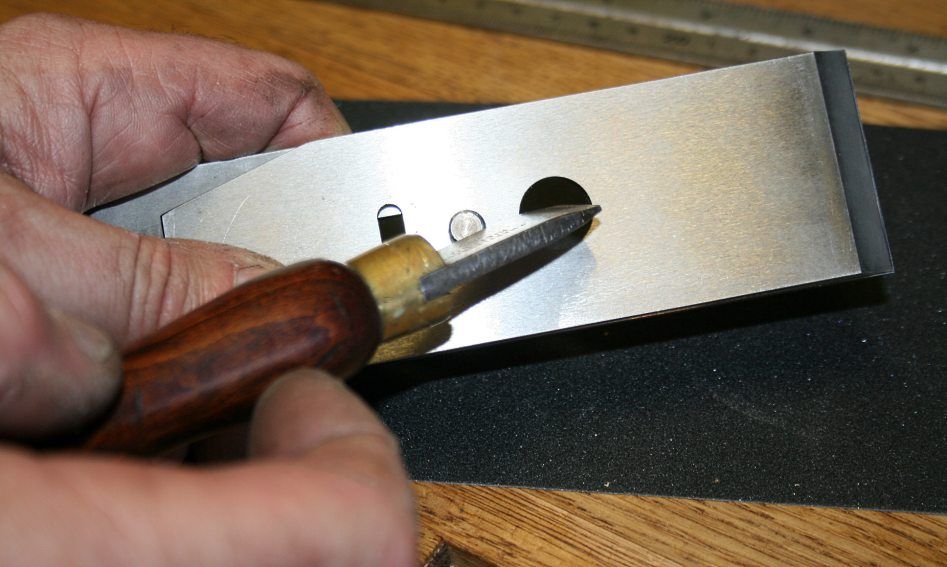

The shorter LV and Stanley chipbreakers expose more or the blade slot, and the screwdriver blade again can be used as a hammer to tap the chipbreaker forward. The longer LN chipbreaker leaves open none of the blade slot open, and cannot be used to adjust in the same way (refer to the initial photo for illustration).

It is relevant to note that the front edge of the LV and LN chipbreakers both angle at 25 degrees. This is too low for Bailey-type planes with a 45 degree bed. A secondary microbevel of about 75 degrees needs to be honed. This is easily and quickly done freehand. More on this in further article.

In summary, the Lee Valley chipbreaker is excellent and, in my opinion, the better design of the three.

Regards from Perth

Derek
Re: Lee Valley Chipbreaker

#2

Re: Lee Valley Chipbreaker

Warren in Lancaster, PA

We no longer hold the belief that the chipbreaker is simply to support or stiffen the blade. Some of us never held the belief that cap irons were for stiffening.

I have been turning the Stanley screws by hand for four decades, maybe five. Why would the manufacturer even think to knurl the screw if it could not be turned?

Re: Lee Valley Chipbreaker

#3

Re: Lee Valley Chipbreaker

Bill Houghton, Sebastopol, CA

I think Derek was contrasting the Lee Valley with the Lie-Nielsen, not with the Stanley.

Re: Lee Valley Chipbreaker

#4

reread

Warren in Lancaster, PA

Because the LV screw can be tightened with finger tips and both the others cannot.

Re: Lee Valley Chipbreaker

#5

Ah.  I sit corrected.


Re: Lee Valley Chipbreaker

#6

Re:They actually can...

Tom

be tightened by finger tips, you just need to take the spring out with your hands. I don't see a huge functional difference. However, I learned as a little tyke while working selling rock climbing gear in a place that also sold, if you can believe it, lawn bowling gear, how much people's abilities vary. While I was rock climbing and woodworking back in the 70s, we know WW is more an oldies activity. Anything that can be done to make it easier for people with weakened hands, or those of lessor strength, or in search of the "better experience", why not.

Of course if you took my advice on the lathe or checkering file, you could throw checkering on in about 2 minutes. Though I think flutes are easier on the fingers.

Re: Lee Valley Chipbreaker

#7

Re: Lee Valley Chipbreaker

Derek Cohen (in Perth, Australia)

I have been turning the Stanley screws by hand for four decades, maybe five. Why would the manufacturer even think to knurl the screw if it could not be turned?

Hi Warren

Of course you can turn the Stanley screw by hand. It's knurled for this reason. I wrote as follows:

What you will notice is that the LV screw is knurled and the LN is flat. The LV screw is also significantly thicker (The Stanley screw is also knurled, but it is the same thickness as the LN).

Perhaps I could have been clearer - simply put, the Lee valley screw is easy to use - will encourage one to use because it is so easy to grasp - while the Stanley screw is going to be difficult for most to grasp, and because of this they will not be aware that it can be used this way. It certainly was this way with me. I had this "ah ha" experience when first using the LV screw!

The LN is the same thickness as the Stanley but lacks any knurling, making it near impossible to grip. I very much doubt that any regular LN user even considers gripping the LN nut head with finger tips.

Regards from Perth

Derek

Re: Lee Valley Chipbreaker

#8

Lee Valley Chipbreaker

Tom Colligan

Thanks for the time you put into making this post, Derek. I'm looking forward to your follow up post about the angle of the chipbreaker as I'm not clear on what you're referring to:

"It is relevant to note that the front edge of the LV and LN chipbreakers both angle at 25 degrees. This is too low for Bailey-type planes with a 45 degree bed. A secondary microbevel of about 75 degrees needs to be honed. This is easily and quickly done freehand."

Thanks again,

Re: Lee Valley Chipbreaker

#9

Re: Lee Valley Chipbreaker

Derek Cohen (in Perth, Australia)

Hi Tom

This is just a quick reply ..

The angle of the leading edge if the chipbreaker pushes the chip up at an acute angle, thus preventing the gradual splitting of the chip at the blade edge that ushers in tearout in interlocked grain. Therefore the angle at the leading edge of the chipbreaker is important and it is this - in combination with the distance to the edge of the blade - that determines how the chip will be directed.

The angle at the leading edge of the Stanley chipbreaker is generally good to go, while both the LV and LN need to have this honed in (as it is about 25 degrees). The amount this angle needs to be is debatable. I know Kees completed his experiments and concluded that he likes 45 degrees. The K and K video suggested 80 degrees, however their bed was, as I recall, 40 degrees. Kees' probably was 45 degrees. I have experimented with frogs from 45 to 55 degrees, and consider that each chipbreaker is ideally suited to a different angle at the leading edge. In practice it does not make too much difference. I suggested 75 degrees in the article simply because this is the same as recommended in the video (80 @40 = 75 @ 45). It is the latter that needs to be altered on the LN and LV chipbreakers.

Regards from Perth

Derek

Re: Lee Valley Chipbreaker

#10

Chipbreakers not ready to go.

David Charlesworth

I have been writing for years, that chip breaker front edges are not ready to use, from the factory.

Not sure they ever were. I'm pretty sure manufacturers do not include dressing instructions, for fear that some users will make them worse!

It is clear to me that Stanley aimed at a 45 degree slope, relative to the back of the blade. Thus it seems reasonable to add a 45 degree microbevel to the front of chipbreakers from: L-N, Veritas, IBC, Clifton and Quangsheng etc.

If people want to try the ultra close set C/B method of controlling tearout in regular bench planes, the Kato research suggests something like a 70 degree micro bevel at the extreme tip (of C/B). This need not be more than about 8 to 10 thou" wide.

I have been doing up L-N C/B screws with my fingers for ever, but some texture would help. Where does one find those fiiles please?

Best wishes,

David

Re: Lee Valley Chipbreaker

#11

More chipbreakers and a summary

Derek Cohen (in Perth, Australia)

Here are a few more chipbreakers.

First the Clifton. This comes out of my Stanley #51 (shooting plane) where it is paired with a Smoothcut laminated blade. The Clifton uses the Record Stay Set design, which has a removable toe (to facilitate easier sharpening). Frankly this design is a royal pain in the youknowwhat since the toe is not securely attached and tends to fall off. It is held securely by the lever cap. However this arrangement does make it more difficult to adjust close to the blade edge. After the umpteenth time that the toe fell off, I epoxied the two parts together!


The chipbreaker is a similar thickness to the LN and LV.


This Hock chipbreaker comes from a smoother I received from Jim Krenov, where it is paired with a Hock blade. Of interest, when the plane arrived the chipbreaker was set 1/16” from the edge of the blade. The mouth is tight. The plane had been used. From this I would conclude that Jim did not set up his planes with the chipbreaker.


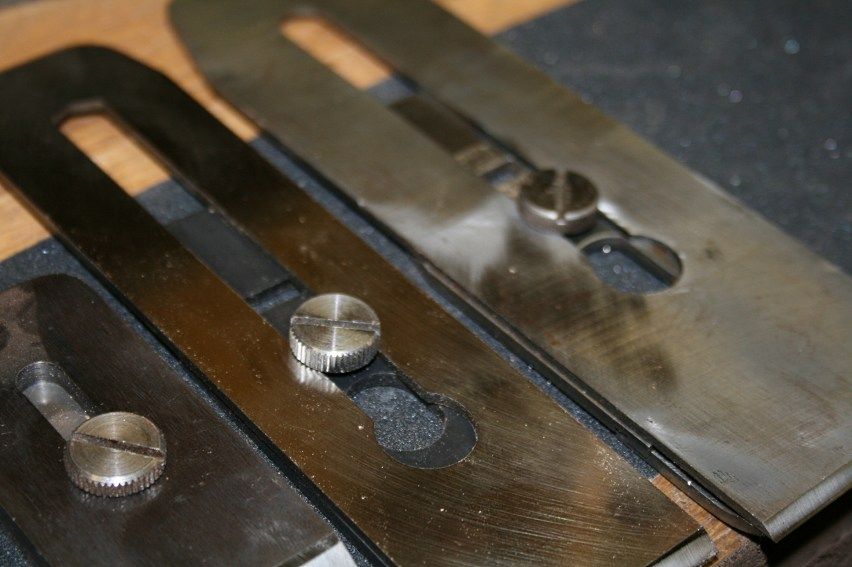
Here are Clifton and Hock chipbreaker screws flanking the Lee Valley …


The Clifton screw is identical to the Stanley – having stated this, it may very well be a Stanley as it has been so long. However, in the deep recesses of what is left of my brain is the memory that the Clifton screws used a different thread to Stanley.

The Hock screw is slightly thinner but does not feel so. It is second to the LV to grip. The reason for this is that it, as with the LV, have coarse knurling. The knurling on the Stanley and Clifton is very fine, giving some but not as much grip as the LV and Hock. The LN has no knurling, and the smooth circumference makes it the hardest to grip.

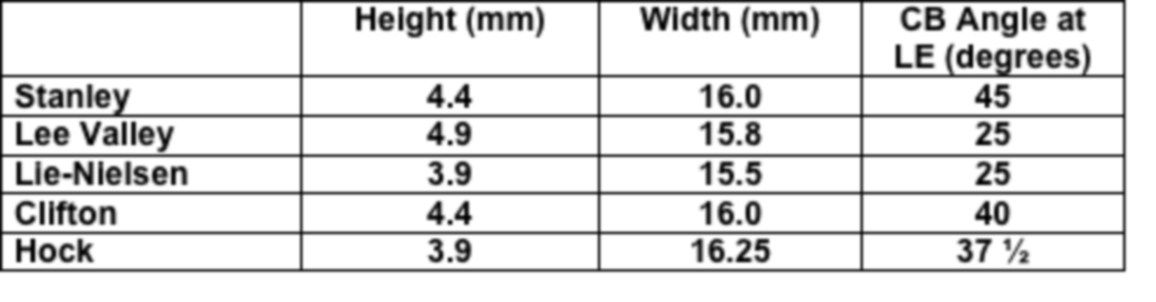
Here is a summary of screws dimentions:


The differences in screw size do not look great on paper. However add in coarse knurling and the little extra height of the LV is very noticeable and makes it stand out. The coarse knurling on the Hock brings it in second. The Clifton and Stanley come in equal third, with the LN bringing up the rear.

And here is the answer to the question that will be asked: the LV screw fits the LN chipbreaker. :)

With regard the chipbreakers, per se, it can be seen that the leading edge angles of the LV and LN, and to a lesser extent the Hock, stand out as the two that really would benefit from a higher secondary microbevel. The Clifton and Stanley are within the range found by some to be acceptable.

Regards from Perth

Derek

Re: Lee Valley Chipbreaker

#12

What you wrote

Warren in Lancaster, PA

What you wrote, Derek, was:

Because the LV screw can be tightened with finger tips and both the others cannot.

I am not the only one to suggest that this is baloney.

Re: Lee Valley Chipbreaker

#13

Re: Chipbreakers not ready to go.

Derek Cohen (in Perth, Australia)

Hi David

I read and relished the article on chipbreakers in your third book, which was around 2006. I recall that you honed the Stanley chipbreakers to 45 degrees and the LN to 40 degrees. Times have changed since then as what you were (then) advising was protection against creating a shaving trap. The use of the chipbreaker in reducing tearout was not yet on the horizon. It is indeed inspiring to know that you can change direction and incorporate new/old information when it comes to light - that you can teach an old dog new tricks! :)

Regards from Perth

Derek

Re: Lee Valley Chipbreaker

#14

Woof woof!

David Charlesworth

Thanks, Derek.

Yes I love to try "new" or different techniques and incorporate them into my teaching, if I can get them to work.

David