We value your privacy.
We use cookies to enhance your browsing experience, analyse site traffic, and personalise content.
By clicking “Accept all”, you consent to our use of cookies. You can also choose
“Essential only” or learn more.
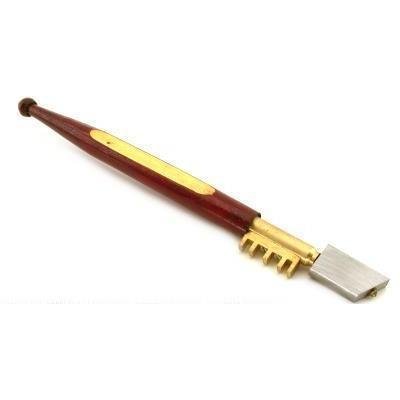
This tool came to me in a very convoluted manner, needless to say I was happy to receive it as I have a good idea what it was used for. It was at a local antique dealer and he called me up and described the tool and I told him I thought I knew what it was, but I wanted to buy it before I told him.
Well he himmed and hawwed, so I passed. A mutual friend heard the story, bought this tool and gave it to me. I will probably call the dealer and tell him what I think it is, just to set things straight.
You can see the numbers there is also a R in a circle on the blade and iron ferrule, the handle is walnut and the end has been hit with something or used to hit something as there are some marks.
Once glass plate, such as window or picture frame glass, is scored with a diamond, the square notches are sized to grip the glass plate firmly. This is then bent to break along score. The tool allows one to break the glass rather than one's fingers!
Is there another option? That seems like a lot of variability in depth and not much variability is width, and a lot of sizes, three things not typical of modern glass cutters, when they even have notches. May have been different in the past. In earlier times glass was not consistent.
If it was some kind of automotive tool to set a certain gap and the screwdriver to tighten the set screw? It also could be some kind of special screwdriver setup a certain piece of machinery. Does Stephen have the answer?