We value your privacy.
We use cookies to enhance your browsing experience, analyse site traffic, and personalise content.
By clicking “Accept all”, you consent to our use of cookies. You can also choose
“Essential only” or learn more.
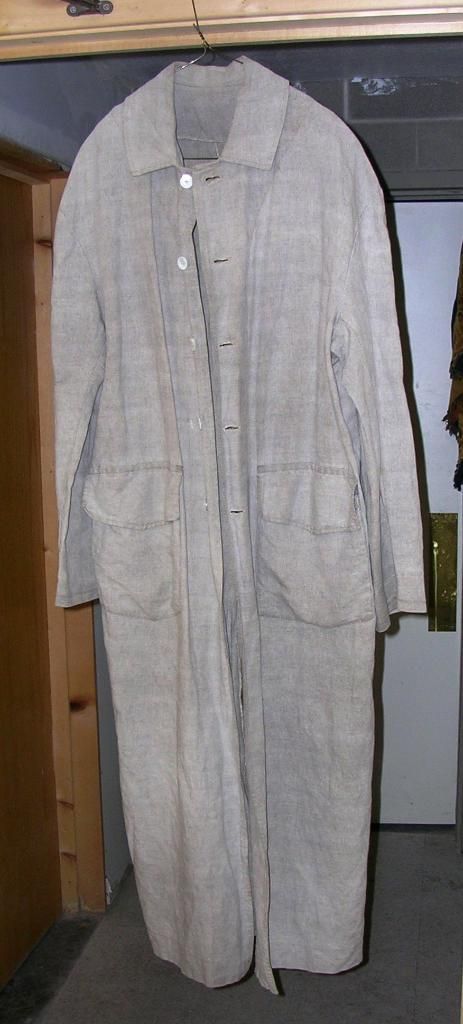
>try putting it on a Linen Duster. It is in its second week of drying. I paid about $130.00 for this linen duster and had no intention of making it into a slicker. Then I got a great deal on another one, so I decided I would make my original duster into a slicker.
With a 16 oz. mixture of boiled linseed oil, turpentine and glycerin I place the duster in a bag and poured in the oil/turps mix. After much rolling and stomping I got the oil evenly on all parts. I could have used more but I didn't want it dripping from the coat, so I took about an hour to get it incorporated.
I hung it up to dry and waited, and waited and am still waiting. A couple more days and it should be ready for a trial in the weather. I weighed the duster before and it weighed 2 pounds, it now weighs 3 pound and is much stiffer yet flexible.
I had some concern that my expensive linen duster/slicker would spontaneously combust, the air circulation helped. The slicker is only slightly darker after making it waterproof. Putting linseed oil on linen is going the full circle.
Stephen
Re: If you think linseed oil dries slowly on wood...
Yes, this is a traditional method of making oil cloth or treating cloth to make it waterproof. There are several other recipes for doing the same including one called 'Elastic Varnish' that I shall have to try some day.
I have used this method to make traveling chess/draughts (checkers) boards from canvas and paint. And I have several pieces of oil cloth that I use to wrap food when going to historic re-enactments.
I started using bigger pieces of linen to apply oil finishes, then when I am done, I spread them out flat and let them dry. So instead of throwing away those oily rags (always dispose of properly), I now put those 'rags' to good use.
Stephen
Re: If you think linseed oil dries slowly on wood...
>The fibers of linen are triangular and have sharp edges, so it is the preferred cloth for a French polish pad. It is also good for smoothing a painted or varnished surface without adding visible scratches.
I am using bigger pieces of linen as an oil rag in order to make more pieces of oil cloth. Once it is dry it is difficult to use as a rag because it is too stiff and doesn't charge with oil like fresh cloth does.
I always practice careful air drying of oily rags as they can catch on fire.
Stephen
Re: If you think linseed oil dries slowly on wood...
Very interesting. There is at least one manufacturer still doing similar, but using cotton. The Filson company of Seattle (outdoor and cold weather wear) soaks cotton duck or twill in oil to make proprietary water proof fabrics (e.g., Tin Cloth).
This is high-end gear, so you're in good company.
Wiley
Re: If you think linseed oil dries slowly on wood...
>Just click on the WC articles and it will bring you to the index that lists articles by author.Select Bob`s articles and it`s on the right hand side.A lot of excellent info there.
Bob also posted a ton of info on other tool boards and wooden boat forums so it`s well worth Googling his name in order to get a look at those sites too.
I`m amazed that nobody(Taunton or Cambium Press for instance) has approached Bob about putting all his hard won knowledge together in a printed book.He`s an excellent communicator and photographer.
MB
Re: If you think linseed oil dries slowly on wood...