WoodCentral Forums

Est. 1998 — 27 years of woodworking knowledge

Hand cut tenons -- cut cheeks or shoulders first?

Posts

Hand cut tenons -- cut cheeks or shoulders first?

#1

Hand cut tenons -- cut cheeks or shoulders first?

wilbur

>For a change of pace, I thought I'd ask a question about hand cut joints that did not involve dovetails. :@)

I've been cutting tenons by hand recently, and it's been going okay. What I was wondering is if you are cutting tenons by hand, is it better to do cheek cuts or shoulder cuts first?
Re: Hand cut tenons -- cut cheeks or shoulders first?

#2

Jack Guzman from Maine

Re: Hand cut tenons -- cut cheeks or shoulders fir

Jack Guzman from Maine

>I usually cut the cheeks first.If I cut the shoulders first I tend to overcut which weakens the tenon.With the cheek cut made not quite to the shoulder line,when I cut my shoulders I can cut just enough until the cheek piece will break off.---Jack

Re: Hand cut tenons -- cut cheeks or shoulders first?

#3

Jack is right - cut cheeks first for his reasoning

Andrew F in Australia

>

Re: Hand cut tenons -- cut cheeks or shoulders first?

#4

Re: Hand cut tenons -- cut cheeks or shoulders fir

Stephen Shepherd in the State of Deseret

>I lay out the tenon with the mortice gauge and use a square and scribe to mark the shoulders. Because I use pine and spruce almost exclusively I cross cut the shoulders first to the score lines then rip the tenons.

The reason I do this is that if the piece splits off which happens on occassion it only goes to the shoulder cut.

I actually rarely saw the cheeks, I saw the tenons shoulder first then using a wide chisel or slick split off the waste and pare the cheeks to the scribe lines.

Stephen

Re: Hand cut tenons -- cut cheeks or shoulders first?

#5

Re: Hand cut tenons -- cut cheeks or shoulders fir

Pam Niedermayer - Austin, TX

>I actually rarely saw the cheeks, I saw the tenons shoulder first then using a wide chisel or slick split off the waste and pare the cheeks to the scribe lines.

I started out doing tenons this way, but found myself with a lot of tearout, wrecked tenons, and spending a lot of time getting these results. So when I took up Japanese saws, I now mark everything, cut the checks, then address the shoulders. It's a much cleaner and faster process for me.

Pam

Re: Hand cut tenons -- cut cheeks or shoulders first?

#6

Re: Hand cut tenons -- cut cheeks or shoulders fir

Pam Niedermayer - Austin, TX

>Forgot to mention, I finally got good results using your method, Stephen, once I tried using the chisels bevel down, but it was still too slow a process.

Pam

Re: Hand cut tenons -- cut cheeks or shoulders first?

#7

Staying dry?

wilbur

>Hi Pam,

The fact that you are posting means that you haven't been washed away by the floods, I hope.

Re: Hand cut tenons -- cut cheeks or shoulders first?

#8

Jim in Burlington Ont.

Cheeks then shoulders for me

Jim in Burlington On

>I just find I can make a more accurate joint that way. Seems when you doing powered work it goes shoulder then cheek.

Re: Hand cut tenons -- cut cheeks or shoulders first?

#9

Re: Staying dry?

Pam Niedermayer - Austin, TX

>No flooding here, fortunately, most of the really bad weather goes around Austin. However, we've had a lot of rain, so I'm not sure we're dry exactly. :)

Pam

Re: Hand cut tenons -- cut cheeks or shoulders first?

#10

It all depends ...

Derek Cohen (in Perth, Australia)

>Hi Wilbur

I cut tenons both off the shoulder and off the cheeks. While some argue that shoulder cuts are safer, with careful sawing there should not be any issues.

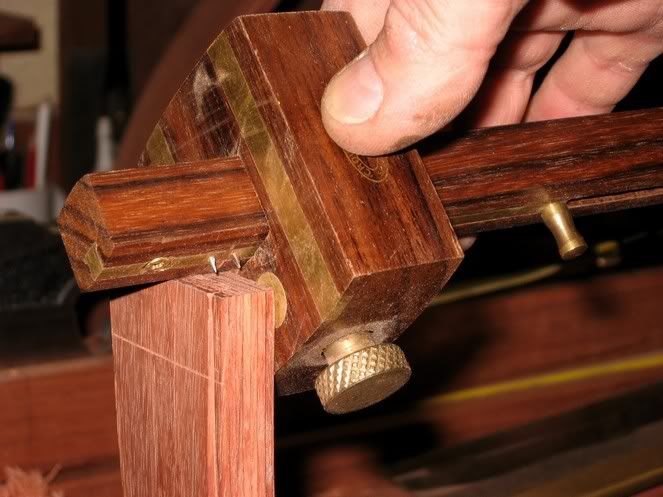
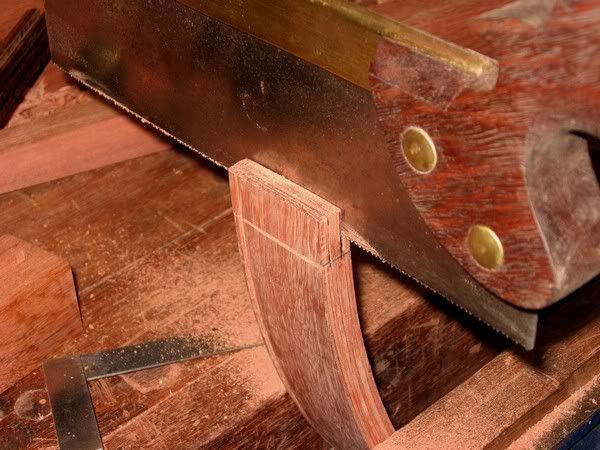
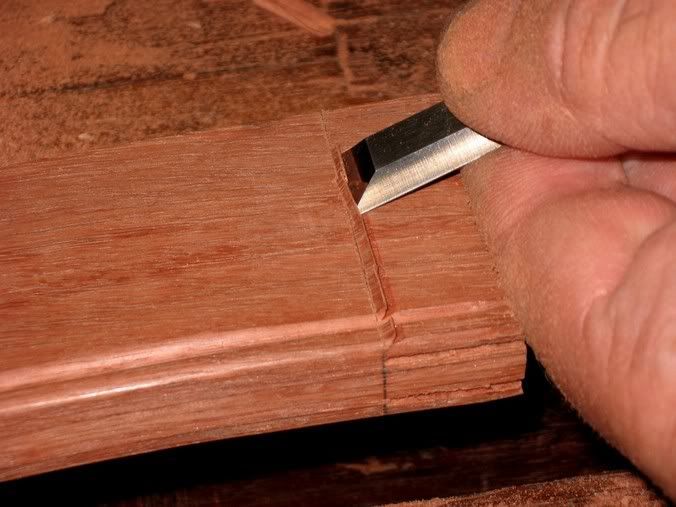
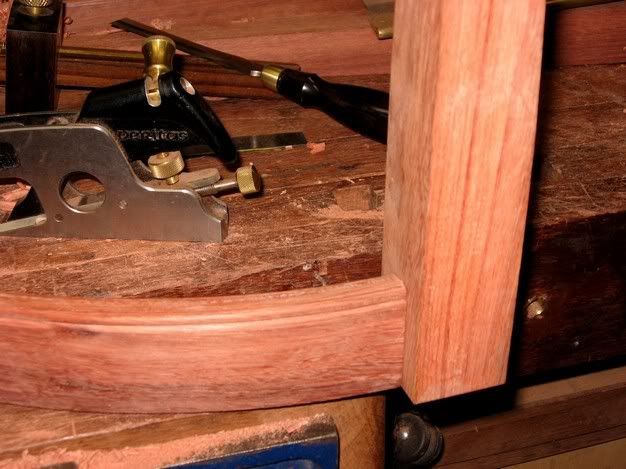
Cutting of the shoulder is my first choice, but cutting off the cheeck is better if the board is thin or there is a danger of the saw being deflected (or both). Here is an example of the latter:

Cutting a laminated (several layers of Jarrah) and curved stretcher ...

1. Marked off the shoulders with a cutting gauge and then the cheeck lines with a mortice gauge.


2. Cut to the line with a tenon saw.


3. Pared a saw line/fence across the shoulders.


4. Result of sawing away the waste.


5. Final fit.


Always another choice!

Regards from Perth

Derek

👍 This page answered my questions

Your vote helps other woodworkers quickly find the answers and techniques that actually work in the shop.