WoodCentral Forums

Est. 1998 — 27 years of woodworking knowledge

Question for hand tool makers

Posts

Question for hand tool makers

#1

Question for hand tool makers

Joanne in Pt. Pleasant, PA

>For those of you who make tools--do you put a finish of some kind on the wood parts of your tools? If you do, what do you use? An oil? Shellac? Poly? Lacquer? Combo? Thanks in advance for your wisdom and ideas.

Re: Question for hand tool makers

#2

I use...

Scott Burr in Ben Lomond, CA

>BLO or Shellac for the most part.


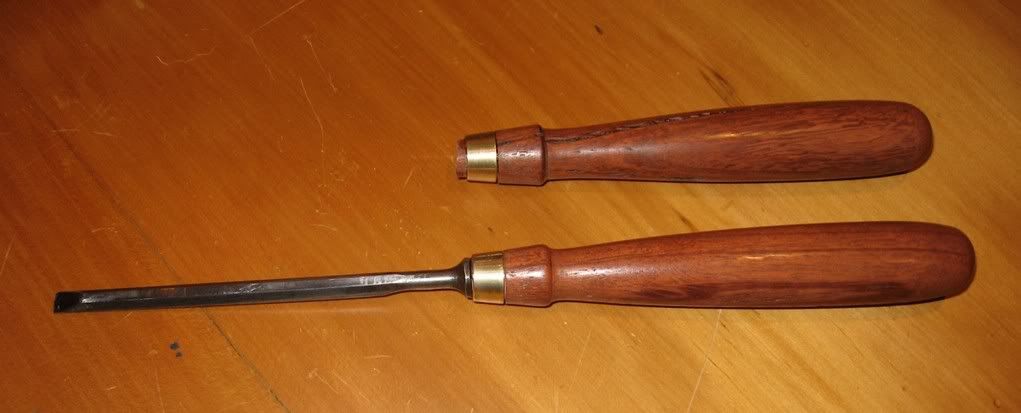
img

Re: Question for hand tool makers

#3

Re: Question for hand tool makers

mikew

>Hi Joanne,

Usually I use a shellac product:


On some woods, oil then shellac:


Sometimes, simply oil and wax. Never lacquer unless requested.

Take care, Mike

Re: Question for hand tool makers

#4

No.

Pam Niedermayer - Austin, TX

>But then I make Japanese planes, which tend to be burnished by the use of other Japanese planes.

Pam

Re: Question for hand tool makers

#5

Re: No.

Norman (Ottawa, Ont.)

>Not much of a hand tool maker, but I do use shellac.

I tried without any finish and the tool handles or

wooden plane bodies get very marked up and dirty fairly quickly.

Norman

Re: Question for hand tool makers

#6

Re: Question for hand tool makers

Jim Shaver Oakville, Ont.

>Hi Joanne,

I can say the few times I have made my own tools I have used shellac, 3-4 coats.

My two S&S planes are finished with multiple coats off shellac.

What are you making?

Take care,

Jim

Re: Question for hand tool makers

#7

Don't shoot . . .

SteveM

>I know the general feeling about Polyurathane but . . . since I've had my neck/arm nerve "job" (re-routed!) my grip is'nt what it was. The poly tends to give me a bit more control (grip). Also provides pretty good protection and looks OK glossy. Pretty. All the boiled lindseed and tung oil folks feel free . . . fire away.

Re: Question for hand tool makers

#8

BLO or Tung, and beeswax

Dave Thompson

>

Re: Question for hand tool makers

#9

Re: Don't shoot . . .

steve knight

>if I have a oily wood I seal it with sellac. they I use this finish called pour and wipe. it is a wipe on lauquer looks nice and is pretty durable.

Re: Question for hand tool makers

#10

Re: No.

Pam Niedermayer - Austin, TX

>I consider dirt and sweat to be patina in the forming; but honestly, my stuff doesn't get so dirty until I muck about with graphite/pencils for fitting the iron. Since I normally only do that when making the dai, it's easy to remove before putting it into production. The Japanese white oak seems to absorb it pretty well, doesn't come off on other work or my hands.

Pam

Re: Question for hand tool makers

#11

Wood finish as a tool

Bill Houghton, garage sales in Sebastopol, CA

>If it helps you continue working wood, it's the right finish.

Re: Question for hand tool makers

#12

Is that the brand name ? Sounds interesting.

SteveM

>

Re: Question for hand tool makers

#13

Thanks, everybody!

Joanne in Pt. Pleasant, PA

>My first thought was shellac (it's what I use on most things anyway) and then some wax, perhaps. Then I was thinking I'd use nothing, as Pam suggested, thinking the wood would get burnished in use. Hmmm. Decision, decision. Eventually, I'll report back on what I use.

Hush, Jim--I'm not tellin' what it is. I might be working as an elf for Secret Santa.

BTW--nice shaves, Scott. And beautiful saws, Mike!

Re: Question for hand tool makers

#14

Steve Kubien

Japanese white oak

Steve Kubien

>Hey Pam,

Where do you get your Japanese white oak? It is cinsidered by many to be the perfect wood for making weapons like bokuto. I would love to get my hands on some large enough for that.

Thanks,

Steve Kubien

Re: Question for hand tool makers

#15

Re: Japanese white oak

Pam Niedermayer - Austin, TX

>The longest I've got is 25-30" long, specifically for making a long jointer, so it's unlikely to do. I'd first check with one of the Japanese tool vendors who have sources in Japan. Or check with Rob, seems he hangs around in Japan from time to time.

Pam

Re: Question for hand tool makers

#16

Should I be worried?

Jim Shaver Oakville, Ont.

>Steve,

Are you preparing for something we should know about?

:-)

Take care,

Jim

Re: Question for hand tool makers

#17

Re: Thanks, everybody!

Norman (Ottawa, Ont.)

>Interesting story..

I brought a couple of handmade wooden planes to a Plane Fest we had up here at Denis Chenards's last year..

The wooden planes were unfinished, light colored beech.

Of course, we had to test all the planes on all kinds of wood.

After those unfinished planes hit the blackwood, they slowly began getting darker and blacker. I didn't have any time to coat them with shellac prior to the PlaneFest.

This is when I quickly realized wooden -bodied tools need to be finished with some sort of protectant, or stay away from dark, tropical woods, especially blackwood :)

Norman

Re: Question for hand tool makers

#18

Re: Japanese white oak

thomd

>Steve I found those in surplus stores and such for as little as ten dollars, cut them up into pieces for handles!. Anyway, maybe next year I will get to my sword projecet and I will have a metal one to play with.

On the japanese planes. I note what Pam said about no finish, that seemed to be the prevailing view down in Boston. But all the books talk about soaking dai in tung oil etc... So I'm not sure what is the real method. Both seem to work, and one gets a patina either way.

Re: Question for hand tool makers

#19

What about live oak?

Ed Snow

>Having held both at once the material in my bought dai and live oak seem very very similar. I have made the other two dai out of lauro pretto, might be another good wood to think about.

Re: Question for hand tool makers

#20

Tried this today and I am Impressed!  *LINK*

Derek Cohen (in Perth, Australia)

>The finishes I usually use on tools are either Shellac and wax or, more frequently, BLO and wax.

Today I was turning a set of paring chisel handles. I decided to try someting new (to me), a wax formulation, product of Oz, called Shellawax. To say I was impressed would be an understatement.

It went on like BLO, on the lathe, and was an instant finish. The feel is like a silky waxed wood. It sets with heat, that is, rub on as the wood is turning. I tried buffing some onto a flat wood surface, and this worked as well.


I have posted a link below.

No affiliation to the product - just very satisfied.

Regards from Perth

Derek


Shellawax link

Re: Question for hand tool makers

#21

Re: What about live oak?

Pam Niedermayer - Austin, TX

>Yeah, whenever I ask about American substitutes for Japanese white oak for dai making, those who know suggest live oak, and nothing else. Thanks for jogging my memory, Ed.

Pam

Re: Question for hand tool makers

#22

Re: Question for hand tool makers

Dave Anderson Chester, NH

>On the tools I make for sale I use different finishes depending on use and tool type. My marking knives and awls use Waterlox because the tung oil in it doesn't darken the woods over time like the BLO or other oils in some finishes. With exotic woods you want to keep the pretty look without things getting too dark. On my hammers I use BLO on the handles and the wooden Ligunum vitae ends. Film finishes make hammer handles slippery and if used for protracted periods of time raise blisters easier than BLO.

For most of my personal tools I use an oil and wax finish becaue it is my personal preference and feels better to me. The tools I sell get what the market demands.

Re: Question for hand tool makers

#23

no finish

bill tindall

>they get black and nasty looking(mostly from sharpening grunge) but they feel better to me with no finish.

Re: Question for hand tool makers

#24

Re: Tried this today and I am Impressed!

Bob Fawcett

>I've made a few tools all for my own use. I use friction polish on all my turning tool handles. Its probably nearly the same thing as Derek's Shellawax. It is a shellac based product. The kind I use is the "store Brand" at Craft Supply. I like the look it gives and it feels good in the hands. I have also finished things like spokeshaves with just wax on the hard maple.

Re: Question for hand tool makers

#25

Re: No.

paul womack

>But then I make Japanese planes, which tend to be burnished by the use of other Japanese planes.

Ah, yes. I'd forgotten that the action of a narrow soled plane included pressure as well as cutting.

The contact area of a J. plane is very small due to the famous hollowing of the sole.

A long time back I did this:

making a combat staff

BugBear

👍 This page answered my questions

Your vote helps other woodworkers quickly find the answers and techniques that actually work in the shop.