WoodCentral Forums

Est. 1998 — 27 years of woodworking knowledge

beaded inset face frames by hand

Posts

beaded inset face frames by hand

#1

beaded inset face frames by hand

frank shic (walnut ck, ca)

>guys, i'm finishing up my kitchen cabinets right now and i used mostly power tools to cut all the drawers, drawer fronts and doors. the little block plane came in extremely HANDY for trimming the drawer edges as well as the getting the wall cabinet sides flush with the face frames. i'm thinking about ramping up the difficulty in the future with beaded inset cabinets with the beads cut directly into (as opposed to applied) the face frames. i've seen some extremely expensive machinery (aka hoffman) used to perform this but i'm wondering how to do it by hand. i understand that you can use a simple miter jig to cut the 45 degree ends of the rails, but how do you chop out the corresponding stile mortises accurately? do you use the rail to mark out the stile and then start whacking away?
Re: beaded inset face frames by hand

#2

Re: beaded inset face frames by hand

Pam Niedermayer - Austin, TX

>As Stephen Thomas told me when I asked more or less the same question, you cut full mortises and tenons when you do it by hand, none of these cope and stick abominations.

Pam

Re: beaded inset face frames by hand

#3

Re: beaded inset face frames by hand

George Makowski

>Frank, I hope I understand your question correctly. With an interior bead on the frame members that shows only at on the edge facing the panel, the bead is cut full length on all the frame stock. Then it is completely removed past the miter on the stiles leaving you a flat even place to cut your mortice.

Good luck,

George in AL

Re: beaded inset face frames by hand

#4

Re: beaded inset face frames by hand

Ted Shuck, Centennial, CO

>I think what you are asking is how to bead the outside edge of the frame if you make a conventional frame and panel. The ends of the two frame members that are mortised (rails) will have end grain that must be beaded to match the beaded long grain of the tenonned pieces (stiles).

The best way I know of to avoid this problem is to make mitered frames. With a mitered frame, all the beading is on long grain. Spline the corners of the frame or insert floating tenons to give it strength.

Ted

Re: beaded inset face frames by hand

#5

Re: beaded inset face frames by hand

Moses Yoder in White Pigeon, MI

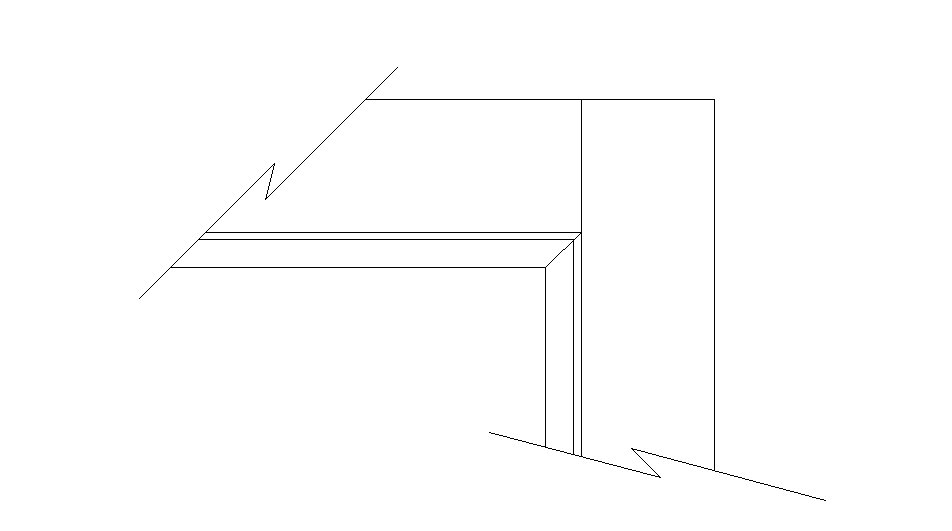
>The bead would be put on with a beading plane, and then the mortices and tenons cut into the stiles and rails. Where the bead in a stile meets a rail, it would be mitered, and the bead on the rail mitered to match. I would cut it by hand and then use a 45� block to trim the bead. I had a picture on the p*w*r t**l side last week, and will just put it in here again, as the finished look when done by hand would be the same finished look, just a much more interesting and more skilled process, without a major investment in tools. I am talking about a face frame construction here; letting a rail into a solid side would be a similar process, just different size parts.


Re: beaded inset face frames by hand

#6

is this the answer?

bill tindall

>I was not sure of your question, but if it was how to cut this joint I am doing a bunch as we speak. A table saw is mighty handy for removing the molded strip from the stile and cutting the miter.


img

Re: beaded inset face frames by hand

#7

Re: beaded inset face frames by hand

Warren in Lancaster, PA

>Frank,

I noticed that nobody answered your two last questions. I cut the mortices and tenons first while I still have straight stock. I then run the tenons into the stile mortices, and with a knife I mark the edge of the miter on the inside edge of the stile. Then I mark with a miter square. To remove the beaded portion where the rail comes in, I saw from the end with the grain and saw at the miter and clean up by paring with a chisel. If the rail meets in the middle of the stile rather than the end, I chop crossgrain with a chisel to remove the bulk of the material and then finish up by paring.

Make sure you give extra length to the rail to account for the part of the stiles you will cut away.

Re: beaded inset face frames by hand

#8

a mistake waiting to happen.....

bill tindall

>"Make sure you give extra length to the rail to account for the part of the stiles you will cut away. "

I've made that mistake a time or two!

Re: beaded inset face frames by hand

#9

that's it, bill!

frank shic (walnut ck, ca)

>glad to hear that the tablesaw is good for something ;)

Re: beaded inset face frames by hand

#10

good point

frank shic (walnut ck, ca)

>moses, i originally meant beading on a face frame, but you're right, the same concept will work on frame and panels. thanks for the nice diagram! 1000 words!

Re: beaded inset face frames by hand

#11

pride on the line

frank shic (walnut ck, ca)

>pam, there seems to still be a fair bit of controversy over what's "appropriate" construction for a door: modern cope/stick vs traditional mortise and tenon. seriously, though, how much BENDING or LATERAL pressure does a door receive at the edges? thus far, all of my projects have been constructed using cope/stick router bits (eeeek! i know...) and have held up pretty well, except for when i didn't apply enough glue!

Re: beaded inset face frames by hand

#12

Re: a mistake waiting to happen.....

frank shic (walnut ck, ca)

>i've done the same thing with crown molding - expensive mistake!

Re: beaded inset face frames by hand

#13

the steps I use

bill tindall

>The picture in post below is chopping mortise in such a rail. I put molded edge on pieces. Then I saw away the molded edge on stile and cut its miter using a stop block on saw to get them all the same. then I mortise stile. Use mortise to mark tennon and make it. Then nibble away at the rail miter to get a perfect fit. I nibble with the table saw, again using a stop block, but a confidnet chiseler would do the task quicker.

And it bears repeating for us slow learners, remember the rail must be 2X times the molding width longer than I usually cut it.

Re: beaded inset face frames by hand

#14

Re: pride on the line

Pam Niedermayer - Austin, TX

>Beats me. The couple of cope and stick framed raised panel cabinets I built in my ACC woodworking class are still alive and well. However, I take Stephen's advice very seriously, and when he talks about kitchen cabinets falling apart I believe him. Therefore, my new kitchen cabinets will be built with full M&T.

Pam

Re: beaded inset face frames by hand

#15

Re: pride on the line

William Duffield, on the Cohansey

>Pam and Stephen are right. The only way a copeandstick door has any chance of working, especially in a kitchen or bathroom, is if you use a glued-in plywood, ugh! (or MDF, double-ugh!) panel and waterproof glue. Slamming the door a few times puts a lot of stress on those sorry excuses for joints. Copeandstick is just an excuse to sell a lot of expensive router or shaper bits. Most of us with any integrity, or any desire to build cabinets that will survive a couple of generations, just won't go there.

Re: beaded inset face frames by hand

#16

Re: pride on the line

Alan Bierbaum, near Denver, CO

>The company that I work for (now part time) has done over 16k kitchens with cope and stick doors over a 20 year period. At 20 doors per kitchen, that is 320k cope and stick doors. I can't remember the last time we had a failure. There have been a few mistreated doors that failed; but they are few and far between.

There is no doubt that full M&T is better; however, cope and stick does hold up well in "normal" use.

Alan

Re: beaded inset face frames by hand

#17

Jack Guzman from Maine

Re: pride on the line

Jack Guzman from Maine

>Yea,but I'll bet that in 50 or so years not very many of those will still be intact.If the glue fails,there's nothing to keep them from coming apart.---Jack

Re: beaded inset face frames by hand

#18

Re: pride on the line

Warren in Lancaster, PA

>I have repaired doors of this type. All that I can remember were on freestanding cupboards. When the door is open it is vulnerable to hyperextension; there is a tremendous amount of leverage when you push on the open door that is supported only by the stile on the edge of the cabinet. The back of the groove breaks out, sometimes the whole way from top to bottom. It is only a 1/4 inch strip that is holding the whole door. Kitchen cabinets are less vulnerable because they usually open out onto other cabinets and can not be bent back.

👍 This page answered my questions

Your vote helps other woodworkers quickly find the answers and techniques that actually work in the shop.