Mitred joints - opening Pandora's Box
A little while ago I posted a progress shot of the two nightstands I am building. These will have Tasmanian Oak cases with a Jarrah base.
The cases are simply mitred to avoid anything distracting the visual flow of the wood grain and figure.
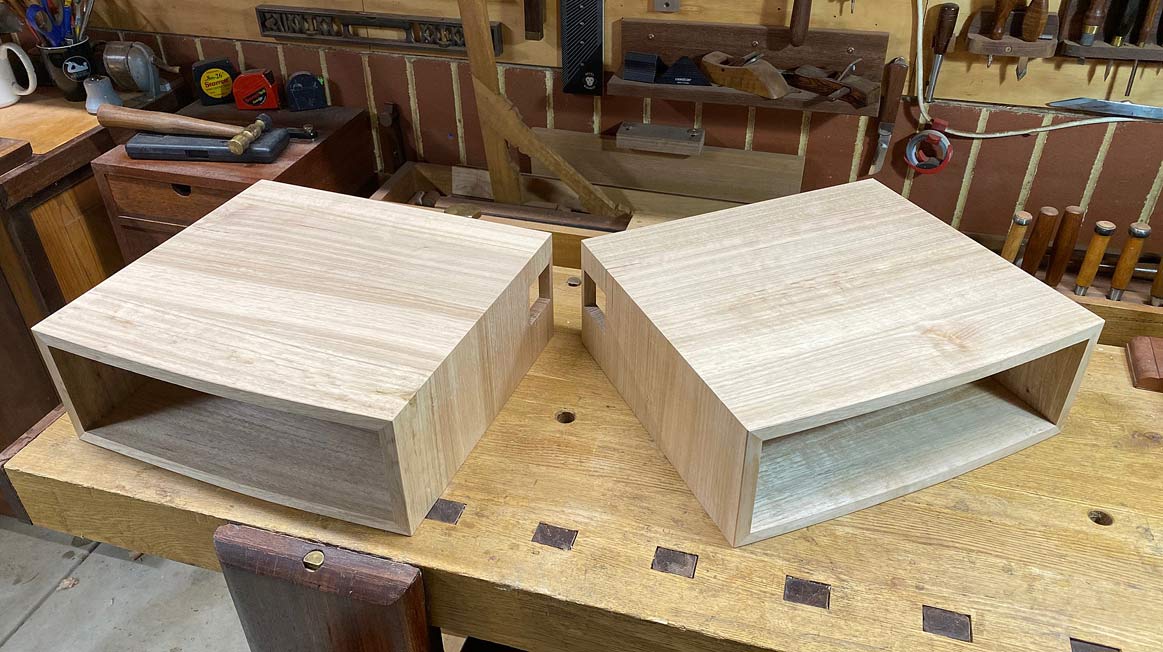
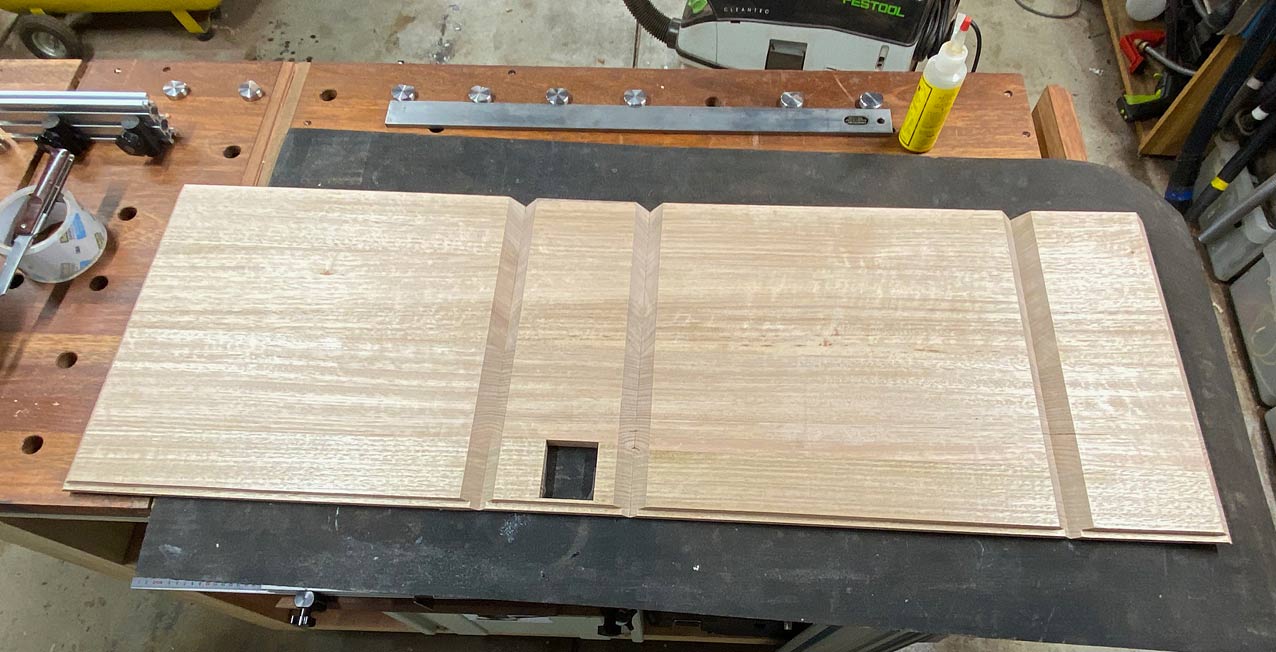
Now I chose to glue these up without any reinforcements using Old Brown hide glue. I could have used splines, biscuits or dominos. Instead, the panels were taped together ...
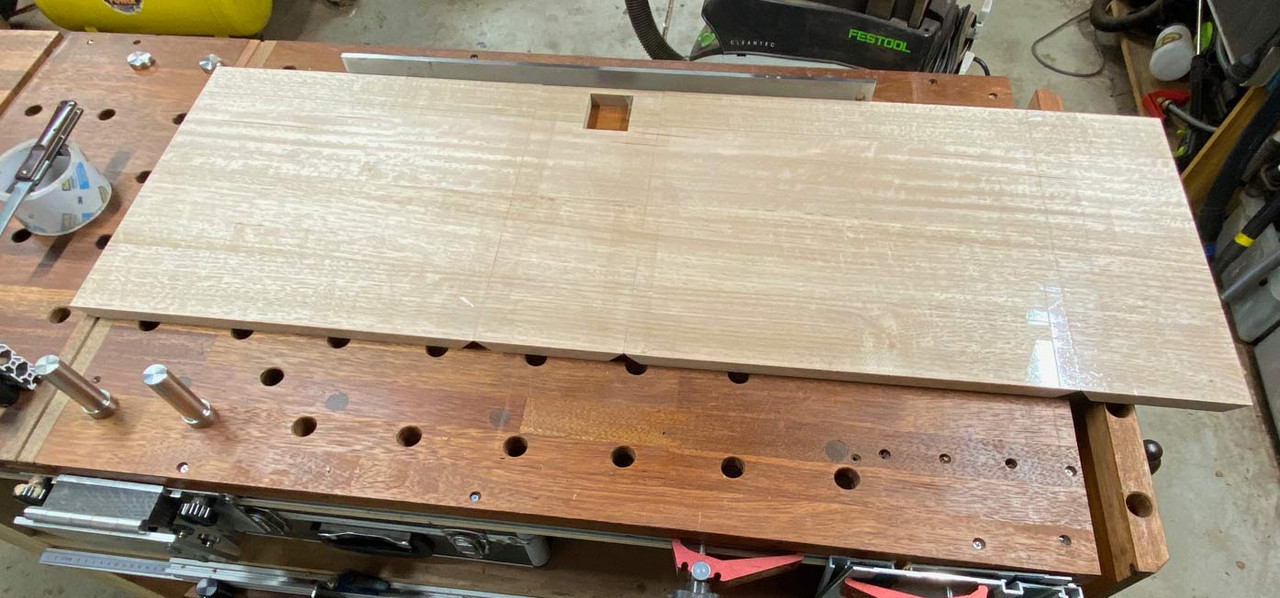
and glued with a sizing technique ...
I came in for a great deal of stick for this at Sawmill Creek. "You can't just glue mitres together - they will come apart!". "Mitres are weak. They need to be reinforced (with dominos, biscuits, etc, etc)". Or, "eventually the joints will fail owing to movement", and "what it they are dropped?".
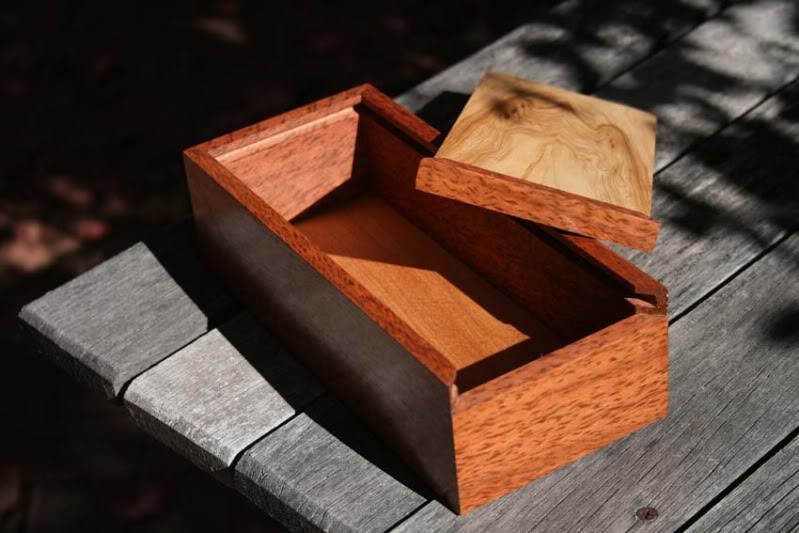
I think some are a little surprised not to see dovetails, but I did mention that I have made many boxes or cases like this over the years, and they have proved to be strong construction. A few examples ...
I have used this pencil box every day for the past 12 years …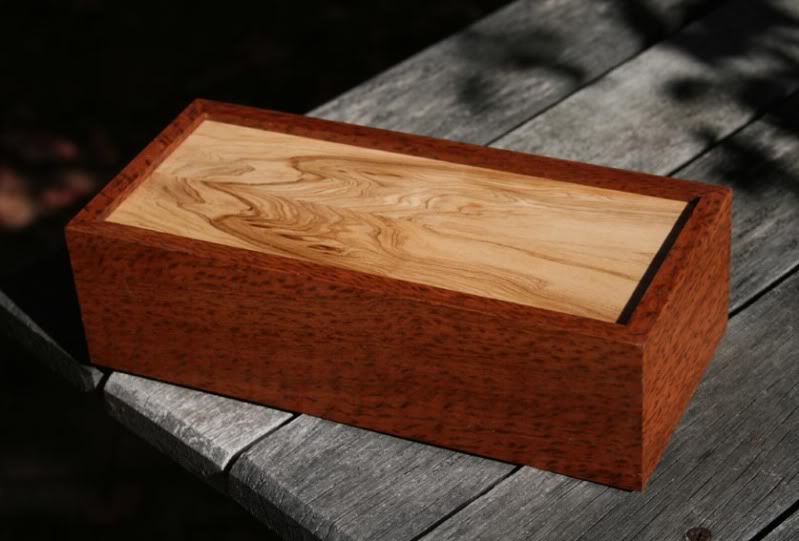
This is a box made for the Veritas Combination Plane. It has been bumped around for the past 5 years …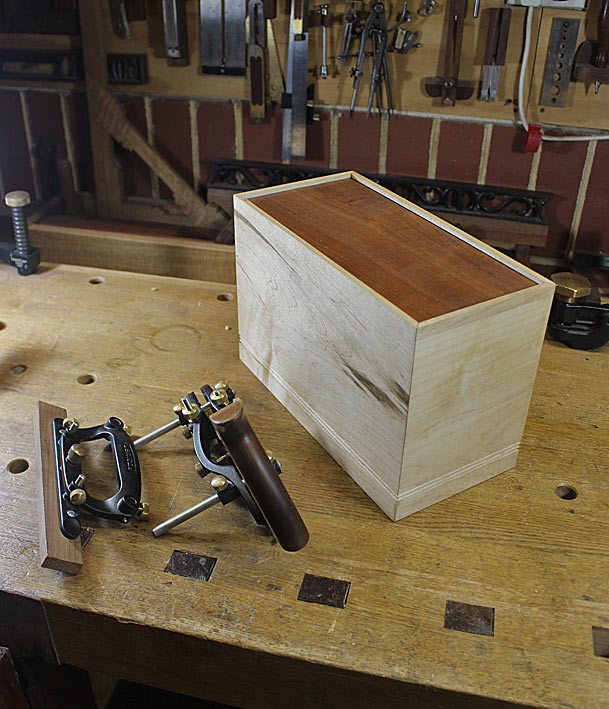
I lug this tool box to demonstrations. I am not especially gentle with it …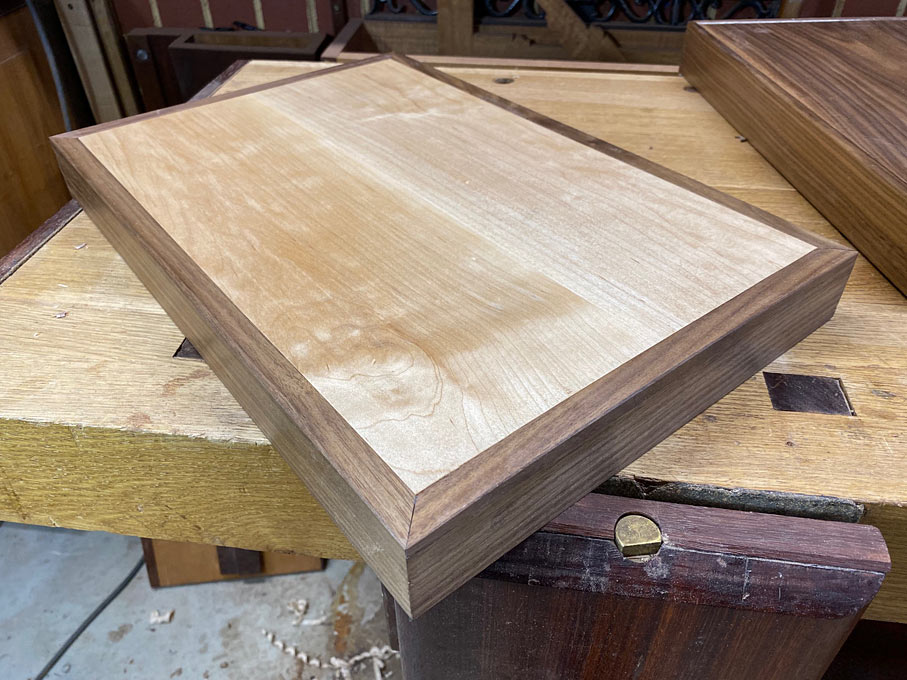
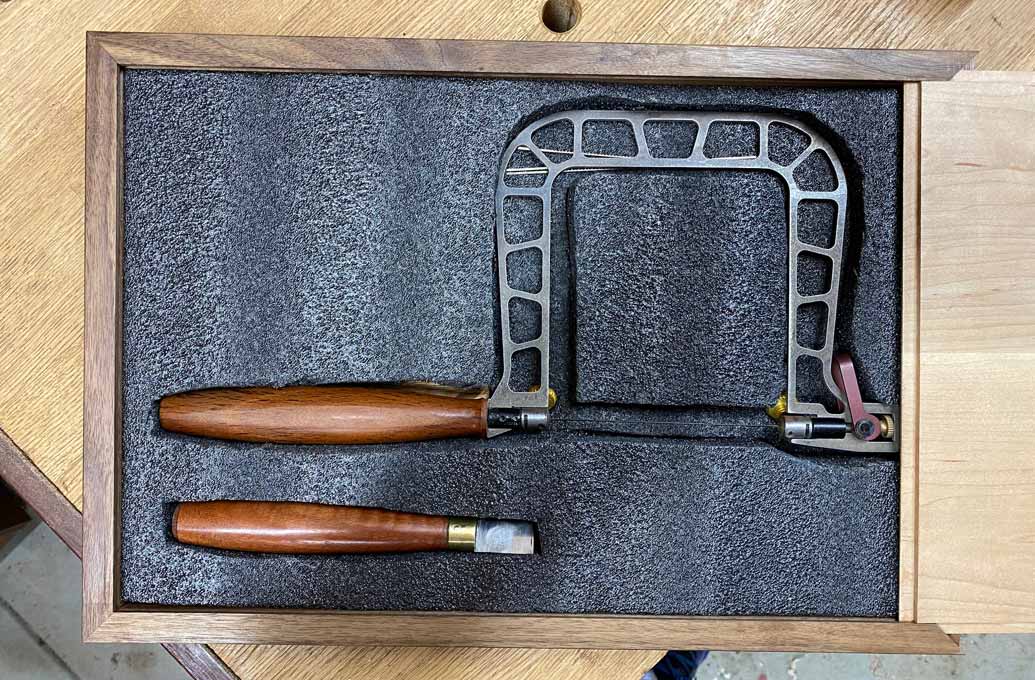
And more recently I built a new plinth and isolation table for a turntable. The isolation table has compound mitres …
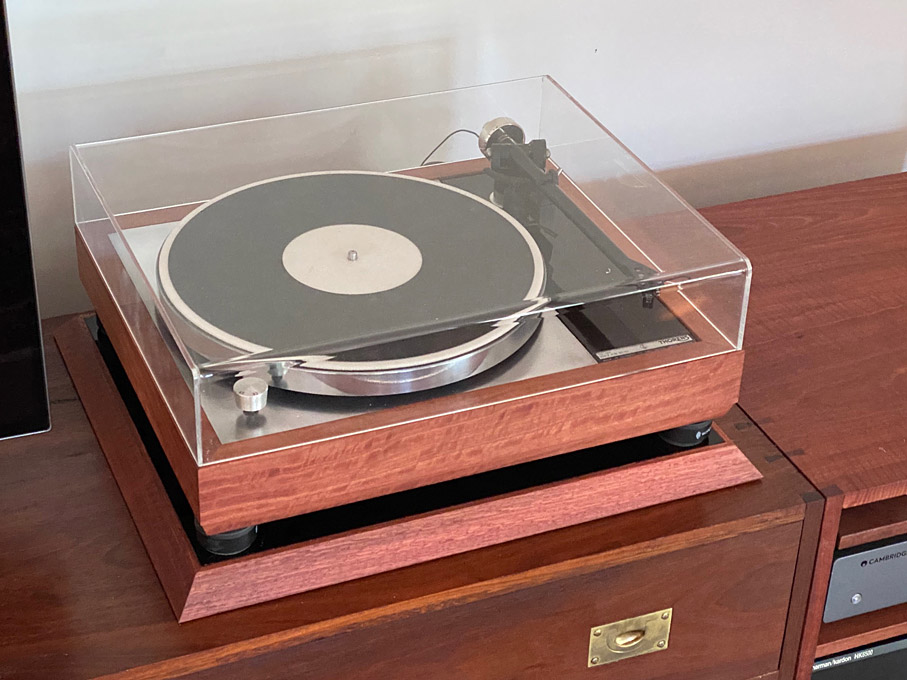
I would not have done this if I did not believe in its ability to stay together.
There was a recent video by Patrick Sullivan, which was an assessment of the strength of end grain glueing ...
Frankly, while Patrick did produce a good video, his conclusion that "end grain-to-end grain is twice as strong as side grain-to-side train " is incorrect, but not because the glue joint is not as strong as he depicted. I must admit that I was taken in by this at first, mainly because when all these criticisms were levelled at the joinery, I wanted to avoid further discussion, and just pointed to this. However, there are two take aways from this research project (which would have been better had Patrick included these points):
1. Glue is stronger than wood. None of the joints tested broke at the glue line. This includes end grain-to-end grain. It remained intact under greater forces than side grain-to-side grain. But this is where Patrick gets off track.
2. What Patrick did not account for was that the strength of end grain glue up lay with the grain direction of the boards. The side grain boards broke earlier simply because they were stressed along the grain. It is extremely difficult to break boards across the grain. So, the results of the test really demonstrated that glue joints are stronger than the wood itself, only.
But this is misleading and potentially dangerous information, which is the reason I am writing this post.
Then Rob Cosman, following release of Patrick's video, did his own testing ...
https://www.youtube.com/watch?app=desktop&v=l_w_or3KhH4&ab_channel=RobCosman.com
Go to the 25-minute mark where a 200 lb Rob Cosman jumps on a dovetailed-and-glued corner and a end grain-glued corner. Both survive. Again, glue wins.
I feel now that it is my duty to clear up any misconceptions about the joinery here:
What Patrick's video demonstrated was that glue is stronger than wood. Most of us have known this for many years. But that does not mean that it is a satisfactory substitute for joinery. At the same time, one does not need to use extreme joinery for everything. It is relevant to differentiate "stressed" from "non-stressed" joints. Panels (as in table tops and frame-and-panels) being glued up are non-stressed. If someone adds biscuits or dominos, it is not for strength; it is for alignment. The glue alone should suffice.
If you plan to hammer on or lever a glued mitre joint verses a reinforced mitre joint, all you are demonstrating is the strength in a non-stressed verses a stressed situation. A small box may have thin sides and thin mitres, but there is relatively less chance of the panels flexing than something structural.
The same situation is present in the mitres for these cases. The only possible stress is from the atmosphere, and I believe that this is negated by the fact that the wood is consistent and the grain of the boards joined are, essentially, coplanar. Will the glue breakdown? Sure, eventually ... in a 100 or so years. Look at vintage furniture using hide glue. These pieces are not intended to last 100 or more years. Fashion will see to that. So ... okay for this situation, not-okay for stressed joinery.
With regard to mitres and biscuits et al, a big reason they are used is to prevent movement when glueing up. Glue is slippery and a misaligned mitre is ugly. Glueing a mitred joint is tricky. The tape method I used here is fantastic for alignment (and it also prevents glue leaking out on bench tops), better than anything else out there (such as other tape, biscuits, dominos, etc). And it is dead easy.
It is important to emphasise that I am not recommending that one use un-reinforced mitres indiscriminately; assess the demands and the determine the risk.
This is a potentially great discussion topic. I would like to hear the views of others.
Regards from Perth
Derek

