Finish for ash desk?
Bill Tindall, E.Tn.
Needs to be a non yellowing finish which rules out anything solvent based.
Est. 1998 — 28 years of woodworking knowledge
Finish for ash desk?
Bill Tindall, E.Tn.
Needs to be a non yellowing finish which rules out anything solvent based.

Re: Finish for ash desk?
Ellis
I once made a large Parson's-style dining table of white ash and the customer wanted a very white, natural finish. I bleached the entire piece with KleenStrip wood bleach and then lacquered it with SWP water-white lacquer. It came out beautifully. I don't know if you can find a more durable finish nowadays that is clear enough, but the bleaching process might make it irrelevant.
Ellis
Re: Finish for ash desk?
Mark Mandell - Gone Round In New Jersey
My preference would be a spitcoat of super blond dewaxed shellac and then three coats of General Finish's Enduro Gloss Poly.
Re: Finish for ash desk?
Keith Newton
Maybe using a grain filler slightly lighter than the ash might look good. Then take a look at CAB-acrylic lacquer if you haven't used it.

Re: Finish for ash desk?
Jim DeLaney, Austintown, Ohio
I'd use Target EM8000cv. It's clear, and very durable.
Re: Finish for ash desk?
David Weaver
clear shellac wash with target em6000 and cross linker sprayed over it.
I wish you had not said that
Bill Tindall, E.Tn.
Sigh  I was ready to finish this thing and be done with it. Then you planted the image of a white filler, tempting me to experiment with that look on it. I have a gallon of CAB lacquer someone in the finishing lab at the place that makes the CAB made for me. Learned to spray from him. I would need to deluster it some.
No experience with white filler. I have filled walnut and mahogany and oak, dark. Do I use plain filler unpigmented? Or do I need to put white pigment in the filler?
You can play with it,
Keith Newton
Back in the old days, every painter would mix their own stuff like that. Even colored putty. I was needing to do that a while back, and ask at several paint stores for some whiting. They all looked at me like I was from another planet. Surely you can find a base to start with and get some of the ingredients online somewhere. I always keep the basic universal tints on-hand, but even that is hard to find too. However if you go to a paint store with some sort of little jars, most will give you a squirt of the colors you need cheap or free. Seems like the whiting was just calcium carbonate? is that what chalk is only a powder.
We sold SWP back in my dad's store when I was growing up, and he would always have something in the works for someone. I think he just rubbed straight burnt umber across the grain into the Walnut then scrubbed with burlap, before final sanding. I suppose you might use the titanium white that you toned down a little, but I think the whiting would make it more putty like and less creamy.
Sorry I can't be more specific about products with links, but I'm afraid I've aged out of todays new latest and greatest products.
pigments easy to come by
Bill Tindall, E.Tn.
Artist colors. Available everywhere.
White Pigment or Lime
Steve Elliott
Years ago I was asked to match existing trim that was a very light-colored maple. A white stain did the trick.
My current dining table is one my parents bought in 1946--their first piece of "nice furniture." It is limed oak, which I believe has lime used as a filler. Having never been refinished it now has what can politely be called a "marathon finish." For light-colored furniture it's not bad.
The prominent pores in ash might not result in as pleasing a look, but a few test pieces might be worth trying.
end of story
Bill Tindall, E.Tn.
Wife over ruled anything but a plain, satin finish. So that was the end of my enthusiasm for experimenting with this idea.
A Wise Man
Lime, chemistry
Bill Tindall, E.Tn.
I always wondered about " lime". It is wickedly basic/caustic and I think would destroy a top coat of lacquer or varnish. Lime can easily be made in doodle dust small particle size, though.
Lime is calcium oxide made by heating the bejesus out of limestone to drive off carbon dioxide thereby creating global warming. A component of concrete made in mega quantities generating mega quantities of CO2, but I digress from woodworking.
Calcium oxide, lime, will promptly react with water, or even humid air to become calcium hydroxide, "slaked lime", less caustic. But exposed to air slaked lime eventually reacts with CO2 in the air and reverts to calcium carbonate which is not caustic and will not react with varnish or lacquer.
I am guessing that what is actually on the wood from "pickeling" is calcium carbonate. It may be some less dazzling than white titanium dioxide pigment.
I was so anxious to see what I might do with it on ash. sigh
affix...
David Weaver
..that linde b in the pores with clear shellac!!! 
I'm guessing it won't react with much.
Re: Lime, chemistry, a chemistry question
Barry Irby
At some point in my career as an Expert Witness on construction defects I had to bring myself up to speed on lime mortar. An ancient technology. It's the slaking I wonder about and the released CO2. Wouldn't the slaking process recombine the same amount of CO2 that was driven off? Ignoring the CO2 created by generating the heat to drive it off, If all the lime were slaked, wouldn't the process be carbon neutral? Just curious.
(Is this an argument for nuclear power?)
Re: Lime, chemistry
Sgian Dubh
Hi Bill, a similar effect to liming can be achieved on coarse timbers with water based paint, emulsion paint we call it over here, used for painting interior walls and ceilings of habitable buildings: I think in the US this stuff falls under the generic name of latex paint ... but I could be wrong on that.
Basically, if you want a film finish the best way I've found to do it is to apply a fairly light coat of polish, e.g., shellac, pre-cat, etc. Then quickly brush or rag on paint with no need to get it on too thick. Before the paint dries wipe it off across the grain using plenty of clean dry rags (old T shirts, for instance). Let dry and you may well find you need to do a little light hand sanding with the grain at maybe 220 or 180 grit. Dust off and polish the job up.
You don't have to include the first coat of polish, but doing so reduces the amount of paint that affects the colour of the base wood that's not a crevice if you see what I mean, i.e., the denser summer growth of temperate tree species, for example. It gives a greater contrast between the paint colour in the crevices (spring growth) and the dyed/stained or natural colour of the wood formed during summer growth.
Anyway, I suppose this information is moot, because the decision appears to be to nix the liming idea altogether, ha, ha. Slainte.
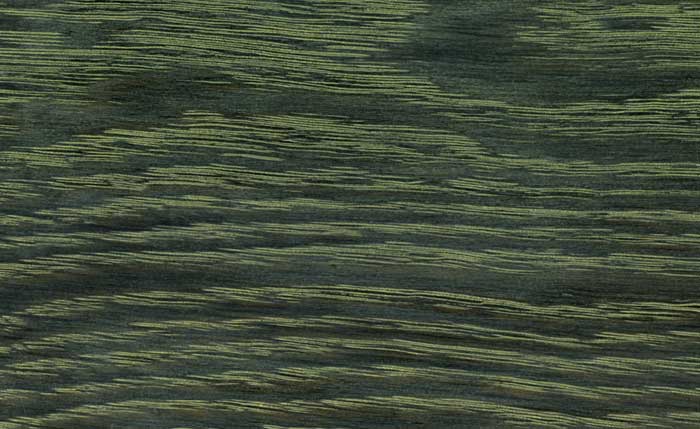
Below. White oak, ferrous sulphate background colour, coat of pre-cat, green emulsion, more pre-cat.
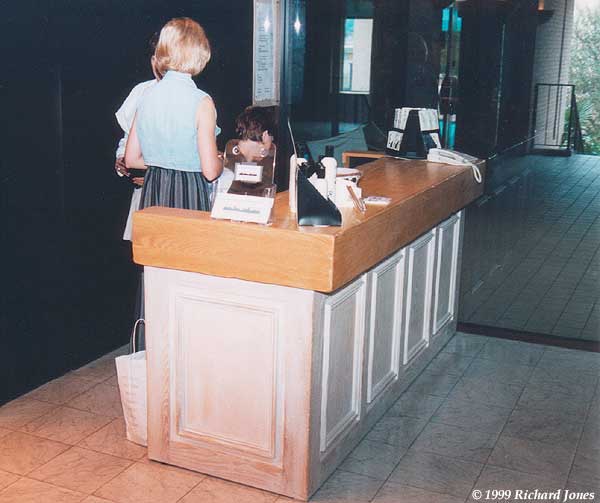
Below. American ash and ash veneered ply base with panels, no barrier coat of polish, white emulsion, bit of sanding, plus a couple of coats of pre-cat. Horrible photo I know which is all burnt-out nearer the top. What you can see nearest to you at the bottom gives the best idea of the finished appearance.
go back and read what i wrote

Story of my life


