WoodCentral Forums

Est. 1998 — 27 years of woodworking knowledge

Pleasant Hill

Posts

Pleasant Hill

#1

Pleasant Hill

Joe in a Cleveland suburb

Last week while driving home from visiting my daughter in Athens GA, we took two days to come back and stopped at Pleasant Hill Shaker community. I've been wanting to go there since the 80's. First time there. As luck would have it, it was pouring down rain. We just came home. Didn't see anything on the inside other than one building quickly. We had one of our dogs with us - one of their rooms allows dogs.

We plan to go back the day after Christmas.

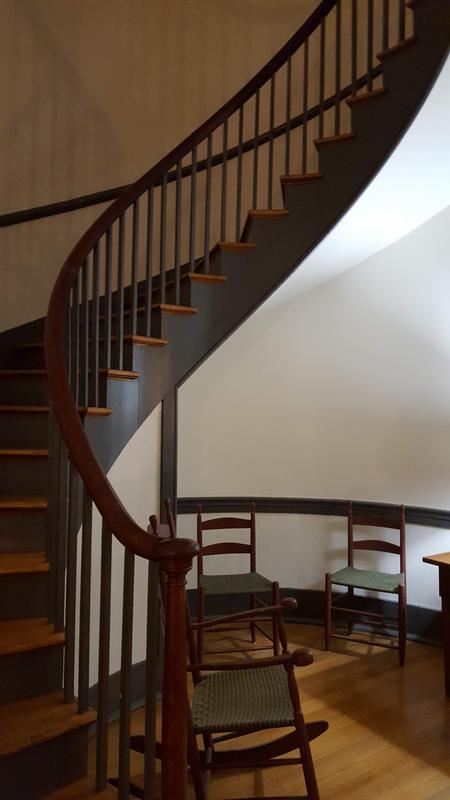
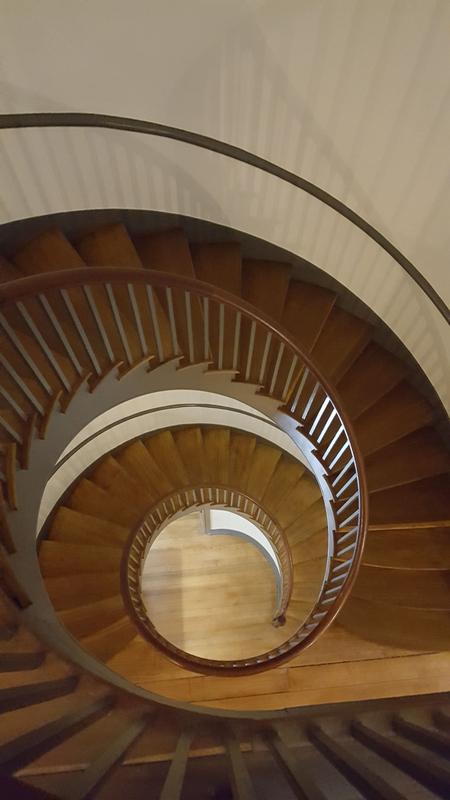
Anyway, I heard somebody say (or I read it someplace, don't remember) something wondering about how they would have shaped the cherry rails on the steps in the pictures below in the early 1800's

Pretty amazing to me. I know they are in sections, but still.

Any guesses on how they would have made these?

#1

#2

Ps

Thanks Bill Tindall for the redirect directions driving to Athens. I think it helped although it took me 14-1/2 to get there.

Re: Pleasant Hill

#2

Re: Pleasant Hill

Michael van pelt

I have visited all the Shaker settlements across the country and Pleasant Hill is my favorite! Worth a visit! And the food is wonderful!

Re: Pleasant Hill

#3

Shaker use of wide wood

Bill Tindall, E.Tn.

In some quarters it is advocated to rip wide boards and reassemble to make "stable" panels. Such nonsense can be tested and a tall storage chest in one of the Pleasant Hill rooms provides data. This thing has a single walnut board side, 20" or so, as I recall. Seemed flat enough to my eye. Joe can confirm upon his visit as well as scrutinize the hand rail construction. As I understand the process a curved rail is assembled in sections and the joints smoothed in place. The details of the joints vary so what is used here will be interesting to know.

I recently watched a CNC router make curved stair parts and then bore the hole in the end of the scetions to dowel them together.

Some nice English Period furniture, silver and decorations can be seen a short ways down the road in Shelbyville. The nice folks in this shop have always let me poke into these pieces to examine construction.

Re: Pleasant Hill

#4

Re: Pleasant Hill

Don Goodwin

Have they moved furniture back into the various dwellings yet?

We had planned on driving down there a couple of months ago for a local maker fair but decided not to. My understanding is that there was/is a major fix up happening and most of the furniture has been in storage and that they were not doing demonstrations in the shops.

If the furniture is back in the dwellings, I see a trip coming next spring for us.

Re: Pleasant Hill

#5

Question, You said,

Keith Newton

"Pretty amazing to me. I know they are in sections, but still.

Any guesses on how they would have made these?"

Did you get to walk these stairs? How long were the sections? If they were rather short, they probably were sawn out of solid wood with the curve and twist sawn in, then shaped with planes.

However if the sections were pretty long, like 8 ~ 12' and not glued-up laminated, then that would suggest steam bent.

What I've done though is to rip a heavy timber, then glue the laminates back together using epoxy in a vacuum bag. I've got about 20 steel angle brackets that I clamp to the tread to establish the inside edge. Once the laminates are in the long skinny bag, that gets clamped to the brackets before the vacuum is drawn. After about a day the clamps come off, the shaping starts with a power-plane, followed with a router to get the profile.

Re: Pleasant Hill

#6

Re: Pleasant Hill

Joe in a Cleveland suburb

"Have they moved furniture back into the various dwellings yet?"

From the very little I saw, they have.

We arrived late at night and had reservations for one night at the East Family Brethren Shop on the second floor - they allow dogs in this building.

The following morning the first floor was open and I could see in two rooms there were displays and furniture and so on. I peeked into the building next to this one and could also see displays and furniture. I could also see people were staying overnight in some of the other buildings. Lastly, the building with the two staircases and restaurant were open, serving food, and the gift shops were open.

I would say everything is normal although I didn't know furniture was moved out and this was my first visit. It was pouring down rain so we just left. Plan to go back the day after Christmas.

Re: Pleasant Hill

#7

Re: Question, You said,

Joe in a Cleveland suburb

I don't know the answer to your question(s).

We are going back the day after Christmas and should have time to look closer.

Yes, you are able walk the stairs all the way to the top floor. The rooms on the floors are rooms people stay in so you can walk all over.

Re: Pleasant Hill

#8

Re: Shaker use of wide wood

TomD

"In some quarters it is advocated to rip wide boards and reassemble to make "stable" panels."

Ripping and reassembling along the cut line is not seriously contemplated to make stable panels. It is usually to fit into smaller machines. If done properly the joint can be relatively invisible, though after time it will often print through.

If you rip it for "stability" it is normally to remove a section of unstable wood as one might get from a pith centered piece. The success of that kind of operation is not a myth. Or one might choose to book match such a piece That can certainly add stability as the straightest grain can be oriented in the middle of the reassembled piece. Pretty much assembly 101 in guitars. With guitars you also get the benefit of the riff grain outboard allowing the board to pump a little better.

We just cut down a huge ash, that had died of natural causes (though the borer is probably on it's way), and as it turned out was rotten, but it could have delivered a 25" piece to the side of the pith. That would be a lot more stable than a 20" piece heart centered on a smaller tree. Or a little off the heart. It isn't as though all species or cuts are the same. Antiques are interesting but what would really be interesting would be to study the 99% of the stuff that was made to similar specs and failed to make it to modern times. Not only did the Shakers get the first cut on some virgin timbers, the second growth wood is often dramatically different in properties. Huge trees today are less often extracted from forests where they grew for centuries, and more likely to be some gangly tree someone left in the open as an ornamental. What you get when you cut that tree is nothing like what the shakers would typically get.

Re: Pleasant Hill

#9

Re: Pleasant Hill

John McGaw

I've been pleased and amazed by that staircase every time I've seen it but I don't have a clue as to how they managed to pull it off. The Kentucky Shakers managed some very sophisticated architectural and structural feats at both Pleasant Hill and South Union. At the moment I can't recall which one it is where one may enter the attic space of the meeting house showing the innovative timber framing which allowed an immense visibly-unsupported span in the main room below.

Re: Pleasant Hill

#10

Re: Shaker use of wide wood

Don Stephan

As the product of Nature, wood will vary not only between species but occasionally between trees within a species. Maybe wide boards always stay perfectly flat in some parts of the country, for some people, . .., but it hasn't been my experience. No doubt there will be an occasional flat sawn board just off the pith that does not warp seasonally with humidity changes, but one example does not make a rule.

👍 This page answered my questions

Your vote helps other woodworkers quickly find the answers and techniques that actually work in the shop.