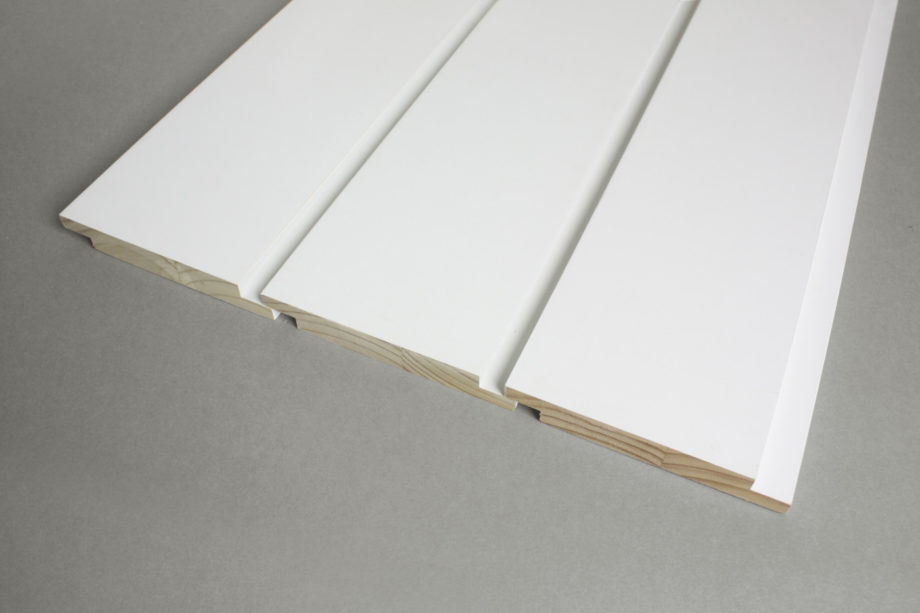
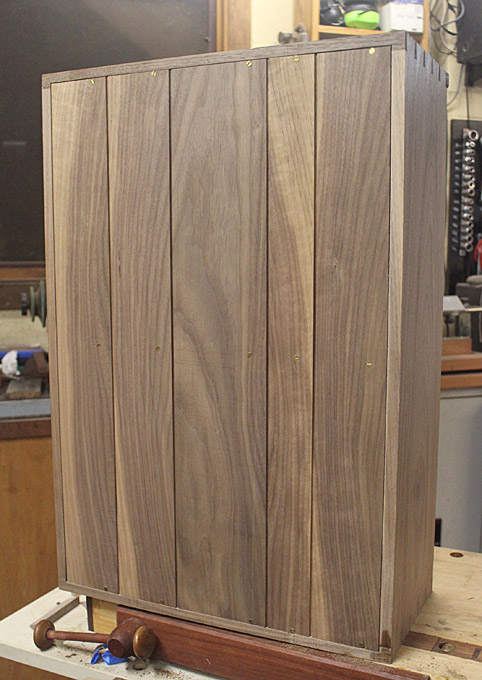
I believe you are right, ship originally was rabbeted . in more recent parlance it has become any "plank" wood application to a wall, most often horizontal or Herringbone. You need to find out from her what looks she likes. Heck they are now using vinyl plank drooling and wood look tile and calling it shiplap.
In my opinion Shiplap boards have a rebate on both edges and inter lock allowing the boards to expand and contract without opening a gap stopping blocking light and air flow.
If you are the hosts of a popular home improvement TV show any collection of random boards nailed to a wall is shiplap. This is the same pair of fools that think all bricks are ugly until they paint them.
We always called a tongue and groove product we bought at the lumberyard, decades ago, car siding. I think that was short for railcar siding. It had a v groove in the center of the 1x6, bevel at the tongue, and a bevel at the groove. You are correct, true shiplap is rabbets only. As mentioned, on TV any plank that goes on the wall is called shiplap. It should be called Gaineslap since that HGTV show has brought it back bag time!
I did some more looking and talked to her again. She was fascinated with the "nickel gap" idea. Wanting the really neat look of consistent spacing.
Turns out someone is making T and G stuff cut so there appears to be a gap the thickness of a nickle between the pieces. She/we discovered some of it is made of MDF either very smooth or textured with fake wood grain and other textures and some of it is made of wood of various qualities. So now she is struggling with how much patina does she really want.
So, the real shiplap was rabbeted on each edge. Either way, I told her I would not any of it for a kitchen wall, especially behind a 5' wide commercial range.
IIRC "shiplapping" made for a more water-tight hull rather than merely butting the planks and allowed for small variations in plank width.
With the invention of plywood shiplap gave way to "lapstrake" construction a/k/a "Clinker" hulls where the top edge of the ply was beveled. Make a very strong, but heavy, hull.
The term got borrowed by house builders for milling siding. Makes for an easy weather-proof installation as rain water flows over, out, and away from the join.
Shiplapping is the joining of boards using an overlapped rebate. The advantage of this is to allow for movement while presenting an outward solid and sealed surface.
As others have said, you're right about shiplap, but the definition has drifted/gotten muddy/irritated lots of us.
If it were an exterior application, she would need to install it in a way that allowed for wood movement, which might mess with her nickel gap; not as big a deal inside.
One benefit of T&G, if she's staining the wood, is that she may be able to install it the way T&G flooring is, with nails angled through the base of the tongue and thus no nail holes on the face of the boards to fill.
You are correct. years ago I built a log home in the Catskills. I do not enjoy painting so all of my walls and cielings were unfinished rough sawn ship lap. It really looked beautiful.
Someone should leave comments on their site....FIL's church just spent about $45,000 having the paint removed from their bricks and then dealing with the subsequently required repointing.
It looks a million times better.
Wife's friend (a decorator, probably a good one...what do I know) suggested painting our fireplace and I've been fighting that off for 13 years so far. It smelled like smoke, so I sprayed it with blonde shellac and that's satisfied the mrs ...sort of...the demand for paint still comes and goes.