Re: questions
Derek Cohen (in Perth, Australia)
1. Curious why the interior partitions that define the drawer opening were made thinner than ends of case. Will a lipped drawer hide this partition, or non-lipped drawer?
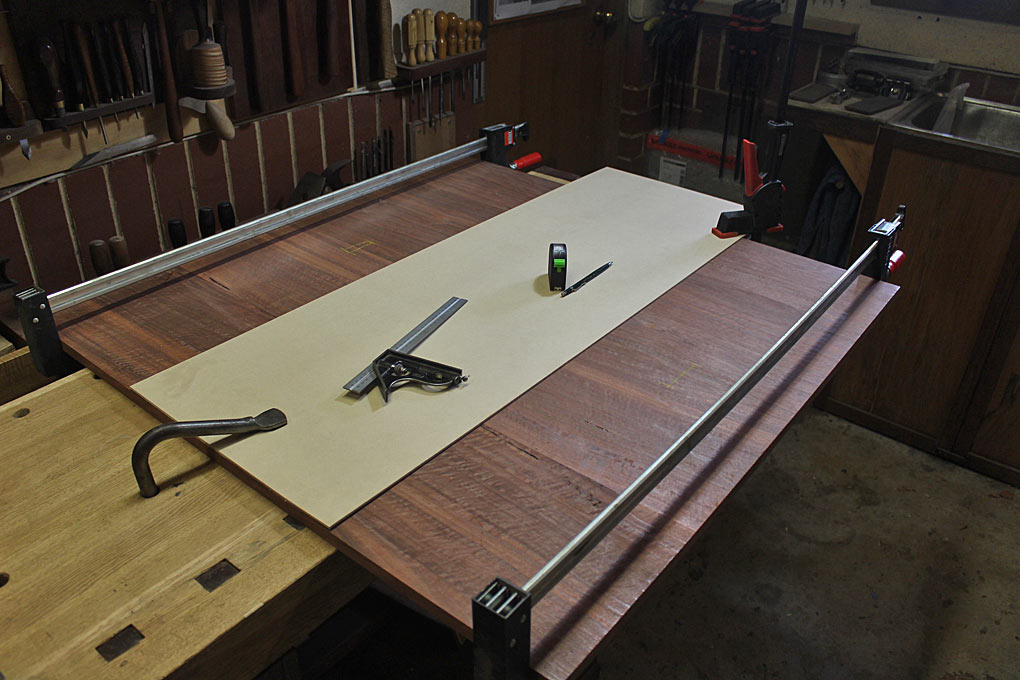
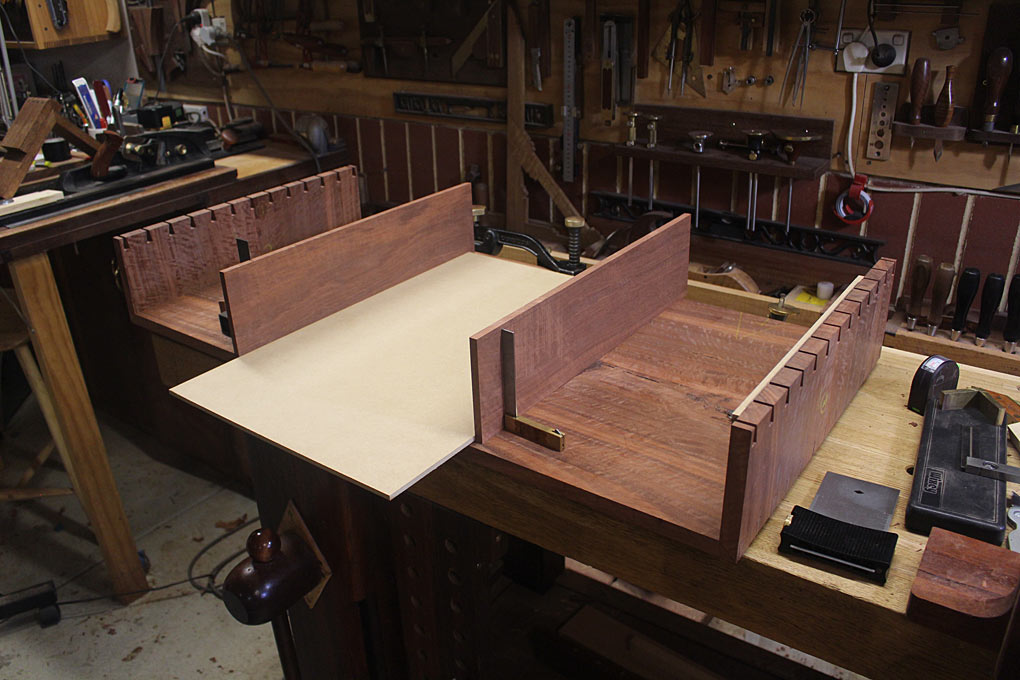
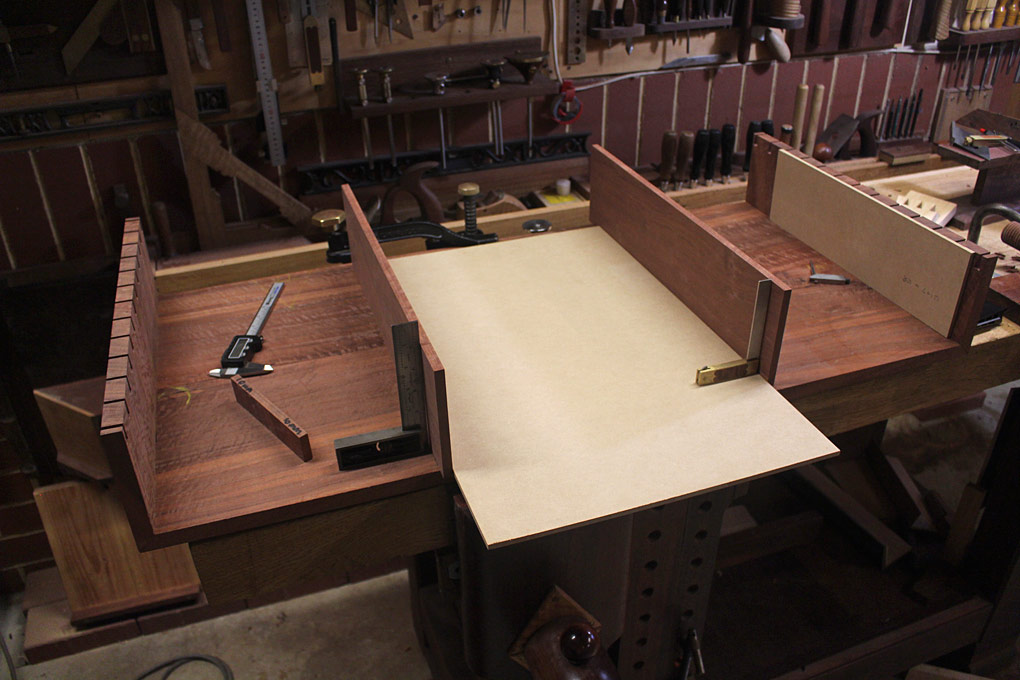
2. Followed along clearly until the end...."At the far end is another MDF template to size the drawer case sides ". What is being sized, which is to say what is a drawer case side, a drawer side? Either this piece of mdf is simulating a drawer side, in which case I don' t understand its necessity, or I don't understand this operation.
Good questions to clarify the design and build process, Bill.
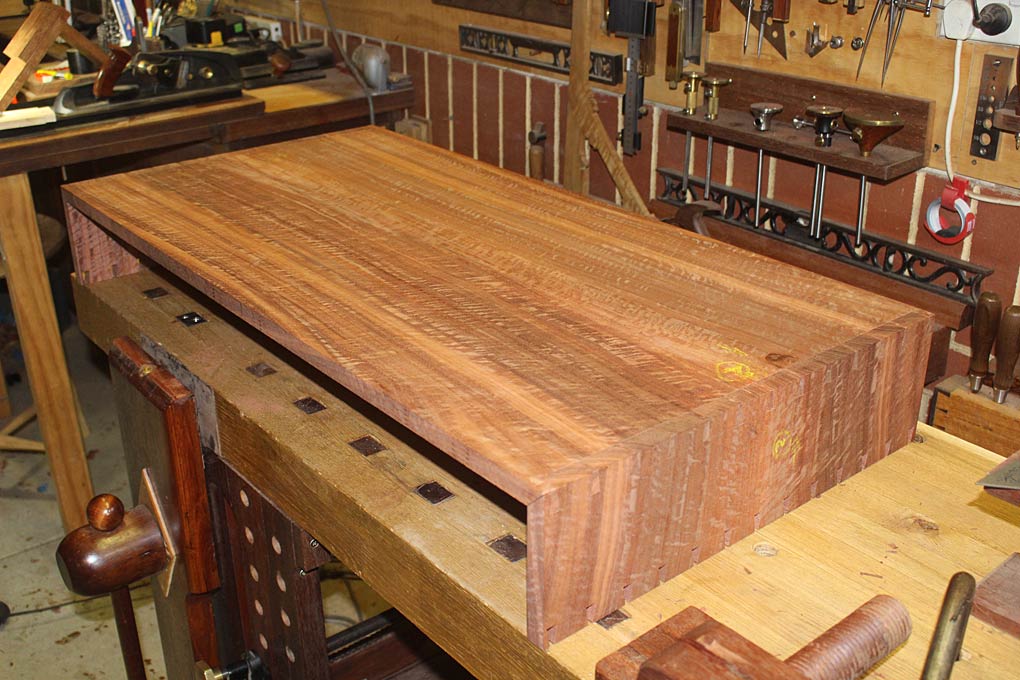
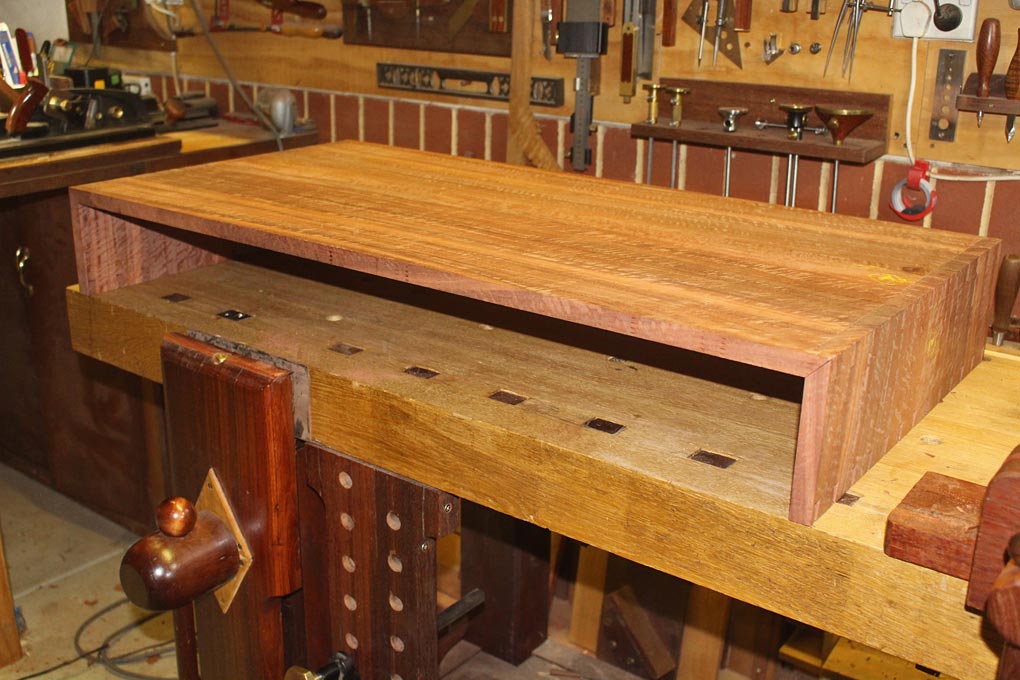
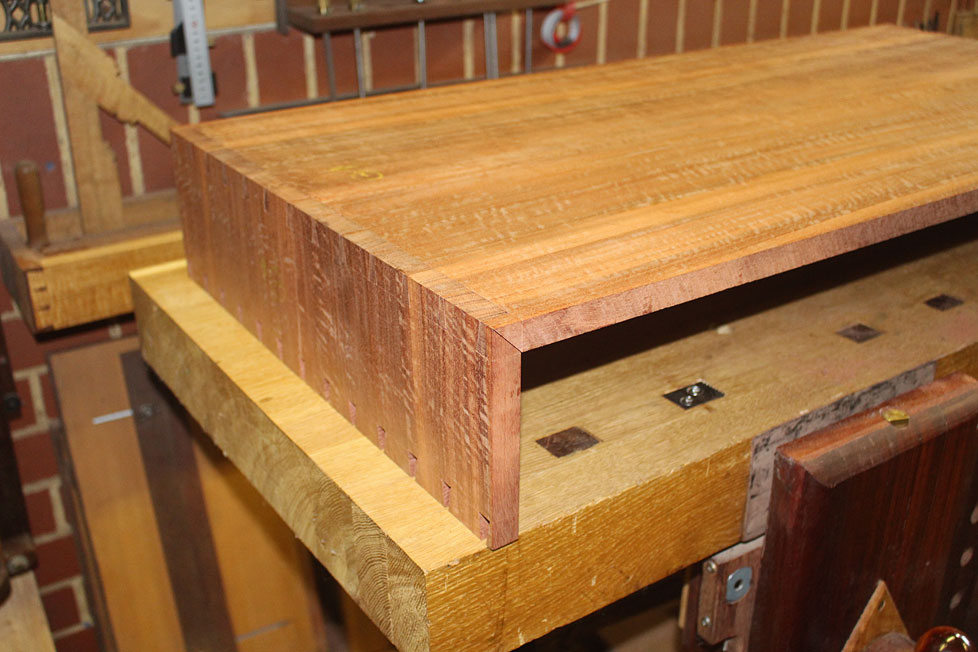
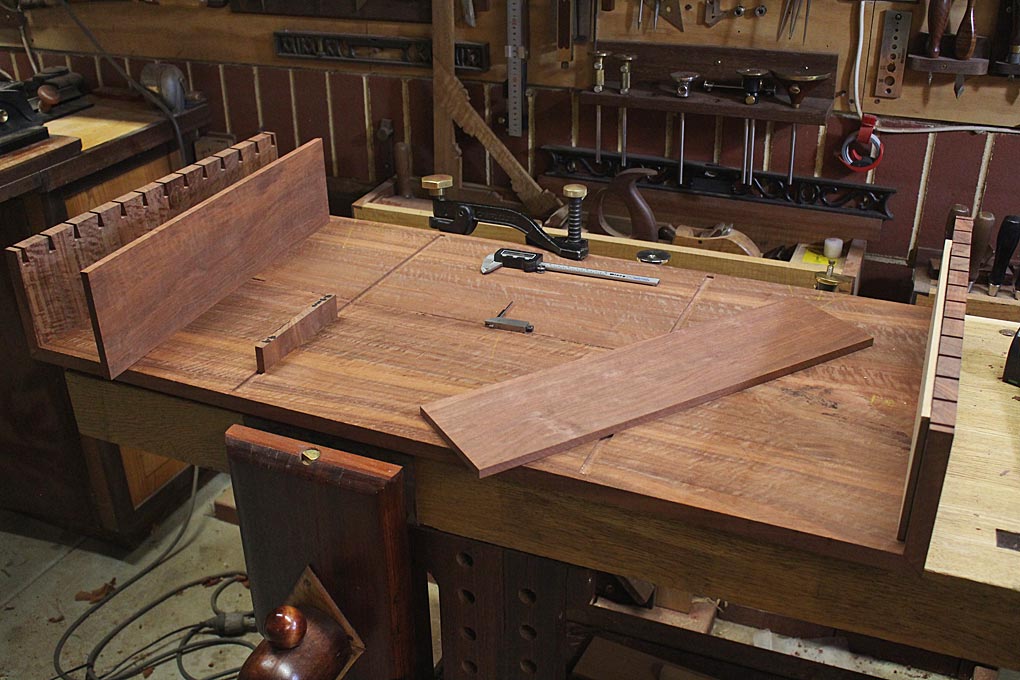
1. The drawer case (at 10mm) is half the thickness of the carcase (20mm). The drawer front will be the same Fiddleback Jarrah as the top and sides, and will be inset (rather than lipped). The purpose of the thinner sides is simply aesthetic - I want it to look lighter, to subtly separate it from the carcase. The drawer front will be the same thickness as the carcase, and the drawer sides the same thickness as the drawer case.
2. When the two ends of the lower panel have been dovetailed, the two sides of the drawer case must be fitted before the panel can be attached. In other words, these three pieces are fitted together at the same time.
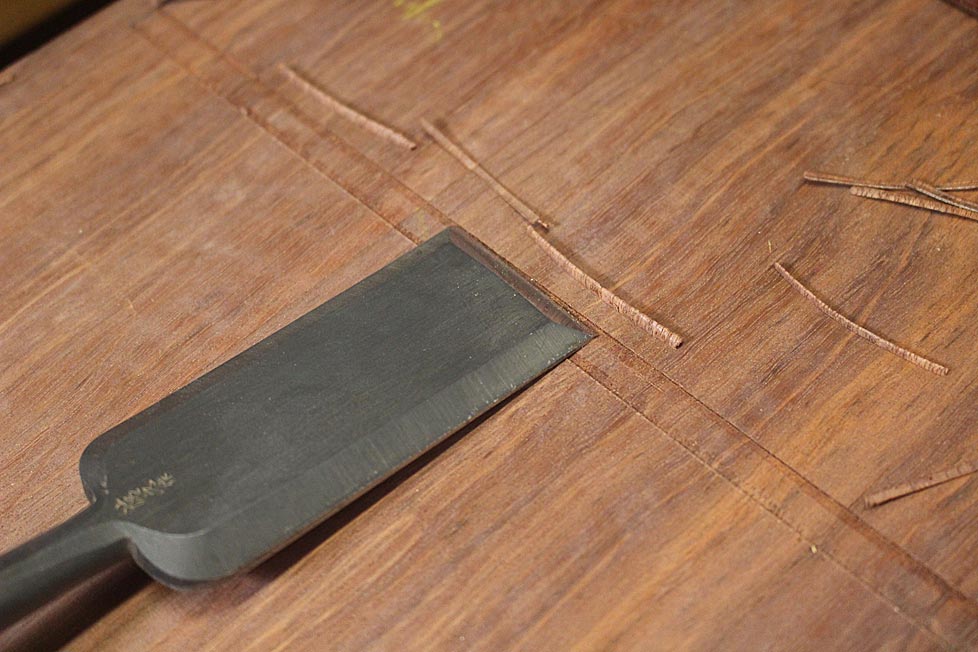
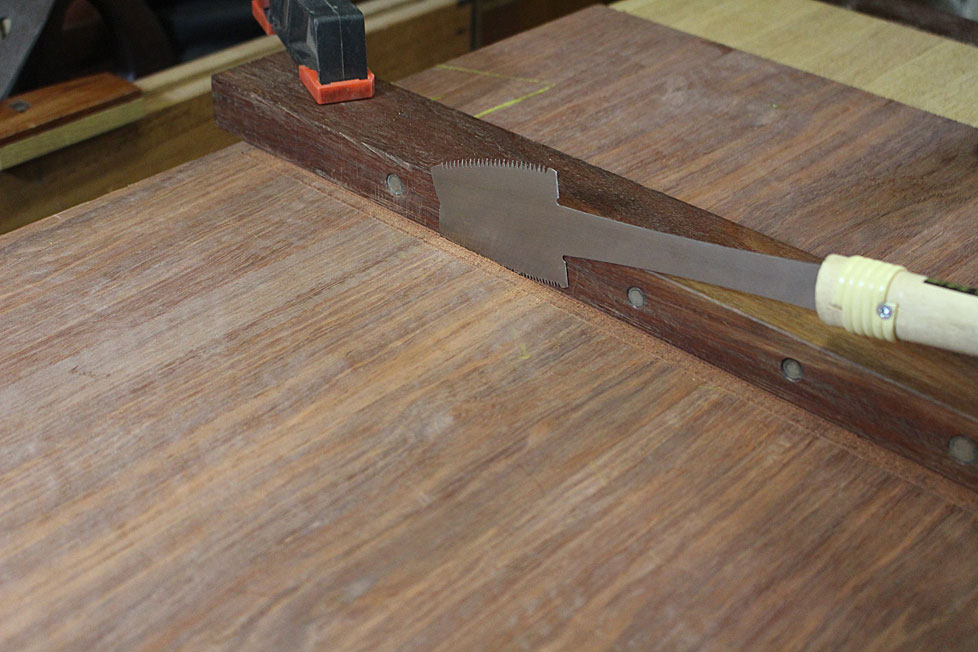
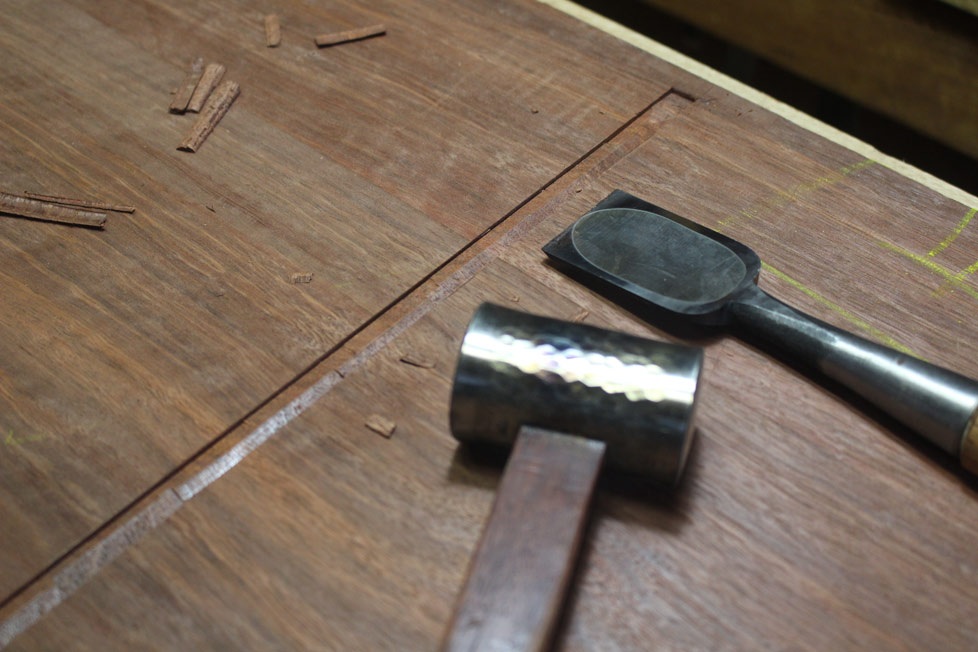
Now, as the sides of the drawer case run in a stopped dado, they need to be sized beforehand. This fitting is different and far more exacting that in the typical carcase which as a stopped dado on one side only, and the dividing panels (which I term the drawer case) are slid in, allowing one to mark where the front rebates will go. In the present build, the front and rear rebates need to be determined beforehand, and cut before the parts are brought together.
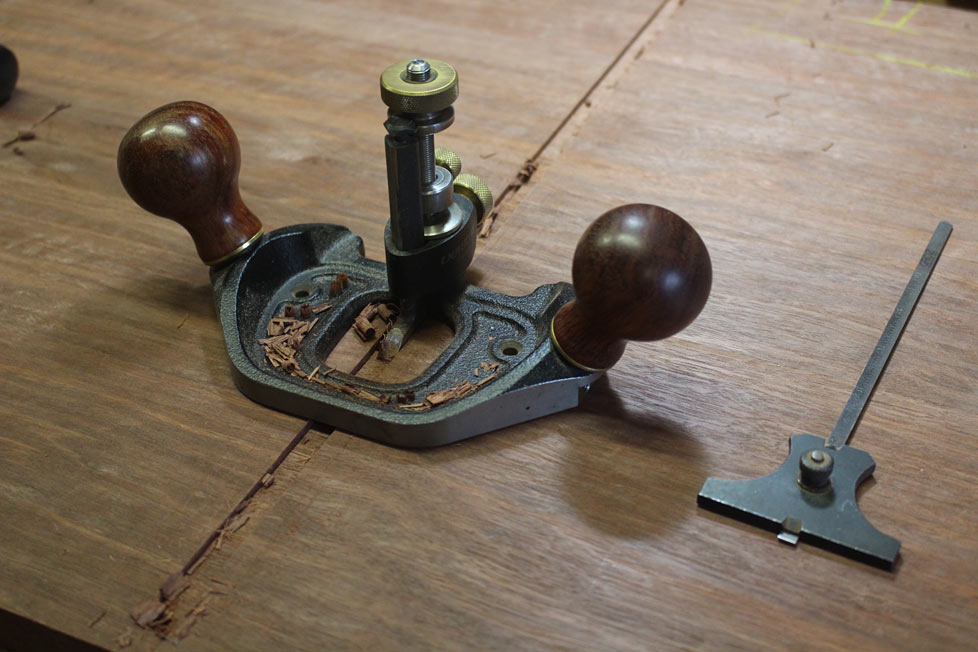
The MDF template is to aid in measuring up the sides for the drawer case.
I assumed that the above was understood, and did not think to explain it before. This is one of the (number of) surprises of this build: it looks so simple from the outside, but when it comes to constructing ...
Regards from Perth
Derek