WoodCentral Forums

Est. 1998 — 27 years of woodworking knowledge

Another coffee table

Posts

Another coffee table

#1

Another coffee table

Derek Cohen (in Perth, Australia)

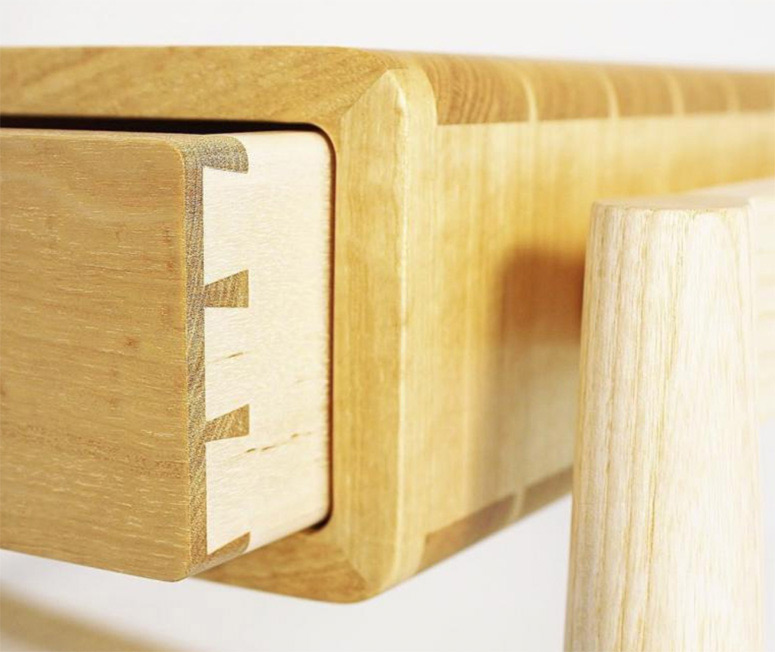
My nephew is getting married in February, and I offered to make a piece of furniture as a gift. The offer was open-ended, and the couple decided they wanted a coffee table. Their taste runs to mid century Danish, and so I sent them a bunch of example from the Internet to get the ball rolling. They fell in love with the following design, and want it in a medium dark wood (it is going to be solid wood, so possibly Jarrah) ...
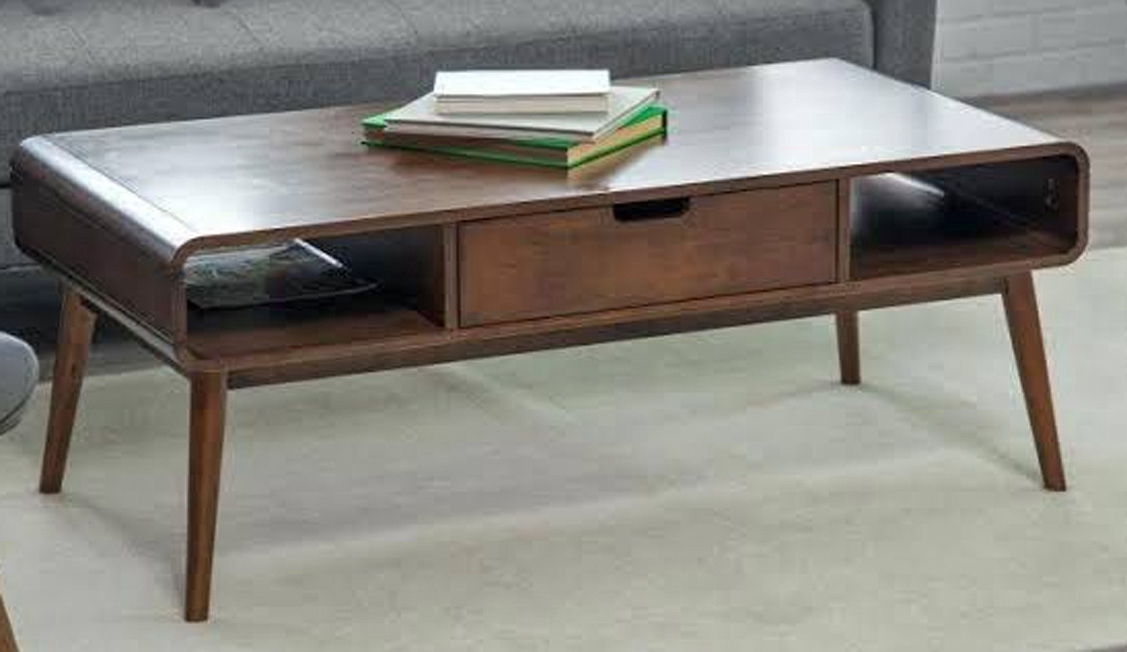

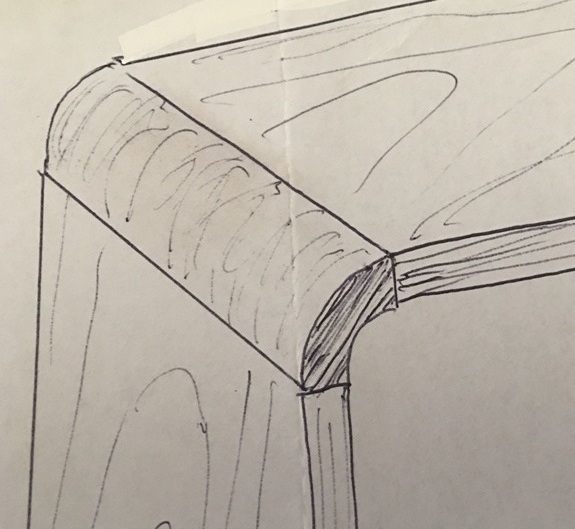
My question is how would you build the table ends ...
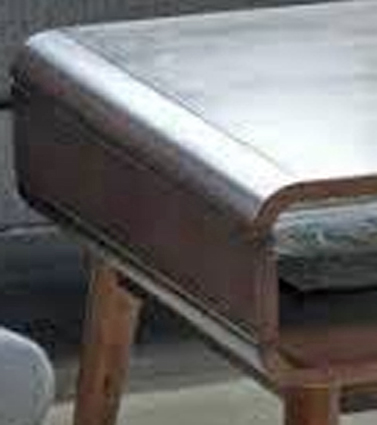

Here is similar end ...
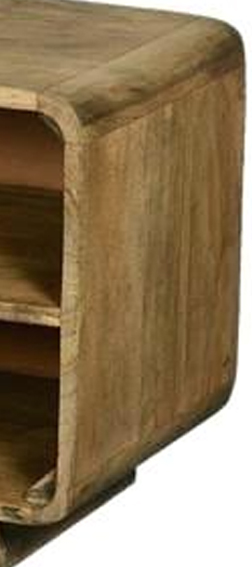

I would like to make the end pieces wider so that they can create a breadboard join at each side.

Your thoughts?

Regards from Perth

Derek
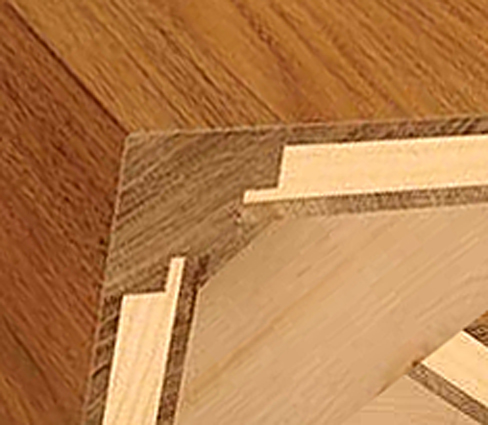
Re: Another coffee table

#2

Seems straighforward

Bill Tindall, E.Tn.

The inside cove could be cut on one side of a ? x? square piece of stock using the table saw cove cutting process. I would then biscuit or spline these pieces to the top, bottom and ends. Finally shape the outside curve with usual hand tools for this kind of operation.

What will make this all easy is the fact that only the first bit of the inside cove joint will be visible. I would oversize the corner piece just a bit so that it did not fall short of the flat pieces and scrape the joint to perfection for 2" , and less so beyond. Each corner could be scraped dry fit and then just assemble it.

The drawer strikes me as crude and hence unattractive. Your pretty dovetails will be peals on a swine.

The challenge is how to fasten its spindly legs, durably.

Does anyone find this piece attractive? Maybe my taste is flawed. I thought I liked Danish furniture.

These pieces were traditionally built from walnut.

Re: Another coffee table

#3

Re: Another coffee table

Roy

Back in the black and white FWW days, there was an article about some native Americans in the NW who made boxes by cutting a joint at the corners allowing the board to be bent into a right angle. There was some curved knife that undercut the wood to allow the bending. If you have access to back issues or their archives, you could look it up. Maybe your wood would not be suitable for this technique.

Roy

Re: Another coffee table

#4

An idea for construction ...

Derek Cohen (in Perth, Australia)

If I build the corners from a solid section, it is relatively straight forward to orient the grain and then plane the inside hollow and rounded outside. This is the picture I posted earlier ...


The issue is how the mix of cross- and long grains would look. Very busy in my expectation.

An idea that has occurred to me (suggested by this picture, actually) - to hide the corner being an added section - is to make the entire carcase with the grain running across, rather than than along the length. It may be possible by bookmatching to hide any joins.

I've not seen a construction like this. Could be interesting :) What are your thoughts?

Regards from Perth

Derek

Re: Another coffee table

#5

Re: Another coffee table

Barry Irby

Wonder how the manufacturer of the pieces in the picture did it?

Some thoughts: Why not make the corners out of blocks with the grain running cross grain and large enough to make M and T joints to the top and sides? Then you could join them solidly without a cross grain connection. A very tiny groove to separate the pieces and celebrate the joints. Dominoes would work for this.

Or, make the thing up as above and wrap the entire carcase in veneer of the same wood. Vacuum bag anyone?

As an aside, The inside of the bottom joints has to be better than the underside of the top. You will be able to see most of it from one side or the other.

I'm trying to like MCM furniture and Danish Modern. Only found a few so far.

Re: Another coffee table

#6

my thoughts....

Bill Tindall, E.Tn.

....are that a long table with the grain running perpendicular to the long length will experience dimension changes that could cause drawer fit problems and challenges for attaching to frame beneath. On the other hand if the corner is made with opposing grain then this joint will be stressed by humidity changes. So, I would assemble a square corner piece from glued up lumber of orientation same as the top and sides, then shape it.

Re: Another coffee table

#7

Re: my thoughts....

Derek Cohen (in Perth, Australia)

Bill, I completely agree with you. A square end piece is just so simple by comparison! The added complications from the rounded ends add up to a non starter. I have mentioned to my nephew that the rounded design is very complicated - as a non-woodworker, I doubt that he would appreciate this.

Regards from Perth

Derek

Re: Another coffee table

#8

I bet....

John in NM

That the original piece is plywood with a round corner, so for it cross grain was not an issue. Veneered plywood was big in Danish MCM as I recall.

Why not do the same thing as you thought here, but with the short grain on the curved piece? Not ideal from a construction point of view, but once assembled it would be arguably stronger than what is shown in your picture, and it's a better compromise than the cross grain problem.

Or make some veneer and do it the old fashioned way :D

Re: Another coffee table

#9

Re: my thoughts....  *LINK*

Sgian Dubh

Four pieces of veneered ply or MDF with the grain running longways around the cabinet, add the corner blocks with their interior/exterior profile after accomplishing the joinery, e.g., biscuits, loose tongue, dominos - your choice for grain direction of the corner pieces, although I'd probably prefer to run the long grain around the corner to match the veneered board rather than front to back. Add a lipping the the front and back edges. Create the three openings. Make the drawer. The legset seems to include a rail, so you could join the legs with M&Ts and some compound shoulder lines. That's taken care of it using the KISS principle.

Complex could potentially involve male and female formers, construction veneers, lots of clamps and perhaps a joint (scarfed maybe) hidden somewhere under the drawer box. I don't think I'd want to go there for something that I think is already available off the shelf for reasonable money. I can't recall off hand where I've seen these tables retailed, but I'm pretty sure they're out there.

An alternative might be to buy an already made table, like the Hooper table from made.com (if available where you are) and just add the drawer. That last bit was said somewhat tongue-in-cheek, but it would be a relatively cheap and easy way of getting something similar to your images, ha, ha. Slainte.


Hooper storage coffee table.

Re: Another coffee table

#10

question and comment

Bill Tindall, E.Tn.

"Add a lipping the front and back edges. " I don't understand what you mean by lipping.

Design often involves material of construction to be compatible with design. I'll bet this table was made exactly as you describe. I would use an edge banded veneered walnut plywood for top, sides and bottom. This construction would be compatible with a long grain corner. Or, glue up a block and run the grain with the veneer, depending whether contrast was desired or not.

What could be done about the crude looking drawer? Leave it out? Or maybe a drawer of lesser height? Or shrink the opening and leave the drawer with some better looking opening arrangement (a knob?).

Re: Another coffee table

#13

Re: Another coffee table

Ryan

They're called bentwood boxes and are made by west coast indigenous peoples (Haida, Tlingit etc). Usually made from cedar, they are steamed to make the bends. The box is made from a single piece of wood - pretty clever!!

Re: Another coffee table

#14

Re: Another coffee table

Derek Cohen (in Perth, Australia)

Hi Roy

I think that the approach you are suggesting is using kerfs in the corners to create a curve. That's doable, but the kerfs will show.

Regards from Perth

Derek

Re: Another coffee table

#15

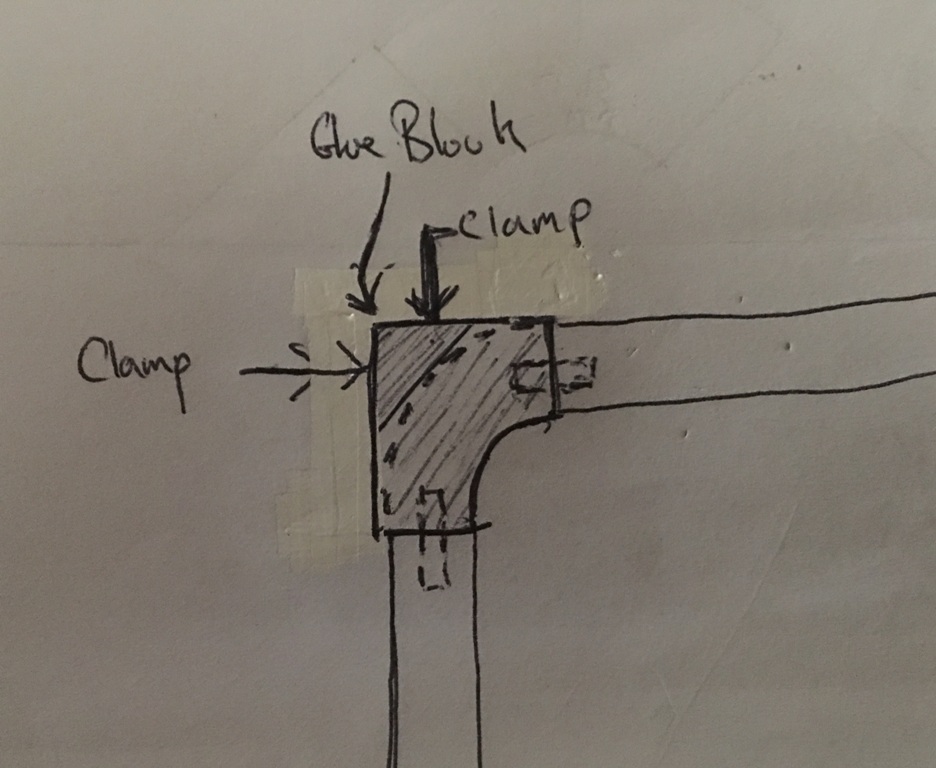
More details on the method under consideration

Derek Cohen (in Perth, Australia)

This is a cross post from the Oz forum. The drawings are courtesy of a formite there.

This is what I also thought to end up with ...


Joinery could be as simple as dominos.

I can shape this with a table saw and hand planes (perhaps - see below).

The question is whether one uses a single section used across the width. That is easier to shape with hand planes as one is planing long grain. However this may create more of a sectional look.

The other way is to join together sections, and to have the grain running into the the top. Looks better, but more work to shape, as planing across the grain. But perhaps not such a big deal to do.

Worth thinking about.

Regards from Perth

Derek

Re: Another coffee table

#16

Re: More details on the method under consideration

Bill Tindall, E.Tn.

I would argue that it would be easier planing across the grain to get the initial profile. After all, flattening begins across the grain as it is easier to push. Trivial task to refine with sandpaper rolled around a dowel, or can, or what ever is about the right diameter.

I made a sanding block for this kind of task. It is a block of wood with saw kerfs almost through it every 1/8". I attach Klingspor flexible abrasive to it and go to work. With an initial 80 grit I can rapidly shape concave profiles.

Re: Another coffee table

#17

Re: More details on the method under consideration

John in NM

I think that grain orientation is your best bet, and probably not too hard to make. I would probably figure on using a router myself, but if you're using Jarrah I doubt even new bits would hold up to making 4 of them. From that point of view, I think Bill is right that a plane and sandpaper would be best, though I'm sure I don't know how I'd hold it.

Could you make 4 on a lathe? Glued with paper between and turned into a tube, then split apart again?

Re: Another coffee table

#18

Re: question and comment

Sgian Dubh

""Add a lipping the front and back edges. " I don't understand what you mean by lipping."

Bill, you mentioned edgebanding in your reply, which is essentially the same as lipping. The way I think of it is that edgebanding is usually quite thin, say, the thickness of a piece of veneer up to perhaps 3 - 4 mm thick, whereas lipping is more substantial: lipping could be anywhere from about 4 -6 mm thick to maybe 50 mm or so, i.e., something to which you could conceivably add reinforcement, e.g., biscuits, slit feather (loose tongue), T&G, etc.

"What could be done about the crude looking drawer?"

A more attractive grain selection for the front, ranging through a solid wood option to maybe veneered and book matched or quartered? Get rid of the rectangular cut-out used for the finger pull and replace with a touch latch and side or undermount slides, even though slides eat up interior space? A U shaped pull to reflect the curved ends of the piece? Change the width proportions somewhat? They're all possibilities, but it's like every other design decision when it comes to marrying practicality with aesthetics … you often can't please everyone. Slainte.

Re: Another coffee table

#19

Re: Another coffee table

Paul in NJ

Hi Derek,

I don’t know if this will fit the aesthetic you are looking for. Structurally this might work. Finger joint the case together. This is pretty easy to do on a table saw and provides lots of glue surface area. Make up a stacked filler block such that the grain aligns with the case. You would alternate the individual blocks so every other one aligns the face grain with the top/bottom or side.

Regards,

Paul Dzioba


Re: Another coffee table

#20

Re: More details on the method under consideration

E Phillip Smith

Mechanically this will work but not sure that it will give the best aesthetics.

If I were doing this I would think of it as a box turned on edge. When making boxes (think Jewelry, presentation etc.) one of the things that sets a so, so box from an elegant box is to see the grain wrap around the box in a continuous fashion.

This is a nice clean design. I would be looking for some way to wrap the grain continuously around the visible edges. One way of doing that would to make the ends a bent lamination. The ends are just a U. If you have enough lumber length you could veneer the top and ends out of the same piece of veneer and the grain would flow nicely around the table.

Re: Another coffee table

#21

Ellis Walentine

Consider expectations

Ellis Walentine

Derek, while this could be made to work, there would always be something vaguely wrong about the appearance. We're accustomed to seeing things in a particular orientation -- in this case, the grain orientation of an oblong table top -- so the cross-grain look is going to be visually confounding, whether you articulate it to yourself or not.

I like the idea of making the entire piece of solid wood, with the corners built up of short-grain blocks so that the grain will run around the entire table and you won't have to worry about expansion/contraction issues. The top, bottom and ends will lend plenty of strength to the corner joints.

While the originals were most likely veneered, I can't see this being a reasonable option unless you're okay with the corner blocks being perpendicular to the top and sides. You can't wrap veneer lengthwise around a 3/4" radius.

Ellis

Re: Another coffee table

#22

Yet another set of options

Derek Cohen (in Perth, Australia)

Ellis, I agree. I've just been tossing out ideas. It's really interesting how such an apparently simple piece can become complicated when the material changes (in this case to solid wood). And how ways there are to do this.

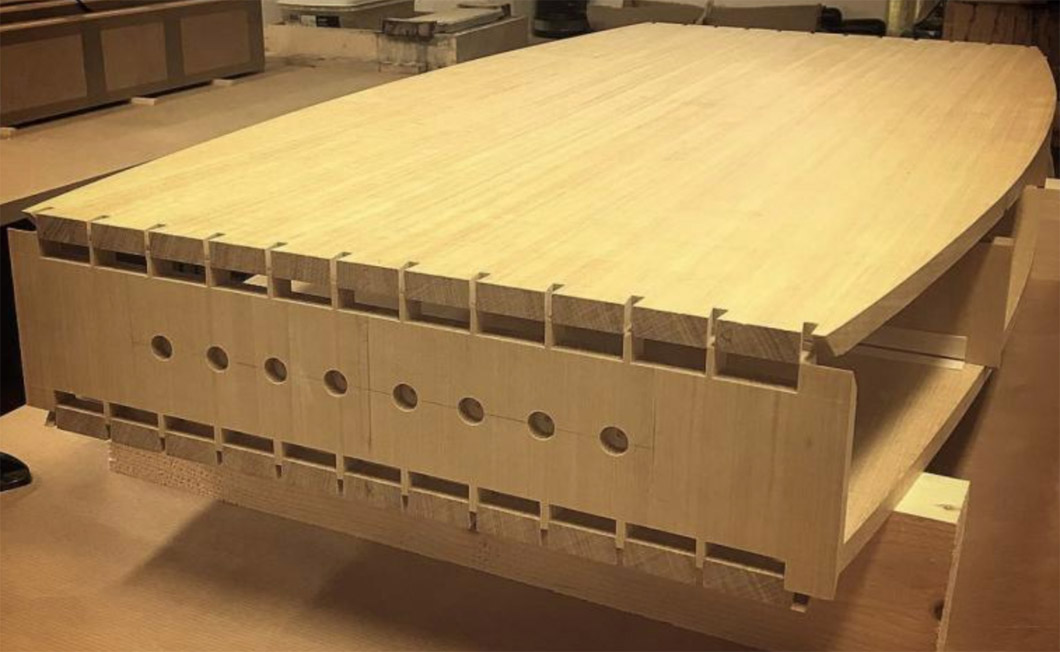
These are a cross post from SMC, where these photos were posted ...


This offers two other options: dovetails (with mitred ends) followed by rounding, and a rounded mitred end. In each, the inside receives a filler, which is hollowed.

It's a toss up between the dovetailing, or simply mitering the ends and rounding them. The latter allows the grain to flow around the sides and top, while the former is interesting in a different way (I like this one).

Irony is, the nephew has acknowledged that they like a square end as well, and would enjoy either. Decisions.

Regards from Perth

Derek

Re: Another coffee table

#23

Yes!

Bill Tindall, E.Tn.

Except for the holes (what ARE the holes about), that is a much better looking table. And you are good enough to execute the dovetails which will have to be perfect. Get on with it..........

Re: Another coffee table

#24

Holes?

Henry (Raleigh NC)

Bill

My guess is that the holes are the mounts for the leg set. Look at the second picture, and envision dowels connecting the legset (or ends) and the table top.

Henry

Re: Another coffee table

#25

Re: Yes!

AZ in Colorado Springs

I thought that one was a jig.

👍 This page answered my questions

Your vote helps other woodworkers quickly find the answers and techniques that actually work in the shop.