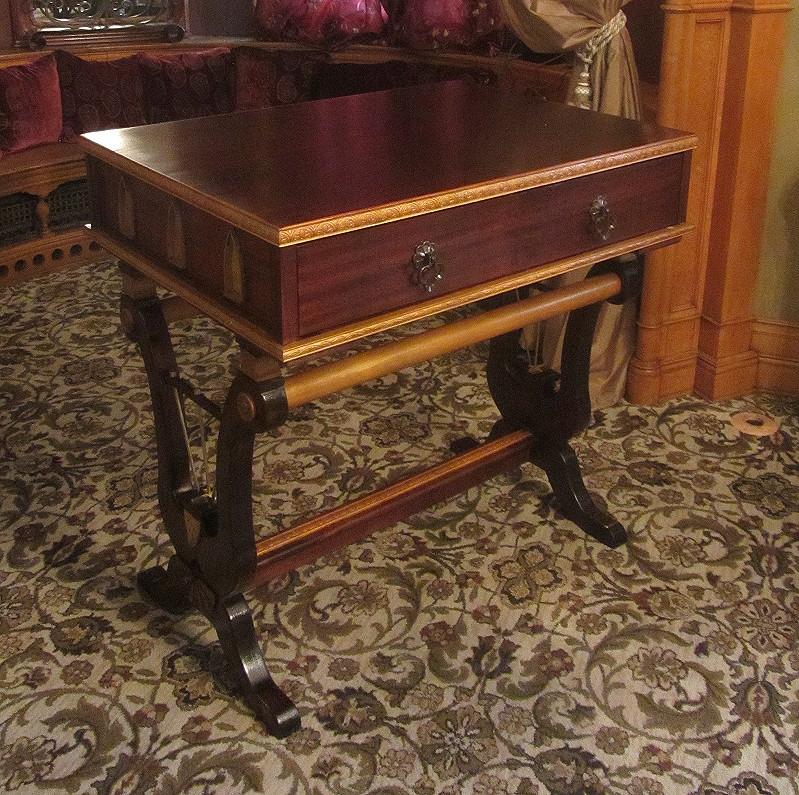
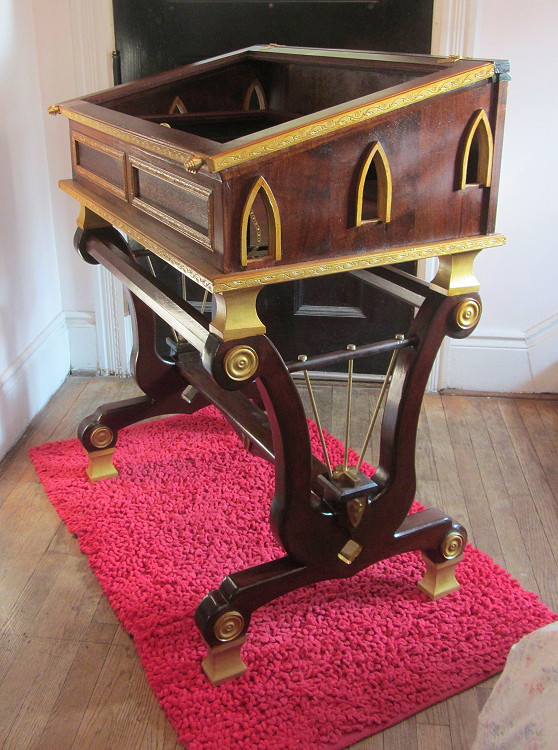
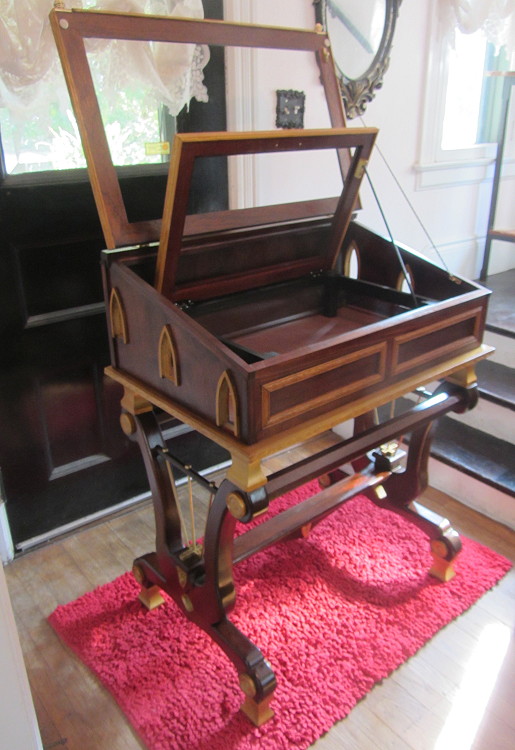
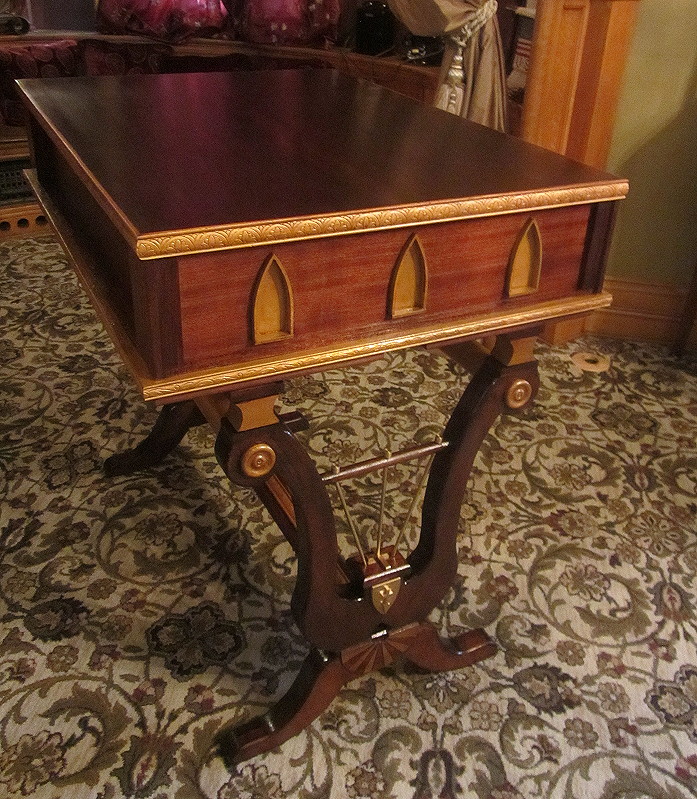
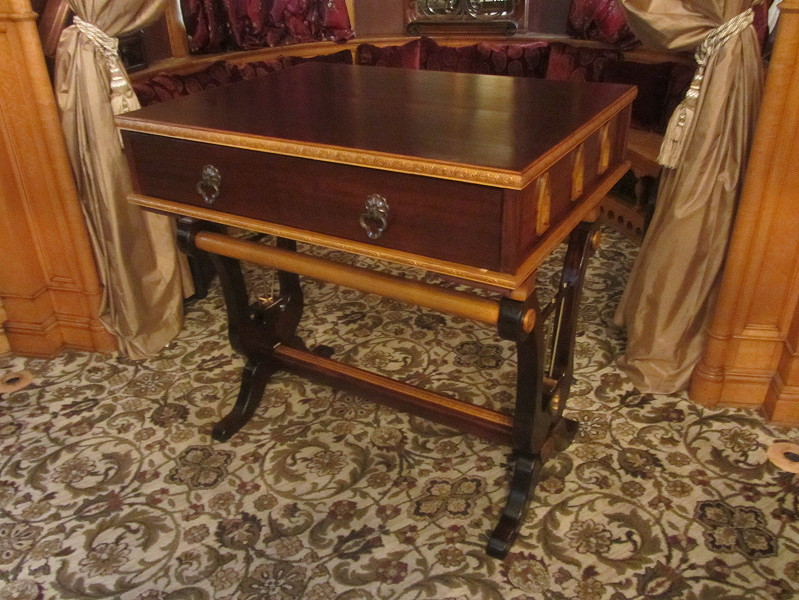
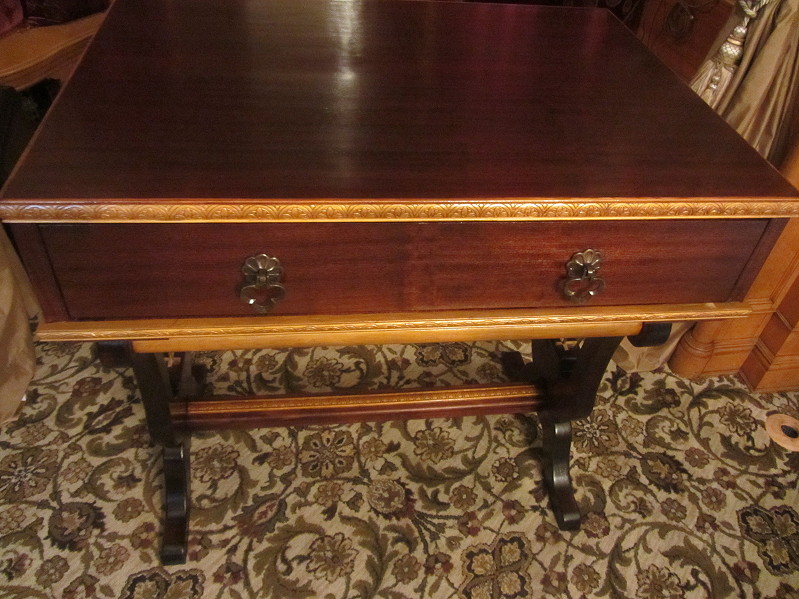
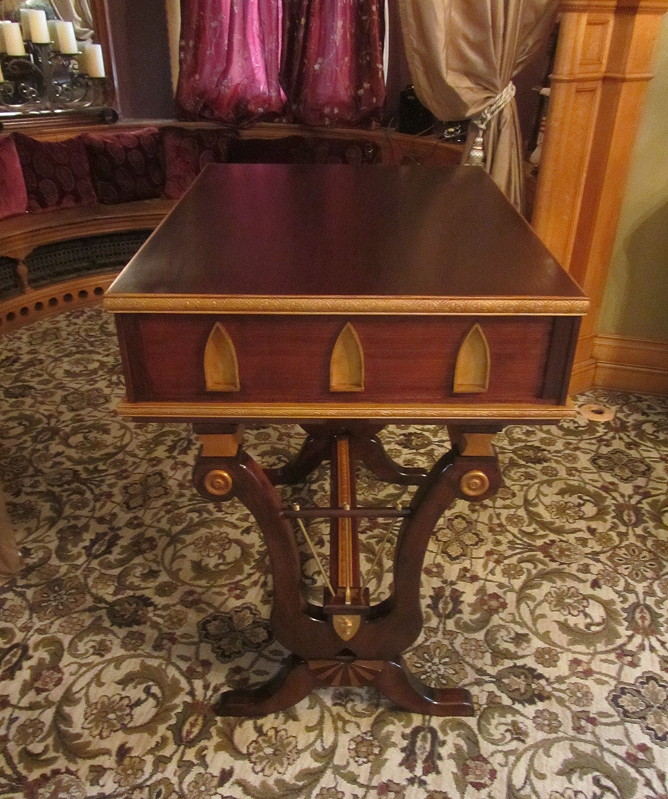
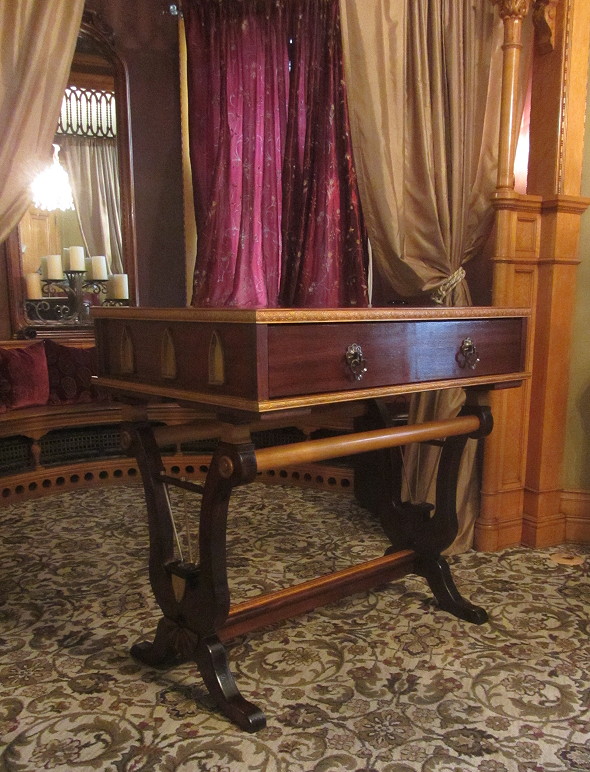
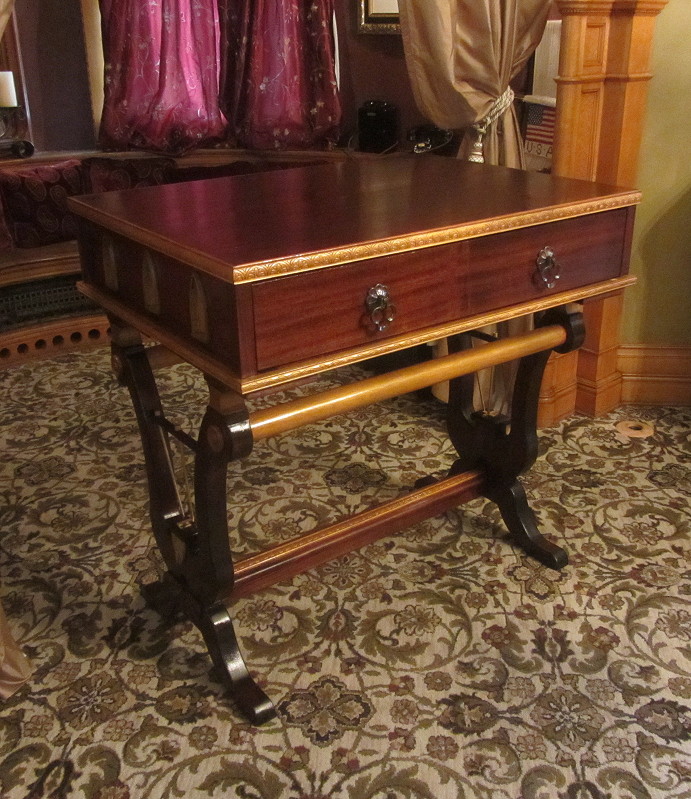
I have just completed this period styled desk. This "Gideons Desk" is a commission from Levy Baptist Church in Little Rock, Arkansas.
This new desk will be a companion piece to the Case on Stand I made for the Church in 2015.
The Case on Stand was designed to hold a large Antique Bible
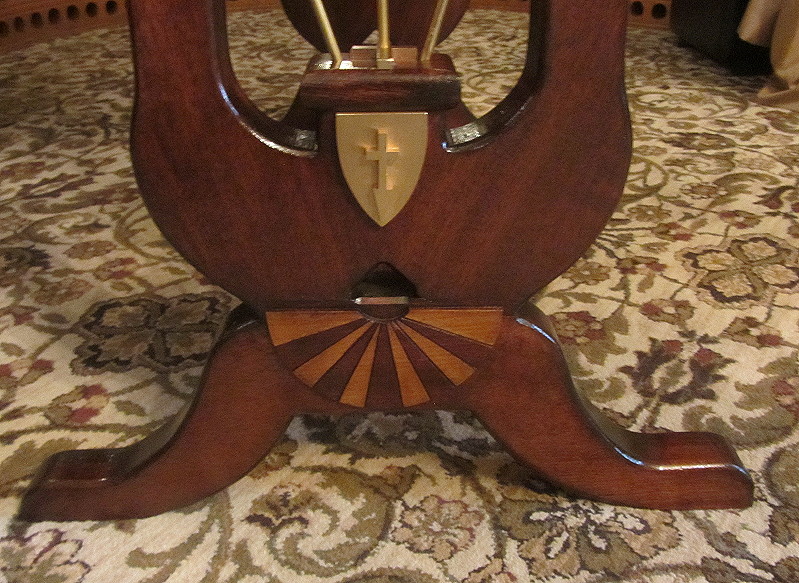
The Desk features harp brackets on"Duncan Phyfe" style leg/base form with Gothic Arch Window structures.
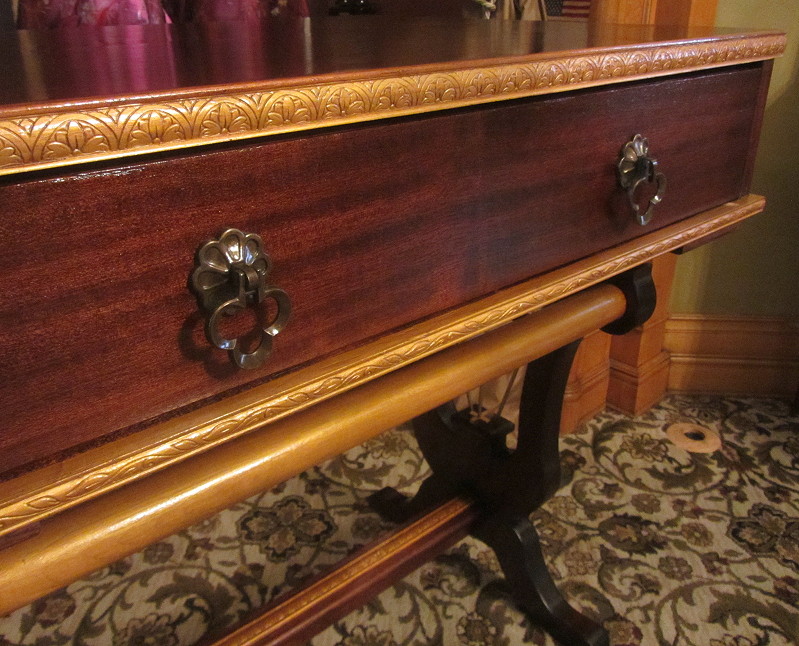
Materials are Mahogany, Sapele, Gilded Moldings, and Brass. Finish is Red Mahogany Stain. The gilding was done with "Brass toned" Mica Powders mixed with Zinsser Amber Shellac.
The top is finished with polyurethane. The rest of the piece is top coated with the Amber Shellac
The desk drawer contains compartments that hold greeting cards.
These drawer pulls were scavenged from an antique store find several years ago.
Alan, I remember the Bible display case you made and thought it was a marvelous piece. Now, this desk makes it a splendid duo. Very, very elegant and appropriate. Given enough time and effort on your part and the entire passageway to the sanctuary will be blessed with A.Young woodwork.
"Gold" paint gives anything a yard sale air. Give your work the class it deserves with a few dollars worth of real 23 karat gold leaf. It won't bust the bank and ain't hard to do well.
Your pieces are fun to explore. There are details everywhere(in a good way, as it is easy for novices to overdo embellishments). You must stop adding them when the client demands delivery?
I gather the light colored wood is gilded? Would you explain in more detail how this gilding is accomplished? Just mix and brush on?
Horizontal top "stretcher"....... Is it bored through and decoration applied to end of dowel?
In the first piece this stretcher was an octagon cross section. Why the change in cross section?
Would you explain in more detail how this gilding is accomplished? Just mix and brush on?
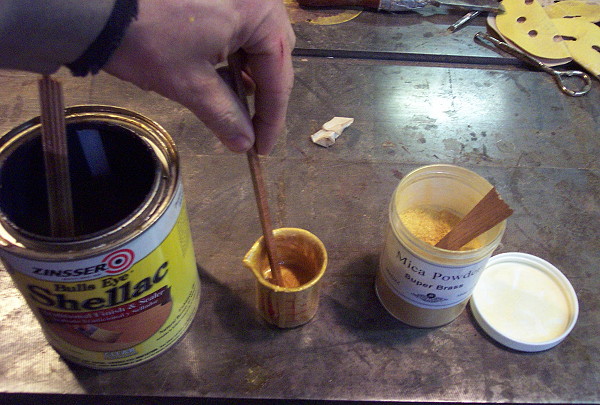
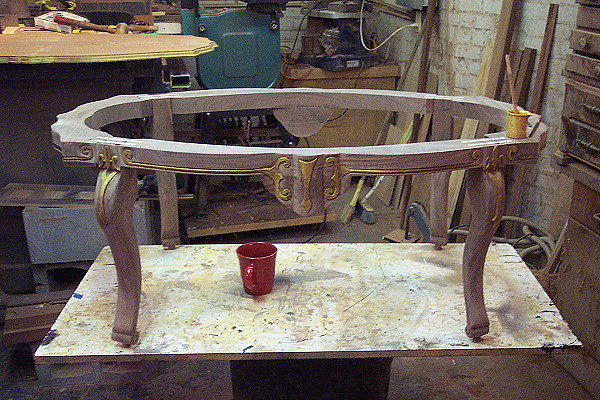
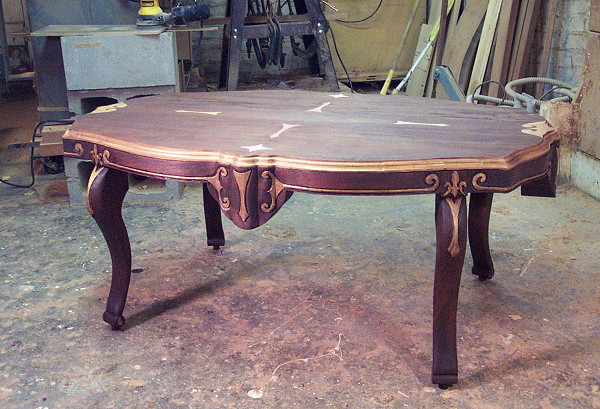
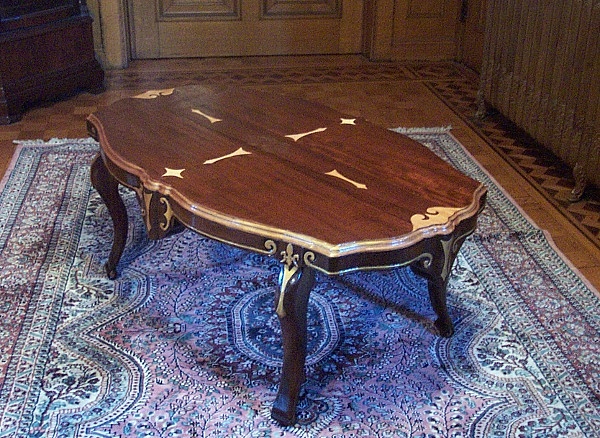
I didn't take any pictures of the process while making this desk but here are descriptions and pictures of the process from an earlier coffee table I made utilizing the same process-
The gilding solution is a mixture of Mica Powder and clear shellac. There isn't a real formula here-it's just a matter of how dense a gilded texture is desired.
The gilding goes on before any other finish. After the gilding sets I then apply the stain and topcoats. As the gilding has a wax-based shellac- an oil finish (stain or urethane)-won't adhere to the gilding once it is set-
Here is the gilding on an earlier coffee table-
After the gilding sets I apply oil stain and wipe it off-
Then top coat is applied
I should note that for this desk I used Zinsser Amber Shellac as I felt it would give a better "aged" look that I wanted for this piece.
Horizontal top "stretcher"....... Is it bored through and decoration applied to end of dowel?
These round stretchers are glued "flush" to the harp brackets with long screws applied from the out side of the harp bracket. The screws are plugged and the gilded rosettes cover the plugs. You can see the plugged screws here
In the first piece this stretcher was an octagon cross section. Why the change in cross section?
Well-I don't always maintain continuity from one piece to another even if they are supposedly based on previous designs. In this case when the time came to make these stretchers- I looked at the pictures of the finished Bible case and realized I made these in the form of octagons. I couldn't tell by the pictures or remember by experience if I had made these out of thick solid stock or if I had glued up layers and then cut the octagon forms. In either case I didn't have solid stock in that thickness and would have to glue up stock then rip the form. It was at that point that I remembered/saw a pair of 2 inch diameter maple "dowels" I had purchased some time ago at my local wood craft just because they looked cool and I thought I'd uses them sooner or later. (Think they were designed for turning into baseball bats)-anyway I decided they would become the horizontal stretchers...