WoodCentral Forums

Est. 1998 — 27 years of woodworking knowledge

Apothecary chest

Posts

Apothecary chest

#1

Apothecary chest

Derek Cohen (in Perth, Australia)

Parts 1, 2 and 3 are on the Hand Tool side of the forum ...

http://www.woodcentral.com/woodworking/forum/handtools.pl/page/2/md/read/id/487849/sbj/apothecary-chest-part-one/

http://www.woodcentral.com/woodworking/forum/handtools.pl/page/2/md/read/id/487857/sbj/apothecary-chest-part-two/

http://www.woodcentral.com/woodworking/forum/handtools.pl/page/1/md/read/id/487864/sbj/apothecary-chest-part-three/

The build is really a combination of power and hand tools, so I am posting part 4 here as well as there appears to be very little discussion being generated ...

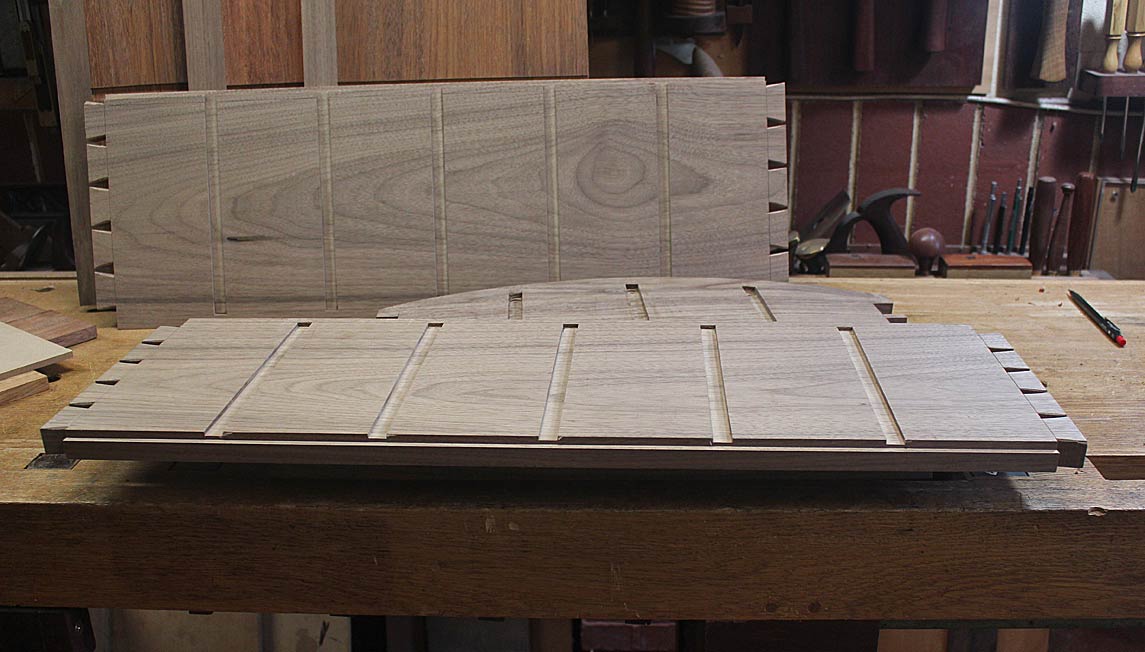
This is the work completed this weekend. It includes rebating the rear of the carcase in preparation for the back (at the end of the build), tuning up the dados for the horizontal drawer blades, and building the drawer blades.
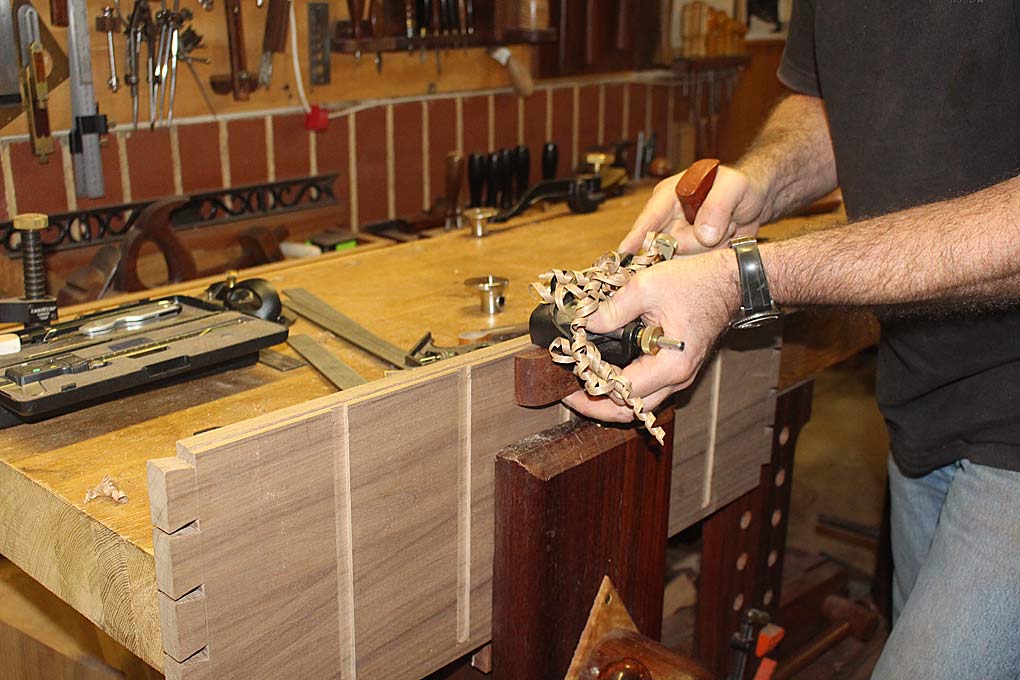

Rebating the side panels of the carcase is pretty straight forward. The rebate is 6mm x 6mm. Planing the full width is unobstructed.

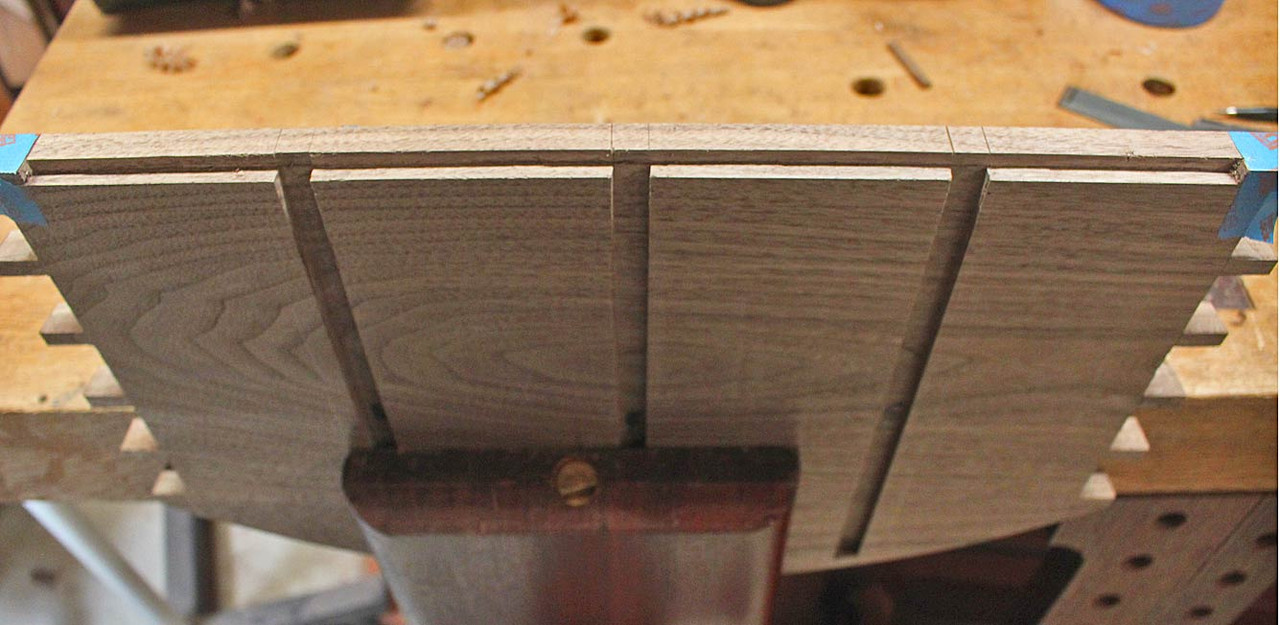
However, where the upper and lower panels need a rebate, planing through will lead to gaps in the panels as these end in dovetail pins. There would have not been an issue here had I used mitred dovetails, but this was an oversight at the time. Now I have a couple of choices, one being that I add a bead around the read panel, however I do not want additional adornments on the chest.

The decision is made to use a stopped rebate at each end. If completed at this stage it would lead to a weak set of pins. This is where the rebates would end ...
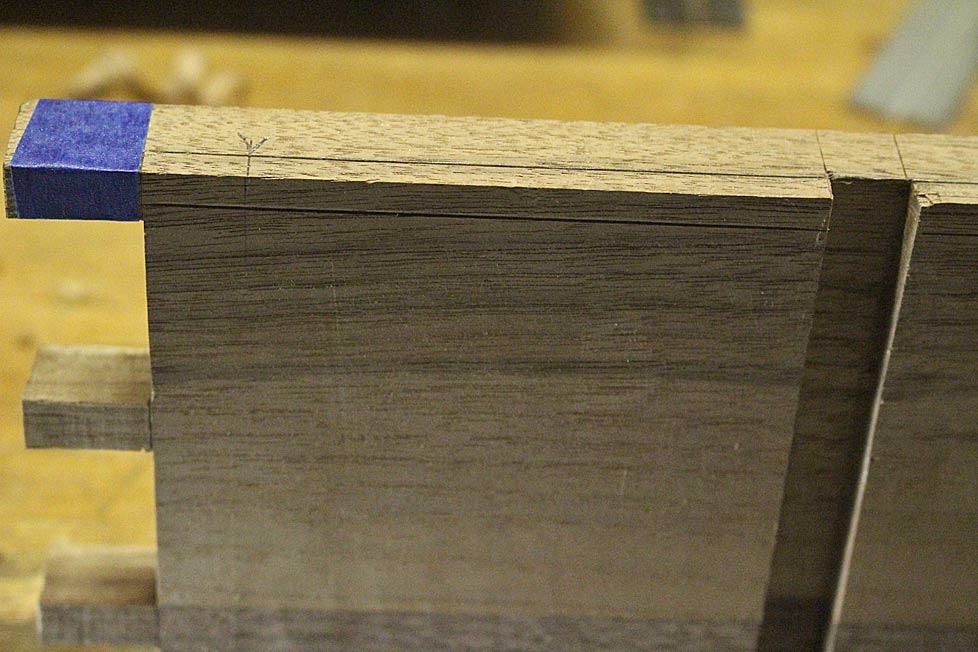

Instead, they will stop short of the end at this stage, and the remainder chiselled out after the carcase is glued up (glueing up will support the weakened pins) ..
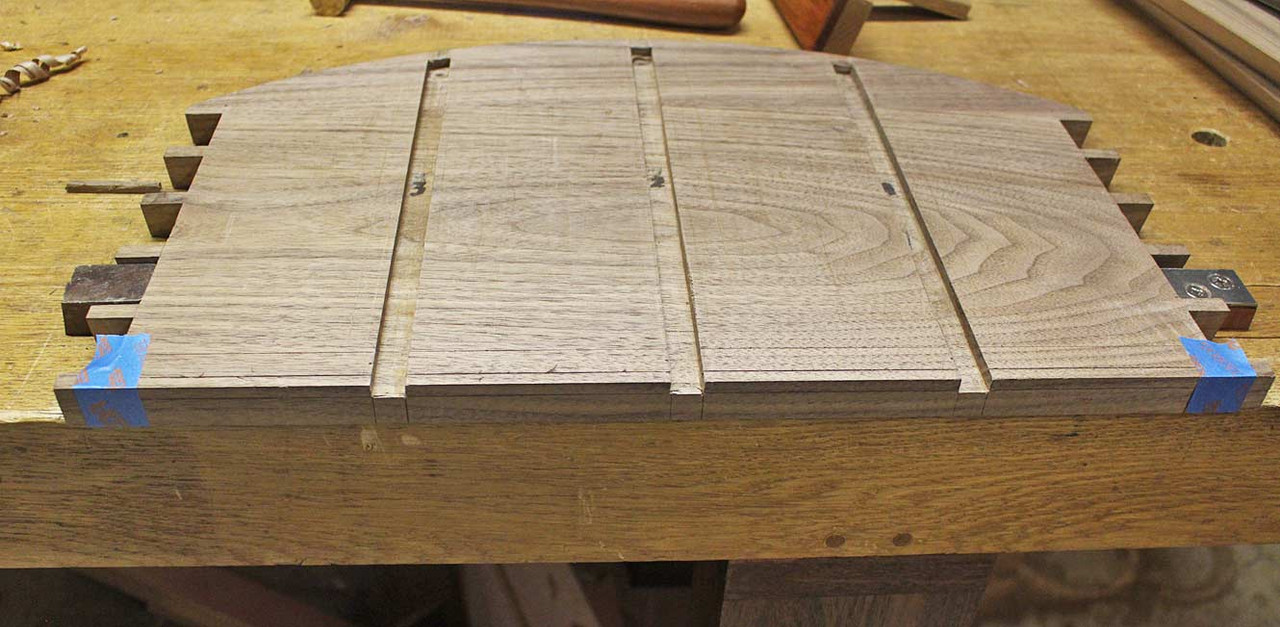

The ends of the panel are excavated to start and end a saw cut, and then the shoulders are sawn with a azebiki ...
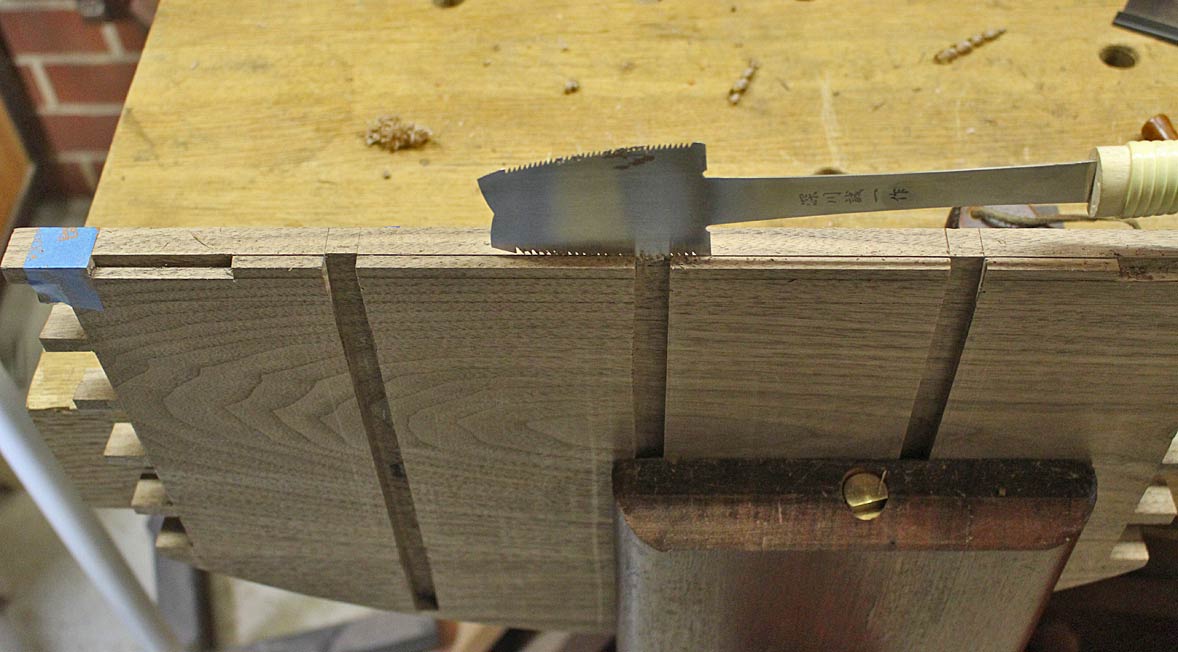
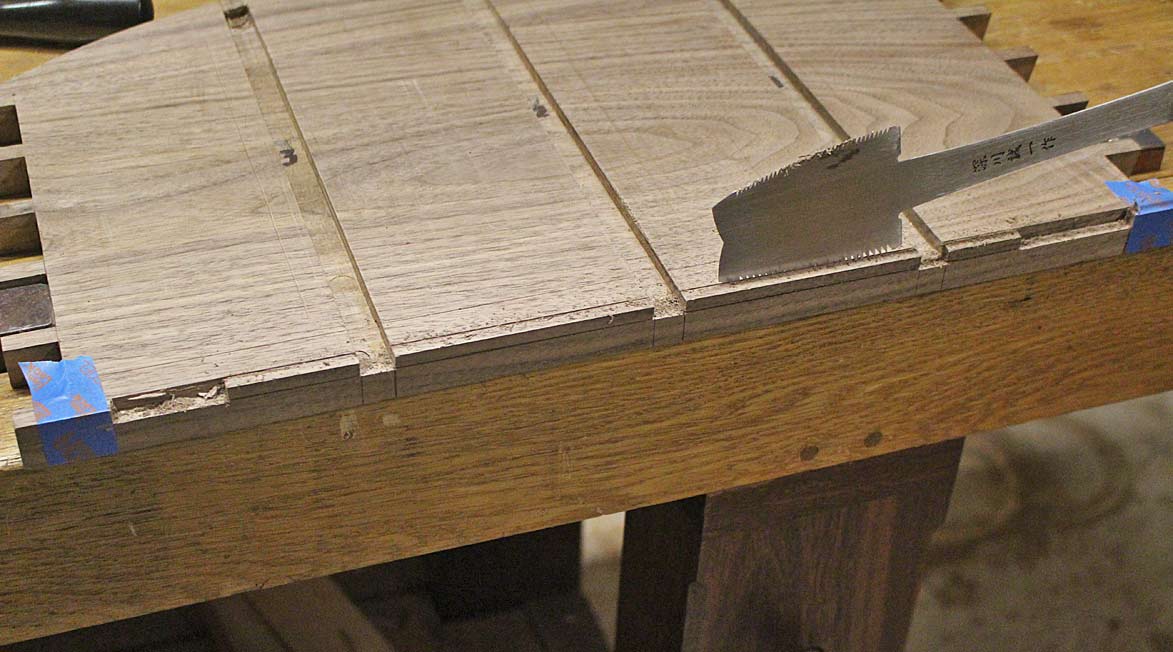

You do not need to create a chisel wall for the saw teeth if you knife the line with a Japanese cutting gauge or a thickish knife. This opens a wide enough kerf ...
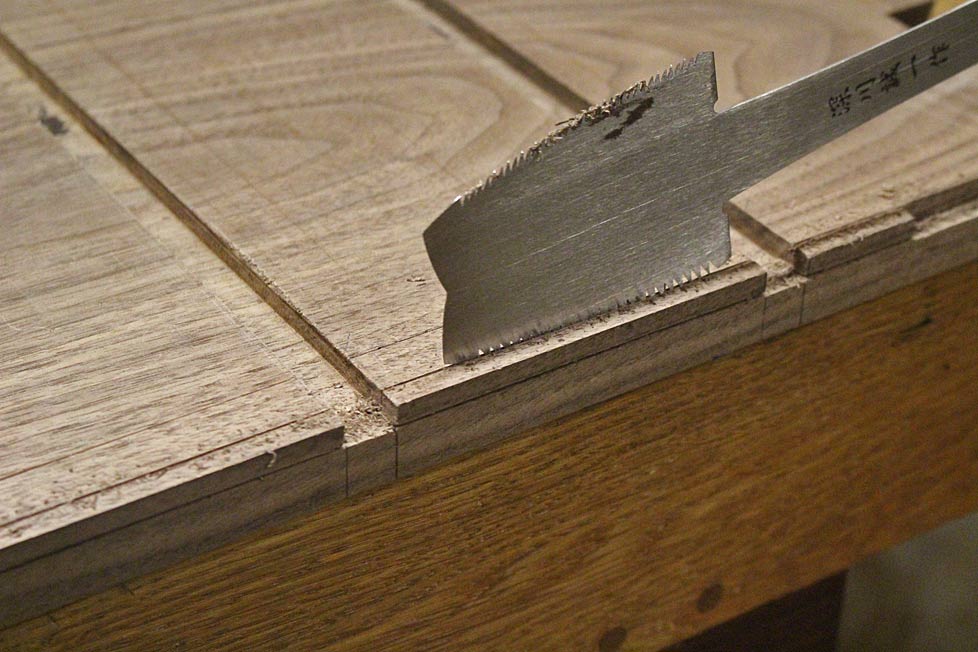

No guide, just muscle memory...
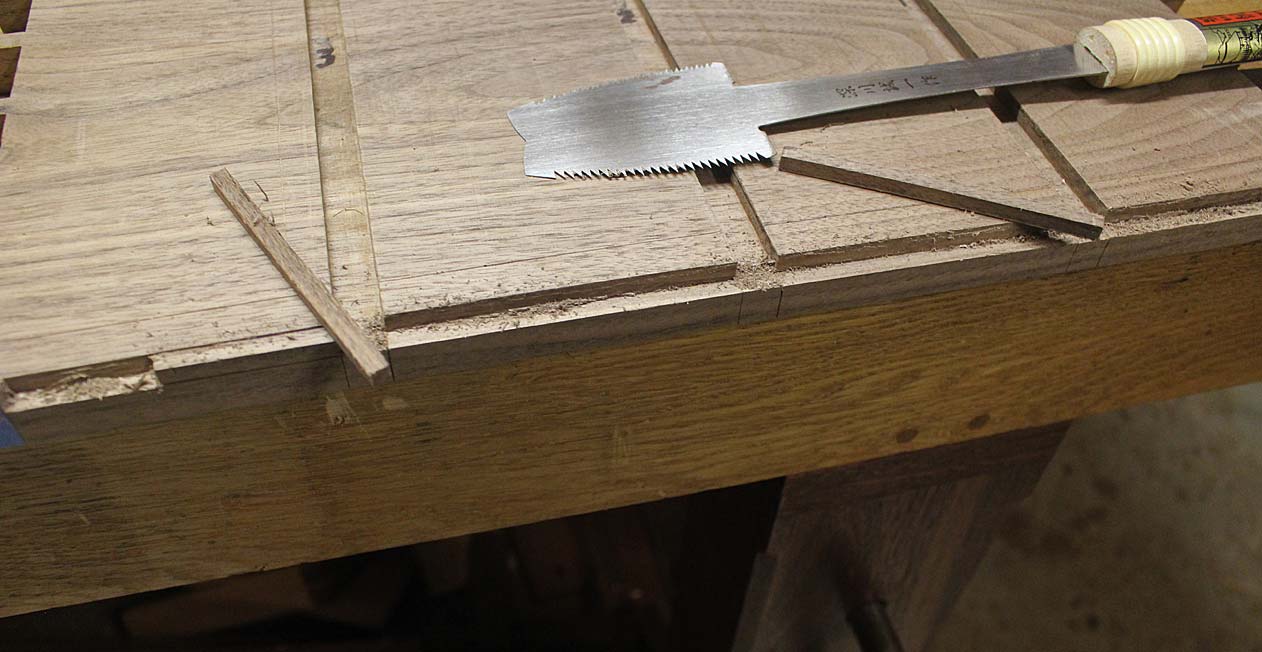

A cutting gauge from each side will clean out the rebates ...
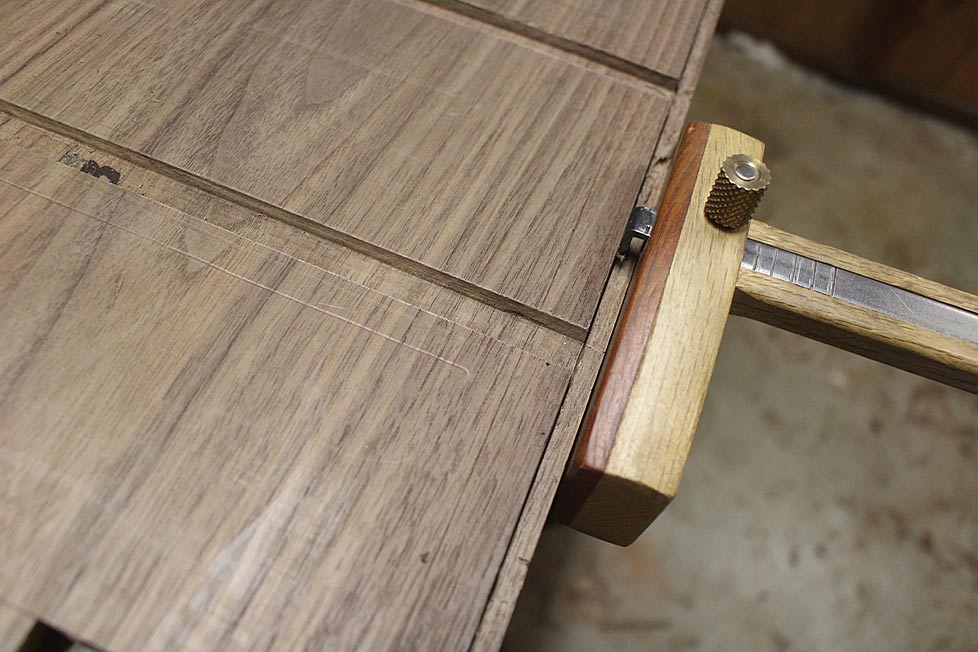


Cleaning up the dados

The strategy for the dados was to make them 20mm with a power router, which was done, and then fit panels to these. The panels were completed with the assistance of a jointer-planer/thicknesser, and this made it easier to dial them close to 20mm. Final surfacing was with handplanes.

Although the dados were made with a brand new 20mm straight bit, they were not as precise as I would have expected. A little tuning was necessary to bring them to width.

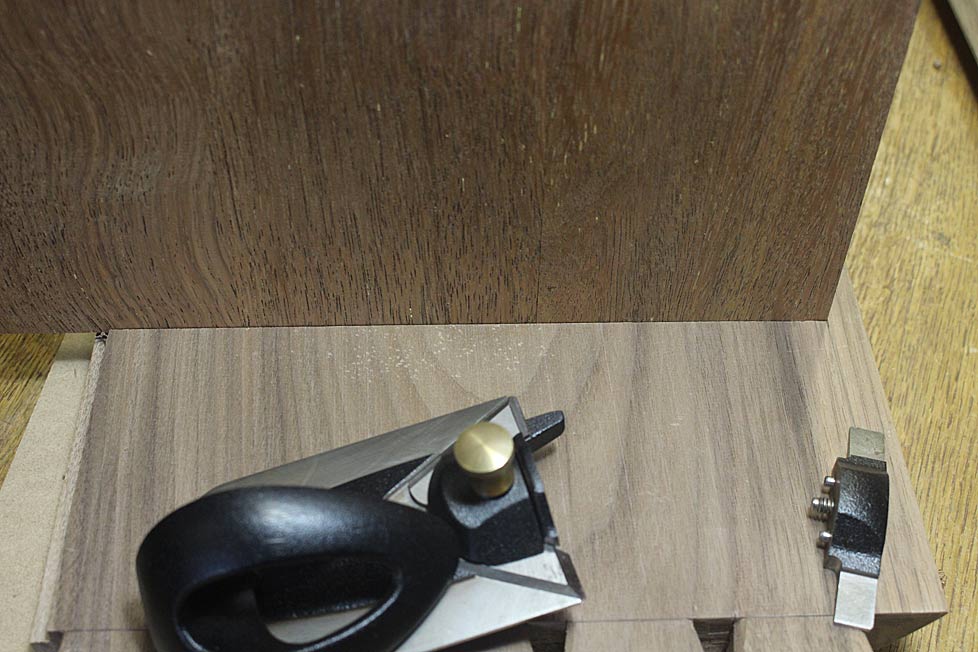
The tool of choice here is a side rebate (rabbet) plane. This one is by Veritas. It is in stopped mode to cut to the end of the stopped dado ...
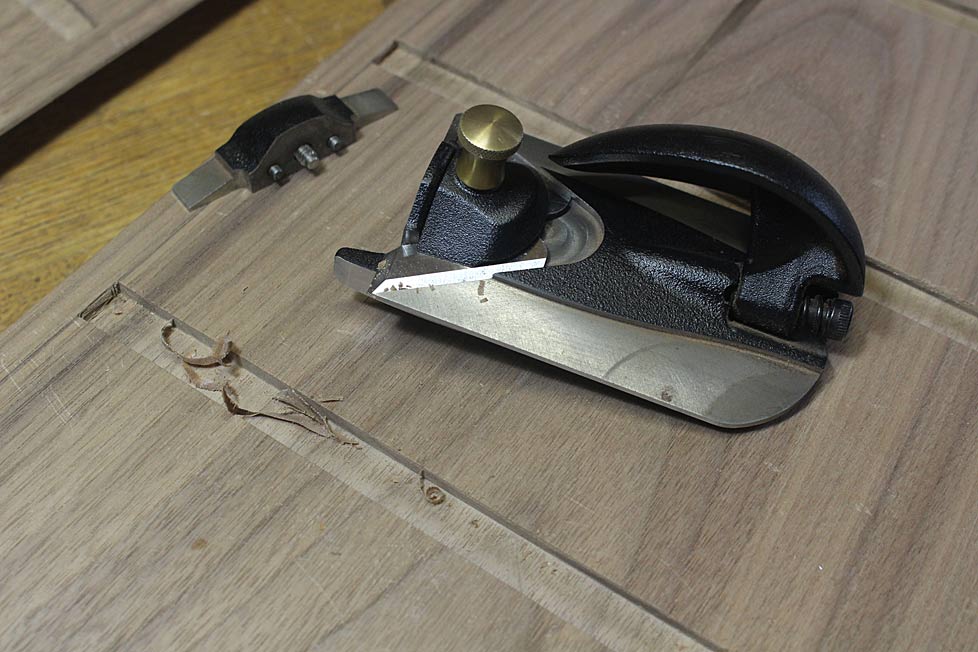

This was the fit ...

A total of 40 dados needed to be tuned (that took a few hours!). The drawer blades below are, in fact, for the 24 drawers, and will be cut to fit the compartments.
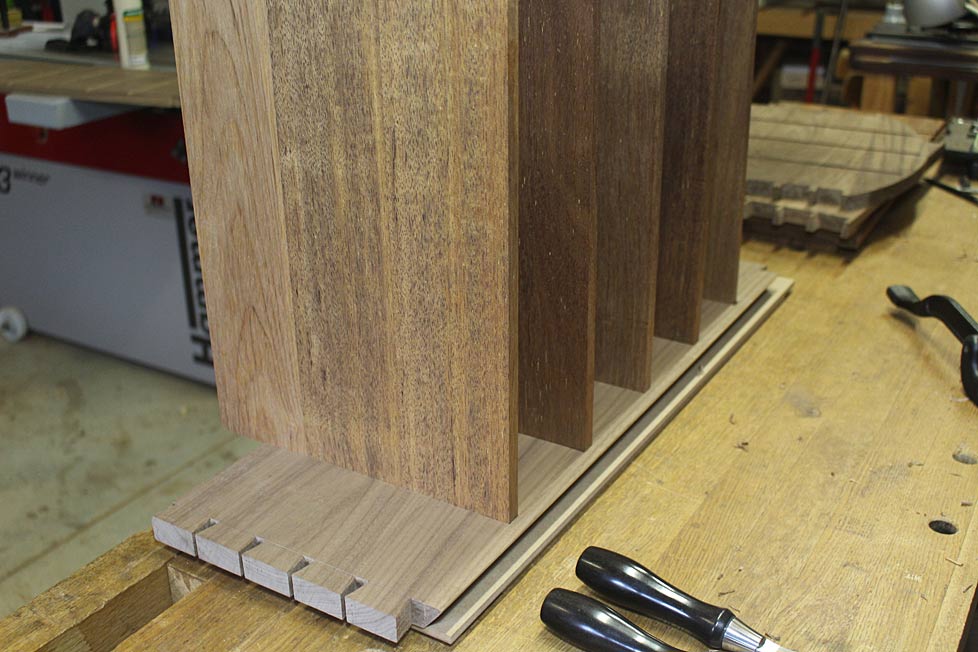

The drawer blades

The design of the chest called for vertical dividers. This would create an emphasis on the vertical. Every apothecary chest I have seen used horizontal dividers/drawer blades as the primary construction. It would have been a lot easier to have done so as well since the bow front could be shaped in, and then the curved drawer blades attached to the carcase. This would have been followed with the individual vertical dividers which, while needing to be aligned, would be straight and uncomplicated to align. Starting with the vertical dividers meant that the bowed horizontal drawer blades presented a complication with alignment.

I built another template ...
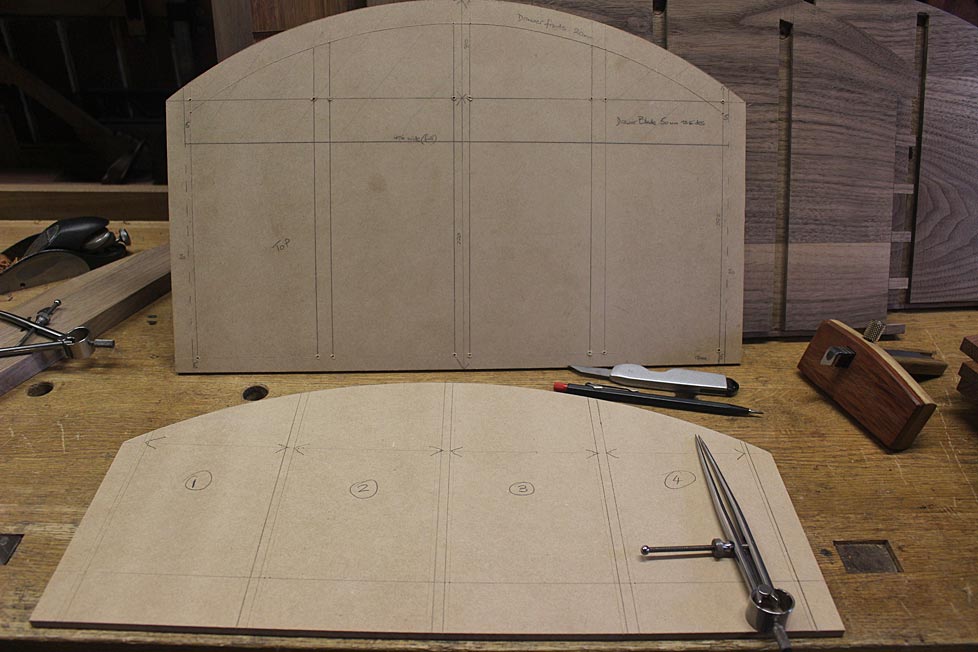

This was similar to the plan drawn up at the start. It differed in that it represented the drawer blades plus the area seated into the 3mm deep dados.

Cut to size ...
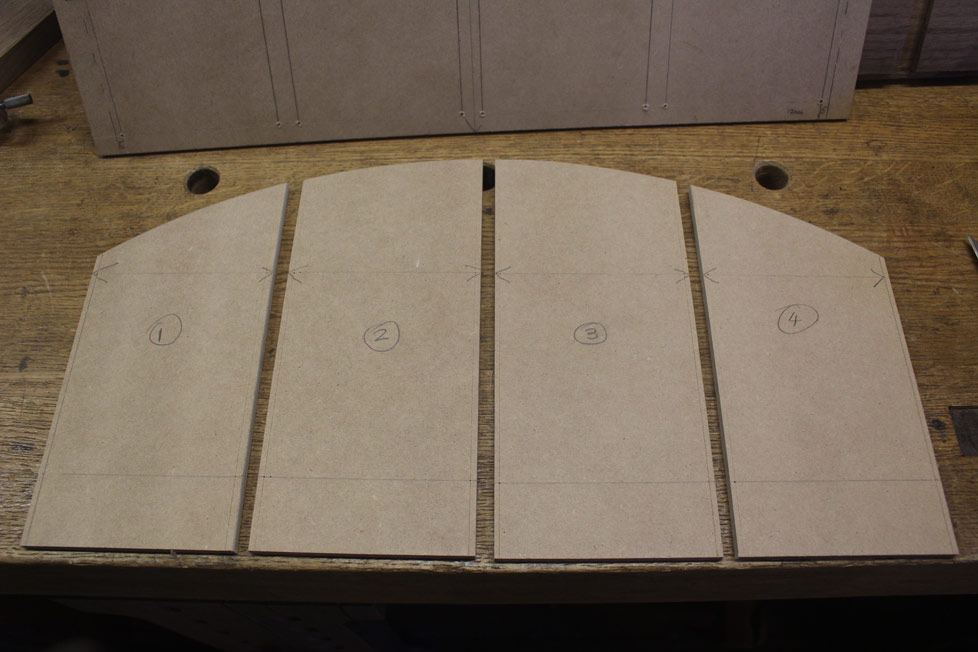

The curved ends were removed ...
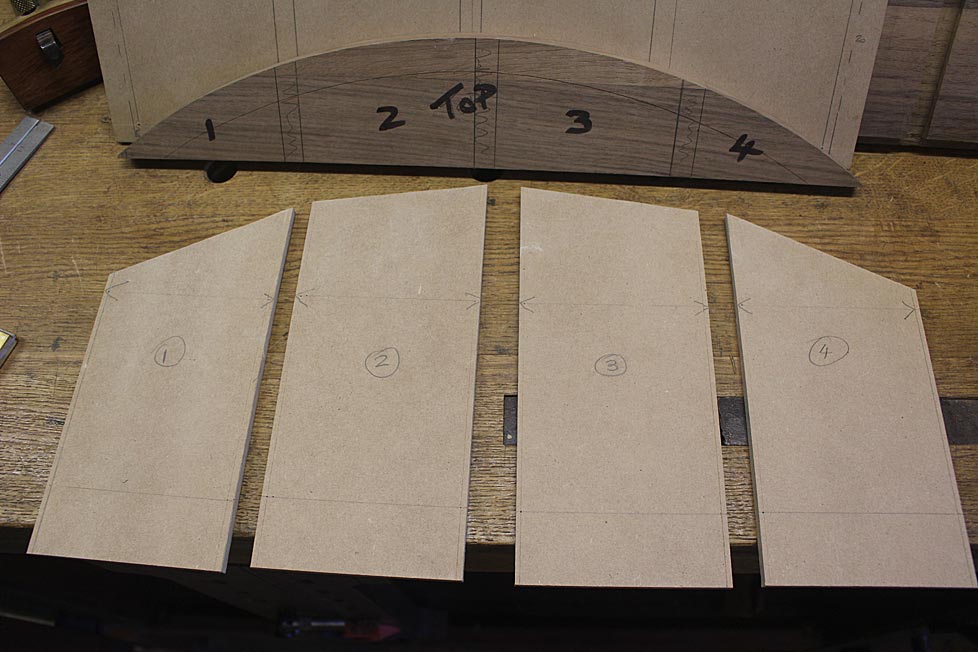

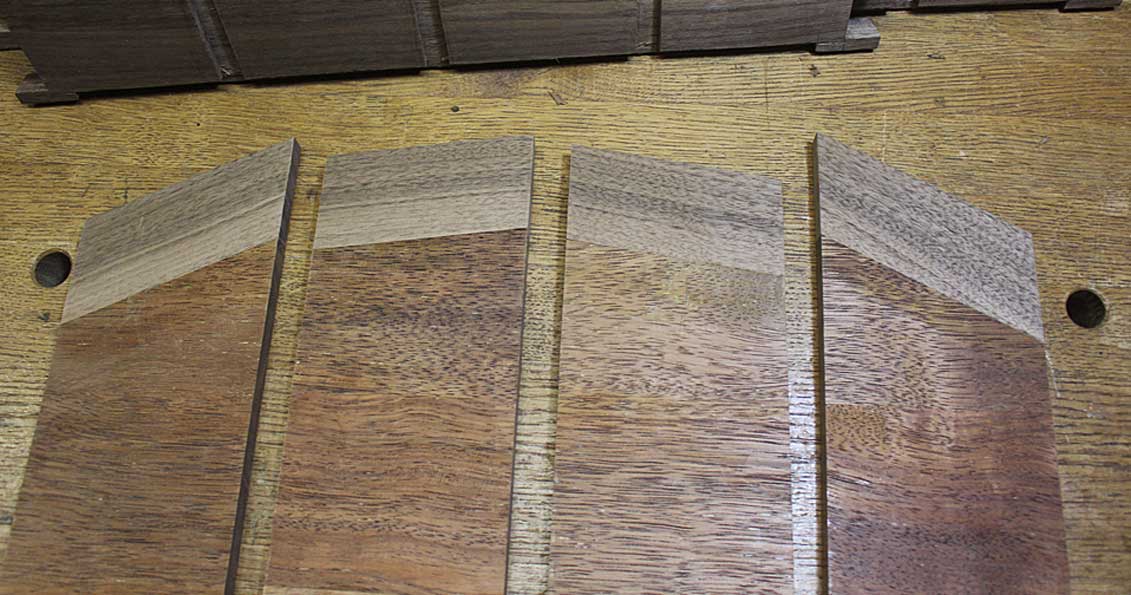
... and a second template made to form the bow front of the drawer blades (above and below) ...
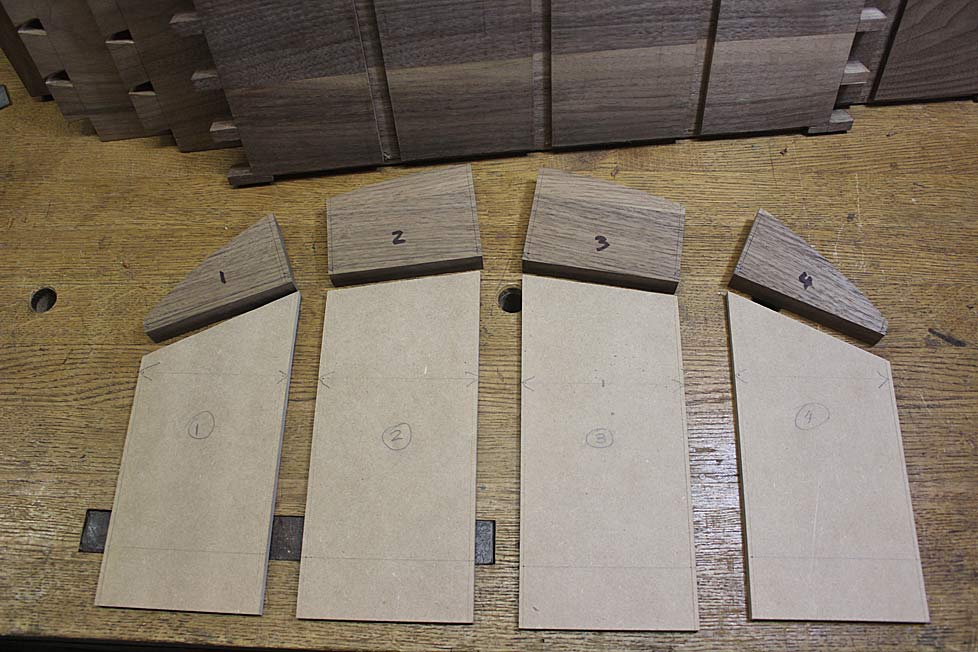

In the meantime the (horizontal) drawer blades were sawn to size. Not that the grain for all runs across the width of the chest. Expansion takes place front-to-back.

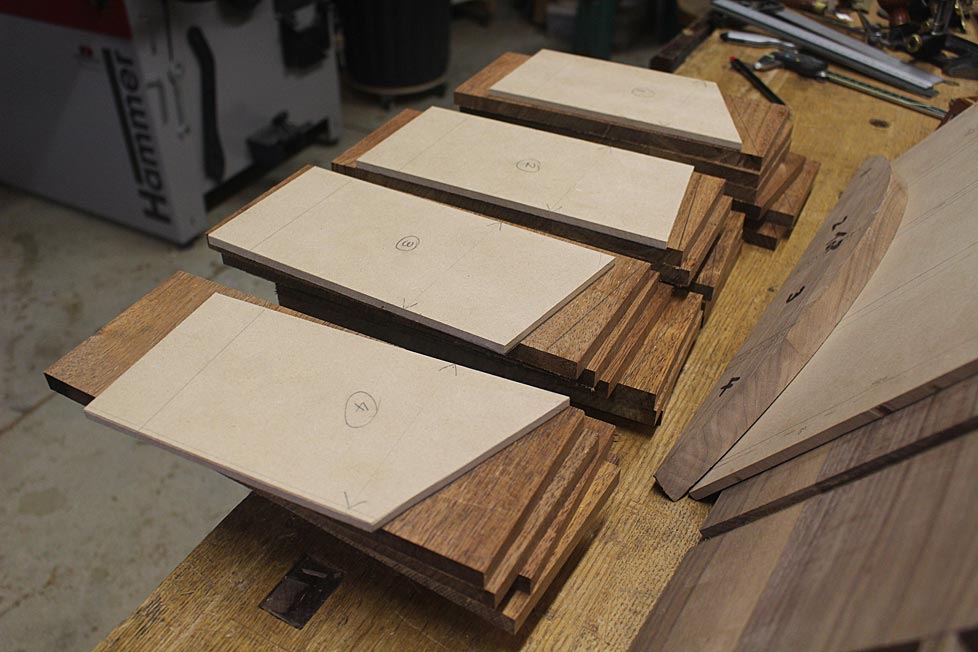
The sections will still require shaping to a bow ...

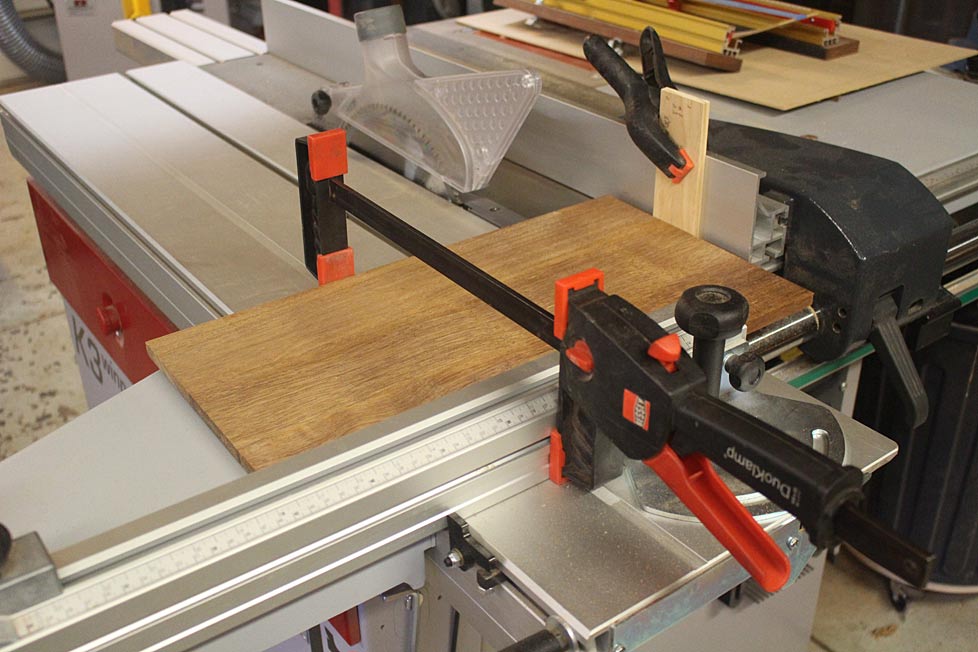
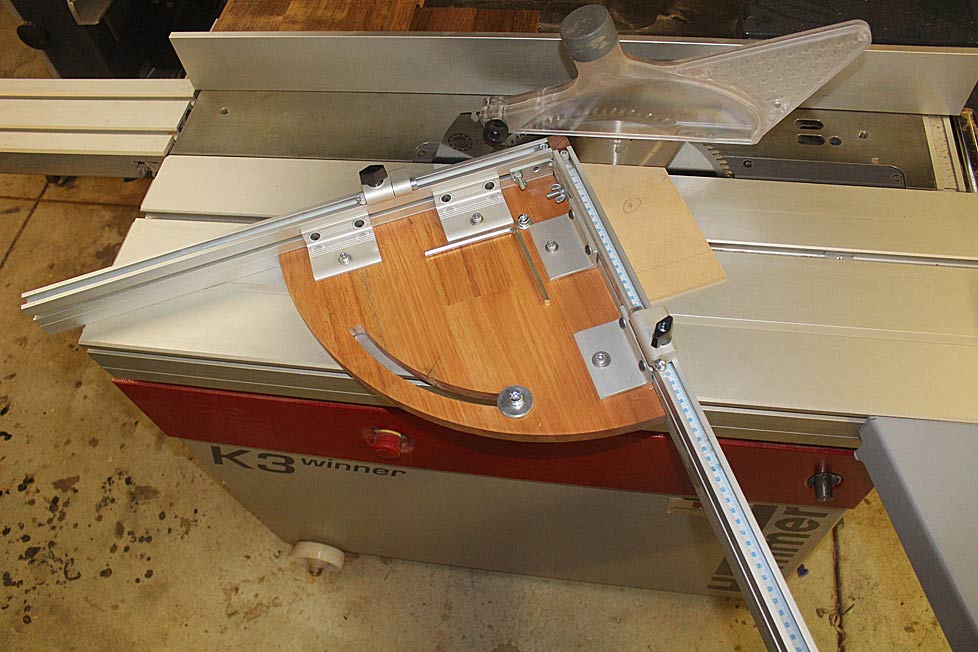
I had a chance to use the mitre gauge I built for the Hammer slider ...

The shaped merbau drawer blades now need to be given their walnut end faces ...
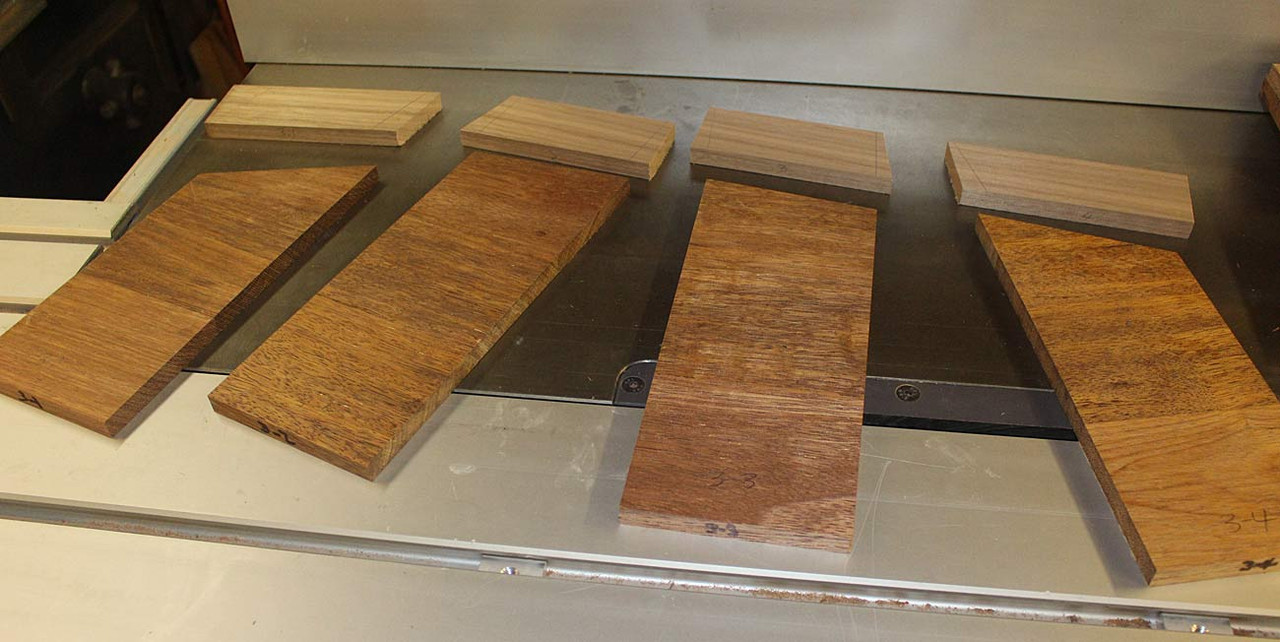

These are glued with the aid again of blue tape ..
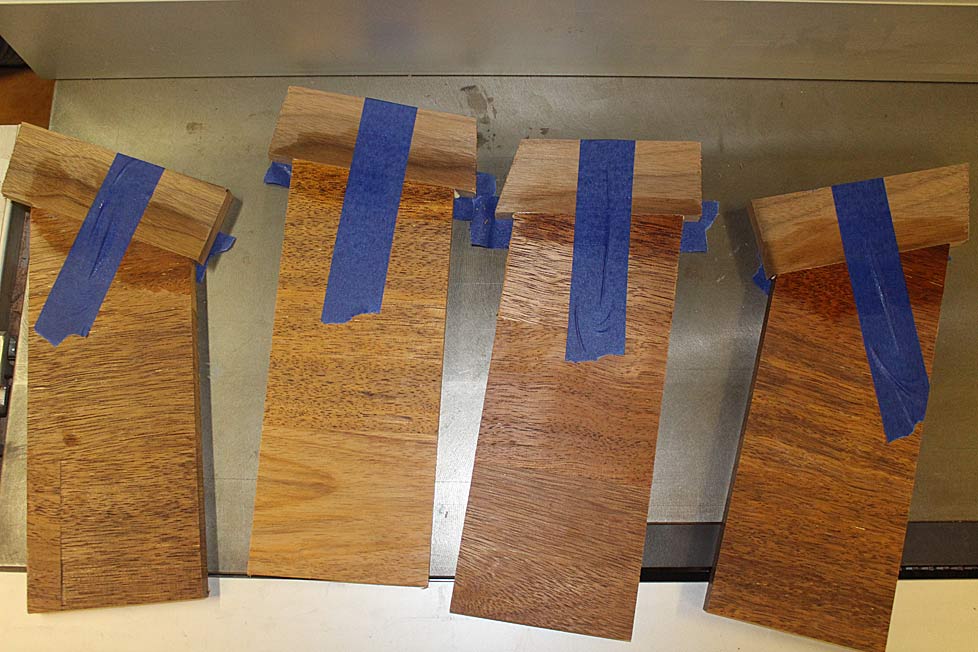


The templates from before are now used to shape the ends ...
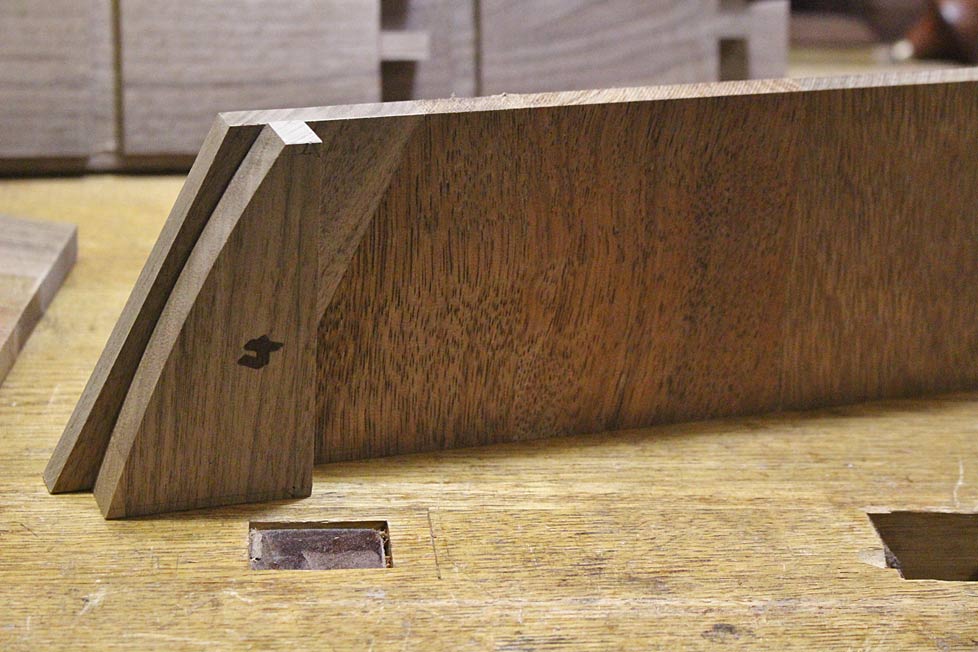

And the result is a drawer blade ready to fit into the dados ...
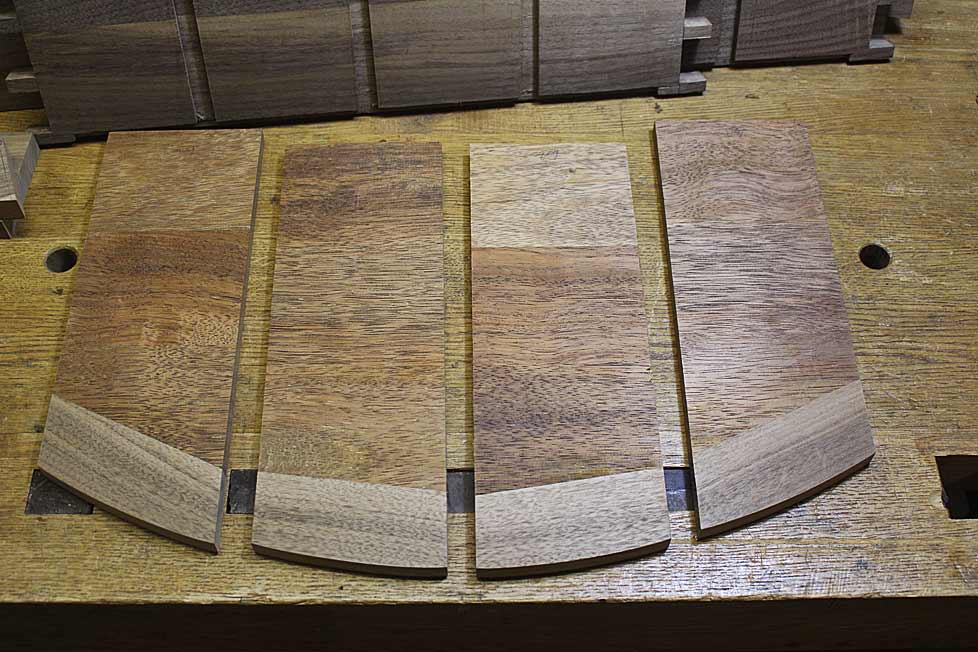

Fitting next ....

Regards from Perth

Derek
Re: Apothecary chest

#2

Re: Apothecary chest

Bill Tindall, E.Tn.

That is an exceptional piece of walnut. Now I know where all our good walnut goes....export.

That was a complicated way to wind up with a stopped rebate.

Dadoes. Would it not have been easier to adjust what went in the dado? For looks and to provide a stiffening shoulder I typically rebate the end of a shelf and stick it into a dado less than shelf thickness.

Why the mixed wood species?

Re: Apothecary chest

#3

Re: Apothecary chest

Derek Cohen (in Perth, Australia)


That is an exceptional piece of walnut. Now I know where all our good walnut goes....export.

That was a complicated way to wind up with a stopped rebate.

Dadoes. Would it not have been easier to adjust what went in the dado? For looks and to provide a stiffening shoulder I typically rebate the end of a shelf and stick it into a dado less than shelf thickness.

Why the mixed wood species?

Hi Bill

The stopped rebates ... with 24 drawers, I am just trying to be a precise as I can to ensure everthing is as square as possible.

I decided that it would be easier to adjust the panels, as you suggest, but the dados still required a little tweaking.

Why the mixed woods? Well, I do not have enough of that wondeful walnut to use inside the chest, and so am using merbau as a secondary wood. It is hard and cheap (used for decks), and will not be seen.

Regards from Perth

Derek

Re: Apothecary chest

#4

Question

Bill Tindall, E.Tn.

what do you pay for walnut there? It is about $5-6 /bdft here at a place that sells to professional shops. Much higher at the pick- your- own- boards retail level. Walnut is in high demand at this time.

Re: Apothecary chest

#5

Answer

Derek Cohen (in Perth, Australia)

Hi Bill

I do not recall what I paid, and my supplier does not have an accessible price list on his website. An alternative website offers these prices (in Aussie dollars .. AUD):

Keep in mind that this is imported from the USA.

American Black Walnut in 25mm and 50mm sawn boards:

100x25 $18.70p/m

140x25 $26.18p/m

170x25 $31.79p/m

Rock (Hard) Maple in 25mm and 50mm rough sawn boards:

200x25mm $35.20p/m

200x50mm $79.20p/m

How does that compare?

Regards from Perth

Derek

Re: Apothecary chest

#6

Re: Answer

Bill Tindall, E.Tn.

I don't know what 100x25 $18.70p/m means. I presume 100x 25 means the board is 100 mm wide by 25 m thick or 4" wide by 1" thick. Is the $18.70 p/m mean per linear meter? Hence, 4/12 x 3 or 1 bdft (144 sq in) is $18.70 au or about $14 . bdft US? I expect these prices are several steps removed from wholesale from distributor. It doesn't cost much to ship a container of anything.

The maple price is astonishing high. It is much cheaper than walnut at the source and a 200mm or greater width is common.

That is a curious way to price hardwood lumber. It is sawed at the source random widths and lengths and sold by surface measurement of what ever the board is. Every imaginable width will show up in a wholesale pack of lumber with a minimum width of 5.75" common for most lumber sold at retail. There is no difference in bd ft price unless the mill sawing selects out 10 or 12" and wider and packages it separately. (see my article in the Articles section on measuring hardwood lumber at the source) In this case there is a premium on the wider packs of lumber. The premium depends on how rare the wider lumber is. the premium is small for oak and poplar and it could be $1/ft for something like walnut and white oak where the larger logs go for veneer.

Re: Apothecary chest

#7

Re: Answer

Derek Cohen (in Perth, Australia)

Bill, 100x25 means 100mm (width) x 25mm (thickness).

Timber is sold either rough sawn (with an option of skip dressing) or dressed (thicknessed to finish). We purchase by the dimension and then by length.

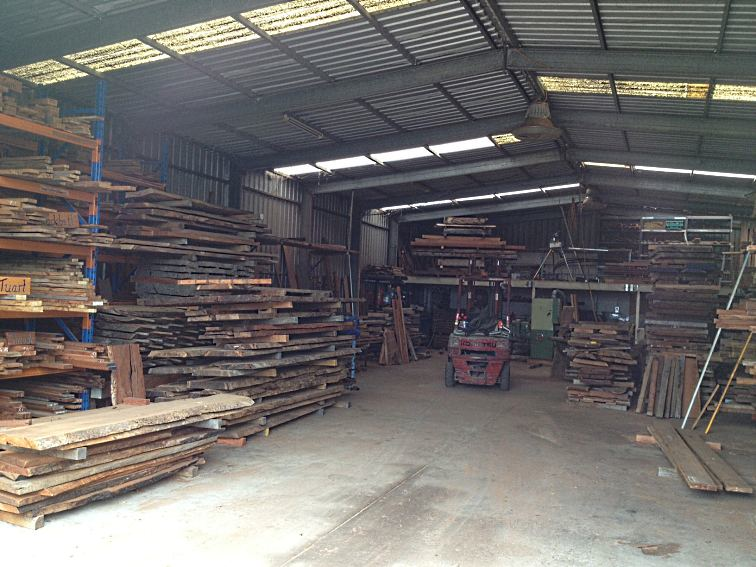
This is the yard I usually get wood from ...


Those boards on the left could be rough sawn maple. They may be 250mm (say 10") wide and 50mm (2") thick. A board might be 2.7m (106") long. That may cost $200 AUD ($150 USD).

That is how it is done in Australia.

This curly jarrah piled in the back of my wife's car cost about $300 AUD ($225 USD). That became the Wegner chair I built a few years ago ...


Regards from Perth

Derek

Re: Apothecary chest

#8

Re: Answer

Sgian Dubh

Derek, presumably in the end they sell wood by the cubic metre? Those dimensions you gave for that one piece equate to roughly 0.034m³, so if that board you reckon is about AUS$200, then 1m³ of the stuff would cost roughly AUS$5882. And that works out at about AUS$165 per ft³ or about AUS$13.8 per board foot, approximately US$10.35 per bdft, for rough sawn maple, presumably hard maple imported from North America. There may be taxes of some sort to pay on top, but I've no idea how that works, nor if you included taxes in your estimated price. Interesting.

Here in the UK good American black walnut (FAS) the last I heard was about £60 - £70 per ft³ and upwards, about the same as US$7.25 per bdft. I could be way out with the walnut price - it's been a while since I needed to buy any. Slainte.

Re: Apothecary chest

#9

Re: Answer

Brian Holcombe

Beautiful work Derek!

8/4 FAS and better walnut is about $12/bf here. Pricing for really high quality from a commercial supplier is about $11/bf.

You can buy walnut for $6/by here but it will usually be a Lower grade.

👍 This page answered my questions

Your vote helps other woodworkers quickly find the answers and techniques that actually work in the shop.