Hand finishing water-based poly.
Derek Cohen (in Perth, Australia)
The decision was made to use Hard Maple for the kitchen doors and drawer fronts because the wood was light in colour and the figure was gentle. With very little experience in working with this wood (imported from the USA), I decided to use a USA-made finish, since this appeared to be recommended as the best way to retain its light colour. That's where I ran into the first hurdle.
General Finishes water-based poly received the top rating a few years ago in a FWW comparison, however it is best sprayed, and I do not have spray equipment.
I looked into brushing on the finish. General Finishes recommend using a foam brush. However, all the reviews and videos I examined complained of brush marks and streaks in the finish, whether by the best brush or foam. This is partly due to water-based finishes drying rapidly. They set in minutes - sometimes seconds! - and there is no time for the finish to be self-levelling.
To date, my main finishes have been oils and shellac, which I have applied with a rag. I would have liked to have used shellac here, but it is just not durable enough in a kitchen, which will be wiped down frequently. Still, my experience is in wiping a finish, and so I tried this with the GF. It went on well, and it showed promise. The only fly in the ointment was the water-based finish raised the grain, and this would require that the finish was sanded again.
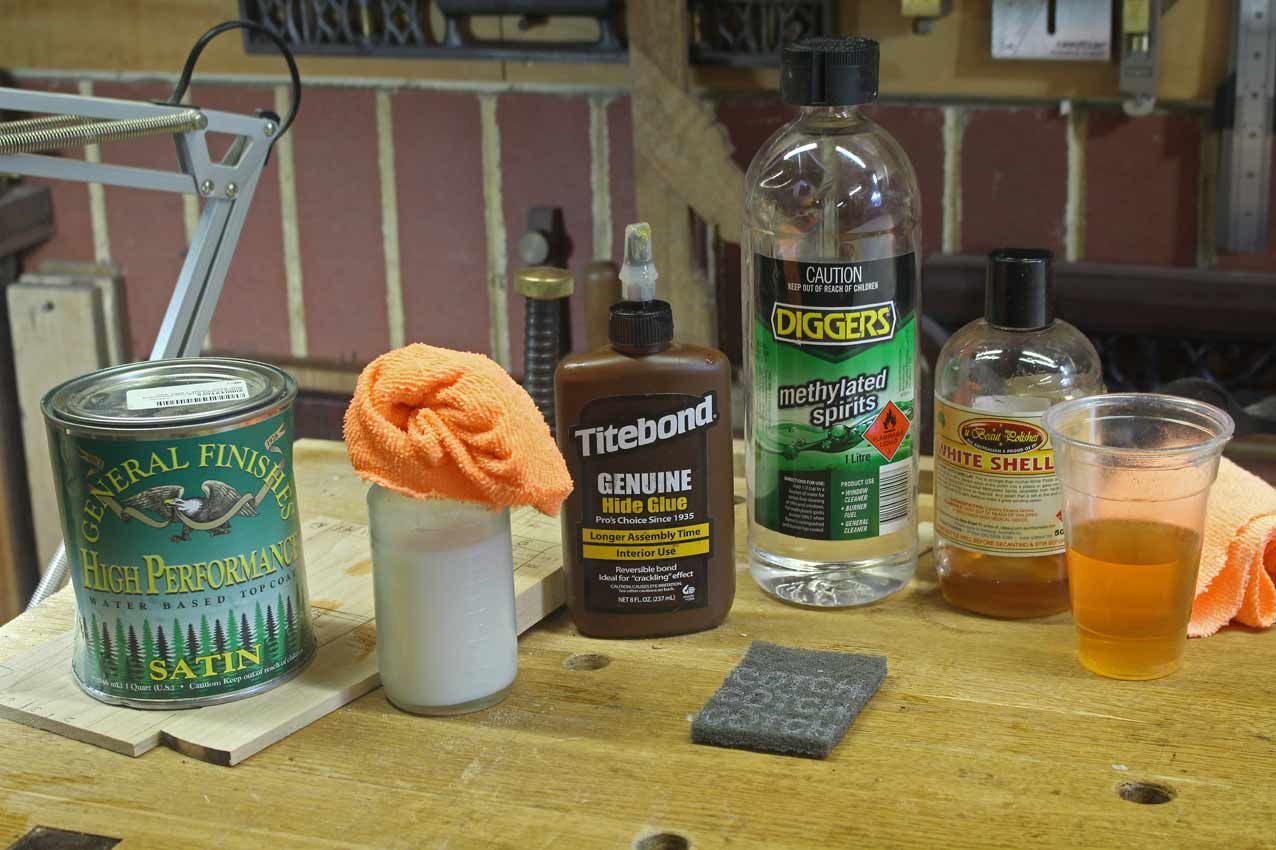
I decided that I would use a dewaxed, white shellac as a sealer prior to wiping on the poly. My choice here is Ubeaut White Shellac, which is concentrated. It was diluted 50-50 with alcohol (methylated spirits).
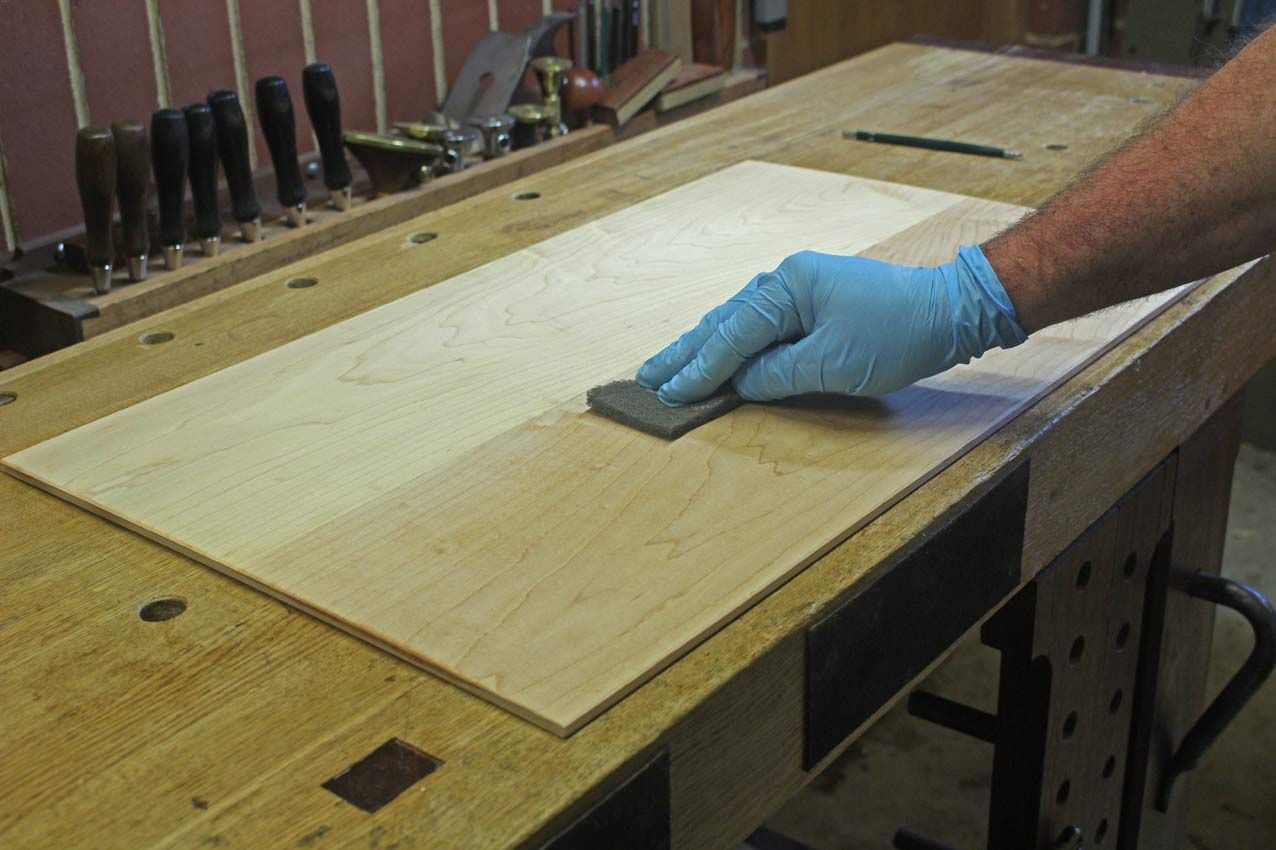
For rags I used microfibre, and grey Scotch mesh smoothed the surface between coats.
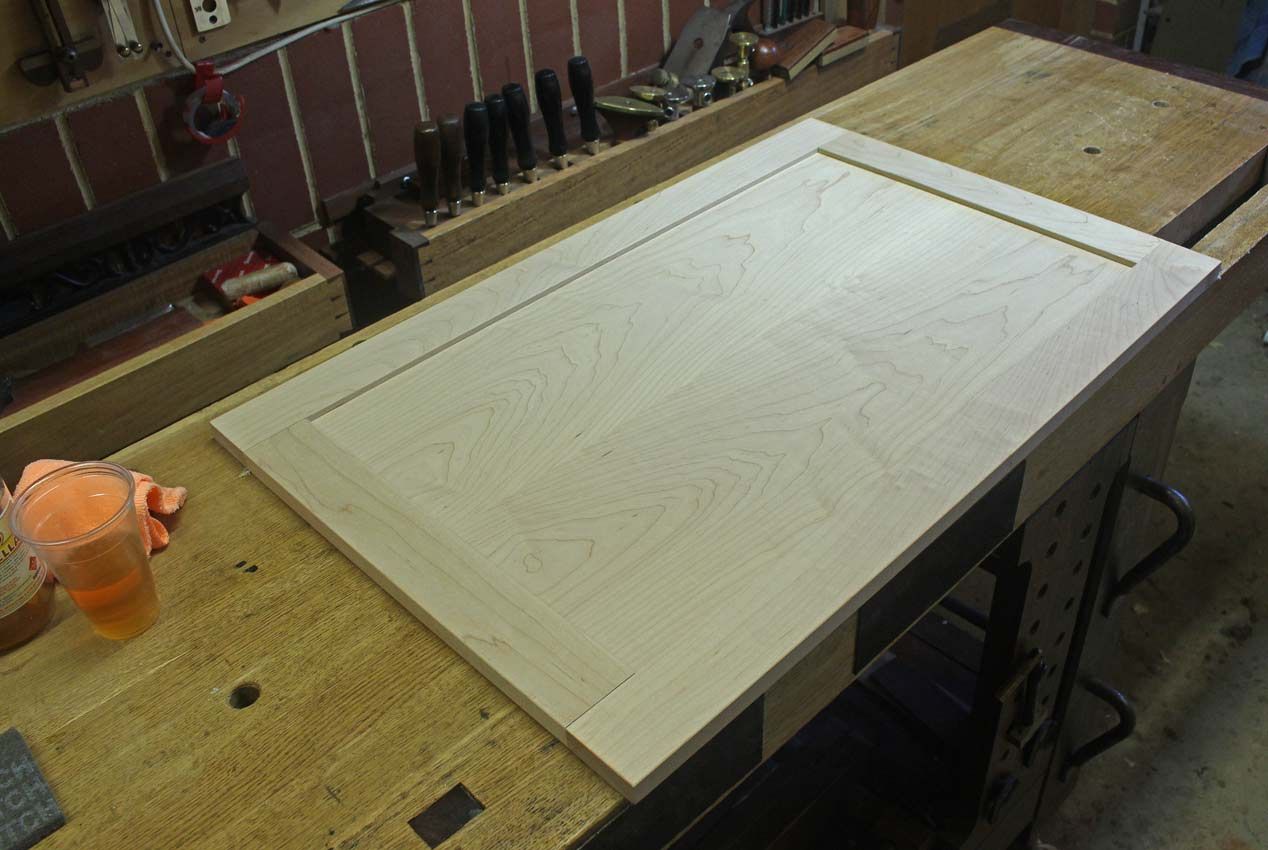
This is a door pre-finish ...
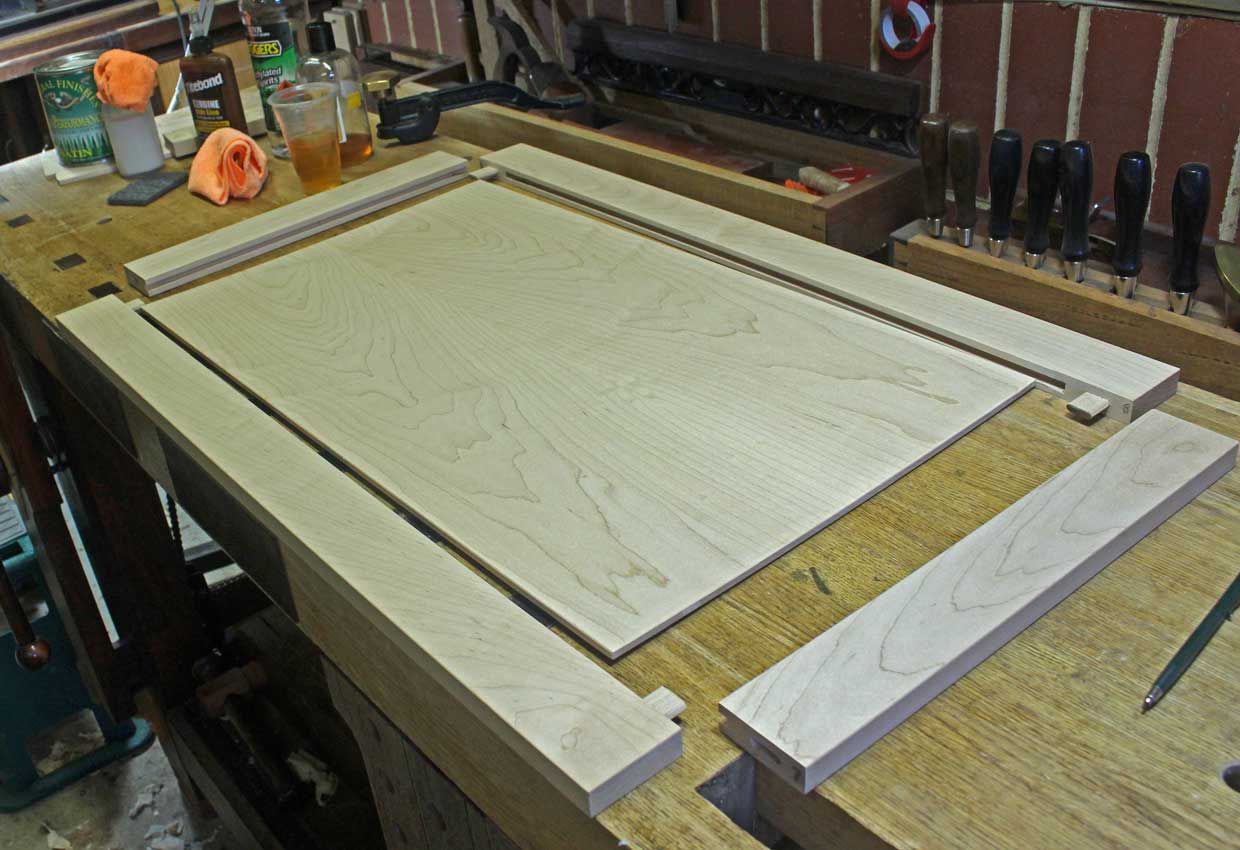
Pulled apart. Every piece is carefully marked for mating and orientation ...
Each surface was given two coats of shellac (with the grain) ...
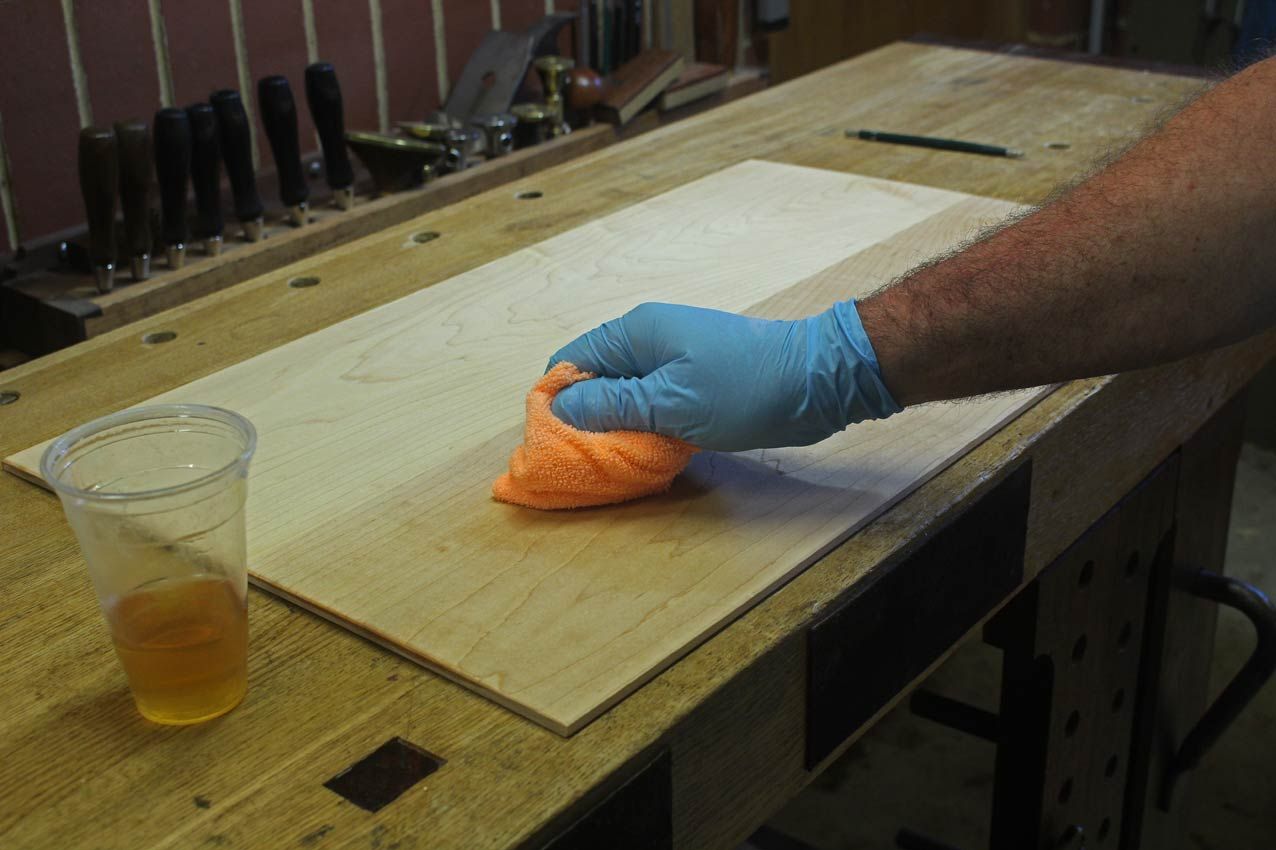
.. followed with a rub down (with the grain) ...
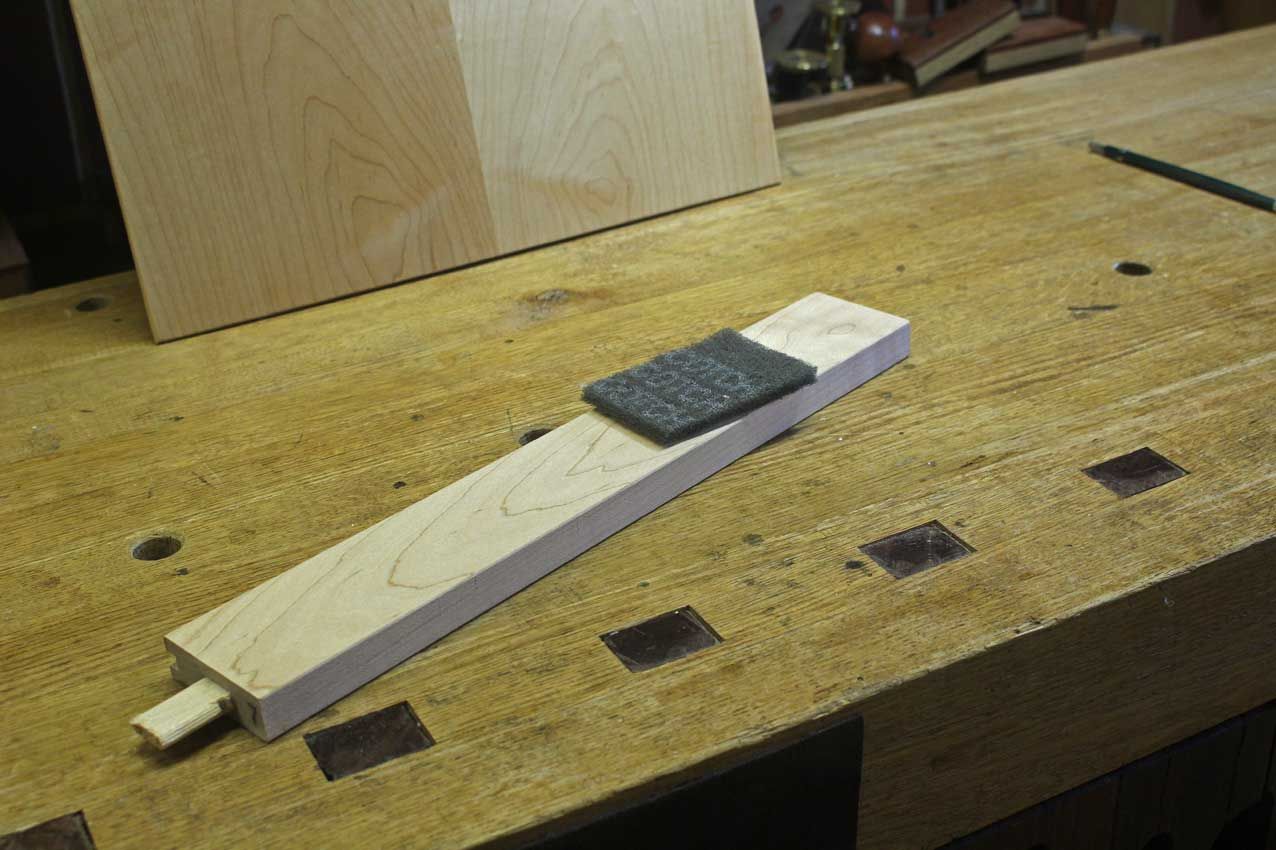
The shellac does colour the wood, but very slightly - far less than expected from its darkish amber. It dries quickly, and within minutes of each coat one can move onto the next.
Now it is the turn of the poly. It is white in the decanted bottle. but goes on clear.
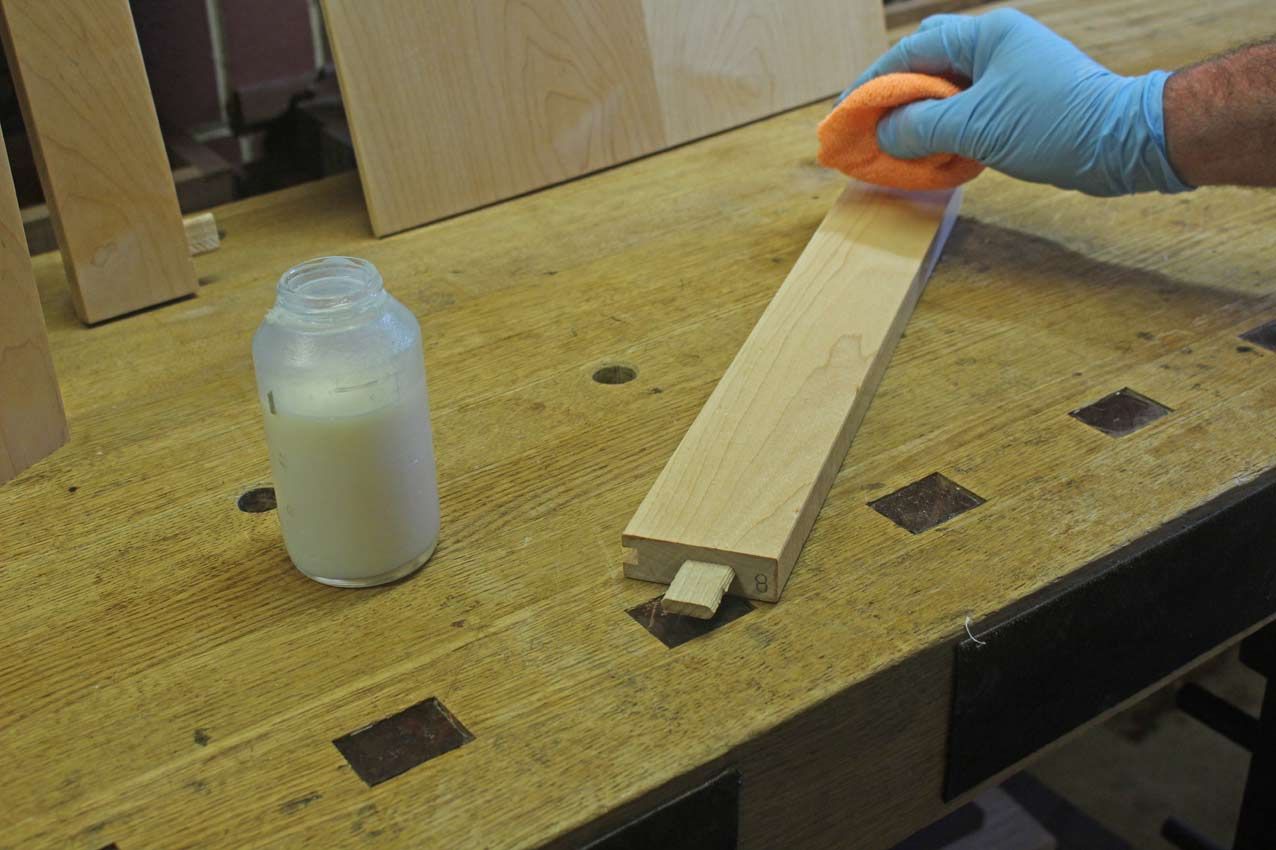
The finish is a little sticky, and it is drying fast. I apply it as if it were polish and I was polishing the surface of the wood. You can do so in small circles, but you must finish (as it dries) by only rubbing along the grain. Using raking light, look for any streaks. Simply rub them out.
Once dry, use the grey mesh to rub the surface with the grain. It not only removes any streaks, which it blends all together, but it seems to raise a shine.
It takes at least 2-3 layers before the shine becomes apparent. The poly slowly builds in thickness. Polishing it as done here only adds a thin coating on each occasion. Then suddenly it is there ..
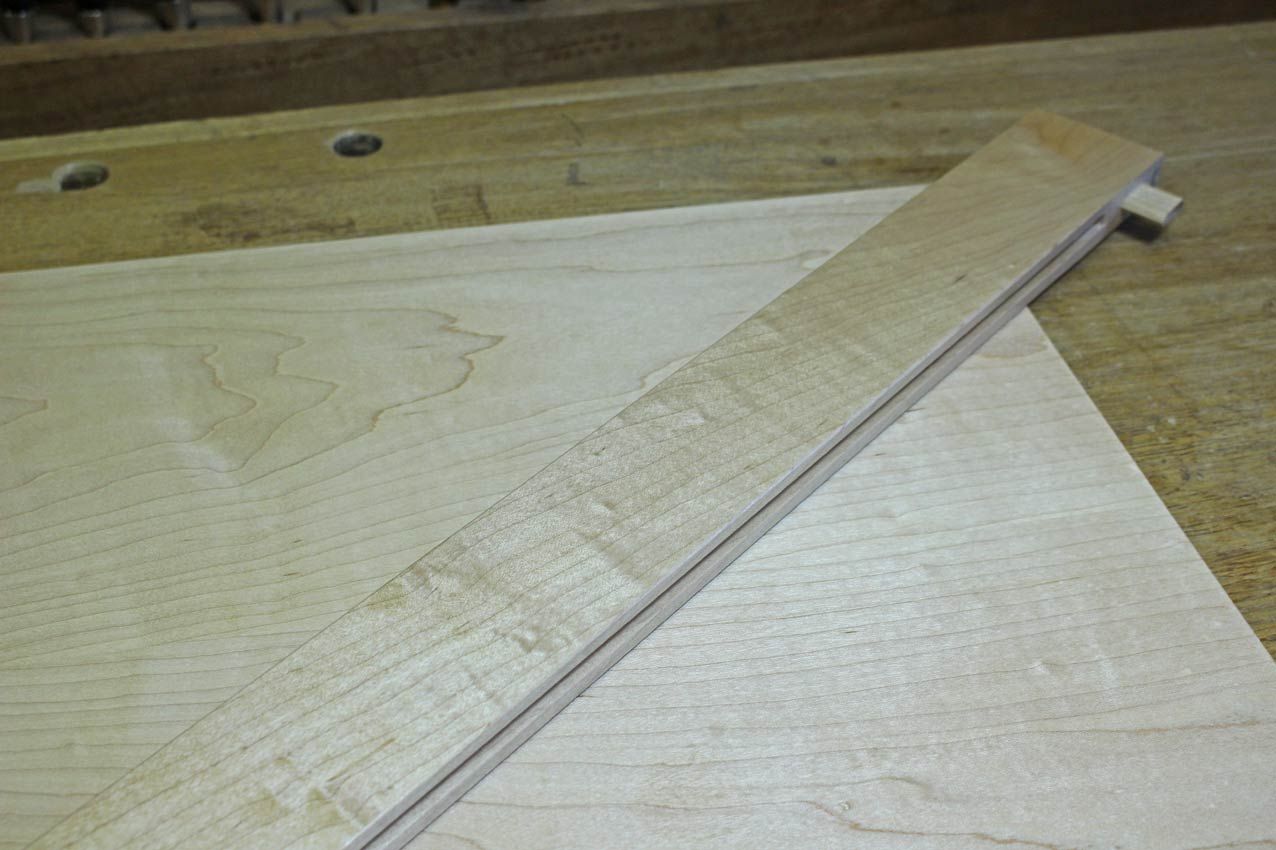
I stop after 5 coats.
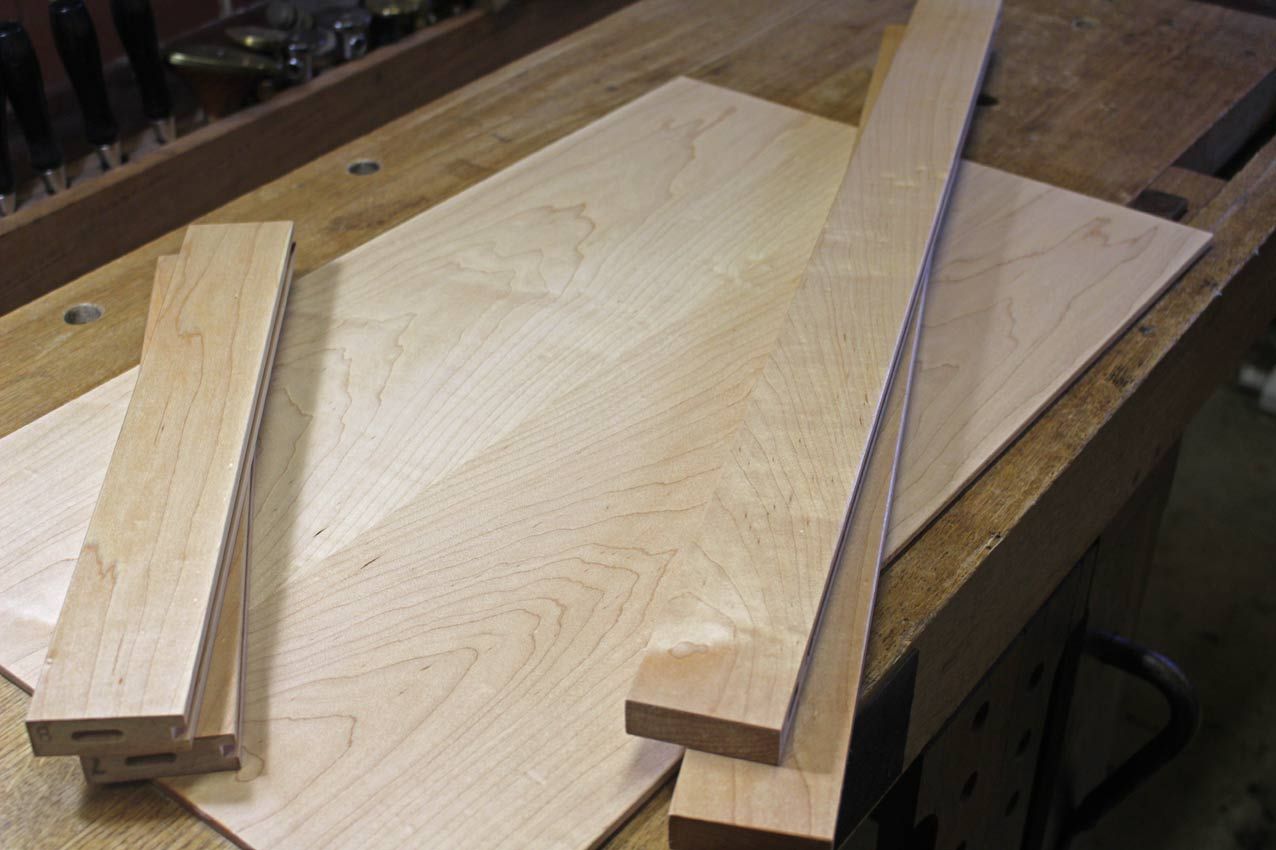
Now it is time to glue the frame together. The panel floats inside the frame ...
A note on the glues: I used Titebond lll for the bookmatched panel as it is water resistant. I used Titebond Liquid Hide Glue on the Domino mortice-and-tenon joints as this is reversible and unlikely to affect the finish.
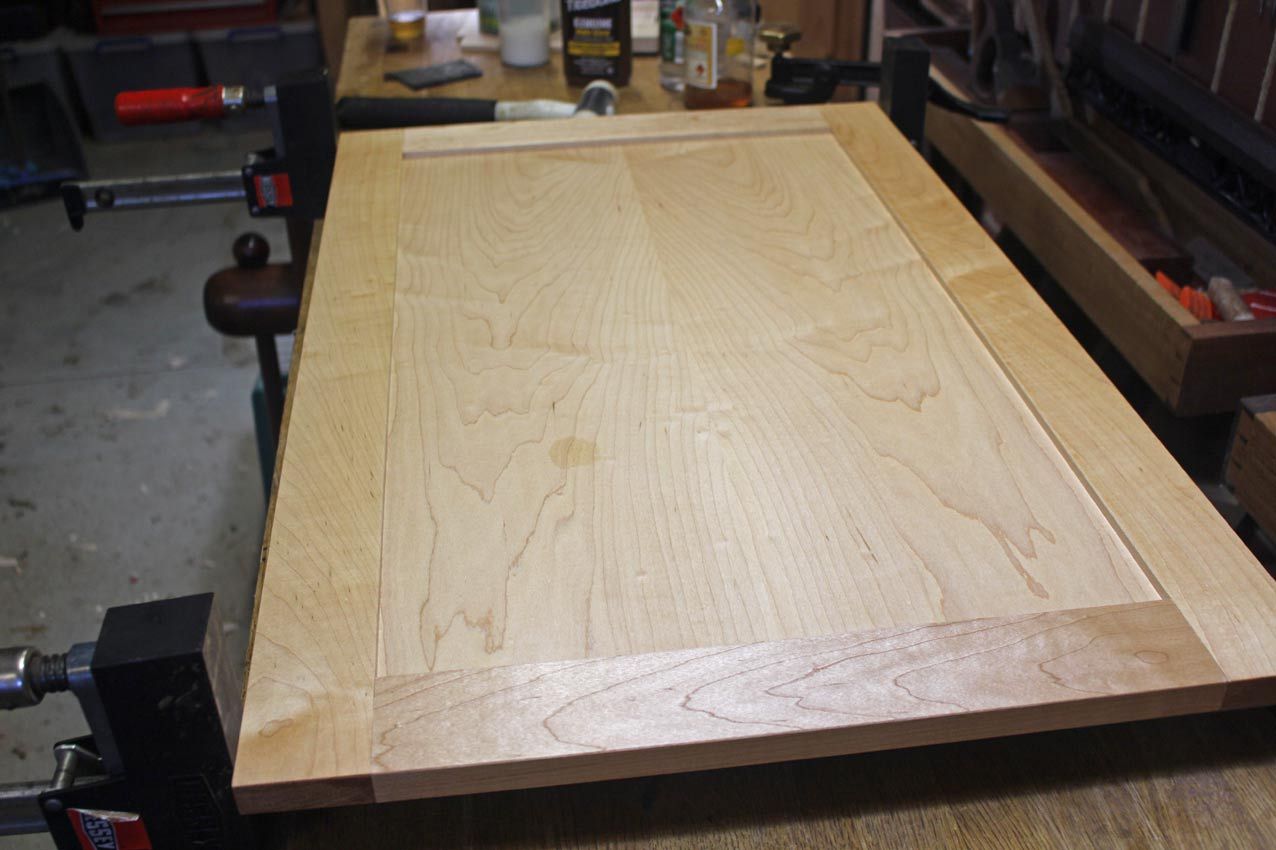
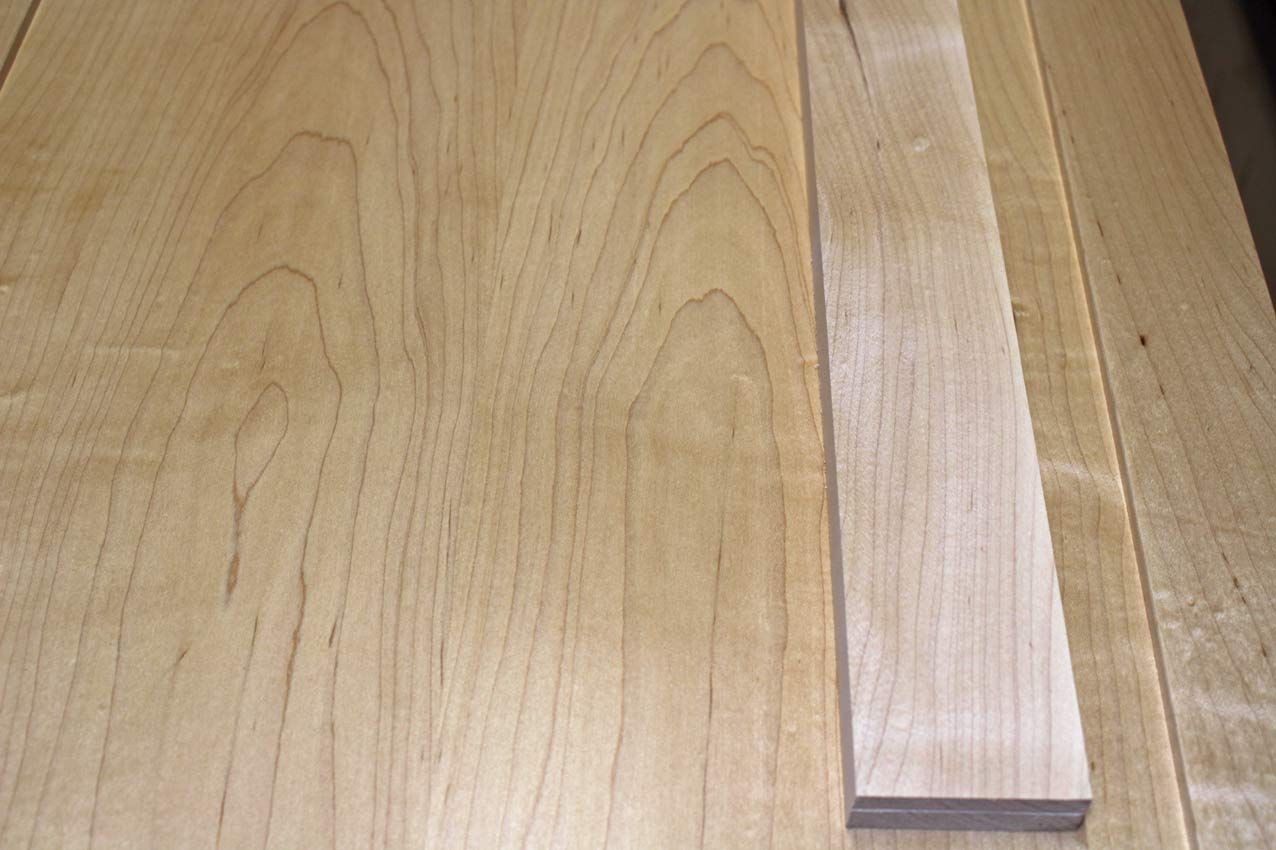
How much colour change did the finishes add? Here is the completed panel along with a planed but otherwise unfinished board ...
Regards from Perth
Derek


