
Home Articles Forums Gallery Marketplace Videos

WoodCentral Forums

Knowledge You Can Build On — Est. 1998

Find a woodworking club near you

Variations on Pull-Out Table (Kind of Long)

Posts

Variations on Pull-Out Table (Kind of Long)

#1

Alan Young

Variations on Pull-Out Table (Kind of Long)

Alan Young

I have been working on a design for an expandable table. I admit I have never seen up close the under workings of the Tage Frid design-


which doesn't seem to have been a new idea-Google searches showed many tavern tables and older styles that seem to function this way-ie the Ends sit underneath the top when collapsed but pull out for extension.


After quite a few searches and You-tube viewings, I think I found the basic way this table functions:
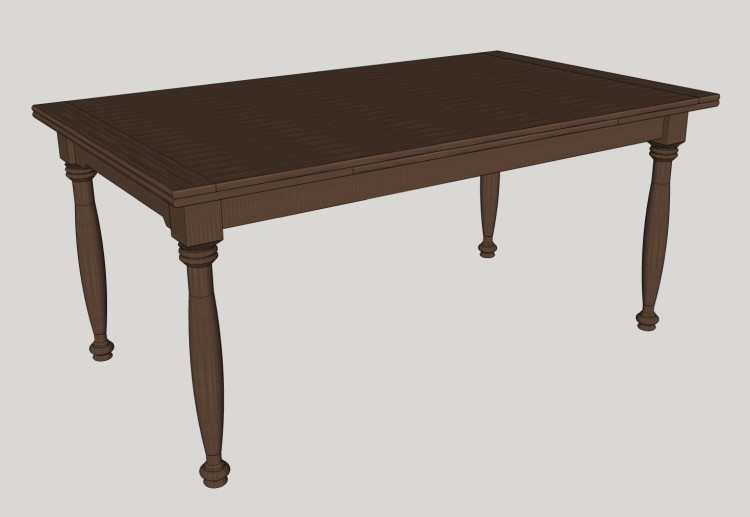

Lift the center section and pull out the end slide.
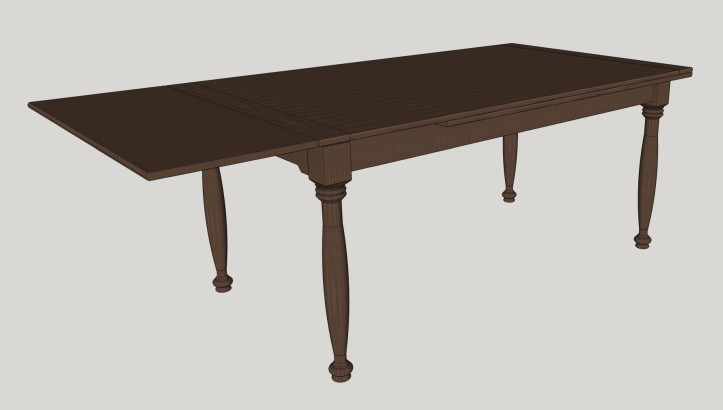

Repeat for the opposite end.
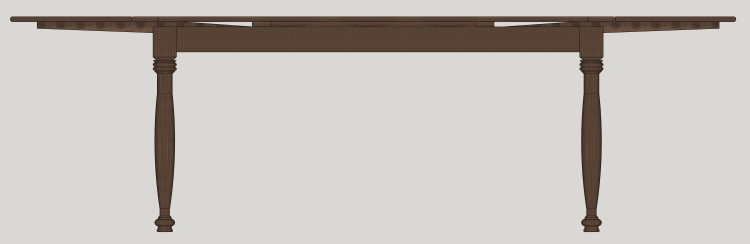

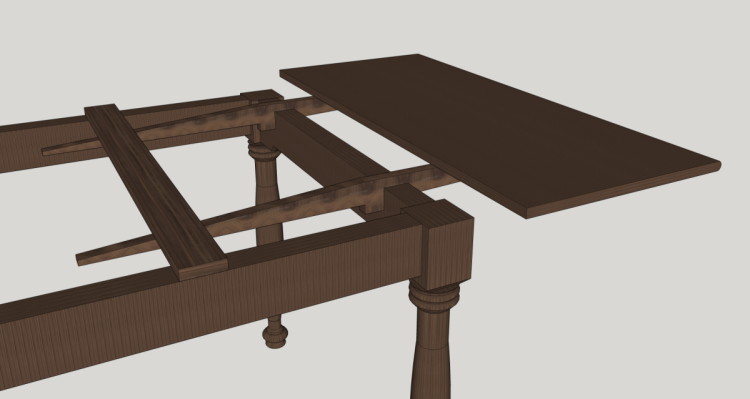
Each extension mounted to a pair of tapered slides.


The Tapered slides run through the grooves on the end apron and underneath the cleat screwed to the top of the long axis aprons.

My proposed alternative design has the end aprons pulling out with individual leaves stored in a cavity under the top. When closed it looks like this:
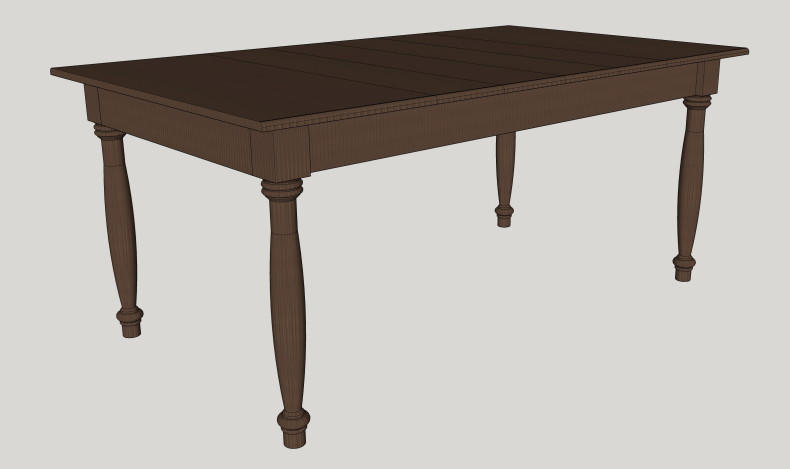

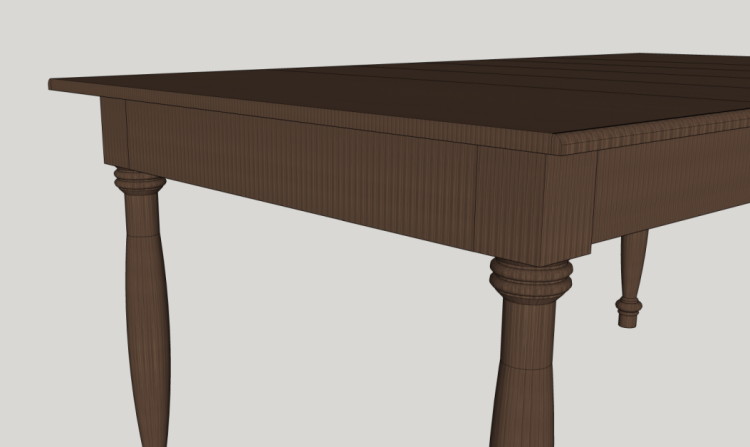
Here is the closed end apron.

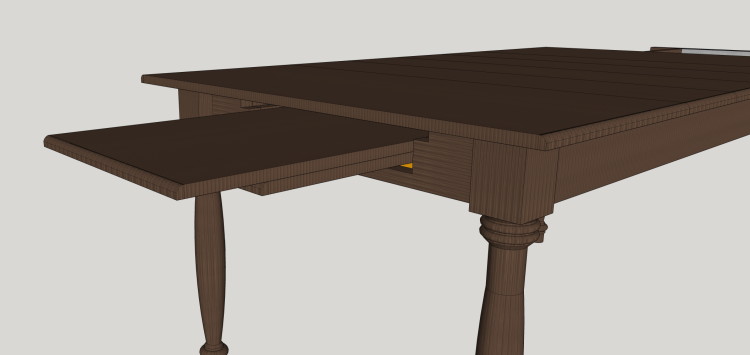
Here the apron is pulled out revealing an apron that is connected to the slides via reverse groove-matched aluminum bars.
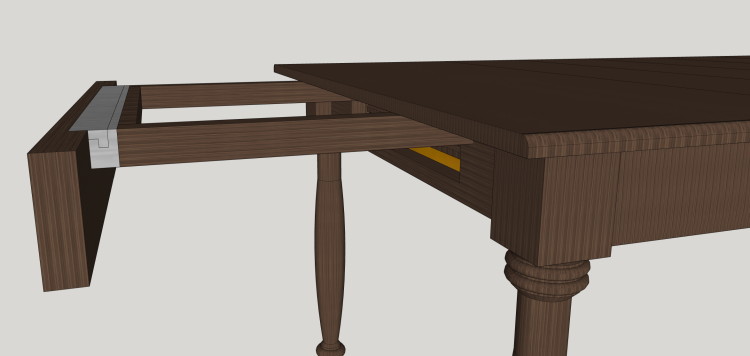

The outer piece is removed so the extended apron edges don't interfere with a person's knees.
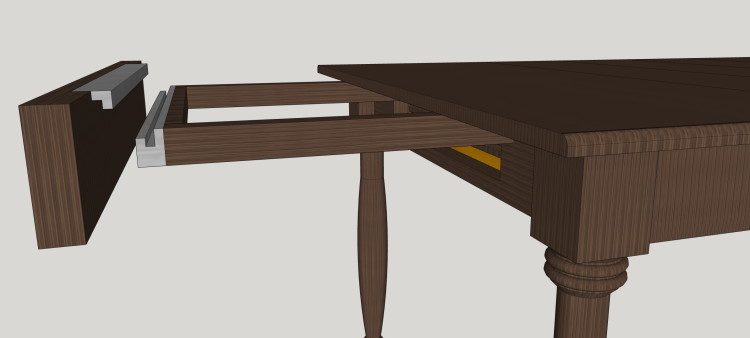

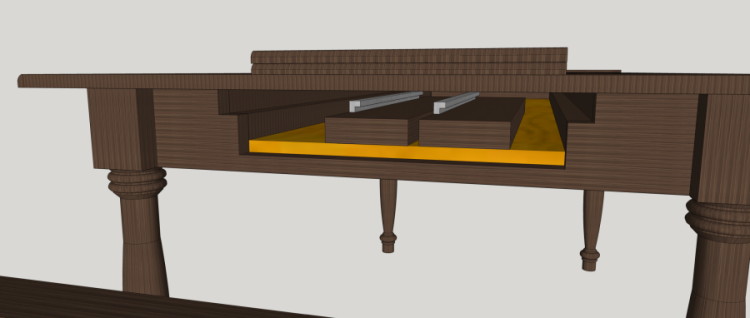
The table extensions are removed from the underside cavity.

The end caps from each apron extension are stored in the underside cavity

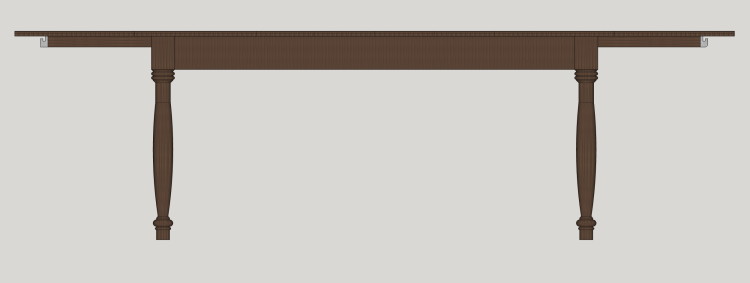
The table with extensions open and end caps stored.

What are the advantages to this revised idea?--I haven't used the original design so maybe I'm inventing problems that don't exist.

1. It seems with repeated use the extensions could have their finish marred by the sliding in and out process- In my new design the leafs can be stored with a padding around them to prevent marring.

2. In observing you tube videos every one that operated the original design was a moderate to large sized male- ie a person who could reach across the width of the table-lift the top then slide out the extension. My potential clients include a female who is not large at all in stature so my design allows for an easy method to pull out the end apron, set it aside, pull out the leaves, set them aside and replace each removable end apron in the same storage cavity-finally-place the extension leaves in place-Never needing to handle more than one item at a time.

-Alan

Re: Variations on Pull-Out Table (Kind of Long)

#2

Two things bother me,

Keith Newton

First, you have cut away so much of the end aprons, that they don't offer much support for the top, nor very little support for the legs, especially if some small person wants to drag it sideways, rather than lifting it to move it a little. or when someone bumps into the side.

Also, by making the outer apron slide out, moves the secondary apron part further under pushing it's connection to the leg closer to the inside corner of the leg. You may be able to get a good strong joint back there, but I don't think it would be as good as having your M&T more to the outside.

You might do better, and save yourself a lot of headaches by storing the extra leaves under the bed or in the back of that entry closet, rather than compromise the structural integrity of the legs this much.

Re: Variations on Pull-Out Table (Kind of Long)

#3

Re: Variations on Pull-Out Table (Kind of Long)

Dale Warder

I am not sure I understand the advantages of the proposed design. It seems that the process of setting up the leaves is somewhat complicated compared to the classic Dutch slide design. Additionally, the loose leaves do not appear to be secure to the slides when in use. It is conceivable a slide could be retracted while supporting the leaf. That is avoided in the conventional design, as the leaf is attached to the slide.

I have built two conventional Dutch slide tables without problems. On both, I routed a finger groove on the underside of the center top, slightly back from the edge the leaf will pull out. This allows a firm hold on the center of the top while sliding the leaf out. One hand to lift and hold the top while the other hand pulls the leaf out. To prevent scratches to the top while opening, I placed two felt strips to the underside of the top. No problems so far.

These tables were built for my daughter and granddaughter. They report no difficulty opening or closing.

Your design poses a new and different solution to the problems of expanding the top. Please post the results of your build.

Dale

Re: Variations on Pull-Out Table (Kind of Long)

#4

Re: Variations on Pull-Out Table (Kind of Long)

Dick Coers

We open up our table once a year, Thanksgiving. That would be way too much effort for once a year. Maybe she has large groups over all the time though. I would offer the customer a cost comparison of your design and traditional drop in leaves. I bet she chooses the traditional.

Re: Variations on Pull-Out Table (Kind of Long)

#5

Alan Young

Helpful Observations

Alan Young

The client was/is hoping to keep the leaves "with" the table ie not have them stuck behind coats and paraphernalia in a closet ...That was the initial impetus in looking for a different solution. They also have large gatherings on a frequent basis-so the extensions- however implemented-will be utilized frequently. I have another iteration where the leaves are stored in a case under the framework which would allow for the end aprons to keep their construction as designed in the Dutch version...After reading all the comments I think my best bet is the Dutch Pull Out-with some felt to the underside....of the tops...thanks for the comments and observations!

-Alan

Re: Variations on Pull-Out Table (Kind of Long)

#6

Butterfly leaf Variation of an extending Table

Ian Neuhaus

I've seen variants with two and three leaves


img

Re: Variations on Pull-Out Table (Kind of Long)

#7

Re: Variations on Pull-Out Table (Kind of Long)

TomD

In many instances you want a hand doing this stuff. What does a leaf weigh, and how will that seem 10 years from now. The table will often move around without a second person holding it back. Or you end up with the enlarged table needing to be re-positioned to make ideal use of the space. It may be worth considering whether the ideal solution is to make something that one thinks will work for one person, or to figure out a better way to get or use help when the guests arrive.