
Home Articles Forums Gallery Marketplace Videos

WoodCentral Forums

Knowledge You Can Build On — Est. 1998

Compare cordless drills on the numbers that matter

Marquetry for Doors process *LINK*

Posts

Marquetry for Doors process *LINK*

#1

Alan Young

Marquetry for Doors process *LINK*

Alan Young

Last week I posted some pictures of a project I am working on. (That thread is in the link below for reference)

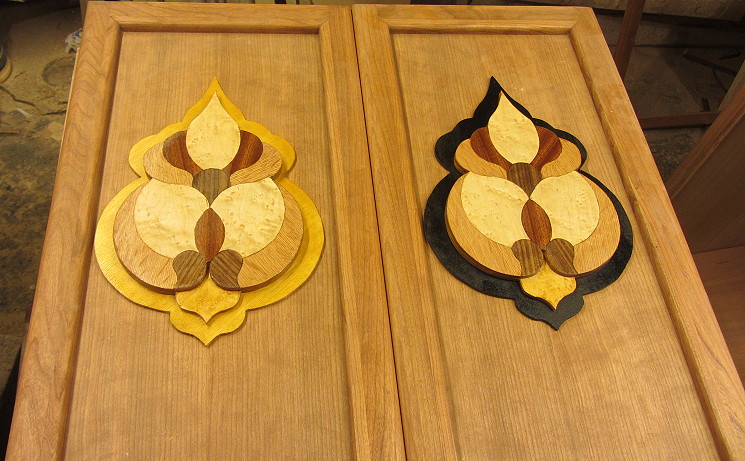
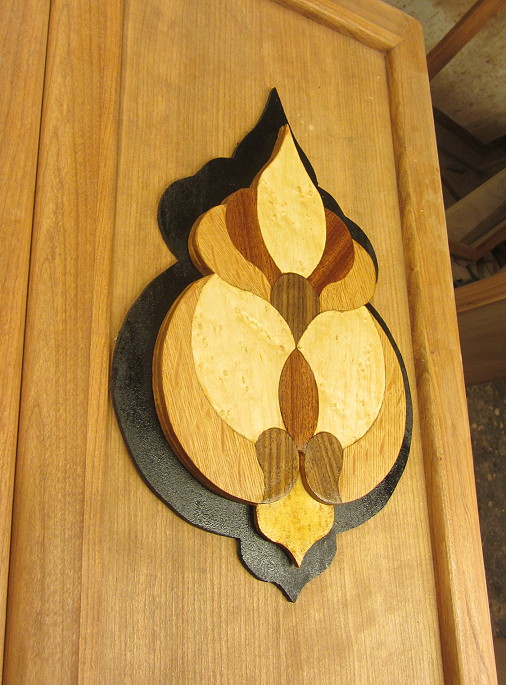
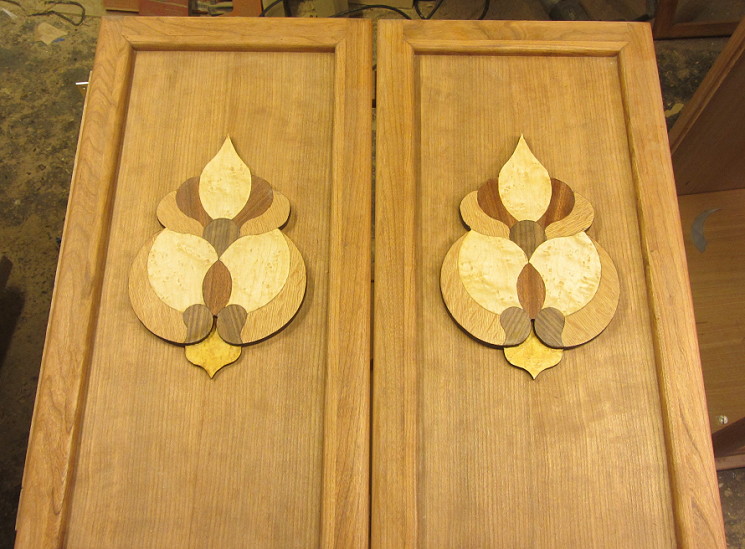
The flower designs for the lower doors are finished. The Marquetry used veneers of Sapele, Walnut, Bird'e eye Maple and Quarter sawn White Oak...

First I laid a full printout of the flower pattern over an Anigre veneered panel (Panel is 1/4" thick")
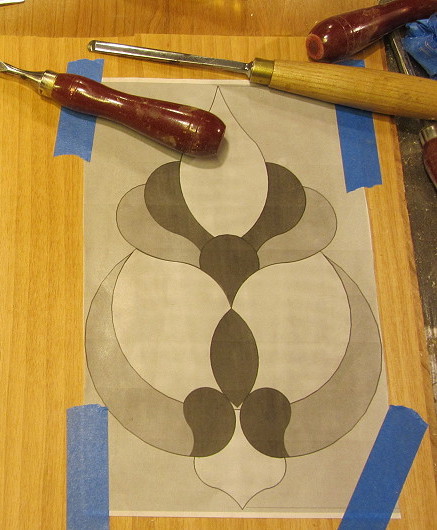

Then using various carving tools I cut out each individual shape. I then laid these paper cutouts over the various veneers,traced the profile onto the veneers and cut out the profiles with various carving tools. It was a lengthy process to cut the individual pieces and glue them up. I did 2-3 at a time and each session took a day to set.
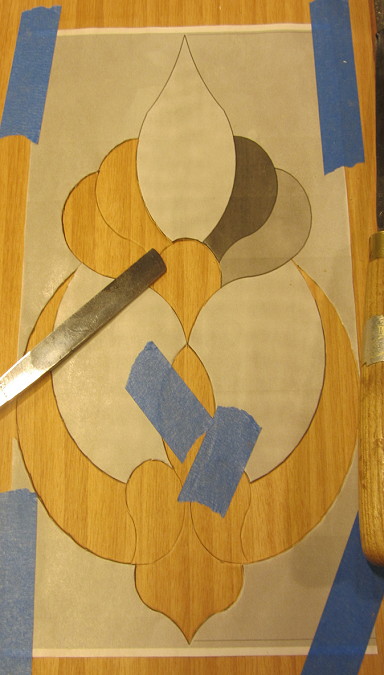

This technique is far from efficient and I plan on getting my scroll saws fixed for the next time I have a design such as this to execute....

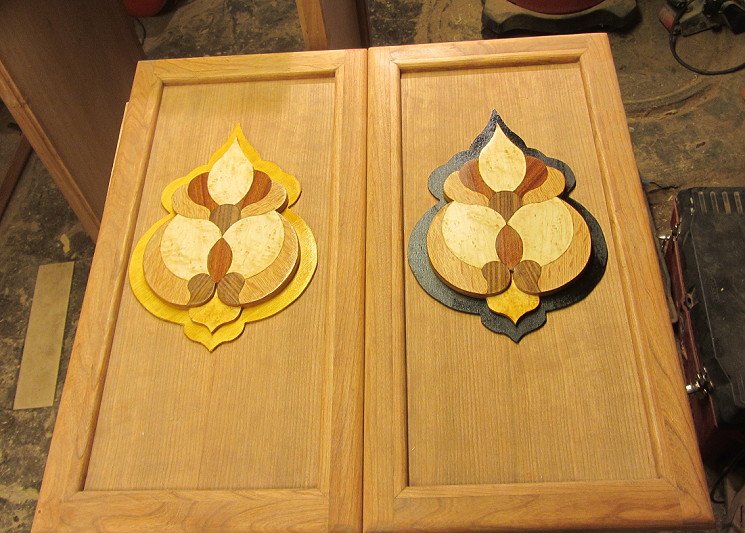
Each flower is now complete-I have them temporarily set on back planes- a Yellow/Gold plane and a Black plane- I like the Black back plane better- The veneers "pop" better against the Cherry doors.
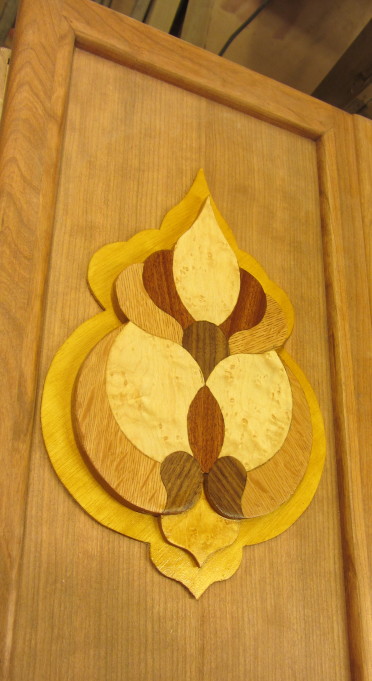
Marquetry Thread

Re: Marquetry for Doors process *LINK*

#2

Comments

Mark Mandell - Gone Round In New Jersey

1. Loose the yellow backer.

2. Cut the black border to no more than 1/4" surround. Overpowers the design.

3. Show without backers.

Re: Marquetry for Doors process *LINK*

#3

Alan Young

Heh-Heh and Heh!

Alan Young

1. Loose the yellow backer.

Agree

2. Cut the black border to no more than 1/4" surround. Overpowers the design.

Was thinking the exact reduction.

3. Show without backers.

Will do--later today.

Re: Marquetry for Doors process *LINK*

#4

Alan Young

Design Artifacts

Alan Young

On the day Job I design mechanical fixturing for a medical imaging research group. Projects start out with a certain set of requirements that my designs must accommodate. So I incorporate various elements into the designs that will solve the anticipated problems.. As the projects develop (sometimes over the course of many months)-I am told that some of the original requirements are no longer needed or are somehow to be altered--but my "solutions" tend to stay in the design....These can the get Grandfathered in to new iterations with no deliberate need-Till one day some ones says "What is that for?" after much back tracking and discussion we can usually find why some detail was incorporated but now is not needed---So I find that is what happened with the Yellow/Gold Back plane--That Yellow details was originally going to be brass or aluminum inlaid or wrapped around the different veneers-mimicking the lead that was seen in the Stained Glass Panel- That idea was abandoned fairly early on but for some reason I never mentally removed the "Gold Highlighting"

Re: Marquetry for Doors process *LINK*

#5

Re: Design Artifacts

Jesse Cloud

Same thing happens with computer code. An original requirement get dropped, so you no longer need that code, but its a hassle to take the code out and there is a risk that the code may be called for other purposes as well. Many less anal shops just leave the "dead code" in there. A Program that has been around long enough may have a sizeable proportion of dead code that is undocumented.

A shop that is strict about slop will use tools and time to keep their code clean, but many are struggling just to keep up.

I guess every trade has its own version of duct tape...

Re: Marquetry for Doors process *LINK*

#6

Isn't that intarsia?

Dick Coers

I thought all marquetry was flush with the surface. Maybe I'm confused at what stage you are at.

Re: Marquetry for Doors process *LINK*

#7

Alan Young

It's all a Puzzle to Me! *LINK*

Alan Young

Dick- I really don't know what to call the pieces I've done. I did some searches on the differences between Intarsia, Marquetry and Inlay. There seems to be a fair amount of cross-over in definitions. From the article below:


In the modern era intarsia is made using solid wood whereas marquetry uses veneer. In most instances the intarsia is not inlaid anymore. It is merely glued to a wood backing as an appliqué after it has been sculptured thus creating a 3D effect.

I used veneers so It's marquetry-but I glued the individually shaped veneers to a (ply)wood backing- So it's Intarsia.

I guess if there is a defining characteristic of these pieces it would be this: from what I understand- The result of marquetry is a flat surface- Intarsia has a contoured surface....My pieces are in essence: flat so I'm calling it Marquetry. Happy to hear those with more knowledge weigh in on this-Alan


http://marquetrytime.blogspot.com/2012/12/intarsia.html

Re: Marquetry for Doors process *LINK*

#8

Alan Young

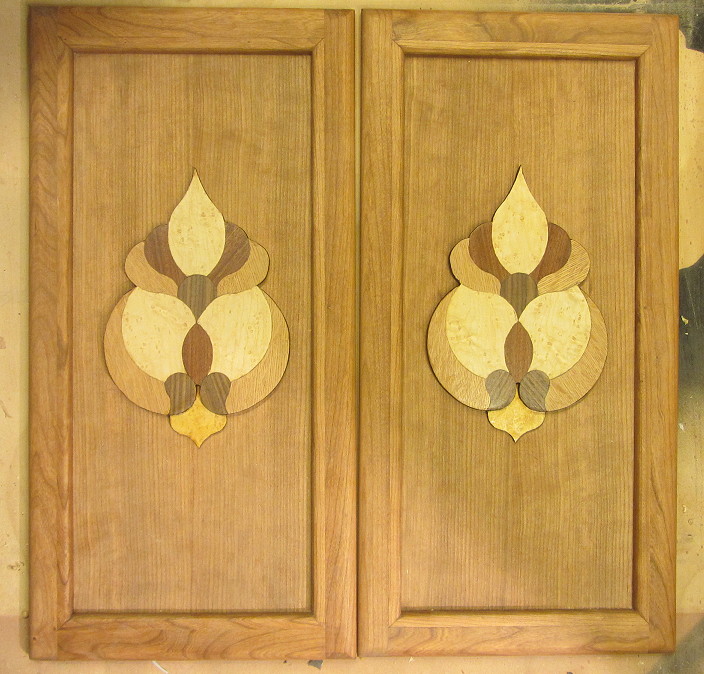
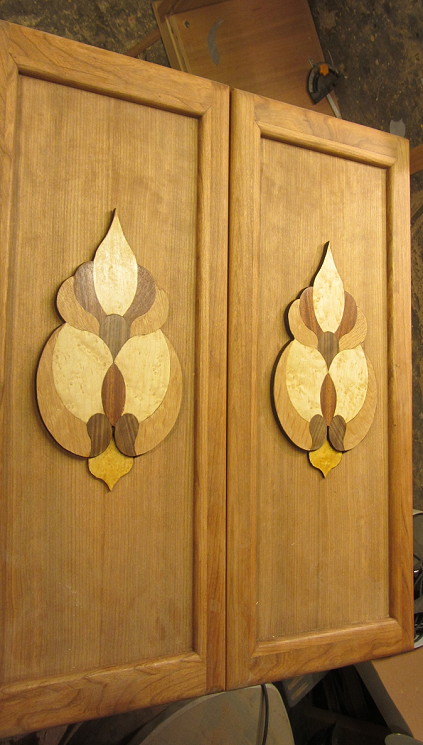
Some pics without the back plane

Alan Young

I think this might in fact be better with out any back plane--(I didn't get around to downsizing the black back plane)


Re: Marquetry for Doors process *LINK*

#9

Moto Bene!


Re: Marquetry for Doors process *LINK*

#10

How About

Mark Mandell - Gone Round In New Jersey

an "Applied Medallion" ;)

Don't need Latin or French to make it more significant.

Pedagogs beware, "wood" and "craftmanship" spoken here :D

Re: Marquetry for Doors process *LINK*

#11

Alan Young

Re: Moto Bene!

Alan Young

And the "No-backing" just passed Commissioner's muster.