Home Articles Forums Gallery Marketplace Videos

WoodCentral Forums

Knowledge You Can Build On — Est. 1998

Abingdon, VA – Tree Cutting & Portable Sawmill

breaking epoxy bond

Posts

breaking epoxy bond

#1

Joe Bradshaw

breaking epoxy bond

Joe Bradshaw

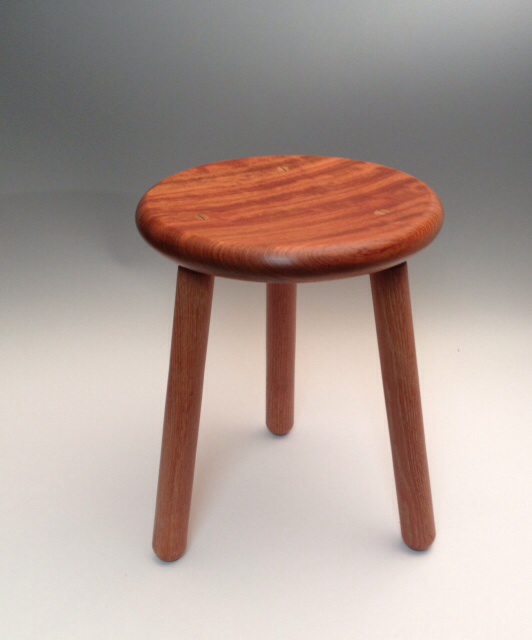
I epoxied a stool leg in the seat wrong and did not realize it until the epoxy had set up. Is there anything that I can use to break the bond and remove the leg, short of drilling out the leg and turning a new one. Thanks in advance.

Joe

Re: breaking epoxy bond

#2

Re: breaking epoxy bond

john lucas

Heat it up. I've used a heat gun to heat parts to the point the glue becomes gummy and you can pull them apart. Might take a while because you want the parts pretty darn warm but you don't want to damage them with too much heat.

Re: breaking epoxy bond

#3

Yup

John in NM

That is about the only way I've been able to do it.

Re: breaking epoxy bond

#4

Re: Yup

Barry Irby

They are right, heat will do it. Hard to drive that much heat through wood, but you can do it. Then have some alcohol handy to wipe the gummy stuff off. May not work if its fully cured, but it may help clean up.

Re: breaking epoxy bond

#5

question

Jerry Gibbs

Has anybody tried boiling in a vat to soften the epoxy? Might be worth a try since wood is such a good insulator. Maybe it is worth a test. Jerry

Re: breaking epoxy bond

#6

Yeah, I'll be interested

Dick Coers

To see if you can get heat all the way to the bottom of the mortise.

Re: breaking epoxy bond

#7

Re: breaking epoxy bond

TomD

Before getting too excited,r try melting the epoxy with the heat gun or whatever (in an extremely well ventilated situation, even one exposure to burning epoxy can be very bad). You are not going to do better than you can do in direct heat, at the bottom of a mortise. If that doesn't work, then you know it is hopeless to attack the piece of furniture.

You need to know several things. Heat will initially just harden and raise the melting point of most epoxies that would have had any business being used in this kind of construction. I would not personally try heating it out, I have done that on a variety of metalic objects, mostly golf clubs, and the amount of heat required can be way way above the burning point of wood. It is not a safe procedure, either for the parts or for you.

Without knowing the product in question, I would normally first try to shock it out. Epoxy is amazing, but if you used the wrong stuff like 5 minute, or just got unlucky, epoxy can often be fractured right out, and come out in a whole piece. Second favorite method is to drill a hole that is not full diameter, and then use a gouge to remove the ring of remaining wood. My very favorite method is to use a milling bit to precisely remove the tenon, but that requires a really accurate set-up that does not sound likely in this case. And a milling machine. I have done it a few times on dowels.
Re: breaking epoxy bond

#8

Re: breaking epoxy bond

R. Payne

From what I recall reading on this a while back, the point that epoxies soften enough to loose strength is around 200 F. Well below the temp one would need to worry about burning anything. You don't need to completely melt the epoxy, just soften it enough for removal.

Re: breaking epoxy bond

#9

Re: breaking epoxy bond

William Duffield

200° is a reasonable temperature for the epoxies we usually use for wood, but there are other epoxies that have a higher softening temperature, so if you are going to make an assembly mistake, make sure you plan for it by using an epoxy that is compatible with "Aw, crud!" I don't want to see a request for disassembly help from someone who found some NASA rocket epoxy cheap on eBay and can't understand why his heat gun isn't working. :D

Re: breaking epoxy bond

#10

steam might be easier to get down deep

Keith Newton

Seems like if you were resourceful, you might try try drilling small holes around it, then rigging a manifold with hoses to needles like used for a basketball or whatever to get the heat down deep, concentrated in close to where it's needed.

Re: breaking epoxy bond

#11

JL

Dry ice

JL

Can sometimes be used. Apply dry ice to the epoxy in question (and on the wood). It causes the epoxy to become quite brittle. The wood is not materially affected.

You then just give the piece a whack or two with a dead blow hammer.

Re: breaking epoxy bond

#12

Joe Bradshaw

Re: Dry ice

Joe Bradshaw

Great suggestions from all. I wasn't clear in my first post. I have a free form stool seat made from walnut burl. I drilled blind holes for the legs. While shaping the seat, I thinned the wood over one of the leg holes. I was using wedges in the legs. When I whacked the leg in, the wood around the leg hole chipped out. I will try the heat gun next week and maybe some dry ice. The epoxy that I used is the two part from Woodcraft. If necessary, I will drill the leg out and turn another one. Happy holidays.

Joe

Re: breaking epoxy bond

#13

Re: breaking epoxy bond

Ralph Lipeles

I would cut the leg off flush with the seat and then with a drill and gouge, remove the remaining leg stub from the seat. Then center drill the leg for a stepped dowel that you will make. One diameter the size of the hole in the leg and the other the size of the hole in the seat. I've used this technique many times over the years and it works well.

Re: breaking epoxy bond

#14

Steam is not

Brian Roberts

hot enough to break down epoxy.

Re: breaking epoxy bond

#15

And....

Brian Roberts

I know some will argue....b

I base my statement on twenty years of furniture repairs and the need to remove epoxied repairs done by misguided repair persons.

Re: breaking epoxy bond

#16

Re: breaking epoxy bond

TomD

I don't know of any epoxies that are used in serious bonding of wood that fail at 200. And getting even 200 deep into a mortise is quite a task even if it would work. I have had epoxies hold tight when the surrounding metal was 1500 degrees. Which is not to say that they were durable anywhere near that range, but when seeking to remove them we patiently increased the heat, which is an issue, you need to goose it a bit or the whole object will go up to significant temps. Anyway despite our best efforts the heat just kept building until there was a sudden eruption like a Roman candle. The parts were glowing red and had lost paint.

Actually bows often fail around 200 degrees, but there is no release of material, they loose their shape, which is disastrous, you can wreak a bow at low temps, but you can't peel it apart.

Re: breaking epoxy bond

#17

Re: breaking epoxy bond

R. Payne

What do you call "serious bonding of wood"?

I've checked some specifications of the commonly available epoxies and the glass temp (point that they become weak enough to fail) have all have a glass temp below 200 or 300 F. Well below the point you have to worry about the wood. I've seen epoxy fail in the back of a car in summer.

If you did have an epoxy holding at 1500 F, you are working on stuff well beyond the capabilities of most people here (if not in technical aspects then in cost).

Re: breaking epoxy bond

#18

Re: breaking epoxy bond

William Duffield

When I've needed to loosen it, maybe my epoxy (West System) hadn't completely cured, but I softened it up enough to extract a large nut from a block of white oak, using just a heat gun.

It's certainly not as satisfying or as easy as disassembling a hide glue joint with hot water and then being able to just add more glue and put it back together. If you want to reassemble the joint, you need to clean out the weakened epoxy (which is almost as onerous as cleaning out aliphatic resin), and probably rebuild the joint.

Re: breaking epoxy bond

#19

Joe Bradshaw

Re: breaking epoxy bond

Joe Bradshaw

Thanks for all the helpful replies. I used my heat gun today and was able to remove the misglued leg. I also used a dental pick after the epoxy softened. Some twisting and wiggling and a few taps with a mallet and spacer block and the leg came loose. Now to plug the hole and re-drill it.
