
Home Articles Forums Gallery Marketplace Videos

WoodCentral Forums

Knowledge You Can Build On — Est. 1998

Compare cordless drills on the numbers that matter

Bill Tindall asked about making Legs

Posts

Bill Tindall asked about making Legs

#1

Alan Young

Bill Tindall asked about making Legs

Alan Young

I am working on a pair of music stands.
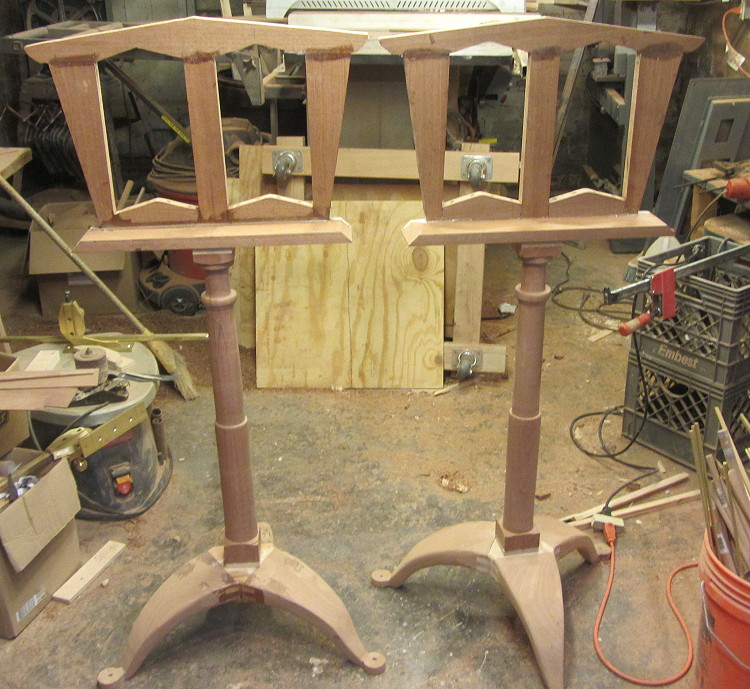

Bill Tindall asked in Weekend Accomplishments how made the legs--here is the process--

This is the profile of the leg. I cut out six of these from a 2"+ thick board of Sapele
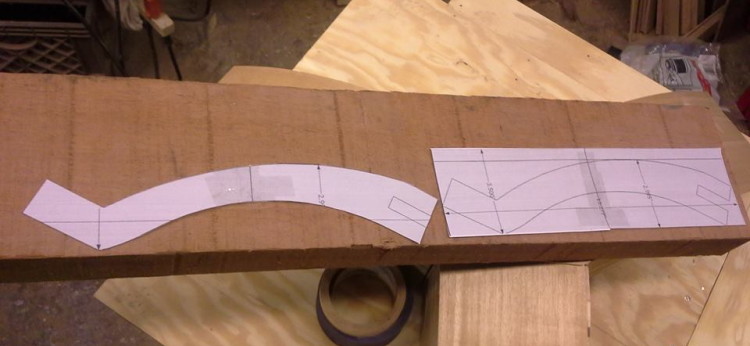

The "waste" is used by gluing it to the top of the board.
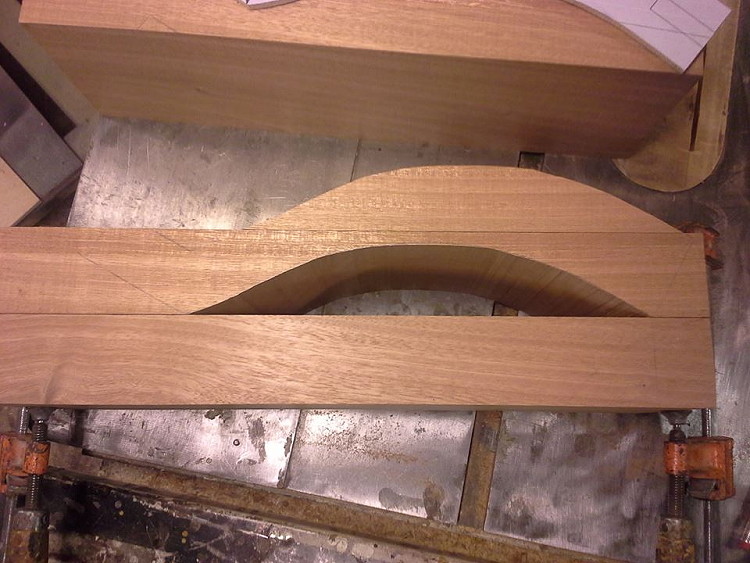

All the "not waste" pieces glued to the tops of the legs

The profile is placed back over the glued pieces and a final cutting is made.
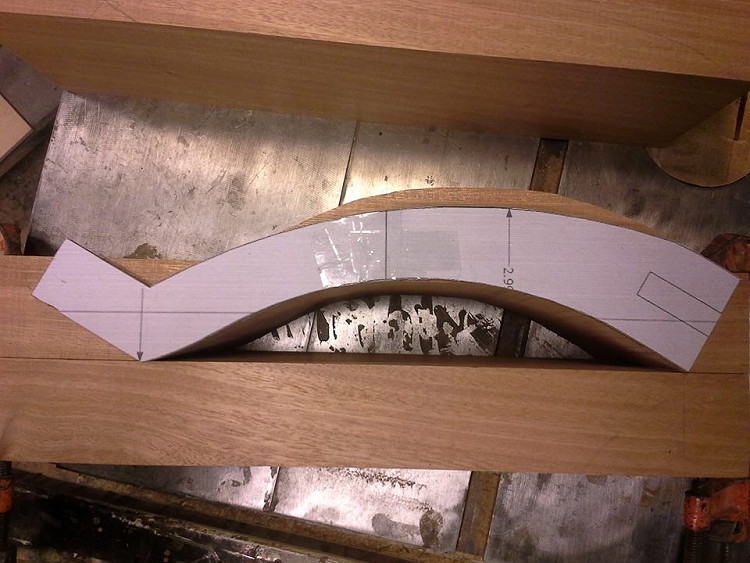

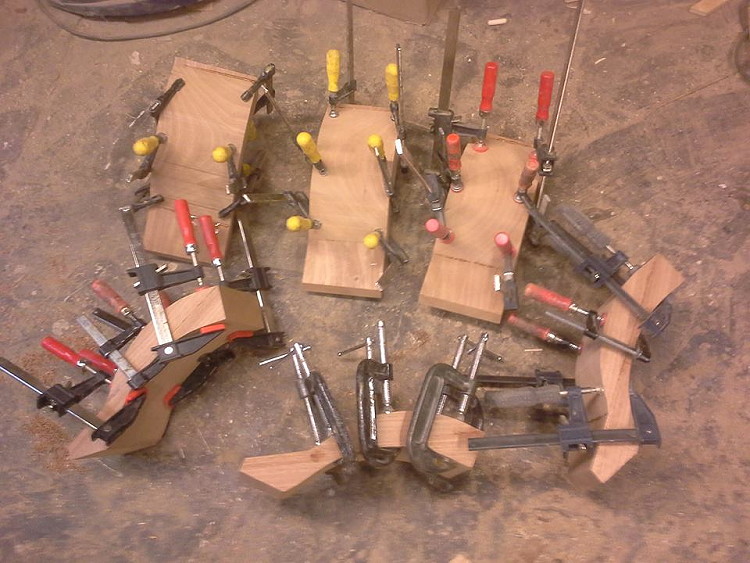
Here are the results of the cutting/gluing and re-cutting
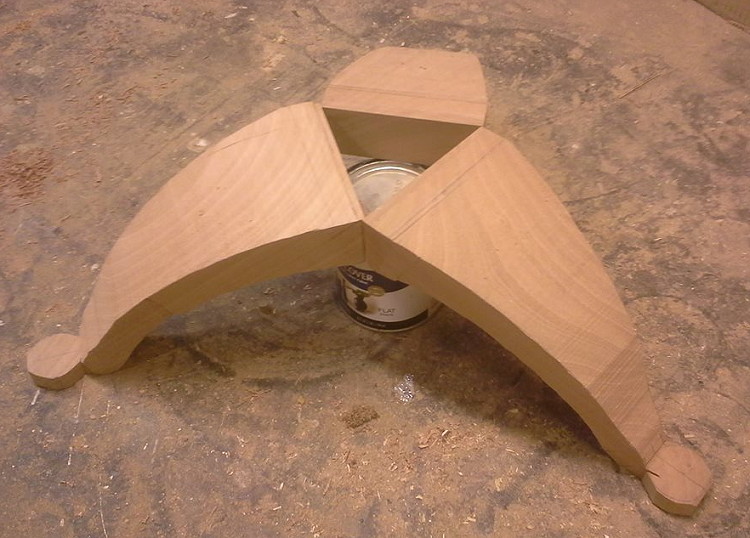

I didn't photograph this step but at some point I angled the table saw blade at 30 degrees and cut both end of each leg. this yielded parallel surfaces from the foot to the end that gets glued to the center triangle


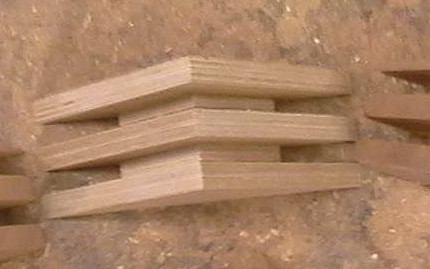
I glued up triangles from baltic birch plywood where the three legs will meet and be joined with loose tenon joinery.

A jig is concocted to hold the legs for a pair of dado cuts
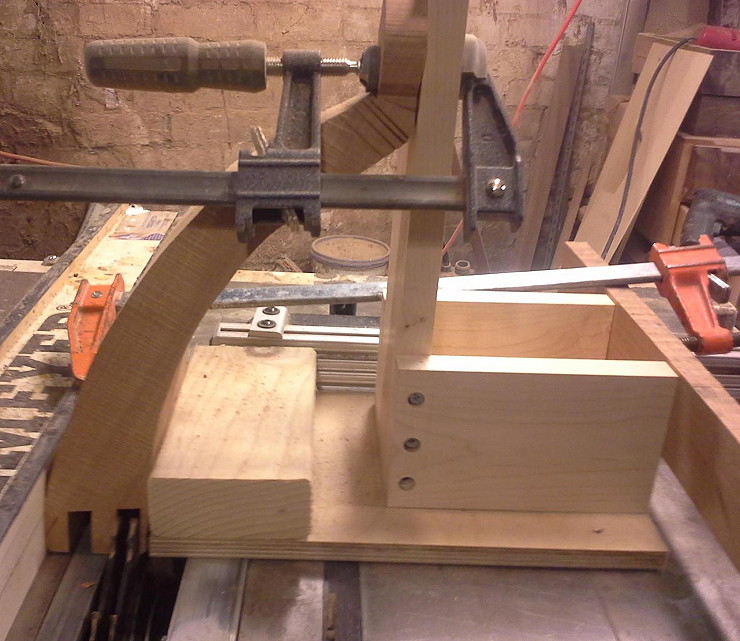

All the joinery has been cut- The grooves will be filled with loose tenons for the joint.
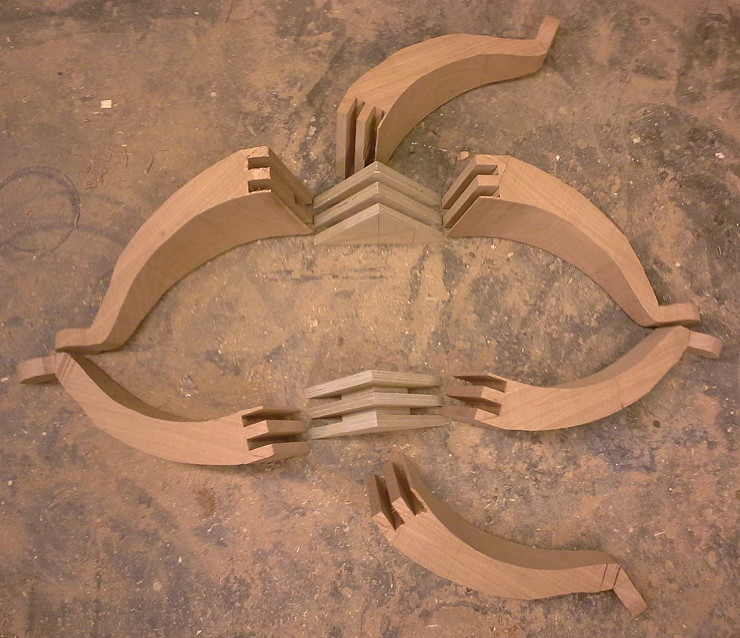

Each loose tenon is cut to size.

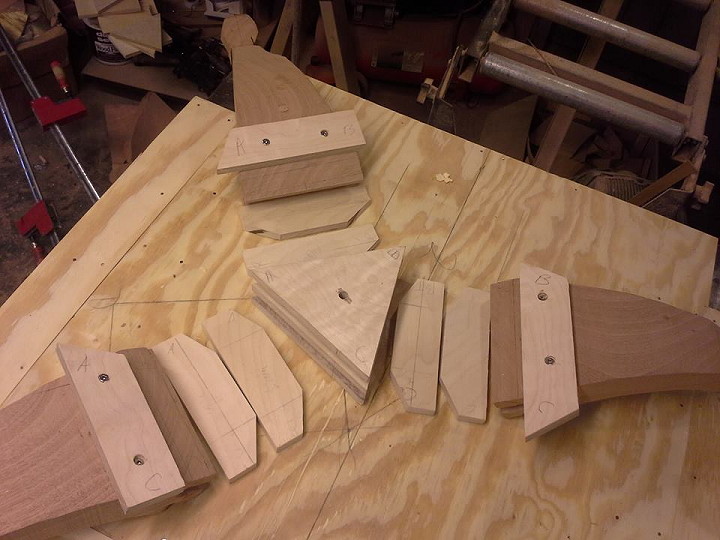
Cleats are screwed to each leg so there will be something for clamps to bare pressure against.

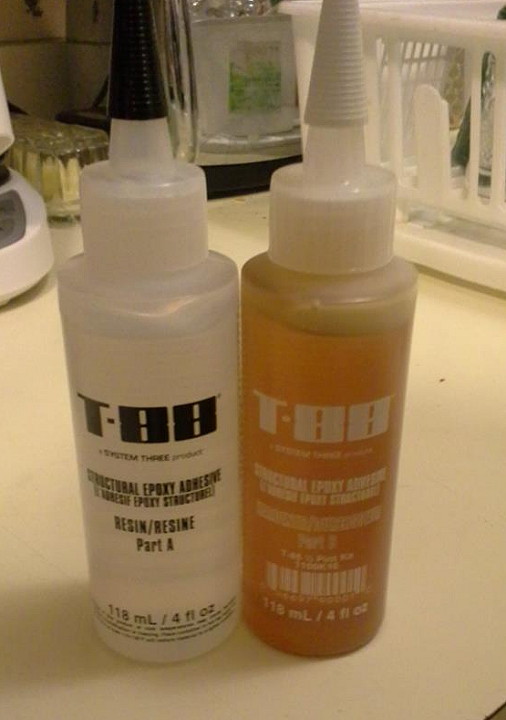
A two-part epoxy will be used to glue the assembly together.

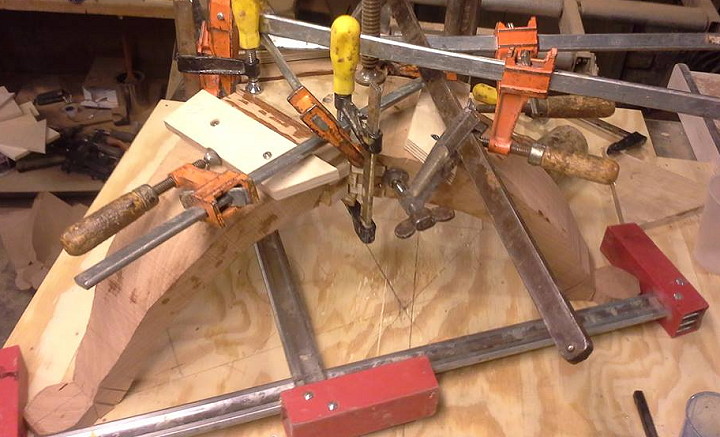
The cleats screwed to the legs allow clamps to pull the structure together.

After the glue sets-(at least 24 hours) I start the process of refining the profile and surface of the structure- lots of hand filing and sanding,
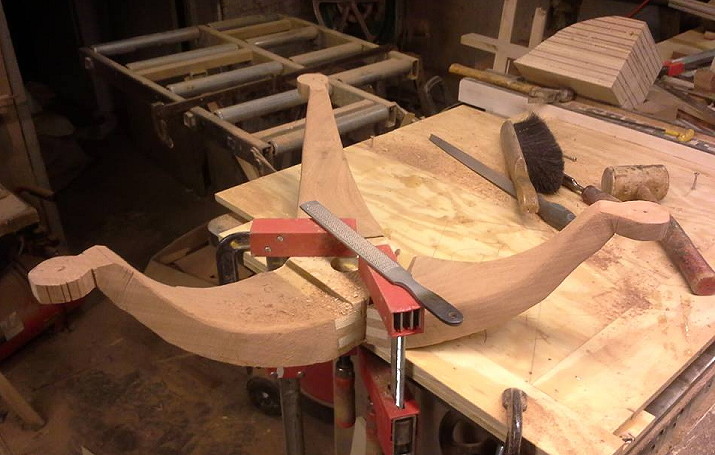

This is what I have so far- I will return to these and continue to sand and file for final shaping. The pieces will all be stained/painted black to the contrasts of the plywood splines and sapele will meld together in the finish

Re: Bill Tindall asked about making Legs

#2

Re: Bill Tindall asked about making Legs

HC Sakman

Nice post Alan.

Chico...

Re: Bill Tindall asked about making Legs

#3

thanks

Bill Tindall, E.Tn.

When I see some creative piece I always wonder, "How did they do that?". I appreciate taking the time to explain it. Clever indeed.

Re: Bill Tindall asked about making Legs

#4

Observation

Ray Carson - Lawrenceville, NJ

Alan,

Very interesting construction assembly. I built a ladder not too long ago that had tapered stringers and with pitched steps. I really had to tap into my creative juices to build the jigs necessary for cutting the dados and to keep it all straight.

So, on your project -

1. What happened to the holes that were left behind by the sacrificial cleats?

2. What happened to the very thin layer of wood on the lower or bottom most dado? It appears missing in the latter photos.

Re: Bill Tindall asked about making Legs

#5

Alan Young

Re: Observation

Alan Young

The screw holes left when I removed the cleats were enlarged and plugged with 3/8 diamter oak dowels. I cut them off and sanded them flush- As these pieces will get a black finish- all the disparate materials -birch ply/sapele/oak dowels etc will be filled and covered in a unified finish.

The thin pieces on the bottom of the bases provided no extra strength or support-I removed them-hard to see exactly but they are gone in this photo:


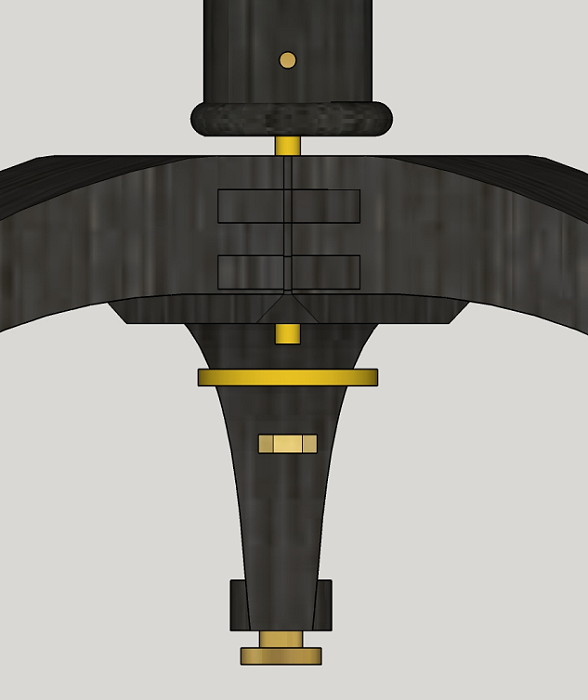
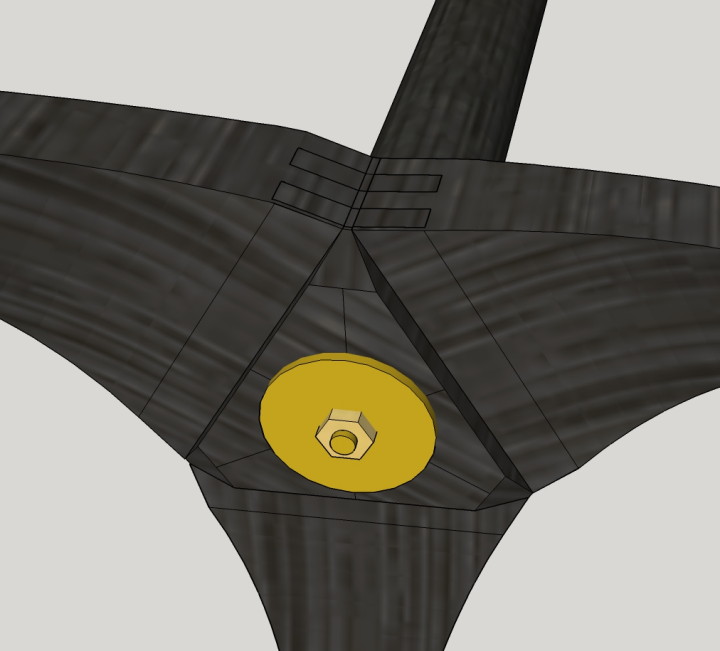
A 1/2"-13 bolt/threaded rod will be fixed in the wooden column then it will run through the Tripod base and be tightened with a plate and nut.


Re: Bill Tindall asked about making Legs

#6

Re: Observation

William Duffield

Are you going to make and install a spider on each stand? They are often recommended on traditional tripod tables and stands with legs joined to the post with sliding dovetails. I realize that the strengths and weaknesses of your construction and joinery are much different than on one of those, but still there are always weaknesses somewhere.

An example of a spider, from Jack Plane's Pegs & 'Tails blog:


Re: Bill Tindall asked about making Legs

#7

Just Curious

David Yoho

Just curious, Alan, but why use an oak dowel to fill the holes? Even with your finishing method aside, I always make tapered plugs from the material used. They fit and fill the hole better and take finish the same as the surrounding wood. With dowel material there would be end grain versus face or side grain. All it takes is a tapered plug cutter in a drill press. I have two sizes that I use most often - 3/8" & 1/2".

Re: Bill Tindall asked about making Legs

#8

Re: Observation

Ray Carson - Lawrenceville, NJ

I love the ingenuity your joinery. I've always seen three legged pieces like this with the legs dovetailed into a center hub.

I recall Norm Abram doing a pedestal table of similar design. The process and jigs he came up with to get the dovetails just right was pretty cool too. Now that i think about it, it may have been a replica of a table he saw at the Ole' Sturbridge Village.

I imagine with the piece being painted or stained black, the joinery and finer details will be hidden quite well.

"Always more than one way to skin a cat"

Re: Bill Tindall asked about making Legs

#9

Alan Young

Spider

Alan Young

William

Thanks for that photo- That "spider" is a device I've never seen before- I think I will attempt to incorporate the technique in my bases.

Thanks for the information!

-Alan

Re: Bill Tindall asked about making Legs

#10

Alan Young

Plugs

Alan Young

David,.As these pieces are getting a unified paint/stain finish I am inclined to think the end grain of the oak will disappear under the finish....I suppose it is not too late to drill-out the oak dowels and replace with a sapele plug...I think I would have used your plug cutting method- If I had one of them- I certainly have thought about them every time I see one on the web or in print-But I've just never picked one up...

Re: Bill Tindall asked about making Legs

#11

Re: Spider

William Duffield

Typical failure mode of most traditionally constructed tripod tables and stands, which is caused by downward pressure on the edge of the table top, is to split out a sliding dovetail socket in the post. Because this type of damage was common, many antiques and reproductions had them installed when the table was built. Many others had the spider installed as part of a restoration or repair.

Yours cannot fail in that way! I'm guessing that if one of yours failed, it would be in the short grain of one of the legs at the base of the finger joints or out at the foot.

Usually, spiders are not as elaborate as the one that Jack Plane used in his reading table. Most are flat, and have one screw in each leg, and one screw in the center of the post.

Note that I did not install spiders on the Sheraton dining table I posted in the Wood Central Gallery, but its legs and column are much more massive than a smaller candle stand.


Re: Bill Tindall asked about making Legs

#12

Another potion for your Sheraton dining table

Keith Newton

would be to countersink a long screw through the column, then plug the hole. There is still a pretty long lever arm in those legs, pulling out on a fairly small amount of wood on each side of the dovetail, and since it is right at the end of the leg doesn't help.

Another modification that would be pretty easy to work into a design, if you weren't trying to do an exact modification, would be to let the column come down a pit past the leg, then have a brass ring around it, somewhat like the ferrel on the end of a chisel.

Hey William, did you make those Chippendale chairs I see against the wall behind the photo?

Re: Bill Tindall asked about making Legs

#13

Re: Another potion for your Sheraton dining table

William Duffield, on the Cohansey

A brass ring would show, and wouldn't be traditional construction.

A spider is easy to add to my table, and hide, because it doesn't have any decoration on the bottom of the post and legs. Jack Plane's table is more complicated, with a more complicated spider to make and match. Other tables have somewhat simpler carving on the bottom edges, and thus may have their own issues with hiding the hardware.

No, I didn't make those chairs. The master of the shop made them. I did make a set of less complicated Chipendale chairs, under his direction, that had straight legs instead of the claw and ball. You can see one of them on my gallery page. From the seat frame up, mine were the same, except in mahogany instead of walnut. Mahogany, of course, is also a bit easier to shape.