Home Articles Forums Gallery Marketplace Videos

WoodCentral Forums

Knowledge You Can Build On — Est. 1998

Personalized Wooden Watches, Engraved Free

The Zen of breadboard ends

Posts

The Zen of breadboard ends

#1

Clint Searl

The Zen of breadboard ends

Clint Searl

To my knowledge, this commentary has nothing to do with Zen.

The recent discussion got me to thinking why I would put BB ends on a table top. I can't think of a reason. The only time I've applied breadboard ends, and they probably don't qualify as such to a purist, was to hide the particle board core of a veneered commercial door that I was recycling to make a desk top. 3/4" wide and simply a glued butt joint, since there would be no movement. Still OK after 28 years.

So how and why did they come about? My guess is that the guy who invented them just wanted a way to keep all the board ends co-planar and came up with that neat idea, and the competition copied him. As long as wood drying and glues were hit-and-miss, BBE's served a structural purpose and certainly looked better than board ends flapping in the breeze. After a while it became conventional wisdom , continuing to the present, that BBE's had to be used on multi-board layups.

With today's standardized lumber and strong glues, there's no structural justification for their use; they add complexity to the construction; and any argument of enhanced esthetic is arbitrary, especially considering the issue of orthogonal seasonal movement.

Next time, I'll address the Zen of sprung joints.

Clint :b

Re: The Zen of breadboard ends

#2

Re: The Zen of breadboard ends

Jesse Cloud

I suspect you are right about the historical origin of breadboard ends, to keep poorly milled and glued boards in alignment. Probably offered some minimual protection against checking as well.

Today, the justification is aestethic and no apology for that. One can do it to keep to a style that is being reproduced. Personally, I just don't like to look at long pieces of end grain...

Re: The Zen of breadboard ends

#3

O-m-m-m-m-m-m-m-m-m-m-m

Mark Mandell - Gone Round In Jersey

Re: The Zen of breadboard ends

#4

I'd guess...

John in NM

The reason has to do with the name - breadboard.

Likely came about as a way to keep two or three boards together to make a large surface that was washable in the days when hide glue was the only adhesive.

I betcha Stephen Shepherd knows :D

Re: The Zen of breadboard ends

#5

"Zen of sprung joints" can't wait for this discuss

Bill Tindall

Re: The Zen of breadboard ends

#6

Alan Young

Overdoing two WW Cliche's in one Top

Alan Young

Hey Clint- Interesting thoughts-when approached by a client to build a "Farmhouse Styled" table in Pine,-my immediate vision of this more or less stylized piece was of a bread board top. But if I were to be really authentic- I probably should have avoided the BB ends and just nailed them down to the apron on all four sides. I would certainly have had cracks and a real "period" looking piece. :^)

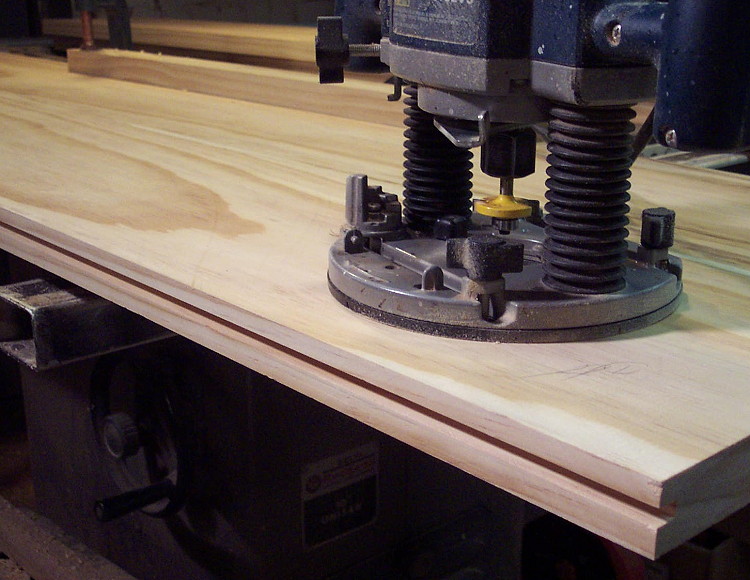
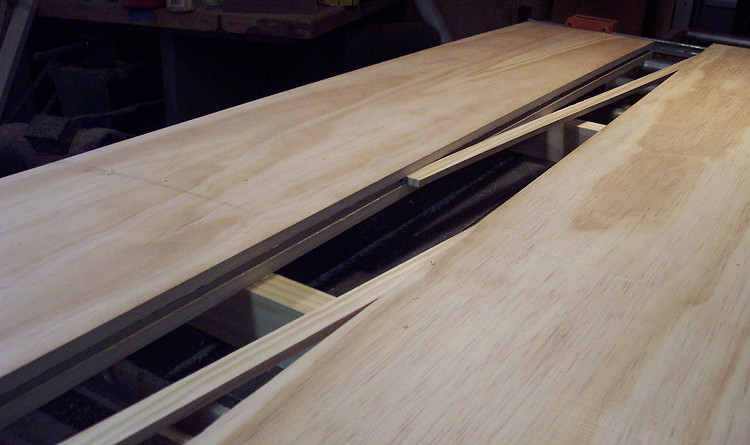
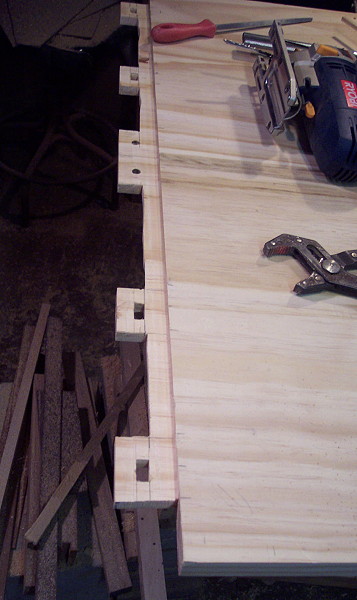
As it is- I didn't even consider NOT using the BB ends--all your points well taken. To make my top even fussier-I did run a groove along the full length of all inside jointed surfaces and inserted splines-so it was too late to just go with an edge glue as the splined joints would have been visible-OK maybe not a sin there either--


These really did help with alignment---


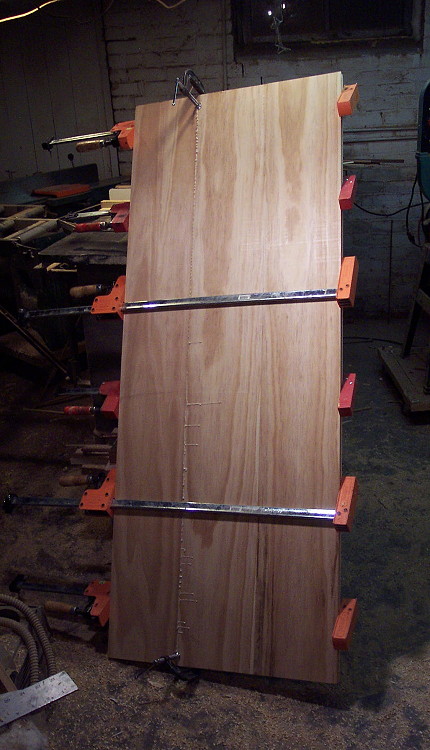
One more board to glue and the glue-up is done...

BTW-My edge glue had some dandy sprung joints. :^)

Re: The Zen of breadboard ends

#7

Re: Overdoing two WW Cliche's in one Top

David Yoho

Alan, you didn't need to cover the T&G joints on the ends if you had picked one of two other approaches for alignment. Instead of through-cut T&G, you could have used stopped grooves and splines to fit. The other option would be biscuits. I do not glue mine at all, since they're strictly for alignment, therefore reducing the shrink/swell problem at finishing.

I find myself in the same camp as Clint on BBE. I built a table for us years ago in the farmhouse style. The base is colored with an opaque stain and the top is clear poly. The entire table is made from maple. The amber color and the laminated maple makes the top look like a butcher block at first.

Probably about the only time I'd use BBE on a table would be if creating a reproduction or found a real desire to hide the end grain.

Re: The Zen of breadboard ends

#8

Probably not a lot of gain on this top

Keith Newton----Little Rock, Arkansas

Alan, Even though I can't see the end-grain on your planks, I can tell that they are flat sawn from well out away from the heart of a fairly large tree, leaving the arc of the annual rings nearly parallel to the face.

While these boards may expand and contract nearly twice as much as QS, at least they don't have much tendency to cup with changing MC.

On the other hand, if someone were to choose wide planks cut closer to the pith, where the arc of the rings was small, on something like a trestle table where there was a long overhang on the ends, a BB end makes a bit more sense if you want to keep those wide boards flat. Otherwise you can count on some cupping when the MC changes.

Re: The Zen of breadboard ends

#9

Moses Yoder

Re: Bowed tops

Moses Yoder

I seriously wish I had a nickle for every time someone has posted a question about how to straighten a bowed top. I would go to the gas station and buy a 20 oz Dr. Pepper.

Re: The Zen of breadboard ends

#10

Clint Searl

Re: Bowed tops

Clint Searl

A bowed top screams poor craftsmanship.

Clint

Re: The Zen of breadboard ends

#11

Moses Yoder

Re: Bowed tops

Moses Yoder

I would be careful who you call poor craftsman. Greene & Greene used breadboard ends on their furniture, and they ended up with a pretty good reputation. Worldwide, as I seem to recall. A top bows if the humidity is unbalanced. In case goods, it is actually pretty hard to make the interior humidity match exterior. A breadboard end has always been a sign to me that the craftsman has taken extra time to make a better piece of furniture.

Re: The Zen of breadboard ends

#12

Re: The Zen of breadboard ends *LINK*

Grantman

Hi Clint. I just came here from a link on Woodworkers Journal that posted a couple of the comments on BBEs.

Having just made one for a cabinet I'm working on, I'm curious as to the line in your post:

With today's standardized lumber and strong glues, there's no structural justification for their use; they add complexity to the construction; and any argument of enhanced esthetic is arbitrary, especially considering the issue of orthogonal seasonal movement.

Are you saying that long tenons and drawboring is no longer necessary? Are there size limitations that you'd suggest that under a particular dimension "glue only" would work and over a particular dimension one would make a traditional BBE? You're saying seasonal movement is not an issue?


Woodworkers Journal link

Re: The Zen of breadboard ends

#13

Moses Yoder

Re: The Zen of breadboard ends

Moses Yoder

Clint also said a bowed top was a sign of poor craftmanship. In 7th grade wood shop I was told it has to do with humidity. One of us has been wrong, and if I was taught wrong all those years ago I want some form of vengeance. Now I am no longer sure whether to believe Krenov and Klausz and Adams and the rest of those guys.

Re: The Zen of breadboard ends

#14

Clint Searl

Re: The Zen of breadboard ends

Clint Searl

Allan, in the days before Titebond and kiln dried lumber the furniture maker couldn't be sure that a multi-board layup would stay together at the ends, what with the different boards drying out differently and undependable glues failing, so a BBE would make sense to keep all the board ends in the same plane while relieving some stress on the glue joint. That's what I mean by structural justification. With today's glues and kiln dried wood, the boards don't need to be splined together or held together at the ends for the layup to remain iflat.

Aside from the extra and fussy work that a BBE requires, another reason I don't like them is because of seasonal movement. It won't stretch and shrink with the cross grain boards it's attached to.

Clint

Re: The Zen of breadboard ends

#15

Re: The Zen of breadboard ends

FredD

Today's glues (read PVC) and KD lumber have little or no effect on whether a top stays flat or bows.

Moses has it right and the glue used a hundred plus years ago (hide glue) has been shown many times to be plenty strong for joints, so you really can't say PVC glues are a advance in Strength.

In addition , once you have the lumber in the 6% MC range , it is moot rather you air dried and acclimated it down to that range in your shop or bought KD lumber which needed the same acclimation.

FredD

Re: The Zen of breadboard ends

#16

Alan Young

Diving into the Deep Zen Zone

Alan Young

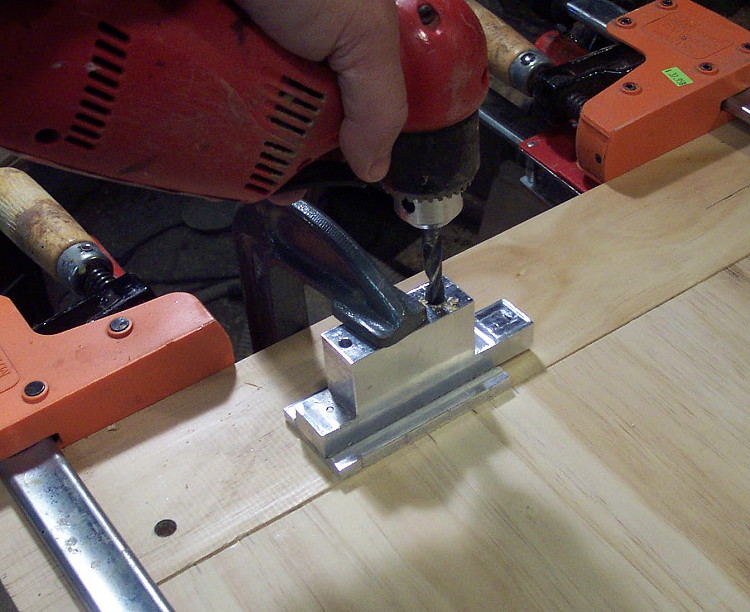
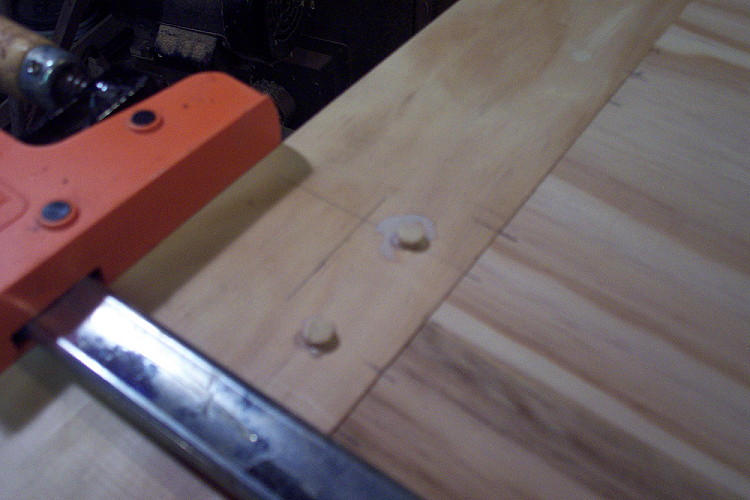
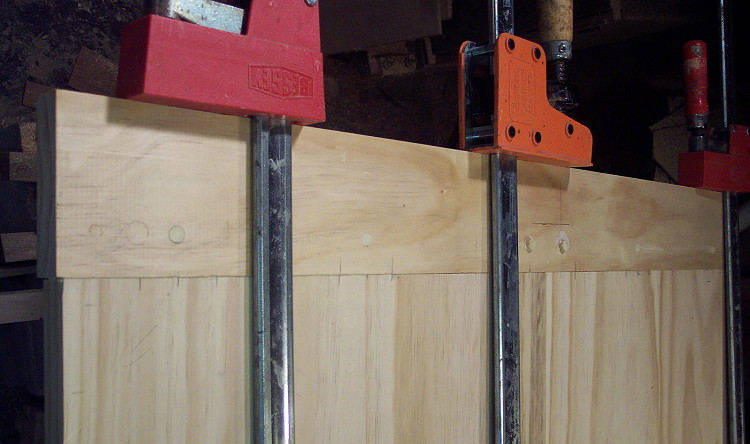
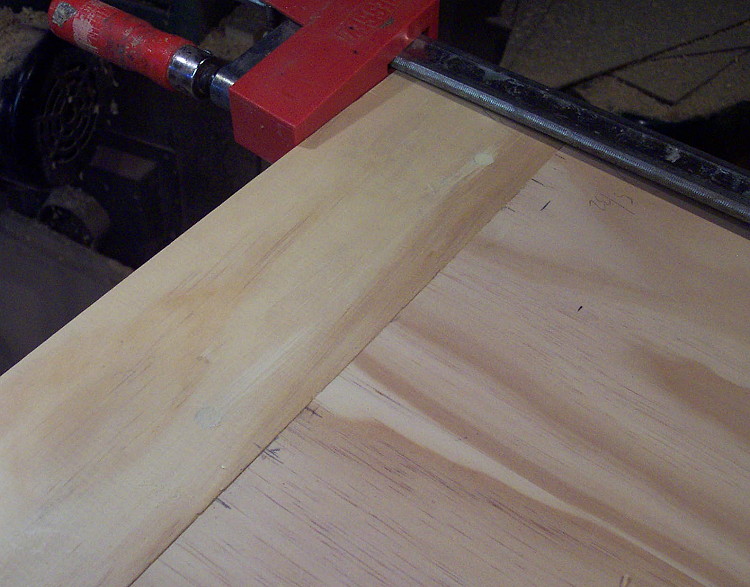
To maximize the Zen experience, I made this doweling jig to allow perpendicular holes to be drilled through the cap and end tenons.


The two center holes are left alone but the outer holes are elongated to allow the panel to expand in higher humidity seasons.


The two center holes are glued and pinned.


The outer holes are only pinned-no glue as the panel can now expand in summer months when the humidly is higher.


Alan with one "L"

Re: The Zen of breadboard ends

#17

Moses Yoder

When did kiln drying start? *LINK*

Moses Yoder

When did kiln drying start? I googled just a little bit and found sources claiming kiln dried wood was used in 1875.


1875 Kiln Dried source

Re: The Zen of breadboard ends

#18

Moses Yoder

Re: Diving into the Deep Zen Zone

Moses Yoder

That looks good for a table. On case goods you would pin the front so it stays smooth and let the top move at the back.

Re: The Zen of breadboard ends

#19

Re: Diving into the Deep Zen Zone

Alan in Little Washington (NC)

All other arguments aside, I built one of Norm's tables. The top was made from primo, 1" thick KD cherry and had breadboard ends. Now, due to seasonal changes and the top expanding and contracting cross-wise, there is 1/16" + lip between the sides of the top and the end of the breadboard ends - I know why, but non-woodworkers who notice it or catch their hands on it think it is a construction flaw not a feature!!! A nicely sanded butt end would have probably looked just as nice and would "feel" better.

Re: The Zen of breadboard ends

#20

Re: The Zen of breadboard ends

Grantman

Clint - I guess I'm trying to figure out if I choose to put a BBE on a panel, I still have to use the elongated mortise/tenon route, not simply gluing up the face grain to the end grain.

Or will the seasonal wood movement truly break the bond?

Allan

Re: The Zen of breadboard ends

#21

Clint Searl

Yeah, blame it on the humidity

Clint Searl

Re: The Zen of breadboard ends

#22

Valid use ob BBE

John Pappas

I have made several console tables with a lower shelf between the legs. BBE serve to answer the question of expansion and contraction...the piece between the legs is lengthwise and therefore doesn't push the legs apart.

As for the difference that occurs with expansion/contraction, I simply make a small "V" cut where the pieces meet, and this hides the expansion/contraction and becomes a design feature.

Re: The Zen of breadboard ends

#23

Clint Searl

Yeah... blame it on the humidity

Clint Searl

Re: The Zen of breadboard ends

#24

Clint Searl

If you gotta do a BBE....

Clint Searl

...you gotta do the whole megillah: mortise, tenons, elongated holes, pins, blood, sweat. and tears. No two ways about it. Rotsa ruck.

Clint

Re: The Zen of breadboard ends

#25

Re: Diving into the Deep Zen Zone

Jesse Cloud

"A nicely sanded butt..." still sounds like endgrain to me. Won't take stain like the long grain does, ages differently, prone to checking, splintering, etc. But the phrase "nicely sanded butt" definitely got my attention :D .