
Home Articles Forums Gallery Marketplace Videos

WoodCentral Forums

Knowledge You Can Build On — Est. 1998

If you sell to woodworkers, your customers are already here

Design-Clean and Simple or Fancy and Frilly?

Posts

Design-Clean and Simple or Fancy and Frilly?

#1

Alan Young

Design-Clean and Simple or Fancy and Frilly?

Alan Young

>I am wondering what influences design decisions. For example I recently sent out an e-mail to all my musical friends requesting opinions on what types of features would be good to have on a music stand. The ideas I was soliciting were meant to effect the functions of the stand not the artistic look. I included pictures of two stands I had already made.

A shaker influenced design:
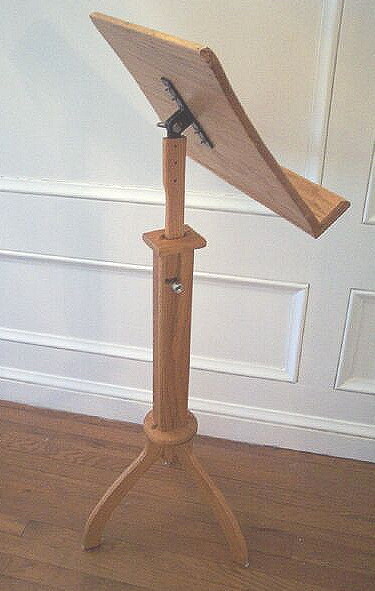

and a more elaborate design.
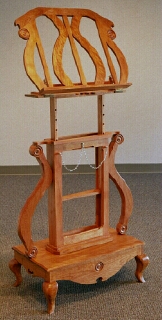

I was surprised when many people responded not with functional ideas but just saying something like.

"I like the shaker stand- clean and simple"

I am working on some big fireplace corbels. The client and I have been discussing the rosettes that are present on the first set versus the second set that has no rosettes.


She has decided that she wants the rosettes removed from the upper sections but kept on the lower. That is fine with me- It is her project after all. But it leads me to wonder what makes something "too much?"

I admit that I tend much towards the "more is better" rather than "less is more" school of design. As a woodworker I am always looking for opportunities to display skill and technique. But that is apparently not the wishes of many end users.

Is there a psychological barrier to design? What sort of things can be implied in a design? ie..does Fancy and Frilly equate to artistic but snobbish taste? Does clean and simple equate to ????

Is there an implied value in something with more or less frill?

I don't know....

Alan

Re: Design-Clean and Simple or Fancy and Frilly?

#2

Re: Design-Clean and Simple or Fancy and Frilly?

Thomas Skaggs, Foothills of Mount Level

>"Frill" is in the eye of the beholder me thinks. It's hard to get into a client's head and tell exactly where they personally draw the line between "enough" and "too much". That's where the drawings, mock-ups and maybe even shop visits are important. Looks like your meeting with and working with your client is a good approach for fending off dissapointment upon delivery.

And one word about music stand design...actually three words: Beer Bottle Holder. ;-)

Tom

Re: Design-Clean and Simple or Fancy and Frilly?

#3

Re: Design-Clean and Simple or Fancy and Frilly?

Charles Sharp

>Check this out http://www.wm-raff-designs.com/default.aspx?

Re: Design-Clean and Simple or Fancy and Frilly?

#4

Re: Design-Clean and Simple or Fancy and Frilly?

Moses Yoder in White Pigeon, MI

>Check out Franklin Gottsahll's book "Design for the Craftsman". I like to use the wood as the main influence in a design. I prefer Shaker / Craftsman / Greene & Greene designs because I see no sense in spending extravagant amounts of time and money to show people how much money you have. I think furniture tends to look elegant when it is understated. Frills when used with taste and proportion can add a lot to a piece, just not my style.

Re: Design-Clean and Simple or Fancy and Frilly?

#5

Alan Young

Re: Design-Clean and Simple or Fancy and Frilly?

Alan Young

>

I prefer Shaker / Craftsman / Greene & Greene designs because I see no sense in spending extravagant amounts of time and money to show people how much money you have.

I agree- if that is the reason for "frills". But is there something inheritantly implied in pieces with carving, inlay, curves ect that automatically says "I am here to display someones Money" ??? Why do we think that? Is it because traditionally that is what wealthy clients wanted? Is it possible to look at a piece of furniture and not wonder "who asked for this?" But rather ask "Does it it work"


I think furniture tends to look elegant when it is understated.

I agree here too-although perhaps "frills" can be understated?

I have no conclusions. I am just exploring the "emotions" that people have towards different designs. I like to know what people feel and what causes those feelings and impressions when they see furniture...

Thanks for your thoughts Moses.

Still contemplating ....

Alan

Re: Design-Clean and Simple or Fancy and Frilly?

#6

Alan Young

Thanks for that link.

Alan Young

>That is clever. I really like seeing innovative ideas employed in furniture pieces.

Thanks for the link Charles.

Alan

Re: Design-Clean and Simple or Fancy and Frilly?

#7

Ellis Walentine

A huge topic, Alan ...

Ellis Walentine

>... maybe one worthy of treatment in a book. When it comes to tastes, as Tommy says, they are all over the map. Your job as a designer is to assess each customer's tastes and offer them something in keeping with those tastes. Often, the best way is to look around their home and get a feel for the amount of detail or adornment that would be appropriate for that interior. If the architecture is classical, a deco fireplace isn't going to look appropriate, etc.

Once you have a sense of the style and color palette and level of elegance that a situation demands, you need to combine that understanding with an assessment of the functional and cost requirements when you present your provisional designs. I say provisional, because it should never be an either/or proposition. Customers may not be able to tell you what they like or want -- and they definitely can't make informed decisions based on two-dimensional blueprints -- but they *know* what they like when they see it, and you need to be able to accommodate their leanings into your design solution. The back-and-forth, followed by some decent perspective drawings and samples of details and finishes, will get you all on the same page.

Much can be said about the way you present a question to people, too. If you showed me two music stands and asked me what features I would like, I'd construe the question as a choice between the two examples you gave me, and I'd pick the one that most closely aligned with my personal style and the context in which I'm envisioning this stand. Since music stands all have approximately the same basic function -- and your two examples differ only in their decorative style and visual complexity -- it amounts to a false dichotomy. You're asking them to compare style and style, but you're wanting input on function.

Regarding the corbel designs, again you've confronted the customer with a binomial choice -- this one with the rosettes or that one without. You haven't given the customer any variations of the rosette designs to choose from. Classical corbels, on which your samples are modeled, have a more sculptural quality than the samples you've given them; and you should probably acknowledge that somehow. Your corbel designs are fairly elemental and spare, but the customer might be hoping for something more ambitious and true to form. This is not a bad thing, because, often, if you can get the customer to realize what it is that he/she realy wants, you can provide that to them at a large premium. I'd consider it a challenge to design and build something a notch above your first offering.

I could easily get ramped up here, but let's see if what I've said so far resonates. The nice thing about designing for/with real customers is that it challenges everyone to do something wonderful, affordable and within expectations.

Ellis

Re: Design-Clean and Simple or Fancy and Frilly?

#8

Alan Young

Re: A huge topic, Alan ...

Alan Young

>Ellis,

Thanks for your comments. You are insightful-I may have received a better set of responces if I had just asked about design features without sending the pictures in the e-mail, but as I said I tend towards more is better than less is more :^)

In regards to the corbel design-I would like a shot a making a bit more out of these too. The design is based on a picture the client had. I drew up several sketches which she approved. During construction she asked that the reveal between layers be increased from 1/8 of an inch to 1/4 of an inch. I had suggested a 1/8 inch reveal based on the picture she supplied. When I increased the depth of reveal I added the rosettes to hopefully play along with the desire to hightlight the differences in levels. In looking back at the original picture she gave me I see that the rosettes at the top carry more detail than what is seen in the photo and in fact the second set is quite close to the picture. Now perhaps if I had offered a less detailed rossette or one that actually continued the spiral she may have gone for it...ummmm maybe I should pursue that....well overall I am very lucky with this client-she does know what she wants. She is also willing to experiment a bit. It has been a very good experience. BTW these pieces will be painted and glazed and accompany a mantle being built by somone else. It will be interesting to see how the end project turns out.

Alan

Re: Design-Clean and Simple or Fancy and Frilly?

#9

Re: A huge topic, Alan ...

Keith Newton

>Alan, I think it is easier to pile on decorative stuff to establish a line of distinction between your work than it is when you are holding back going for less. It will also be easier to live with over the long haul.

The more colors and decorative elements that you add that suit todays fads, the quicker it will be out of style, and need to be re-worked or painted for the latest trends.

Back through the years that I have been earning my living at this, I have seen some trends that everyone seemed to think were so HOT. Yet, I'll bet they didn't make it five years before the persons living with those works, got tired of looking at it, and they are now in a basement, or attic somewhere.

If you want to satisfy this customer, and find a way to find room for your own leaning, try to do less, while giving an ILLUSION of more.

It would take me longer to explain what I mean, or how I would do that than I have right now, But I just wanted to plant a seed for thought.

Re: Design-Clean and Simple or Fancy and Frilly?

#10

Lee Grindinger

How are tastes acquired?

Lee Grindinger

>Tastes are largely taught and restricted by income. In art few appreciate that which they do not understand and the same is true of furniture. Most here are from backgrounds that can't afford elaborate furniture or architecture. One ornate piece in a house doesn't work so most would naturally resist the urge to exceed their means for the benefit of one piece of furniture.

In my experience clients that order elaborately ornamented furniture can afford the complimentary pieces, either built for them or selected from antiques. This is an expensive proposition that few can afford and, frankly, not very many of the rich folks I've worked for have well educated senses of design. They hire me, architects, decorators and designers for that.

Too, the people here are mostly hobby woodworkers whose skills are not capable of producing elaborate works. Everyone here is developing skills and probably producing the most elaborate work they are capable of with goals of adding to their skills set to produce more elaborate work. I doubt you're going to get a realistic view of your client's tastes from this crowd, people here build the stuff, they don't buy it.

Simple furniture like Shaker and Mission, two extremely popular styles, are quite cheap to produce either by a hobby woodworker or a factory like Moser's or sold by a store like Pottery Barn. Shaker and Mission are popular because it's affordable.

Who would look at a Goddard or Chippendale without awe and reverence for the skills? Egos certainly can interfere with objectivity but the simple truth is that elaborate furniture is a greater expression of the art of furniture design and making. Mission and Shaker were the result of diminishing skills in the workforce and a real need among a growing middle class.

Nonetheless, it does come down to the taste of your clients when making design decisions. Most of us have cheap taste by necessity so you have to cater to those tastes. Bottom line? Develop the skills, you may yet find an educated and appreciative audience to whom you can hawk your wares.

Lee

Re: Design-Clean and Simple or Fancy and Frilly?

#11

Nicely written Lee, although,

Keith Newton

>I am not so sure that I go along with all of it, but I enjoyed getting your perception.

I have never thought about ego guiding any part of my design, although that may just be my naivety. Back through the years, my clients that I have respected most for their artistic taste, were the ones that were holding me back to the less end of the spectrum.

Around here, most of the nouveau rich have tried to emulate the old money, who have tried to emulate the old money back east, who were trying to go back across the pond. This was as if all worthwhile design had already been worked out over the bast few hundred years. Although there are exceptions

I have often wondered who the first maker was that cut out and carved a cabriole leg, and how well it was accepted. If he was not a super-salesman, I'll bet it took a while before it caught on, I mean really. How practical is that shape for a leg, and how far have you seen its faults pushed past the point of the reasonable expectation of sound design, because of what?

Yet, How many people look at a design feature such as that, and relate it to something that they don't understand,. However it is accepted as something artistic, and tasteful. I think a lot of its acceptance is just because the wealthy could afford to buy anything, and some designers were searching for whatever they though they could get away with. Now we are stuck with a bunch of critter paws clutching balls and such, that are branded into our collective conscience at a standard of excellence.

Man, I needed to get that out. I sure hope we can sit down and share a beer sometime. Ha

So how is your foot doing? I have not heard you mention it in a long while? I hope it feel well enough that you turn the music up loud now and then, and fling Mrs Ruthie around the shop or house in something akin to the other artistic dance through life that you have been doing.

Re: Design-Clean and Simple or Fancy and Frilly?

#12

Lee Grindinger

Ego, practicality and animal's feet

Lee Grindinger

>Ego plays a large part in taste, especially in the head of a furniture maker. We design that which we are capable of producing and most designer/makers like to push the envelope. I do large-ish carving on much of my work but if I could carve like Chippendale or Gibbons I would design with those capabilities in mind. I know I'm not capable of that level of intricacy so I rationalize it as "Oh, that's too busy," or some other reason why I shouldn't devote 12 hours a day developing that ability. Setting my ego aside I have to admit that having the abilities of design and execution of a Chippendale would be worth trading my soul for.

Keith, you mention practical design. Hogwash! There is little practicality in furniture design. Aesthetics take the front seat nearly all the time. A practical table would be a surface that supports stuff, it would be durable and cheap. We choose expensive woods with color and fragile finishes that show off this expensive wood. The whole idea of marketing furniture is to provide the fanciest furniture your client can afford. or chooses to afford.

The cabriole leg is simply as "S" curve that's been around forever. This shape was not invented in the 1700's, centuries and centuries before that. Egyptian and Chinese craftsmen were using it long before Queen Anne was a twinkle in her Great, Great, Great Grandfather's eye. It's had everything from no foot to every foot. Personally, French Country is one of my favorites, it has no foot. I do believe we are drawn to organic curves and that's just what the cabriole is, an organic "S" curve.

The Arts and Crafts end of furniture design is an interesting study in aesthetics. Ruskin came out with this statement about the dehumanization of factory work so he devised Mission. Morris jumped on board and together a style hawking itself as "honest" came to be..., came to be one of the easiest styles to mass produce in the history of design. In it's day mission was replaced at the end of the Arts and Crafts era by Art Nouveau, the only truly new design to come down the pike in a very long time and undoubtedly the single greatest design since Queen Anne. But again, Art Nouveau requires a great skill set and few craftsmen could produce it well then and even fewer now. Art Nouveau never really got legs because of the skills required and the cost to produce it.

The simple styles of today are reminiscent of Feudal times. Straight lines, blocky fronts and little or no ornamentation are what Medieval furniture was about and it's not hard to draw parallels. There are certainly exceptions and when I walk into a well decorated home I see there is still great furniture being made by production houses, furniture I'm challenged to match.

So, yeah, ego and money dictate style. Ego because we only produce as fancy as we are capable of building, money because it's what we can afford.

Lee

Re: Design-Clean and Simple or Fancy and Frilly?

#13

Re: How are tastes acquired?

Moses Yoder in White Pigeon, MI

>You pose some pretty blunt points I think, but interesting points. I also used to think that my abilities were limited, and I would never be able to carve elaborate details. But this is really not true. I think we all have the ability inside ourselves to do whatever we want to do. A phrase from the Bible reads "All things are lawful for me, but not all are expedient". Something like that. In my opinion the point is that we can do pretty much everything, but not everything is a good thing to do. If you really wanted to, you could easily exceed the artistic ability of the Chippendales. The only thing it would cost you is the time to do so. So we balance our desire for abilities against the cost in time, and this is what determines our abilities. The reason I have not learned to make elaborate carvings is that I really don't see the use in spending my time in that pursuit. I have a small collection of Franklin Gottshall's books, a few of which show fantastic drawings of chippendale furniture. But as you mention, a room would have to be designed for such a piece to fit in, and the result would be something that I simply would not be able to sit down and relax in. In one of the Craftsman magazines Stickley made this point very well by showing the difference between a Victorian style living room and a Craftsman style living room. Frank Lloyd Wright was also working during this time when the popularity of the Craftsman style was near it's peak. People who had plenty of money to buy whatever they wanted to had there houses designed in such a way that they looked clean and simple when they came home to relax at night.

In most furniture factories the Shaker and Mission styles have been bastardized and exploited exactly as you say; it is cheaper to build and profitable to sell. But there are also people like Christian Becksvoort for whom the Shaker style is probably a passion just like carving is for some other people.

As Ellis says, the question deserves a book. My point is that taste is not just a matter of the limits of your bankbook, but also a very personal decision.