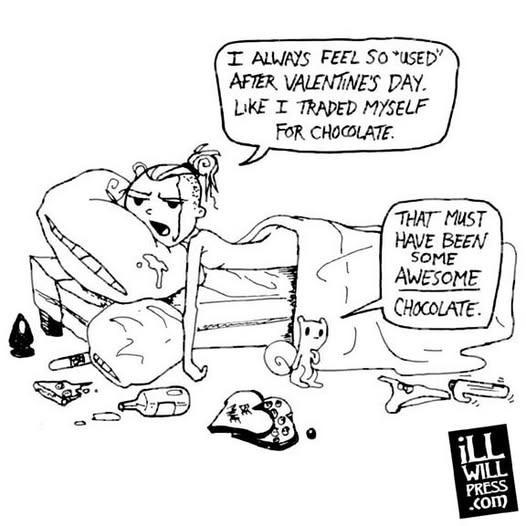
According to absolutely no reputable historian whatsoever, the true origins of Valentine’s Day began in a small medieval village famous for two things: terrible poetry and excellent cocoa beans.
The year was 1372-ish. Winter had overstayed its welcome, the turnips were judging everyone, and morale was low. The village men, who had spent months composing love ballads of questionable quality, found themselves in a crisis. Their grand romantic gestures—reciting sonnets under windows, dramatically sighing in marketplaces—were being met with polite applause and firm door closures.
Meanwhile, the women of the village had recently discovered chocolate.
A traveling merchant named Lorenzo (whose mustache arrived ten minutes before he did) rolled into town with sacks of dark, fragrant cocoa. He claimed it was “the food of the gods.” The women tried it and immediately agreed that if the gods existed, they clearly knew what they were doing.
Chocolate was smooth. Chocolate was rich. Chocolate did not recite poetry about “thine eyes being like damp sheep.” Chocolate did not compare anyone’s hair to root vegetables.
And thus began The Negotiations.
It started innocently. Margaret the Baker’s Daughter reportedly told her husband, “That was a lovely compliment about my smile, dear. I feel… particularly affectionate today. I also feel that square of chocolate in your pocket calling my name.”
Word spread quickly. Husbands who had once relied on wilted roses and off-key serenades now found themselves bartering truffles for “romantic enthusiasm.” Chocolate became currency. Cocoa beans were counted like coins. Love letters began including phrases like, “Enclosed, please find two pralines as a token of my devotion and a modest advance payment.”
To be clear, this was not scandalous. This was strategic.
The women formed what historians refer to as the “Cocoa Council.” They established guidelines:
- One small chocolate square: extended hand-holding.
- Two truffles: enthusiastic cuddling.
- A full box with caramel centers: well, let’s just say the poetry suddenly improved.
The men, for their part, were delighted. Finally, a measurable system! A rubric! Clear deliverables! Gone were the confusing days of guessing whether comparing someone to the moon was flattering or mildly insulting.
Within a year, the village economy revolved around chocolate imports. Romance flourished. Communication improved. The baker began offering “Passion Bundles” tied with red ribbon. Someone suggested an annual celebration to formalize the tradition.
They needed a name.
“Chocolate Exchange Day” lacked elegance.
“Mutually Beneficial Affection Festival” was too long to fit on banners.
So they blamed it on a vaguely saintly figure—Valentine—who, legend says, once handed a woman a cocoa bean and said, “This should smooth things over.”
And thus, Valentine’s Day was born: a celebration of love, negotiation, and the undeniable truth that chocolate remains one of humanity’s most persuasive arguments.
Historians may disagree.
Chocolatiers do not.


