WoodCentral

Normal view

Furniture Maker Floater Frames Revisited

2 June 2026 at 22:49

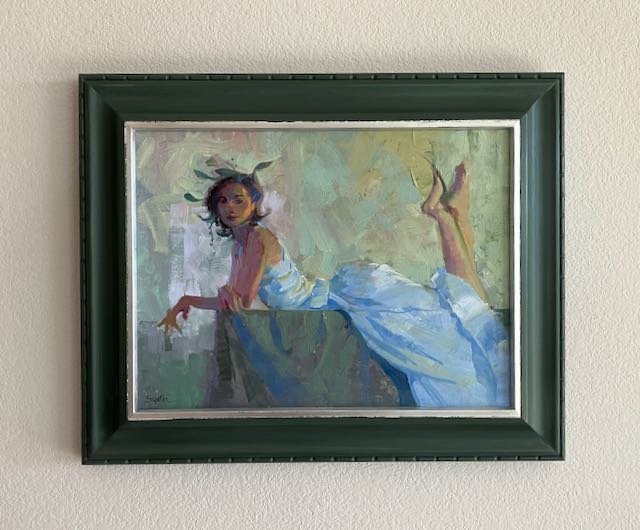
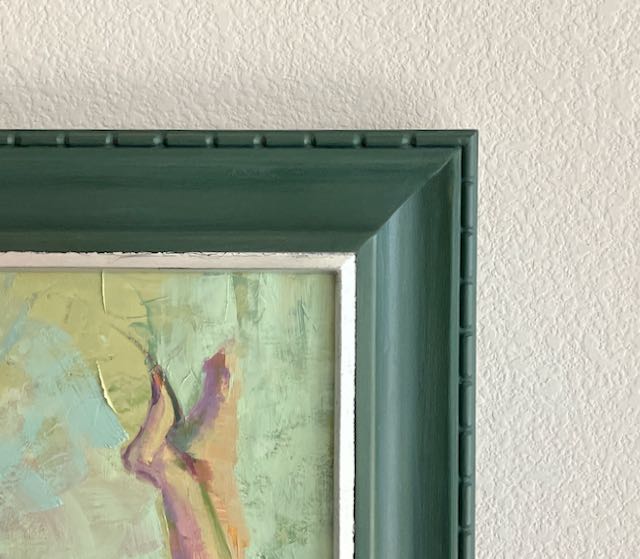
Quite a few years ago I began making floater style frames for my wife’s work and wrote this blog post. Since then, I’ve made a number of them and my methods are different from most of the commercial floater frames available. My goal is to elevate the floater frame from its origin of lattice strips tacked to the sides of canvas to one that has more of a presence. Granted, as a furniture maker I tend to overbuild everything and at this point in my life I have the time to do that. The Picture Framers Grumble has been a place where I can have interactions with other frame makers and I really enjoy that. Unfortunately, here in Las Vegas there isn’t a thriving art scene. This painting is one Diane recently completed, it measures 18″ x 24″ and the frame is about 1″ wide and 2″ deep. The finish is imitation silver leaf which has been sealed Platinum shellac which was toned with French Ultramarine blue powdered pigments.

I’d like to share my process with a series of pictures to illustrate the process. I’d be interested in hearing from other framers who make their own frames and moldings. Basswood begins with 5/4 stock which I try to get at least 7″ wide. A combination of hand planes and a power planer will yield material that is about 1 1/16″ to 1 1/8″ in thickness. I hand plane every surface of the boards after cutting them to rough length and finished width. For this profile I wanted a slight chamfer on the edge which was cut with a low angle block plane.

To support the painting I cut a 1/4″ groove on the inside of the piece about 1″ from the top surface. Plywood (1/4″ thick) is eventually glued into it to support the painting and strengthen the corners. The corners are strengthened further with a face frame sized biscuit. Miters are cut using my shop made jig on the tablesaw and the frame is glued and clamped overnight. In the clamped picture you’ll notice a spring clamp in each corner; there is another piece of plywood on the backside to strengthen that — I know: overkill!

I keep projects glued up over night and check for any misalignment, glue, scratches, etc. before starting the finish process — it is so easy to miss them; don’t ask me how I know!

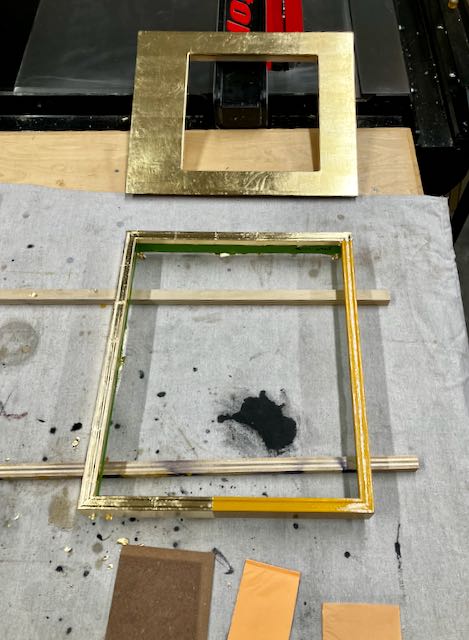
The first step to the finish process is to use Zinsser Seal Coat shellac on every surface. Once dry I lightly sand with 400 grit paper. Next up is taping off the top edge to apply a flat black paint to the inside of the frame. I tape down about 1/2″ from the top and use latex simply because it’s easy to clean up. Once that’s dry, the black areas are taped off so that the gray burnisher/sealer can be applied. Prior to applying the slow set size the frame is buffed with 4/0 oil free steel wool. In my experience, whenever an area is taped off for gilding it’s best to press the taped area down firmly and remove the tape right after gilding. I used to wait until the size was completely set (24 hours or so) but that could result in a jagged edge. By carefully pulling the tape off before the size has set I find that any leaf that wants to rip off can usually be pressed down while slowly pulling the tape off.

Imitation silver leaf always needs to be sealed to prevent it from tarnishing, my preference for that is Platinum Blonde shellac made from flakes. Since the paintings for both of these frames have a blue palette the shellac was tinted with French Ultramarine Blue dry pigments. To tone down the garishness of the silver leaf it was lightly buffed with 4/0 steel wool prior to airbrushing on the shellac, you can see the difference it makes in the left photo. After the toning was dry, cotton pads and Liberon clear Black Bison wax was used to rub out the shellac and add a slight sheen.

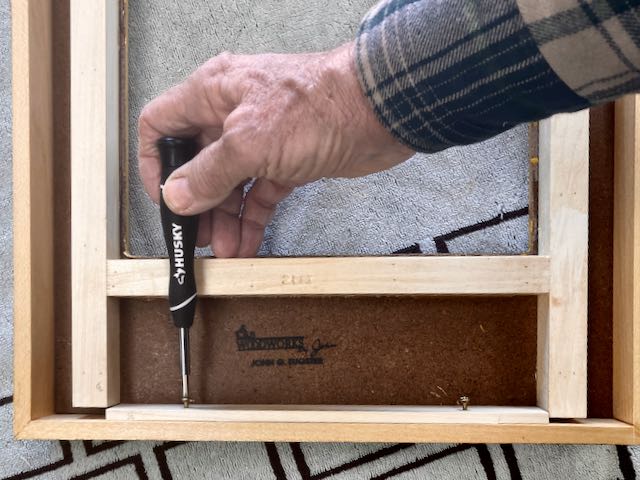
The final step of course is to install the artwork. Holes are located and drilled through the plywood using a 1/4″ forstner bit. I’ve found that the forstner leaves a clean hole which allows for any slight adjustments. Number 6 screws with washers are used, the hole size allows for slight adjustment. My process is to use spacers to center the painting and then locate the holes from underneath the frame. They are pre-drilled with a gimlet and the art is attached with the screws, snug at first to allow any adjustments in case the painting is slightly out of square; this does happen sometimes! One thing I like about the depth of the frame pieces is that the D-ring can be installed so that it isn’t visible from the side. In the picture showing the back view you can see the gusset that is glued into each corner.

So there it is, my process for floater frames which I’m happy with as is my wife and her gallery. Are there any other frame makers that use a similar process? Like I said earlier, Las Vegas doesn’t have a thriving art scene so there are few that I can share frame making with.

  •  

A Litlle Artwork ...

28 March 2026 at 19:07
I have been showing paintings at the Coffee Bar in Bennington
for several years now ... 
 i sold a couple recently and had to add some new ones on Monday ..
which made me think about some artwork that i have had hanging around for
several years that i recently decide to mount and frame. 
I have a million of em ...
 from 2008 ... 
 ink and colored pencil on paper ... 
 
i have been reading about surrealists lately, and i think 
what i have been doing for a while now fits that description. 
 "unusual juxtapositions of objects and items"

 more to follow soon  ...

  •  

Imitation is the Sincerest Form of Flattery

18 March 2026 at 17:18

I’m betting that many of you have heard the phrase so that’s why I’m using it for this blog. It’s a phrase that has been attributed to many different people. This frame showed up on my Pinterest one day and it really appealed to me. It was originally from The Frame Blog which discussed Australian artists work from the late 1800’s. Those frames were made in Japan. The blog showed some of the construction details which consisted of the moldings assembled with miters and cross dowel construction. The framework was covered with paper or cloth. My wife recently completed a 10″x10″ figurative painting and I thought her painting would be a good fit for this style of frame. This work of her’s is going to her gallery, Meyer Vogl in Charleston, SC. It’s for their Ten Year Anniversary show the end of March.

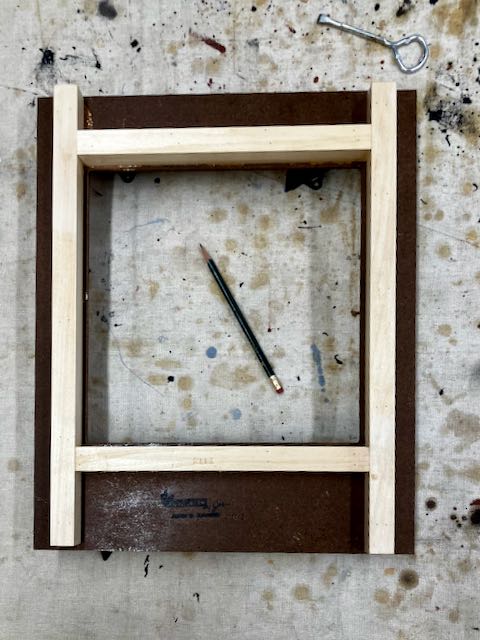
The first part I made was the spandrel. That’s the piece that is inside of the frame; for tabernacle frames they are often curved or arched at the top. From the blog I learned that this frame had a lattice like arrangement of wood which was covered by material or paper. I chose to use 1/4″ MDF for that but still needed to figure a way to support the painting inside of the spandrel. Unfortunately I neglected to take a picture of that before cutting it open but milled some pieces of Basswood 13/16″ square which were glued, pin nailed and clamped to the back of the MDF. The reason for 13/16″ is so that I could pin nail from the backside with 1″ nails and not go through the front — that would not have been good!

Sight edge after removing 3/16″ spacer
Completed spandler

The exact opening in the grid on the back is 10″ x 10″ and was removed on the router table with a pattern cutting bit. However; the opening needs a rabbet for the painting to sit behind. I used 3/16″ spacers which were attached with double sided tape. The first step was cutting the opening with a pattern cutting bit on the router table. Next, a small roundover bit formed a radius. You can see the rabbet in the left picture after the 3/16″ spacers were removed. The picture on the right shows the completed spandrel sealed with 4-5 coats of Zinsser seal coat shellac. There was some debate in my mind about using the MDF for the spandrel since it can be affected by moisture. Since I had MDF in my shop and had success with a very large tabernacle frame commission decided to use it. In addition to multiple coats of sealing shellac the next step will be a yellow burnisher/sealer followed by slow set oil size, and finally imitation gold leaf.

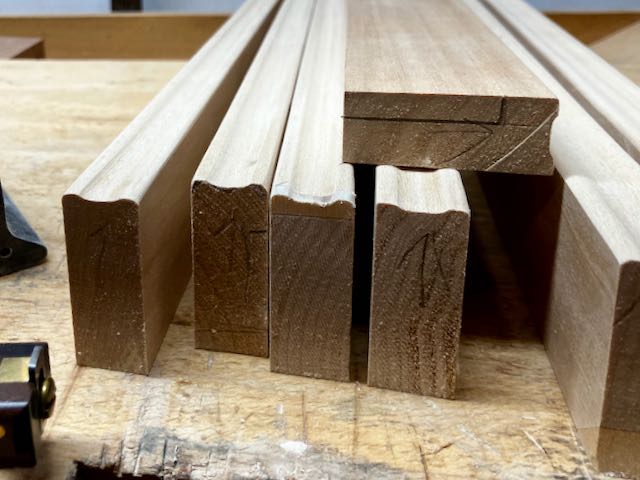
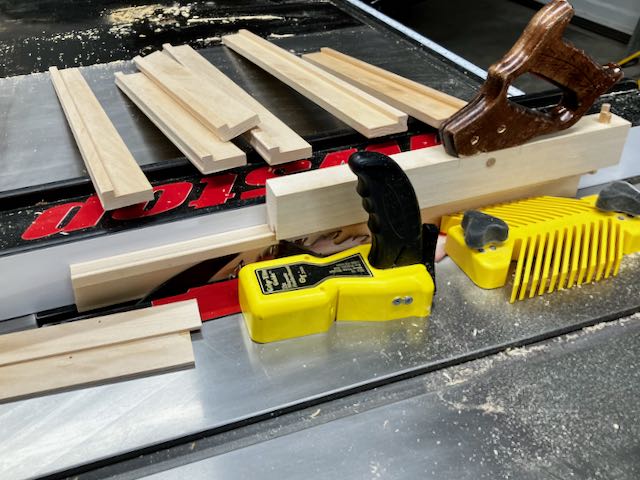
Once the spandrel was made it was time to start creating the molding for the frame. I liked the small, unobtrusive molding on the original piece. I’m imitating that so started out with 3/4″ x 2 3/4″ Basswood. Simplicity was my goal so the top of it has a shallow profile created with a router bit used to make tray bottoms. Knowing it’s almost impossible to center it exactly the insides were marked so that the rabbet is on the same side of each piece. Before cutting the rabbet I took the time to sand a slight radius on the upper edges to prevent the gold leaf from cracking (left picture below). The rabbet was cut on the tablesaw with a rip blade. Marks were made with a marking gauge, the first cut was done flat at the top of the rabbet. Cutting off the remainder of it required careful set up with feather boards and my shop made push stick (right picture below). It took some careful set up and planning but the creating the molding was a success. I know I only need 4 pieces for a frame but cut some extra just in case.

Profile in progress before creating the rabbet
Rip blade for rabbeting

The frame was assembled in the usual way, after cutting the miters it was glued up and clamped with a band clamp overnight.

My usual procedure is to apply a coat of Zinsser seal coat shellac to the frame followed by Yellow burnisher sealer. I use slow set, oil based size and gilded the frame and the spandler at the same time. I wait at least 24 hours then burnish the imitation gold leaf with 4/0 Liberon oil free steel wool. The final finish on both of them is several coats of Platinum Blonde shellac applied with an airbrush. To mellow out the gloss of shellac, Liberon wax is applied with 2500 Mirlon abrasive pad. All that’s left is assembling the frame and spandrel.

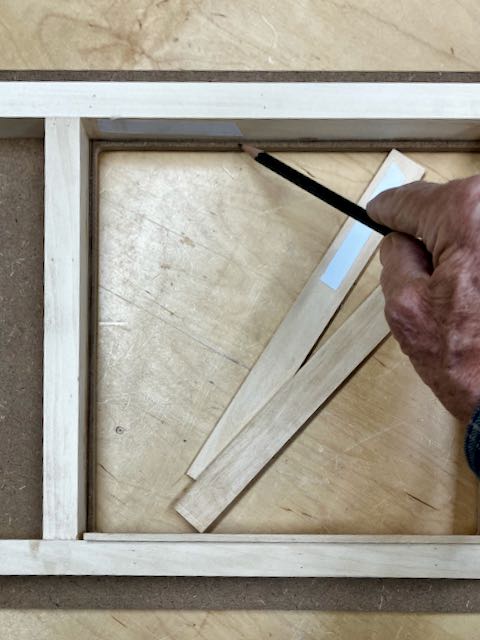
This was a bit of a challenge since there is a very limited amount of space to insert a fastener between the frame and the lattice work on the spandrel for attachment. That dilemma was solved by using a piece of Basswood that I had pre-drilled holes at a slight angle. After putting that piece in place the holes were marked with a pencil. A gimlet was used to create an angled starter hole into the frame for an eventual screw. That part of the frame is only 3/8″ thick so very careful to not go through with the screw. Assembly was successful — no screws p

Here’s a better picture of the finished project than the one above in the comparison shot. I concentrated when laying the leaf to keep the lay lines continuous through the cut out area where the painting is. The painting is on panel and was secured with points.

First Light by Diane Eugster

  •  

A bit of Whimsy and Milk Paint: Frame #280

14 February 2026 at 17:34
Once Upon a Time
Corner Detail

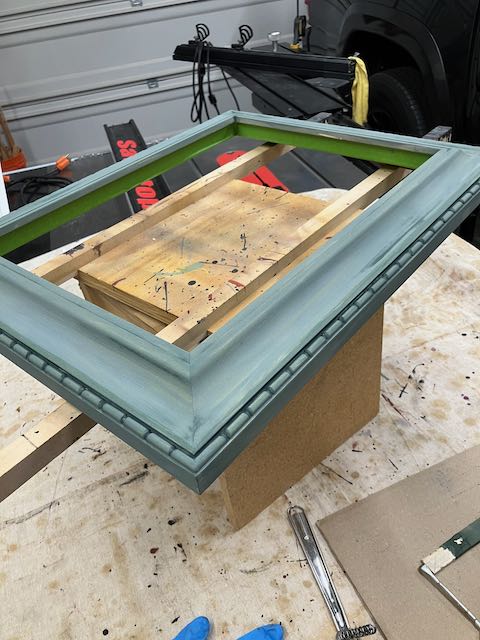
Here’s the most recent frame from my shop and it was fun to create so thought I’d share the story! It’s oil on canvas measuring 12″x16″ and by my wife, Diane Eugster. When I first saw it in her studio my mind went to a wood nymph; whatever that may be! This painting needed something other than a traditional black/gold frame, something more fun and maybe with a bit of whimsical carving to enhance it.

Creating the Profile

Creating the profile began with my typical Basswood sized approximately 1″ thick by 2 7/8″ wide. The process begins by cutting the backside each pieces at 15° to create a profile that angles the frame away from the wall leaving plenty of room to install a 3/4″ thick canvas. I refer to this as my 15° Profile and it’s a way to angle the frame. I wrote a BLOG about it some time ago. I’ve modified the process somewhat since then but that blog gives you the basic method to do it. It took me less than 2 hours to profile this frame, carving took much longer than that.

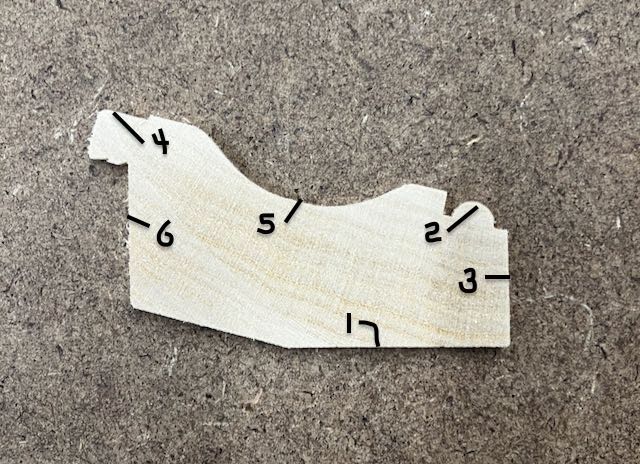
The process began with cutting the 15° angle on the back of the piece, that’s #1 in the picture, this will become the outside edge of the frame. If you do any beading on the frame it’s important to do that before cutting the outside edge 90° to the angled cut. This makes it easier to clamp when gluing the frame together. For this profile I cut a 1/4″ bead on the outside edge, #2 with a small plow plane. Draw a 90° line (#3) from the angled cut to locate the outer edge of the bead. This piece will be cut off after the bead is complete. For this profile I wanted a flat section at the sight edge for gilding, this is #4 and was created with a skewed rabbet plane. To create more interest to the frame I also cut a cove; #5. This was done with a tablesaw, it’s an interesting process and I wrote this BLOG explaining my process. The final cut is #6, the rabbet. This is somewhat tricky so check my blog on how to do it. Very important to note that I always have at least one extra piece of stock about 10-12″ long to set up the tablesaw for all of these cuts.

Carving

Not exactly sure what these are called, they look like an elongated bead or a sausage but I’ve seen them called either billets or reels. To figure out the spacing it’s easiest to use a set of dividers and step the divisions off once you decide their approximate length. Do that on a piece of masking tape, not your frame because there’s a lot of trial and error involved and your bead would have all the markings from the divider. Once you’re satisfied with the spacing put the markings on the frame. My preference is to start at the center and work to the ends. Any slight error will show up at the ends only. I used a 1F/8mm skew to divide them, then a 8/6mm gouge to create the rounded ends. Finally a 1S/5mm removes the bits between the reels.

Finishing

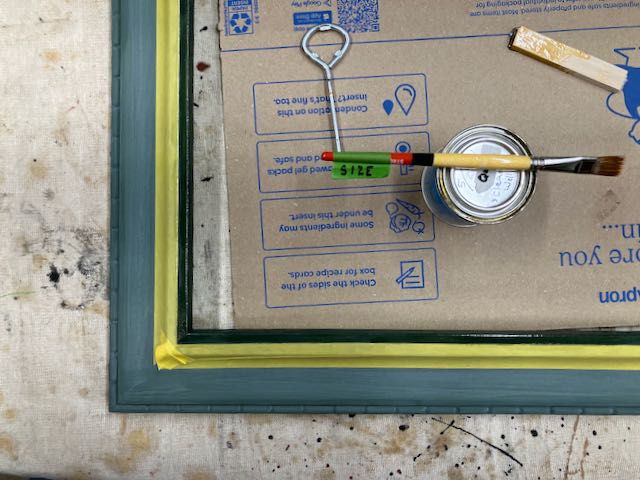
I’ve been using milk paint from RMPfinishes (formerly Real Milk Paint) lately to finish some of my frames. I like the effect of it and it comes in a powder form. That means I only mix up a small amount as needed and the powder will keep forever unlike paints that come in a can. For this frame I chose Blue Spruce. I mix 2 ounces of powder with 2 ounces of distilled water and that’s enough to complete the frame. I’ve found that the foam brushes they sell work great, much better than those available from my local big box store. I lightly scuff between coats (2 usually) with a Mirka 1500 pad. This frame has a gilded, silver sight edge so that was taped off and applied with quick set size. Milk paint should be sealed and I’ve used wax, OSMO #3043, and also Platinum Blonde Shellac which I spray on with an air brush. That’s how this frame is sealed, the shellac also seals the imitation silver leaf. The final step is rubbing out the shellac with Liberon wax to take some of the sheen off of the shellac and even out the spray pattern from the air brush.

Blue Spruce Milk Paint
Quick set size for gilding

That’s the process for this profile; in my opinion, adding the cove and the carving creates many shadows and patterns that brings interest to the frame.

  •  

Economic Impact of Shopping Small Business Black Friday vs Large Corporations

21 November 2025 at 18:58
Economic Impact of Shopping at Small Businesses vs Large corporations

The Economic Impact: A “Shopping Small Business Black Friday” Scenario

Let’s assume an estimated 130 million people shopped on Black Friday in the US (a common estimate in recent years). If each committed to buying just one item from a small business or artist for an average of $30, instead of a large corporation, that would represent a direct transfer of:

130,000,000 shoppers x $30 = $3.9 Billion

This $3.9 billion, when spent at large corporations, follows one economic path. When spent at small businesses, it follows a completely different, more localized one, thanks to the “Local Multiplier Effect.”

The Local Multiplier Effect: A Detailed Breakdown

The chart below illustrates the journey of that $30.

Economic Impact of Shopping at Small Businesses vs Large corporations

Why This Multiplier is So Powerful:

A study by the American Independent Business Alliance (AMIBA) found that $68 of every $100 spent at a local business stays in the local economy, compared to only $43 when spent at a chain. This direct injection circulates and recirculates, creating a wave of economic activity far beyond the initial purchase.

The Ripple Effects: A Sector-by-Sector Impact

  1. The Direct Impact on Artists & Small Businesses (The “Benham Design Concepts” of the Country):
  • From Survival to Stability: For countless small businesses, the holiday season is make-or-break. A surge of this magnitude would not just ensure survival but provide capital to pay off debt, invest in new equipment, and build a safety net.
  • Job Creation: This would directly create jobs in small-scale manufacturing, packaging, customer service, and marketing. These are often more meaningful, skilled jobs compared to typical retail positions.
  • A Golden Age of Creativity: Financial security allows artists to take risks, experiment, and refine their craft, leading to a more vibrant and diverse cultural marketplace.
  1. The Impact on Large Corporations:
  • A Multi-Billion Dollar Hole: Losing a foundational $3.9 billion in revenue would be a massive shock to their quarterly earnings. While they would still be colossal, it would force a strategic rethink.
  • The “Local Pivot”: We would likely see a frantic effort to capture this market. Think Walmart launching a “Handmade in America” section, Target creating pop-ups for local artists, and Amazon amplifying its “Amazon Handmade” platform. Authenticity would become their biggest challenge, as we all know that anything they promote, they exploit.
  1. The Impact on Communities & the National Economy:
  • Revitalized Main Streets: This capital infusion would reverse the trend of shuttered storefronts, leading to more vibrant, walkable, and unique downtowns.
    • We would bring local culture back to our cities instead of bland ticky tacky repeating architecture built by corporations that care about exploitation, not creativity and individualism.
  • A More Resilient Economic Base: Local businesses are less likely to flee a community for a tax break abroad. This creates a stable economic foundation that can better withstand national recessions.
  • Increased Civic Engagement: Small business owners are deeply rooted. They sponsor Little League teams, donate to local charities, and participate in city council meetings, strengthening the social and civic fabric.
Custom Furniture for sale in Colorado Springs, CO - Design and fabrication

The Caveats and Challenges

This scenario isn’t a perfect utopia. It comes with real-world complications:

  • Scalability: Could a single Etsy shop handle 10,000 orders in a weekend? Almost certainly not. The system would be overwhelmed, leading to shipping delays and customer service challenges. The infrastructure for small business logistics is not built for this scale.
    • However, if you shop at local craft shows and local businesses, you would spread out your dollars across your community and completely cut out Etsy from harvesting a percentage of your purchase, and not have to worry about overwhelming a small business.  You can see what they have in stock.
  • Consumer Access & Habit: The convenience of one-stop shopping is powerful. Redirecting purchases requires more intention, research, and time from the consumer.
    • This is a perfect example of how you can vote with your dollars.  What is important to you?  If a strong local economy and a livable city are important to you, make the extra effort to shop small and shop local.
  • Price Point: Handmade, ethically sourced goods simply cost more than mass-produced items. This could price out some consumers, highlighting an inequality issue in conscious consumerism.
    • If you are tight on money you can still participate, a single $30 item form a small buisness from every shopper can create a butterfly effect of positive change in our economy.

Conclusion

This “Shopping Small Business Black Friday” thought experiment demonstrates that the economy is not a static machine but a dynamic ecosystem.   It proves that our daily spending habits are the votes we cast for the world we want to live in.


The post Economic Impact of Shopping Small Business Black Friday vs Large Corporations appeared first on Benham's Blog.

  •  

Right Now, This Is A Blog Post

27 October 2025 at 17:18

As a child, I loved journals. I bought many. Each had so many pages with so much potential. I still have them to this day. But aside from my name, they remain untouched. That’s because while I loved the idea of creating a record of my thoughts and ideas, the challenge of filling it with content worthy of the journal was too much for me.

What went wrong? I misunderstood the purpose. The journals were tools for me to record my thoughts and ideas that may or may not one day be realized into something larger. They were not meant to be great themselves.

The idea of creating something perfect was getting in my way of creating anything at all. My vision was preventing all productivity.

Now, when creating anything, I will start anywhere. Write a few words, draw a few lines, make a few cuts, swing an axe. Just make it bold and make it permanent.

No pencils here. No undo button. These allow for revisions and second guessing.

Once the first stroke has been done, I can assess my progress. Do I like it? Should I include or exclude it? This is how some of my best work is done.

Sometimes many revisions are necessary to arrive at the end result, but if the previous revisions don’t survive (e.g. were erased/undone), there is no way to study and learn from them and understand why the end result is as good as it is.

Right now, this is a blog post. Yesterday it was an idea (actually, it was a different idea). Tomorrow it could be a book, or a billboard, or a tattoo.

  •  

Carved Fans: Frame for a Dancer

25 October 2025 at 21:08
Inspiration and trial piece
Lay out and starting technique

Those of you who follow my work know that I’m often inspired to create a frame when I go into Diane’s studio and see a work in progress. Well, recently I saw a dancer that she was painting and immediately thought Flamenco and visualized the fans I’ve seen Flamenco dancers use. Next thing you know I’m searching the net for pictures!! Once I found a picture of the fan to use the next hurdle was figuring out how to make a pattern and transfer that to each corner of the frame. Adding to the challenge is that the frame has a 15° slant to it so using a compass wasn’t an option. The frames size allowed for a circle with a 2″ radius so the first step was to use the Pages program and print off a couple of circles of that size, that’s the gray piece in the right photo. I’m a big fan of using plastic from lettuce containers to make my templates. The paper is attached to it with spray adhesive then cut to shape. For the circular piece in the center I used a 7/14mm gouge to not only cut the template but also the wood. The outside was carefully cut out with scissors and the location of the frame miter was marked on it as well.

Line the template up with the sight edge and the miter to draw the circle (3/4 of one actually). you need a way to divide the circumference into an even number of parts. The only way I know to do this is to use dividers , if you’re not familiar with these they’re the black tool in the right picture. Set up the dividers on paper, not your wood — you’ll be doing a lot of trial and error work to do this so paper is easier to erase! As a furniture maker I use them a lot to divide a given space into equal sized parts and layout dovetails. To use them you “guesstimate” a size you think would work, adjust the dividers to that size and then “step it off” from end to the other end. The goal is for the last step off to end exactly at the end of the piece. Until it does you’ll need to make very small adjustments spreading the legs more or less until you get equal sized fan blades. Keep the dividers at that setting, you’ll need them for each corner. Note: I’ve tried to explain this the best I could but it is confusing, here is a LINK for a short article I found on the net.

Here are the tools used. After using the template to draw the outer circle and the inner circle on the wood I first used a 7/14mm gouge to outline the inner circle. Start at the sight edge and use the dividers to divide the space, I’d suggest using a pencil rather than the point of the divider as it could show in the carving. Now, use a flexible straight edge lined up with the corner of the miter to draw a line to the marks you made using the divider. See the picture, top right. This line is the high point of the fan blade.

Use dividers to find center of fan blade
Draw arrows to show direction of slope

Once your corner looks like the left hand picture it’s time to divide the fans — I strongly suggest only doing two blades at a time to save confusion. Measure and make a mark at the center on one blade. Use the dividers to mark the centers of all of them, you may need to eyeball and adjust if it doesn’t look quite right to your eye. The right hand picture shows the arrows drawn to remind me which way the slope goes. Here’s the order that worked for me and the tools I used for this project:

  • Use 1F/8mm skew to cut angled line from outside to middle line at the bottom of 2 blades, draw your arrows to indicate slope direction
  • Use 3F/6 to cut to desired depth at end of the blade. I also used a 2/10mm and 2/14mm to blend the carving into the rest of the frame
  • I used what I call my golf ball skew, it’s an old Marples skew fitted with a golf ball which lets me make curved or straight free hand cuts. Make a straight cut down the middle line from the inner circle to the end of the fan blade
  • The goal is to have a tapered cut that slopes to the middle line and down to the end. For me, the best tool was a 3/4″ very sharp bench chisel. Take very light cuts and work from both sides trying to stop your cut before hitting the other side. Definitely practice these, you can’t put the wood back!
  • You will probably need to deepen the cut at the end of the fan blade to maintain a sharp edge.
  • The grain direction changes on every cut due to the miter and to add to the challenge my profile has a 15° angle too.

I needed a lot of practice before I got what I considered acceptable results. The profile is about 3″ wide and what I call my 15° profile. I plowed a 1/4″ bead on the sight edge for a detail and also to create a definite stopping point for the fan. The tool I started with at first was a 1/16mm double bevel skew since that’s a “carving chisel”. Wasn’t happy with how it worked, difficult to create that smooth slope I was after. Then tried a 3/4″ cabinet chisel and it gave a much smoother cut. Also easier to hold and control than the fishtail skew.

Here’s one corner of the 18″ x 24″frame freshly finished with RMP finishes milk paint in Arabian Night Black. I’ve used their product on quite a few frames and like its appearance. You can mix up a small amount so there’s very little waste. To apply it they sell quality foam brushes which leave a nice finish. I usually apply 2 coats and then smooth them out with a 2500 grit nylon pad. To seal the milk paint my preference is OSMO 3043, satin. A thin coat is applied with a chip brush and then wiped dry with blue shop towels. Don’t rub it down too hard, some of the milk paint will come off and you’ll see it on the towel! After 24 hours or so, apply another light coat and since the first coat sealed the milk paint there won’t be any transfer. I’ll post a picture of the completed frame and painting on my Instagram once they’re both dry and assembled.

  •  

How a Thoughtful Display Setup Can Elevate Your Arts & Crafts Show Success

25 August 2025 at 13:00
Modular display for arts and crafts show will up your game

Modular display for arts and crafts show will up your game

For artisans and makers, craft shows are a great opportunity to showcase talent, connect with customers, and grow a business. However, with booth spaces often limited to 8×8 or 10×10 feet, standing out requires more than just beautiful products; it demands a strategic, eye-catching display.

This innovative shelving system proves that the right setup can maximize space, enhance shopper experience, and even complement a venue’s aesthetic, turning a simple booth into a sales-driving showcase.

The Power of Vertical Display

In a crowded marketplace, going vertical is key. Rather than spreading products across a single table, I built a tiered shelving unit that tapers upward, wider at the base and narrower at the top.

Why this design works:

  • No blocked sightlines – Lower shelves don’t obscure items above.
  • Comfortable browsing – The gentle backward slope keeps the display open and inviting.
  • Better product visibility – Items are displayed at multiple eye levels, drawing customers in.

“By using vertical space, I can showcase more without overcrowding. Shoppers can see everything at a glance, which encourages them to linger and explore.”

Modular Design for Flexibility & Portability

Crafters know that every show is different—some are rustic outdoor markets, others are sleek boutique events. A rigid display won’t cut it. This shelving system solves the problem with:

  • Slide-out shelves for quick setup and breakdown.
  • Hinged supports that fold flat for easy transport.
  • Modular configurations—shelves can be rearranged or even left open in the center for featured items.
  • Pegboard compatibility—a removable back panel allows for hanging jewelry, textiles, or framed art.

“I’ve used this same unit at a high-end wine festival and a casual farmers’ market. Being able to adapt the layout means my booth always feels intentional, never out of place.”

Material Matters: Beauty Meets Function

A display should reflect an artist’s brand while blending seamlessly into diverse venues. This shelving unit is crafted from beetle-kill pine, a wood with a distinctive blue-gray hue caused by bark beetles. The result? A rustic yet refined look that suits everything from farmhouse fairs to upscale galleries.

At a recent luxury wine-tasting event, the wood’s natural warmth and texture harmonized perfectly with the venue’s elegant yet organic decor. “The right materials elevate your entire booth.  When your display looks intentional, customers perceive your work as higher value.”

Why Display Design Can Make or Break Sales

A well-planned booth does more than hold inventory—it:

  • Creates a welcoming atmosphere that invites browsing.
  • Improves flow, preventing cramped or cluttered shopping.
  • Reinforces brand identity through cohesive styling.
  • Adapts effortlessly to different venues and events.

For artisans, investing in a smart, flexible display isn’t just practical—it’s a powerful sales tool. As this maker proves, the right setup can transform a small space into a shopper’s destination.

Sketchup Courses for Beginners and Advanced users

Rethink Your Display

Sidebar: Quick Tips for Better Booth Layouts

  1. Lighting is key – Clip-on LED lights or a small lamp can make products pop.
  2. Vary heights – Use risers or stacked crates to create visual interest.
  3. Leave breathing room – Avoid overcrowding; let each piece shine.
  4. Signage matters – A clear, stylish sign helps customers remember your brand.


The post How a Thoughtful Display Setup Can Elevate Your Arts & Crafts Show Success appeared first on Benham's Blog.

  •  

Interior Design vs. Interior Architect: What’s the Difference?

4 August 2025 at 13:00
Interior Design vs. Interior Architecture: What’s the Difference?

Interior Design vs. Interior Architecture: What’s the Difference?

If you have a passion for designing interior spaces, you may be exploring different career paths within the industry. While interior design and interior architecture both focus on creating functional and beautiful interiors, they take distinct approaches.

What Is Interior Architecture?

Interior architecture is the innovative and sensitive redesign of existing interior spaces, often with a focus on preserving historical value. It goes beyond aesthetics, addressing structural functionality, material construction, and spatial planning.

Key considerations include:

  • Structural elements (window and door placements, ventilation, heating, plumbing)
  • Adaptive reuse (repurposing old buildings for new functions)
  • Sustainable remodeling

What Does an Interior Architect Do?

  • Develops concept designs based on a building’s structure and functionality
  • Focuses on public projects (hospitals, museums, schools, theaters)
  • Collaborates with engineers, contractors, and material suppliers
  • Oversees projects from initial concept to technical execution

Key Skills for Interior Architects

  • Creative problem-solving
  • Technical drawing and 3D modeling
  • Knowledge of building regulations and materials
  • Strong communication and collaboration

What Is Interior Design?

Interior design focuses on enhancing the look, feel, and functionality of interior spaces. Designers work on residential, commercial, hospitality, and experiential projects, blending aesthetics with practicality.

Key elements include:

  • Color palettes, textiles, and finishes
  • Furniture selection and placement
  • Lighting and decor
  • Client branding and personal style

What Does an Interior Designer Do?

  • Works closely with clients and brands to understand their vision
  • Selects furniture, fixtures, and finishes
  • Creates functional and visually appealing layouts
  • Coordinates with contractors, electricians, and craftsmen

Key Skills for Interior Designers

  • Strong sense of style and trends
  • Knowledge of historic design periods and color theory
  • Ability to create cohesive mood boards
  • Project management and client communication
Custom Furniture Design and Fabrication by Brian Benham

Does Interior Design Include Furniture Design?

A common question is whether interior designers also design furniture. The answer? Sometimes!

  • Some interior designers specialize in custom furniture design, creating unique pieces tailored to a project.
  • Others select and source existing furniture from manufacturers.
  • Furniture design requires additional skills in ergonomics, materials, and manufacturing processes.

If you’re interested in both interior and furniture design, look for programs or roles that blend the two disciplines.  Both fields are creative, innovative, and impactful, shaping the way we live, work, and interact with spaces.

Which Path Is Right for You?

Whether you choose interior design or interior architecture, an undergraduate degree can help you build essential skills and a professional portfolio. Through masterclasses, live projects, and industry collaborations, you’ll gain the experience needed to launch a successful career.

Which one excites you more—reshaping structures or crafting beautiful interiors?


The post Interior Design vs. Interior Architect: What’s the Difference? appeared first on Benham's Blog.

  •  

How to Calculate Your Billable Hourly Rate – A Quick and Dirty Formula

27 September 2023 at 12:33
How to Calculate Your Billable Hourly Rate

How to Calculate Your Billable Hourly Rate

Calculating your billable hourly rate is essential for freelancers, consultants, and service-based businesses. This is a quick and dirty formula to determine your billable hourly rate. If you want to dive deeper into my thoughts on how I calculate my rates, check out my post on How to determine your shop rate and day rate.

  1. Determine Your Desired Annual Income: Start by deciding how much you want to earn annually. Consider your financial goals, living expenses, business expenses, taxes, and any other financial commitments. Be realistic about your income expectations.
  2. Account for Non-Billable Hours: Not all your working hours will be billable. You’ll need to account for non-billable hours such as administrative tasks, marketing, client meetings, and professional development. Typically, these non-billable hours can range from 20-30% of your total working hours. Subtract this from the total number of hours you plan to work in a year.
  3. Calculate Your Overhead Costs: Determine your annual business expenses, including rent, utilities, insurance, software subscriptions, equipment, and other overhead costs. Divide this total by the number of billable hours you have left after accounting for non-billable hours. This gives you your overhead cost per billable hour.
  4. Factor in Taxes: Calculate the estimated taxes you’ll need to pay on your income. Self-employed individuals often have to pay both income tax and self-employment tax (Social Security and Medicare). The tax rate can vary depending on your location and income level. Divide your estimated annual tax liability by the number of billable hours to find your tax cost per hour.
  5. Add Profit Margin: It’s important to include a profit margin in your billable rate to ensure your business remains sustainable and allows for future growth. A common profit margin is around 15-20% of your total costs (billable hours + overhead + taxes). Divide your desired profit margin by the number of billable hours to get your profit margin per hour.
  6. Calculate Your Billable Hourly Rate: Add your overhead cost per hour, tax cost per hour, and profit margin per hour to determine your total hourly rate. Billable Hourly Rate = Overhead Cost Per Hour + Tax Cost Per Hour + Profit Margin Per Hour

Here’s a simplified example:

Desired annual income: $60,000 Non-billable hours: 20% Overhead costs: $10,000 Estimated taxes: $8,000 Desired profit margin: 15%

  1. Total billable hours in a year = 2080 hours (40 hours/week * 52 weeks)
  2. Billable hourly rate = ($10,000 / 0.8 + $8,000 / 2080 + $60,000 / 2080) * 1.15 = $60/hour

This is a basic method to calculate your billable hourly rate. Adjustments may be necessary based on market rates, your industry, experience, and the perceived value of your services. Regularly review and adjust your rate as your financial situation and business needs change.

The post How to Calculate Your Billable Hourly Rate – A Quick and Dirty Formula appeared first on Benham's Blog.

  •  

How to Make Money With a CNC Machine – 12 Ideas

26 September 2023 at 13:09
How to make money with a CNC Machine

How to make money with a CNC Machine

Making money with a CNC (Computer Numerical Control) machine can be a lucrative business opportunity. CNC machines are used for precision machining tasks in various industries, including manufacturing, woodworking, and metalworking. Here are some ways to make money with a CNC machine:

  1. Contract Manufacturing: Offer CNC machining services to other businesses requiring precision parts or components. You can work with clients in the aerospace, automotive, medical devices, or electronics industries. Promote your CNC machining capabilities and establish partnerships with companies that need high-end services. Most people with a CNC machine fiddle and fart around making signs, so there is little competition in this area.
  2. Custom Woodworking: If you have a CNC router, you can create custom wood products like furniture, cabinetry, signs, and decorative items. Market your products online or through local craft fairs and woodworking shows.  However, beware of posting on Facebook CNC groups, as most people don’t have the imagination to make money using a CNC so they will rip off your ideas.
  3. Custom Metal Fabrication: CNC machines can be used to cut, shape, and engrave metal parts and products. Offer your services to businesses that require custom metal fabrication, such as metal signage, brackets, and decorative pieces.  Plazma cutters work on the same principles as CNC machines. Invest in both, and your CNC business will be able to offer more options to clients, smoking your competition.
  4. 3D Printing: Some CNC machines, such as CNC mills and routers, can be converted into 3D printers. You can create custom 3D-printed objects for clients, including prototypes, architectural models, or custom figurines.
  5. Sign Making and Engraving: Use your CNC machine to create signs and plaques and engrave other various materials like wood, plastic, acrylic, and metal. Target businesses, events, and individuals looking for personalized signage.  Beware of this option, which is low-hanging fruit, so you will compete with every smuck with a CNC machine.
  6. Rapid Prototyping: Offer rapid prototyping services to product designers and engineers. CNC machining can quickly and accurately produce prototypes of new products, allowing clients to test and refine their designs.
  7. Art and Decorations: Create unique artistic pieces and decorations using your CNC machine. These can include wall art, sculptures, and decorative items. Market your creations through art galleries, online marketplaces, or at craft fairs.
  8. Personalized Gifts: Use your CNC machine to create personalized gifts such as custom nameplates, keychains, or jewelry. Market these items on platforms like Etsy or at local gift shops.  Investing in a laser engraver will open up your offerings to clients.
  9. Educational Workshops: Share your CNC machining knowledge by offering workshops and training sessions. You can teach individuals and businesses how to use CNC machines effectively. This can generate income while building your reputation in the industry.
  10. Online CNC Services: Create a website or join CNC machining marketplaces to offer your services online. Clients from around the world can submit their design files, and you can produce and ship the parts to them.
    • On the flip side, you can create and sell digital files that can be downloaded by people who can’t figure out how to make their own files. Then, they can cut them out on their own CNC.  However, be prepared to offer technical support for these options, as these types of customers need extra handholding as they figure out how to use a computer.
  11. Maintenance and Repairs: Offer maintenance and repair services for CNC machines to local businesses that use CNC equipment. Planned obsolescence will keep you busy fixing all the things that break.
  12. CNC Machine Rentals: If you have multiple CNC machines, consider renting them out to other businesses or individuals on a per-hour or per-project basis. This can generate income when you do not use the machines for your projects.

To succeed in the CNC machining business, it’s crucial to invest in quality machinery, master CNC programming and operation, market your services effectively, and have your shop rate figured out and dialed in. Building a strong online presence through a website and social media can also help attract clients. Additionally, networking within your industry and providing excellent customer service will contribute to your success in making money with a CNC machine.

The post How to Make Money With a CNC Machine – 12 Ideas appeared first on Benham's Blog.

  •  

Is Custom Furniture The Same Price as Big Box Furniture?

25 September 2023 at 13:21
How much does custom furniture cost? Custom Bench by Denver Maker Brian Benham

How much does custom furniture cost? Custom Bench by Denver Maker Brian Benham

The cost of furniture can vary widely depending on several factors, including the type of furniture, the materials used, the brand, the region where you’re purchasing it, and whether it’s mass-produced or custom-made. Here’s a general overview of the price ranges you can expect from different types of furniture retailers:

  1. Big Box Retailers (e.g., IKEA, Walmart, Target):
    • Low-End Furniture: Big box retailers are known for offering budget-friendly furniture options. You can find basic items like sofas, tables, and chairs at relatively low prices.  However, don’t expect these pieces to last long term. They are often low quality to meet a price point.  This furniture type most often exploits the labor market and environment to make a quick buck.
    • Price Range: Low to moderate. For example, a basic IKEA sofa may start at $300, while a dining table could range from $100 to $500 or more.
  2. Mass Market Furniture Stores (e.g., Ashley Furniture, Bob’s Discount Furniture):
    • Mid-Range Furniture: These stores offer a wider selection of furniture options compared to big box retailers. You can find both budget-friendly and higher-quality mid-range furniture.  However, many of these types of companies often exploit the labor market and environment to make a quick buck, just like big box retailers.
    • Price Range: Moderate. Sofas might start at around $500, while dining sets could range from $300 to $1,000 or more.
  3. Custom Furniture Makers:
    • High-Quality and Customizable: Custom furniture is typically of higher quality and can be tailored to your specific preferences, including materials, size, and design.
    • Price Range: High. Custom furniture is often significantly more expensive than mass-produced items. Prices can vary widely but expect to pay several thousand dollars for a custom sofa, dining table, or other pieces.
  4. Bespoke Furniture Makers:
    • One-of-a-kind and Luxury: Bespoke furniture is the most personalized and luxurious option. Each piece is unique and crafted to your exact specifications by skilled artisans.
    • Price Range: Very high. Bespoke furniture is the most expensive option and can cost tens of thousands or even hundreds of thousands of dollars, depending on the complexity of the design and the materials used.
Custom Furniture Denver Colorado, Designed and Fabricated by Benham Design Concepts - Custom furniture for sale

It’s essential to consider your budget, style preferences, and the specific needs of your space when deciding where to purchase furniture. Big box and mass-market retailers are suitable for those on a budget or in need of readily available options, while custom and bespoke furniture makers are ideal for those seeking unique, high-quality, and personalized pieces.

Keep in mind that prices can vary greatly based on location and individual factors, so it’s a good idea to shop around and get quotes from different sources before making a decision. Additionally, consider the long-term durability and quality of the furniture when making your choice, as investing in higher-quality pieces can often save you money in the long run.

The post Is Custom Furniture The Same Price as Big Box Furniture? appeared first on Benham's Blog.

  •  

What is the Difference Between Shop Rate and an Hourly Rate

22 September 2023 at 15:49
What is the Difference Between Shop Rate and an Hourly Rate

What is the Difference Between Shop Rate and an Hourly Rate

“Shop rate” and “hourly rate” are terms commonly used in various industries to describe different aspects of pricing for goods and services. Here’s an explanation of each:

  1. Hourly Rate:
    • Hourly rate refers to the amount of money a person or business charges for each hour of work they provide. It is a common method of pricing for services, especially in industries where the time spent on a task is a significant factor in determining the cost. Examples include professionals like lawyers, consultants, plumbers, and freelancers.
    • Clients or customers are billed based on the number of hours worked, and the total cost is calculated by multiplying the hourly rate by the number of hours spent on the project or service.
  2. Shop Rate:
    • Shop rate typically refers to the rate or price that a business charges for the use of its facilities, equipment, or resources. This is often encountered in industries such as automotive repair, manufacturing, and machine shops.
    • In the context of automotive repair, for instance, a shop rate would be the cost per hour that a garage charges for labor and the use of their tools and equipment. It can also include overhead costs such as rent, utilities, and employee salaries.
    • In manufacturing, the shop rate may encompass the cost of operating machinery, labor, and other expenses incurred during the production process.

The key distinction is that an hourly rate is primarily associated with the cost of labor or services provided by an individual or business on an hourly basis, while a shop rate is more broadly related to the overall cost structure of a business or facility, which includes labor, equipment, and overhead costs.

It’s important to note that these terms may be used differently in various industries, so it’s essential to understand their specific context when discussing pricing or costs.

The post What is the Difference Between Shop Rate and an Hourly Rate appeared first on Benham's Blog.

  •  

How to Start a Creative Design Practice From Scratch

12 September 2023 at 13:00
How to start a creative business from scratch

How to start a creative business from scratch

Starting a creative design practice from scratch can be challenging, but it’s definitely possible with dedication and the right approach.  I am 14 year into my journey of creating a design practice from scratch.  I have made a lot of mistakes and have learned from them. Here’s a step-by-step guide to help you get started and hopefully avoid some of the mistakes I have made:

  1. Stop Making Excuses: Recognize that excuses won’t get you anywhere. Accept that the journey will be tough but rewarding.  There are always a million reasons why you shouldn’t do something, but if you do that thing and succeed, you will be rewarded for the risk.
  2. Take Risks: Be willing to take calculated risks in your creative endeavors. Creativity often thrives when you step out of your comfort zone. As that old saying goes, no risk, no reward.
  3. Say Yes to Projects: In the beginning, be open to various projects, even if they’re not your dream projects. This will help you gain experience, build your portfolio, and make connections.
  4. Network and Outreach: Reach out to friends, family, and acquaintances to let them know about your creative design practice. Networking can lead to your first clients and collaborations, allowing you a low-risk way of building your portfolio.
  5. Create a Cash Reserve: While you may not have a steady income initially, building a financial safety net to cover your basic expenses while you grow your business is crucial. As your income starts to grow, manage your finances wisely. Consider setting aside funds for taxes, business expenses, and personal savings.  If you are financially secure, you will be able to turn down jobs you don’t want in favor of the ones you do want to do.
  6. Build an Online Presence: Start by creating a professional website showcasing your work. Use social media platforms to share your projects, even if you have no following yet.  The algorithm is hard to crack, but possible clients expect you to have a social media presence.  Clients will view your socials to get a sense of who you are to be sure they are comfortable with hiring you.
  7. Be Strategic with Online Marketplaces: While platforms like Etsy and Facebook Marketplace can be useful, don’t rely solely on them. They can help you reach a wider audience, but having your website provides control over your brand and presentation.  You don’t have control over what happens on Etsy. They have no problem showing other people’s work to your customers, taking away a potential sale.
  8. Leverage Other Audiences: Collaborate with others in your industry. Become a guest instructor, writer, or speaker in your niche. This exposes you to new audiences and builds your credibility.
  9. Portfolio Alignment: Ensure your portfolio reflects the type of work you want to do. If you want to be known as a custom furniture maker, showcase your furniture designs prominently.  Your clients need to see themselves in your work.  If your portfolio is full of cutting boards, potential clients will never think of you as a custom furniture maker. They will think of you as a cutting board maker.
  10. Learn and Improve: Continuously improve your skills through workshops, online courses, and self-learning. Staying up-to-date in your field will help you offer better services.
  11. Seek Feedback: Don’t be afraid to ask peers, mentors, or clients for feedback. Constructive criticism can help you refine your work.
  12. Patience and Persistence: Building a successful creative design practice takes time. Be patient and persistent, and don’t get discouraged by setbacks.

Remember that success in the creative field often comes from a combination of talent, hard work, and effective marketing. Keep refining your skills, building your brand, and seeking out opportunities, and over time, you can turn your creative passion into a sustainable business.

The post How to Start a Creative Design Practice From Scratch appeared first on Benham's Blog.

  •  

Prevent Design Concepts From Falling Flat: 6 Tips For Successful Client Collaboration

30 August 2023 at 13:00
Design Concepts that fall flat. Bad Design ideas

Design Concepts that fall flat. Bad Design ideasAs designers, we pour our souls into creating our visions. However, one challenge we often face is the potential disconnect between our design concepts and the expectations of our clients, causing our design concepts to fall flat. In our pursuit of perfection and artistic expression, we sometimes forget that successful design is not just about aesthetics but also about meeting the client’s needs and aspirations. This is most often caused by the designer’s rigidity, not wanting to embrace other ideas outside of their own. Conversely, a good designer has learned the art of collaboration with clients. Here are some essential tips on what to do if your design concepts fall flat with clients:

1. Address Client Priorities First:

While the design details you are excited about are crucial, they may not be the most important thing to your client; addressing them too early in the conversation can lead to misunderstandings or even disinterest from the client’s side. To avoid this, start by addressing the aspects that matter most to the client. If they are focused on functionality, dive into the practical aspects of the design before delving into its aesthetics. By demonstrating that you understand and respect their priorities, you lay a solid foundation for exploring other design elements later.

2. Embrace an Open Mind:

It’s crucial to recognize that design is a collaborative process. As designers, we must avoid becoming overly attached to our own vision and be open to embracing fresh perspectives. Clients have unique insights into their target audience and business goals, and these perspectives can enrich the design process. By valuing their opinions and ideas, we can create a more meaningful and relevant design solution.

3. Actively Listen:

Listening is an art; in design, it’s a skill that can make or break a project. By actively listening to our clients, we can uncover their priorities, preferences, and concerns. When clients feel heard, they become more invested in the design process, leading to stronger engagement and collaboration.

4. Speak the Client’s Language:

Every industry has its own jargon and language, and designers are no exception. However, using design-specific terms might alienate clients who are not familiar with them. To bridge the communication gap, it’s essential to adapt our language to match the client’s level of familiarity with design concepts. Present your ideas in a way that is clear, concise, and easy for them to grasp.

5. Iteration and Co-Creation:

Design is rarely perfect from the first draft. Embrace a culture of iteration and involve clients in the co-creation process. By seeking regular feedback and incorporating their ideas, you create a sense of ownership for the client, making them more enthusiastic about the final product.

6. Cultivate Empathy:

Empathy is a superpower for designers. Understanding the client’s perspective, challenges, and aspirations can lead to more empathetic design solutions. Empathy allows us to tap into emotions and create designs that resonate with the client.

To prevent design concepts from falling flat, designers must evolve beyond rigidity and embrace the spirit of collaboration with clients. By actively listening, addressing client priorities, and nurturing empathy, we can bridge the gap between our design concepts and their expectations. Remember, a successful design is not just about making something beautiful; it’s about creating a solution that aligns with the client’s objectives and values. Together, designers and clients can embark on a journey of creativity and innovation that brings their shared vision to life.

The post Prevent Design Concepts From Falling Flat: 6 Tips For Successful Client Collaboration appeared first on Benham's Blog.

  •  

8 Tips To Stay Focused on Keeping Your Design Projects on track

25 August 2023 at 13:00
Custom Designed Coffee Table

Your browser has more tabs open than you can count, and your desk is a mess with sketches and random sticky notes.   You sit there wondering when the next deadline is and what you should tackle first.  We have all been there.  Here are 8 tips on staying focused and keeping your design projects on track.

  1. Set Clear Goals and Priorities: This seems obvious, but it is easy to get distracted.  If you clearly define the objectives of your design project. Break down the project into smaller tasks and set time limits for each one. Having a clear sense of what needs to be accomplished and in what order can help you stay focused and organized.
  2. Create a Structured Schedule: I personally use time boxing.  It creates a sense of urgency that my neurodivergent brain needs.  Establishing a schedule that boxes out specific blocks of time for different aspects of your project will help you stay on task.  Having a structured routine can prevent procrastination and keep you on track.  When the time on the box expires, it’s time to move to the next task.  If you haven’t finished a task and the deadline is looming, you may need to reprioritize your remaining boxes to ensure that you get the important stuff done.
  3. Eliminate Distractions: Identify potential distractions in your environment and take steps to minimize them.
    1. Turn off non-essential notifications. I have zero notifications on my phone.  I have a special list set up that only essential personnel, like my wife, kids, and current clients, are on, so my phone only rings if one of the essential people calls.  Everyone else goes to voicemail.
    2. Create a clutter-free workspace.  If you have a fidget spinner on your desk, get rid of it and direct your fidgeting energy toward your design
    3. Find ways to elicit a flow state; everyone is different, pay attention to what triggers your flow.
  4. Regularly Review and Reflect: Set aside time at the end of each day or week to review your progress. Assess what you’ve accomplished, what challenges you’ve faced, and whether you’re on track with your goals. Reflecting on your work can help you identify areas for improvement and make necessary adjustments to your approach.  Take this time to rest your time blocks and schedule additional tasks.
  5. Break Down Complex Tasks: If you’re working on a complex design project, break it down into smaller, manageable tasks. This makes the project feel less overwhelming and allows you to focus on completing one task at a time. Completing these smaller tasks will give you a sense of accomplishment and motivate you to continue.  You may find it helpful to break tasks into separate time blocks.  As you can see, I’m all about the time blocks.
  6. Use Visual Tools for Planning: Visual tools like mind maps, flowcharts, and wireframes can help you plan and organize your design tasks. They visually represent your ideas and project structure, making it easier to see the bigger picture and stay on track with your design goals.
    1. One of my favorites is a dynamic Gantt Chart.  This allows me to visualize the entire project timeline, easily adjust it to meet client expectations, and reschedule the entire project if something gets behind schedule.  I can make adjustments as needed.
  7. Limit Multitasking: While multitasking might seem like a way to get more done, it often leads to decreased focus and lower-quality work. Instead, focus on one task at a time. Prioritize tasks based on their importance and tackle them sequentially. This approach can lead to better concentration and better outcomes.
    1. Personally, I believe multitasking is total bullshit. We need to get good at switching tasks without distraction and getting ourselves back into the flow state with little downtime.  When we multitask, what we are really doing is allowing other people and things to distract and interrupt us from completing the most important task.
    2. Multitasking should not be confused with an efficient process. Being able to talk on the phone while entering customer data into the computer at the same time is not multitasking. It is developing a process that allows you to craft a conversation on the phone that extracts the needed information politely, professionally, and efficiently.
  8. Practice Mindfulness and Meditation: Mindfulness techniques, such as meditation, can improve your ability to focus and reduce stress. Dedicate a few minutes each day to mindfulness exercises or short meditation sessions. These practices can enhance your overall attention span and help you better manage distractions.
    1. This doesn’t have to be a session where you sit with your legs crossed and the whole stereotypical chants and mantras.  You can simply sit in your car for a few minutes after lunch before you go back to work to let your mind wander and daydream.  This will do wonders for your mental health.  Just be sure to set an alarm so you are not late back to work.

Remember, maintaining focus and staying on track is a skill that takes time to develop. Experiment with these tips and adjust them according to your personal preferences and the specific demands of your design projects. Over time, you’ll find the strategies that work best for you and help you consistently produce high-quality work.

The post 8 Tips To Stay Focused on Keeping Your Design Projects on track appeared first on Benham's Blog.

  •  

How to Determine Your Shop Rate

24 August 2023 at 13:00
How to Determine Your Shop Rate

How to Determine Your Shop Rate

In a past post, I talked about how to determine your Day Rate or Hourly Rate for your work.  In this post, let’s expand that thinking to determine a full shop rate.  This is when our small business has grown beyond taking on more than just freelance work or work from the gig economy.  We are now looking to hire employees to help us, and have returning clients and steady work for our shops.

Determining your shop rate involves several factors that you need to consider to ensure that you’re charging appropriately for your goods or services. Here are 13 steps to guide you in setting up an effective shop rate:

  1. Understand Your Costs: Calculate all your costs associated with running your shop. This includes both direct costs (materials, supplies, labor) and indirect costs (rent, utilities, insurance, marketing). Be thorough in identifying all expenses. Refer back to my previous post on setting your hourly rate to ensure you include all the non-billable hours items and your general overhead.
  2. Determine Your Desired Profit Margin: Decide on the profit margin you want to achieve. This margin should provide a reasonable return on your investment and effort. A common approach is to add a certain percentage (e.g., 30-50%) to your costs to determine the selling price.
    • Don’t mistake profit for your wage.  What you pay yourself is not your profit margin; the profit margin you want your business to make after all costs, such as materials, overhead, and wages, are paid.  Your profit margin is money in the bank for you to invest in the future of your business.
  3. Research Your Competition: Investigate what your competitors are charging for similar products or services. This will help you understand the market norms and ensure that your rates are competitive.
    • It is okay to be above the market rate.  However, you need to make sure you add above market rate value.  If you are 10% above market rate, your product should be at least 10% better than your competitor’s.  This will give you an advantage in marketing your product as a better product to your customers.
    • It is also okay to be below the market rate.  This will allow you to sell in volume. It is easy to advertise lower prices to attract customers.  Selling at a high volume will still allow you to make money.
      • However, there is a huge pitfall with this approach.  You can easily end up in a race to the bottom with your competitors, where you both are trying to outprice each other with discounts, and all of a sudden, you are not making any profit or volume.
  4. Consider Your Unique Value Proposition: If you offer something unique or of higher quality than your competitors, you might be able to command a premium price. Make sure your shop rate reflects the value you bring to your customers.
    • This goes back to #3 above. Ensure you add an appropriate amount of value to justify selling at a higher rate.  Market your added value to attract customers who want to buy quality.
  5. Calculate Your Break-Even Point: Determine how many units of your product or service you need to sell to cover your costs. This is your break-even point. Any sales beyond this point contribute to your profit.
    • All your overhead: the year’s rent, the software subscription, your wages.  Add all of it up to find your break-even point.  You may have to work for several months before you start making a profit.
  6. Factor in Your Time and Skill: If your shop involves your expertise or craftsmanship, don’t forget to account for the value of your time and skill. Many people underestimate this aspect.
    • This ties back into #3 and #4: market the skills you do better than your competition and charge a premium for them
  7. Consider Market Demand: If your products or services are in high demand, you might be able to charge a premium. Conversely, you may need to adjust your pricing strategy if there’s low demand.
    • If there is low demand, you can still charge a premium by tapping into niche markets.  People who want custom furniture will still pay a premium, even if the number of those people is a fraction of the number of people who shop at discount big box stores.
  8. Offer Tiered Pricing (Optional): You can consider offering different pricing tiers for different levels of service or product quality. This allows customers to choose an option that best fits their budget and needs.
    • Not everyone needs soft-close drawer glides. If you are hired to build cabinets for a basic laundry room, you may be able to get away with standard drawer glides and save the fancy stuff for their kitchen build.
  9. Test and Iterate: It’s okay to start with a certain rate and then adjust it based on customer feedback and sales trends. Be open to tweaking your prices to find the optimal balance between profitability and customer satisfaction.
    • Don’t forget to recalculate your rate each year based on last year’s performance and the coming year’s overhead calculation.  Your vendors are raising their prices. Thus, you need to raise your prices as well to maintain your profit margin.
  10. Consider Perceived Value: Sometimes, customers are willing to pay more if they perceive a higher value in your offerings. Factors like branding, packaging, and the overall customer experience can influence this.
    • This is all about marketing your skills as a craftsman.  A strong marketing program can help justify a hire shop rate.
  11. Legal and Regulatory Considerations: Ensure that your shop rate adheres to any legal requirements, such as taxes and regulations specific to your industry.
    • I have seen so many local businesses get behind on paying their local sales tax that once the local tax office caught up with them, the overdue bills and late penalties put them out of business.  Keep up with your local regulations; they are always changing.
  12. Transparency: Clearly communicate your pricing to customers. Transparency builds trust and helps avoid misunderstandings.
    • This doesn’t need to be a breakdown of all your costs, but avoid hidden fees.  Nobody likes seeing an ad for concert tickets for $50 and then going to buy them, and all of a sudden, the price jumps to $150 because of venue fees, booking fees, etc.
  13. Regular Review: Your shop rate is not set in stone. Regularly review your costs, profit margins, and market conditions to ensure your rates remain relevant and profitable.

Remember that finding the right shop rate involves a balance between covering your costs, providing value to customers, and making a reasonable profit. It’s also important to be flexible and adapt to changes in the market over time.

The post How to Determine Your Shop Rate appeared first on Benham's Blog.

  •  

Conquering Procrastination: The Power of Emotional Management

31 July 2023 at 13:00
conquering procrastination

Procrastination is a common challenge that many of us face when it comes to completing our design projects. Whether we have Months to work on a project or just a few days, the tendency to put off work until the last minute can be a productivity killer and leave us unprepared for design meetings with clients. While time management plays a role in combating procrastination, a deeper and more impactful approach involves understanding and managing our emotions. This is a solution that I have found to help me overcome my procrastination tendencies.

The Secret of Procrastination

At first glance, procrastination might seem like a simple issue of time management, but its deeper than that. It is an emotional management issue. When faced with tasks that have negative emotions, such as fear, anxiety, or uncertainty, we tend to avoid them by procrastinating, which becomes a coping strategy to escape these emotions temporarily. It ultimately leaves us with increased pressure and a decreased ability to perform at our best.

Discovering Your Emotional Outlet

The key to overcoming procrastination lies in finding an outlet. This outlet can take various forms, such as a side project, a hobby, physical exercise, or even engaging in mindfulness practices. The purpose of this outlet is to provide a space for you to vent negative emotions, refocus your mind, and recharge your emotional reserves.  For me working in my yard is my outlet.  Tasks in yardwork do not typically need deep thought, which allows my mind to wander and daydream.  This can be a great distraction from what is stressing me out, as well as allow my mind to work out other problems in the background.  The yardwork is also physically demanding, giving me exercise, and allowing me to sleep better so I am sharp for the next day.  Here are some things that might help you find your outlet.

  1. Side Projects: Engaging in projects that interest you can be an effective way to unwind and shift your focus away from the stress of pending tasks. Whether painting, writing, or working on a personal project, these activities offer a sense of fulfillment and emotional release.
  2. Hobbies: Hobbies are not only enjoyable but also serve as excellent emotional outlets. Whether you love gardening, cooking, playing a musical instrument, or any other hobby, immersing yourself in these activities can give you a much-needed break and allow your mind to relax.
  3. Exercise: Physical activity is a powerful tool to combat stress and anxiety. Regular exercise releases endorphins, which are natural mood lifters, and helps you maintain a positive mindset.
  4. Mindfulness Practices: Mindfulness meditation and deep breathing exercises can help you stay centered and focused. Practicing mindfulness regularly can reduce stress and enhance your ability to manage your emotions effectively.

Channeling Negative Emotions

Once you have identified your emotional outlet, the next step is to use it strategically. Instead of resorting to procrastination when facing negative emotions, consciously direct those feelings toward your chosen outlet. For instance, if you feel overwhelmed or anxious about a looming deadline, take a break to engage in your hobby or go for a run. By doing so, you’ll create a healthier coping mechanism that allows you to refocus back on the project when you come back to your desk.

Tackling Procrastination Head-On

By finding your emotional outlet and channeling negative emotions effectively, you’ll be better prepared to tackle procrastination. The more you practice redirecting your emotions, the more you strengthen your emotional management skills. This will, in turn, help you face tasks and projects with a clearer and more focused mindset.

Procrastination is not just a matter of poor time management; it is our ability to manage emotions effectively. By recognizing and finding a suitable emotional outlet, you can break free from the cycle of procrastination. Embrace side projects, hobbies, exercise, or mindfulness practices as tools to manage negative emotions, stay emotionally dialed in, and be ready to tackle any task that comes your way. Remember, mastering emotional management is the key to conquering procrastination.

The post Conquering Procrastination: The Power of Emotional Management appeared first on Benham's Blog.

  •  

What Does a Bespoke Furniture Maker Cost

26 July 2023 at 18:43
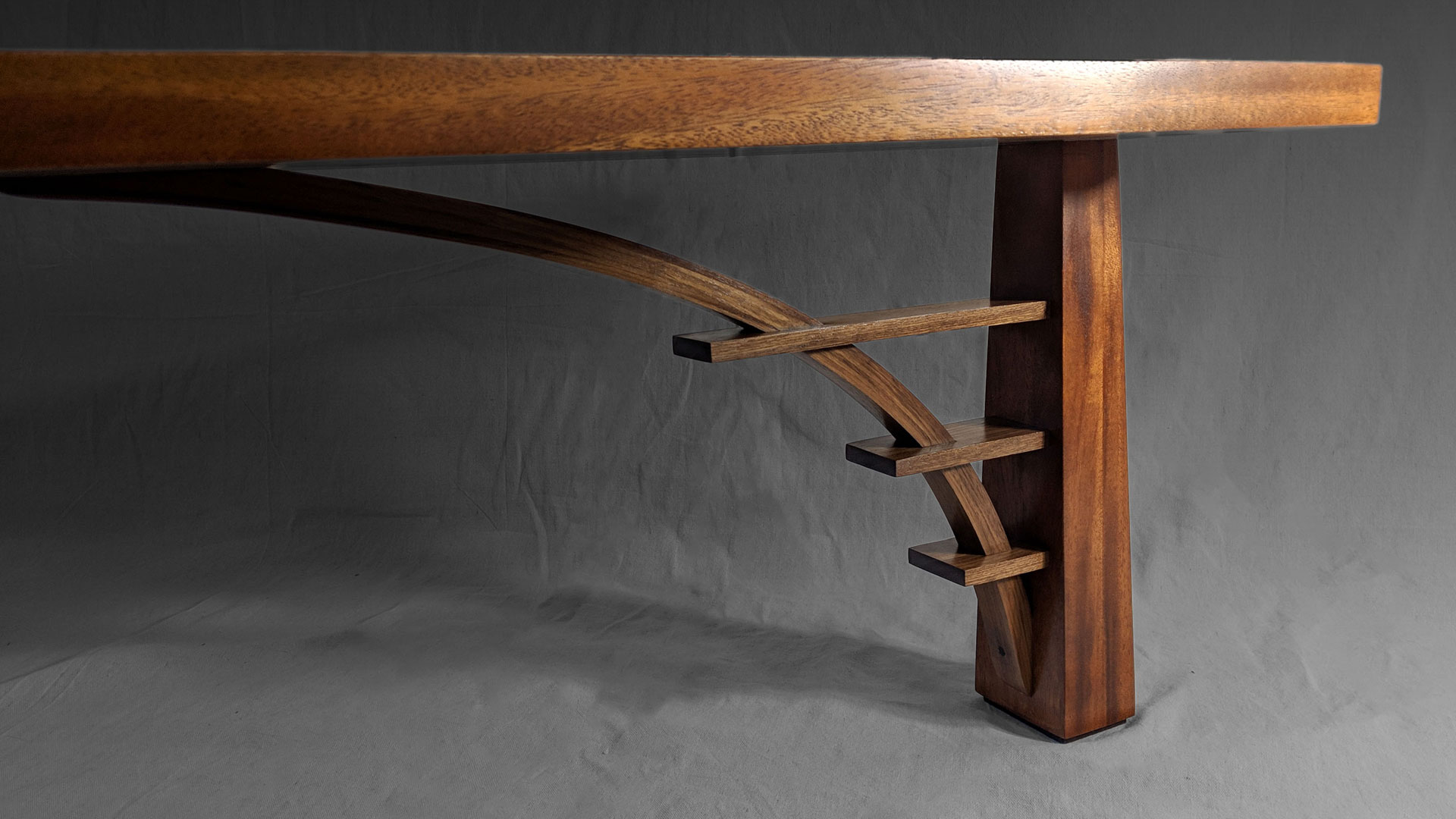
What does a Bespoke Furniture Maker Cost. Leg of a custom bench

When hiring a bespoke furniture maker, you can expect to pay more than buying furniture at a big box store.  There are quite a few variables that affect the cost of bespoke furniture; a piece can cost anywhere from $1,500 to $15,000.  To get a better idea of what bespoke furniture costs, reach out to your favorite custom furniture maker and tell them about your project.

What to expect when commissioning a Bespoke Furniture Maker

When furnishing our homes or offices, many seek unique, high-quality pieces that reflect our personal style and stand the test of time. While mass-produced furniture may offer convenience, nothing compares to the beauty and craftsmanship of bespoke furniture. These one-of-a-kind creations are tailor-made to your exact specifications, providing a sense of luxury and exclusivity. However, the question remains: How much does it cost to hire a bespoke furniture maker? In this article, we delve into the factors that influence the cost and explore the value that comes with investing in such custom creations.

  1. Expertise and Skill: Crafting bespoke furniture requires a high level of expertise, skill, and artistry. Bespoke furniture makers often spend years honing their craft, combining traditional woodworking techniques with contemporary design sensibilities. The extensive knowledge and experience possessed by these artisans are reflected in the final product’s quality and uniqueness. Consequently, the cost of hiring a bespoke furniture maker is typically higher than purchasing mass-produced items.
  2. Design and Customization: One of the primary advantages of bespoke furniture is the ability to tailor every aspect of the design to your specific requirements. From choosing the materials to determining the dimensions and finishes, you have complete control over the customization process. The complexity of the design and the intricacy of the details play a significant role in determining the cost. Elaborate designs or intricate woodworking techniques may increase the overall price due to the time and effort required.
  3. Materials and Sourcing: The selection of materials is another factor that influences the cost of bespoke furniture. High-quality materials, such as solid wood, exotic veneers, or premium upholstery fabrics, tend to be more expensive. Additionally, the availability and sourcing of specific materials can impact the overall cost. If you have specific requests for rare or hard-to-find materials, the furniture maker may need to invest more time and resources in acquiring them, which can affect the final price.
  4. Time and Labor: Bespoke furniture is a labor-intensive process that demands meticulous attention to detail. From initial consultations and design development to the actual construction, the time invested by the furniture maker can be significant. Each piece is individually handcrafted, requiring precision and care at every stage. The complexity of the design, along with the number of hours required for completion, will contribute to the overall cost.
  5. Size and Scale: The size and scale of the furniture piece also impact the cost. Larger pieces generally require more material and labor, which can drive up the price. Additionally, complex projects, such as fitted wardrobes or built-in cabinetry, involve additional considerations such as measurements, installation, and integration with existing structures. These factors may influence the overall cost of the project.


While hiring a bespoke furniture maker may be higher than purchasing mass-produced alternatives, the investment is justified by unparalleled craftsmanship, customization options, and the creation of a truly unique piece tailored to your exact specifications. Each bespoke furniture item is a testament to the skill, artistry, and dedication of the furniture maker, resulting in heirloom-quality pieces that can be cherished for generations. So, if you desire exceptional craftsmanship, personalization, and a piece of furniture that tells a story, engaging a bespoke furniture maker is a worthy investment.

Remember, the cost of hiring a bespoke furniture maker will vary depending on the factors discussed in this article. It is advisable to research local artisans, review their portfolios, and have detailed discussions regarding your requirements and budget to ensure a transparent understanding of the costs involved.

The post What Does a Bespoke Furniture Maker Cost appeared first on Benham's Blog.

  •  
❌