WoodCentral

Reading view

Bamboo Reigns in Bali from the Green School to Ulaman’s Luxury Villas

Bamboo is everywhere in Bali. Growing in vast forests. Effectively used in landscaping for resorts. Preserved in traditional villages as a tourist attraction. Incorporated in the design of luxury resorts.
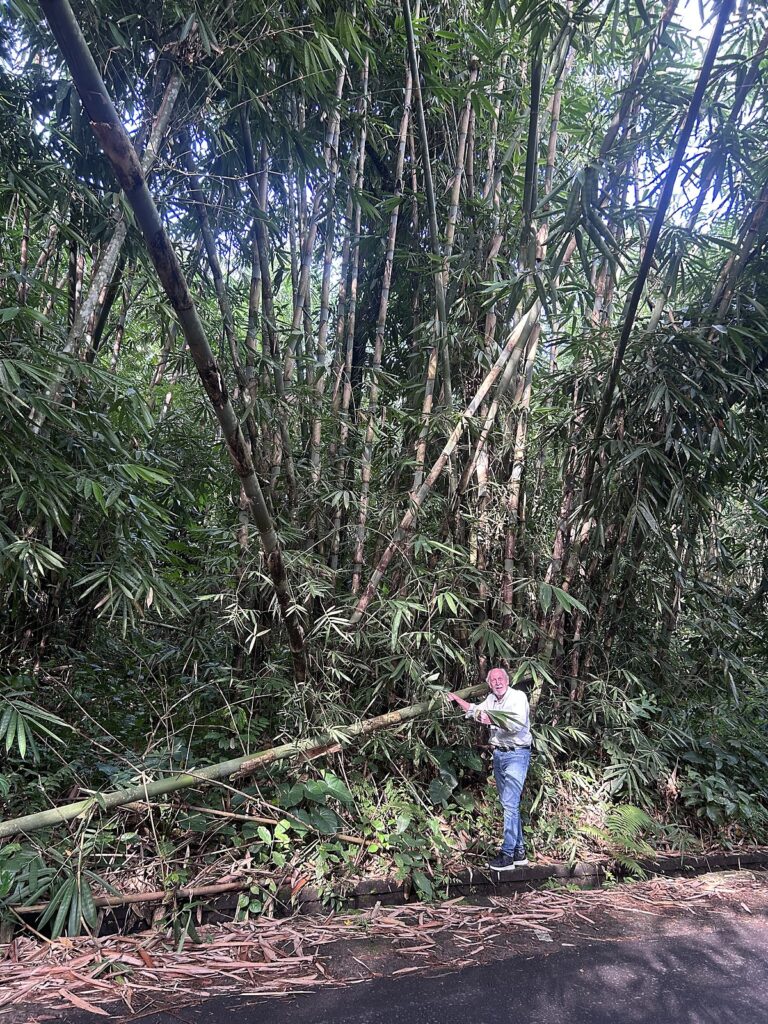
bamboo reigns bali green school ulaman luxury villas bamboo forest 1200x1600 (1)
A Balinese bamboo grove towers overhead, the raw material behind the island’s most ambitious buildings. (Photo Credit: Ken Hickson)

But still the most distinctive use of bamboo as a building material is not for tourists, but for international students. It’s the Green School which opened in 2008.
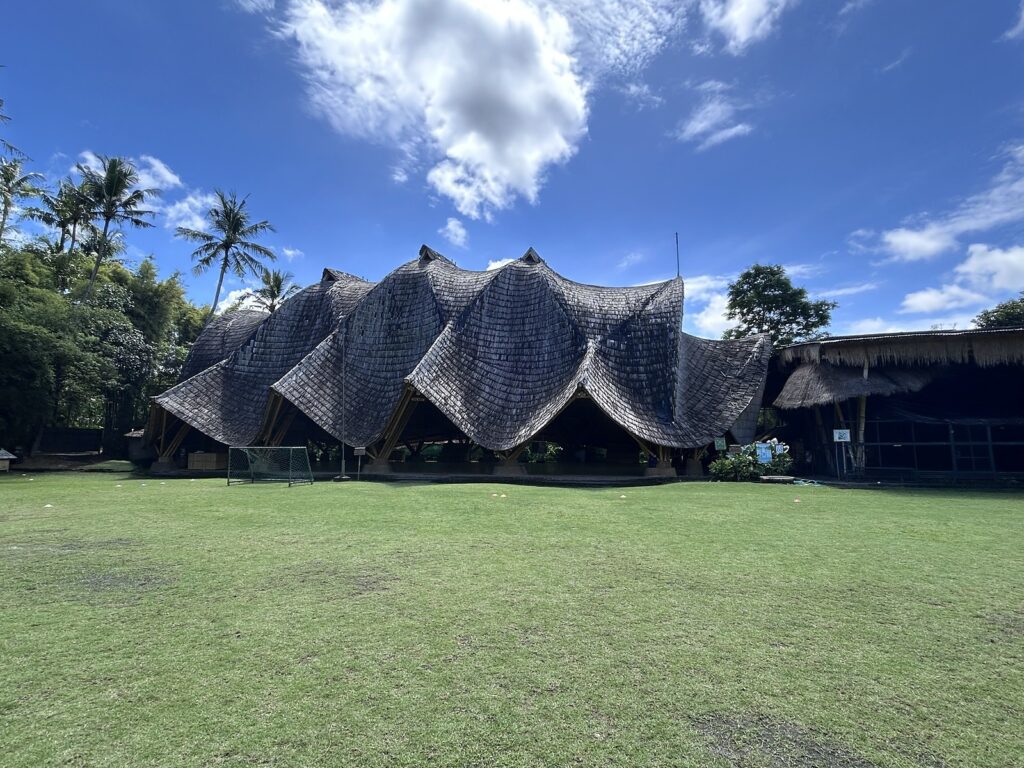
bamboo reigns bali green school ulaman luxury villas green school building 1600x1200
Bali’s most recognised bamboo building, the Green School, established in 2008. (Photo Credit: Ken Hickson)

I was determined to see for myself this time what progress had been made since we first visited the school in 2009, as guests of the founders, John and Cynthia Hardy.

Inspired by Al Gore’s ‘Inconvenient Truth’ in 2006 and compelled to take up his call to action, they started with the School’s bamboo bridge, spanning 22 meters across the Ayung River. Completed in November 2006, it created a beautiful, strong symbol of the transition from the realm of idea to reality.

Green School opened in September 2008 with 90 students and a tailor-made campus that emerged from the jungle and rice fields.

When we visited in May 2026, we see for ourselves how it has expanded in more ways than one. More bigger bamboo buildings to accommodate 514 students and an inspiring example of education for sustainability.
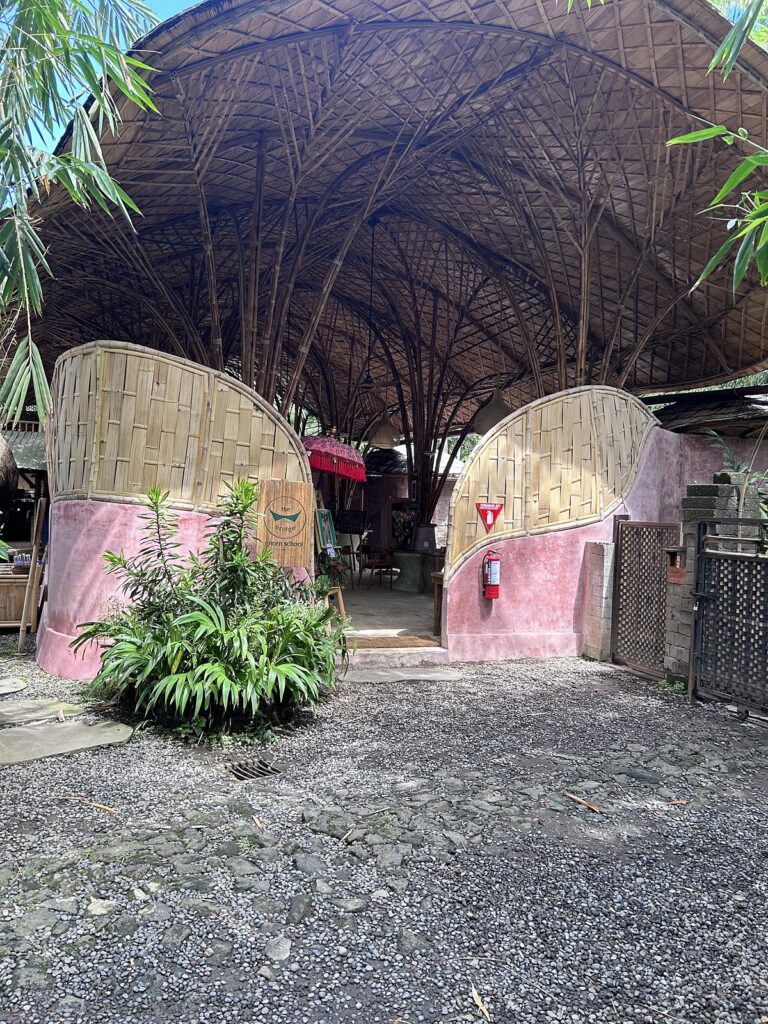
bamboo reigns bali green school ulaman luxury villas reception 1200x1600 (1)
A bamboo reception welcomes visitors to Bali’s Green School. (Photo Credit: Ken Hickson)

The young well-informed guide Rana, who look us on a tour of the property, was excited to report on Green School’s latest mission to help learners and educators of all ages uncover new ways of thinking, designing and bringing to life the products, processes, and places that are needed for a collective shift to regenerative futures.

He told us the Green School has started on the world’s first ever K-12 Biomimicry for Regenerative Design (BiRD) Lab to promote systems thinking, find inspiration in Nature to design local solutions to global challenges, and inspire the world with artefacts and stories of learning.

But BiRD is more than a lab, it is an approach to learning and doing that will nurture regenerative futures through the cultivation of bio-empathy, reciprocity, and long-term thinking.

Designed by the famous bamboo architecture firm IBUKU (led by Elora Hardy), in collaboration with MAIN Studio, the structure is built entirely of locally sourced Balinese bamboo.

You can read more about Bali’s Green School BiRD Lab here.
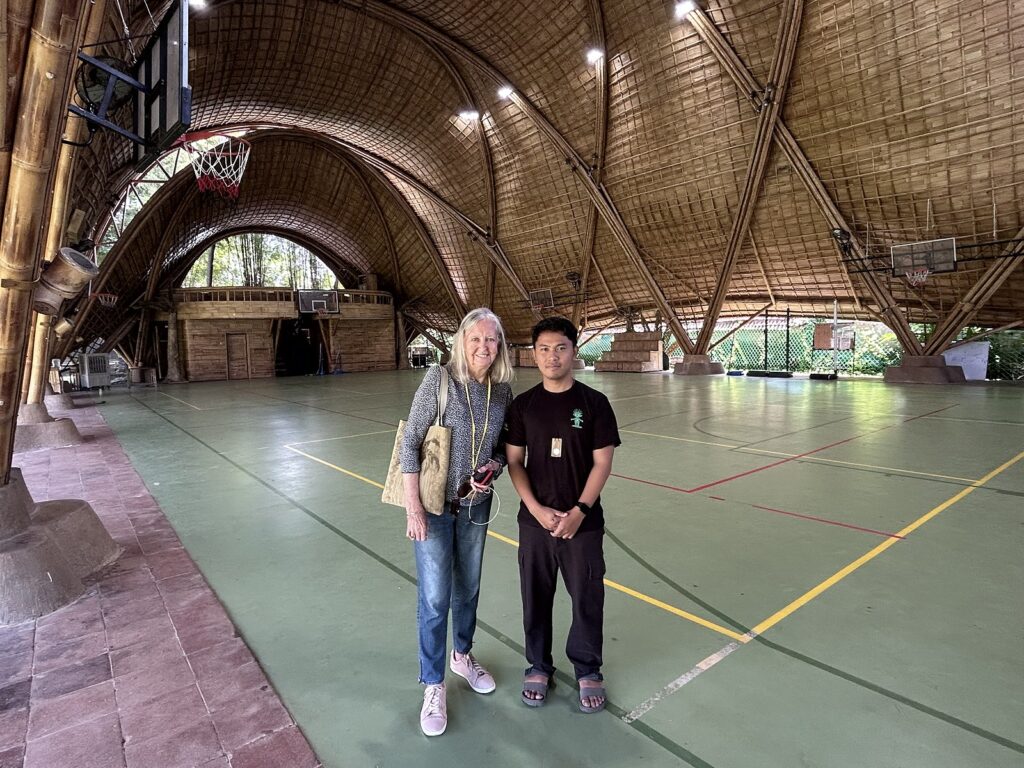
bamboo reigns bali green school ulaman luxury villas sports hall 1600x1200 (1)
The Green School’s vaulted bamboo sports hall, where guide Rana led the tour. (Photo Credit: Ken Hickson)

Meantime, the very same founders of the Green School, have ventured into the tourism sector with their very own Bambu Indah Eco Resort Ubud, which also makes the most of Bali’s ready availability of bamboo.

We didn’t have the time to visit Ubud this time, but did make it to see another fine example of Bali bamboo resort architecture: Uluman Eco Luxury Bali.

After two decades of visiting Bali and falling in love with its people, lush landscapes, and rich culture, Dino Magnatta decided to build his retirement ‘dream’ home to escape the cold Canadian winters.

He envisioned a unique jungle ‘tree house style’ bamboo villa, combining luxury with comfort, nestled amidst rivers, jungle, and rice fields, like the famous Ubud area once was. Once he found the right piece of land, he went ahead to build what has become a unique luxury resort in the heart of Bali.

We were taken on an exclusive tour with Dodi to see these very impressive bamboo structures of Ula Man for photographs and couldn’t resist staying for lunch at what has become an attraction in itself: the E.A.R.T.H. poolside restaurant.
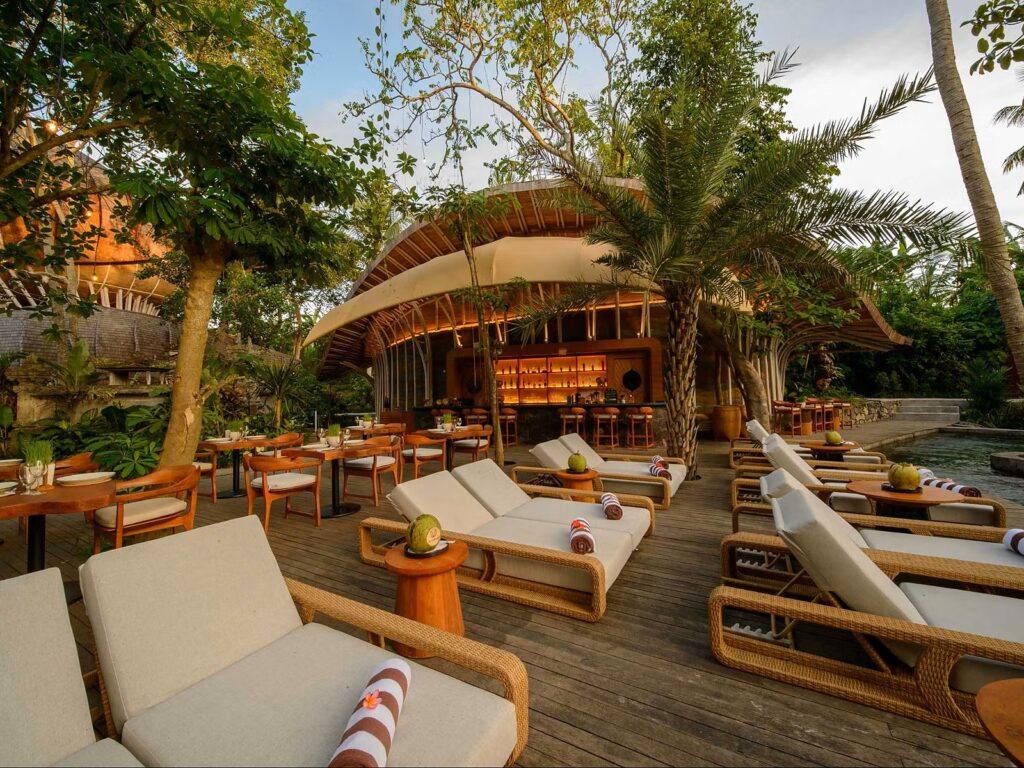
bamboo reigns bali green school ulaman luxury villas earth restaurant 1600x1200
Ulaman’s E.A.R.T.H. poolside restaurant and bar at dusk, a bamboo attraction in its own right. (Photo Credit: Ken Hickson)

From our introduction and photographs you can get some idea of the scope and design of Ulaman Bali, but you can see and read a lot more on the website.

We have always been impressed by the emphasis on eco-design and green landscaping in Bali resorts, epitomised by the work of the late and great Australian architect Made Wijaya, most notably with his work at Four Seasons Bali Jimbaran Bay, which we had the pleasure of staying once around 1990 and later in 1996.

His Bali resort landscaping has been the inspiration for many others and we feel sure it influenced the look and feel of two other resorts we enjoyed staying at recently: Peppers Seminyak, along with the 12 year old Mayo Resort in North Bali.
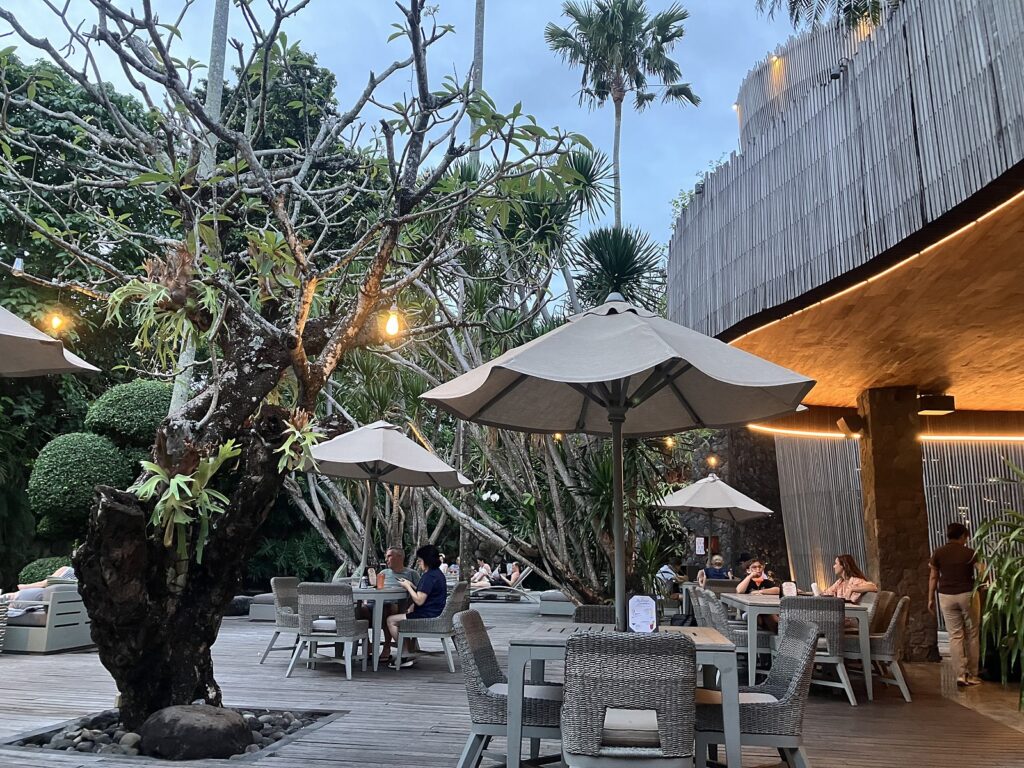
bamboo reigns bali green school ulaman luxury villas peppers seminyak 1600x1200 (1)
Bamboo and timber feature through the grounds and poolside dining at Peppers Seminyak. (Photo Credit: Ken Hickson)

Bamboo and other timbers and trees featured prominently inside and outside of our luxury villa at Peppers Seminyak.

GM Todd Williams told us he is taking the 19-year-old resort through a makeover, but he assured us it will be as green as ever and even more sustainable in every way.

You can expect more from me in future reports on Bali tourist resort architecture, including the sustainability measures being undertaken at Peppers Seminyak and how Mayo Resort maximises its coastal location in North Bali to source local ingredients for its excellent Bora Bora Bar and Bistro.

The post Bamboo Reigns in Bali from the Green School to Ulaman’s Luxury Villas appeared first on Wood Central.

  •  

New flooring and squeak reductions

New flooring was delivered this week, about 1860 sq ft total. These pics I took to show my wife what it looks like with all of the various trims, panels, and cabinets in the house. I had picked it out using some small stain pieces I too to the store with me, so wanted final sign off from SWMBO. As you can see, lighting does make a difference. The kitchen currently has fluorescent lights, but will be changing those over to LED with a bit warmer tone. Many of the led bulbs in the house are...

Read more
  •  

Mass Timber ‘Bunkhouse’ Proves Recovery Need Not Repeat the Past

A vacant Lahaina lot that once held a home destroyed in the August 2023 Maui wildfires has become the site of the first mass timber dwelling in Habitat for Humanity’s global history. That is according to Hawaiʻi Off Grid Architecture + Engineering, the Maui firm whose volunteer bunkhouse is now rising as a flat-pack system built for rapid disaster rebuilding.

Designed by HIOG principal David Sellers, who also sits on Habitat for Humanity Maui’s board of directors, the Bunkhouse uses veneer-laminated timber walls and glue-laminated timber roof panels dimensioned around a four-foot module. That module allows termite treatment before installation, efficient shipping across the Pacific and rapid assembly once the panels reach the site.

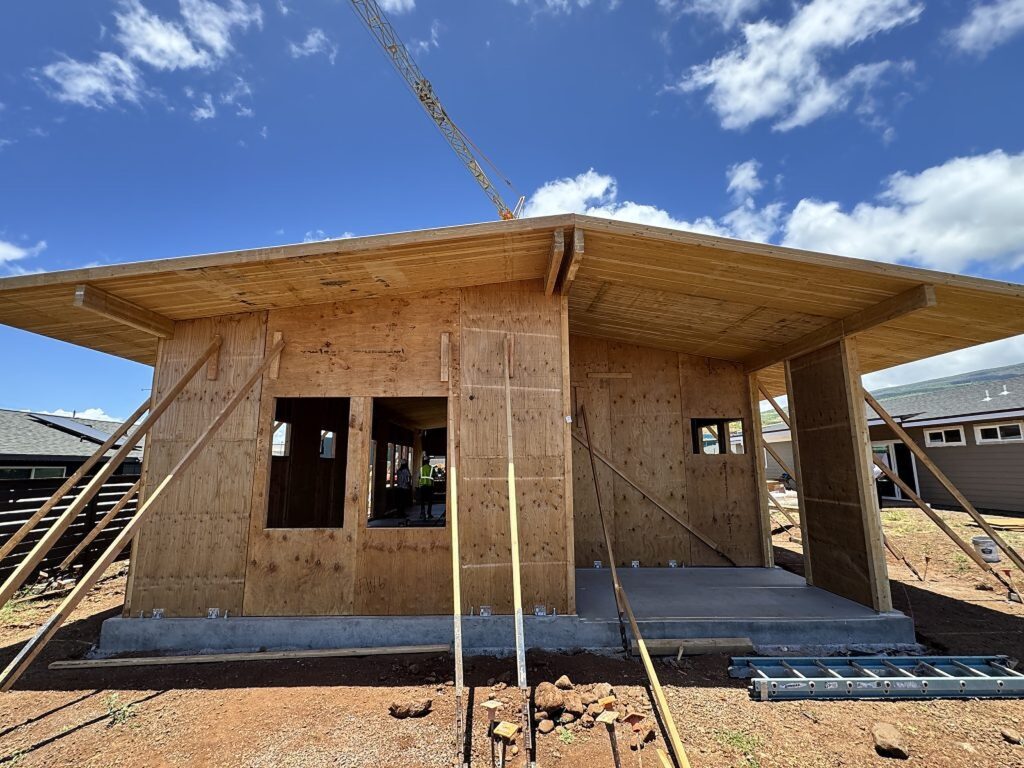
Front elevation of the Lahaina bunkhouse showing veneer laminated timber walls and craned roof panels
The bunkhouse’s veneer laminated timber walls and craned roof panels rise on the cleared Lahaina lot. (Photo Credit: Hawaiʻi Off Grid)

Sellers, who led the design with support from WoodWorks, said two decades of underbuilding had left the islands unable to rebuild Lahaina at the speed residents deserve, and the bunkhouse answers that with a system that can be prefabricated and deployed after future disasters. “Recovery doesn’t have to mean rebuilding the same way,” he said.

The flat-pack logic is the point for HIOG, which conceived the dwelling as a proof of concept for prefabricated mass timber as a route to affordable, resilient housing at a lower cost and faster pace. Maui’s largest architecture and engineering firm, HIOG, commits 30 per cent of its work to community projects and partnered on disaster relief after the 2023 fires.

Three project leaders wearing lei and hard hats at the Lahaina mass timber bunkhouse blessing
Project leaders mark the start of construction at the Lahaina mass timber bunkhouse blessing. (Photo Credit: Hawaiʻi Off Grid)

According to Jennifer Cove, president and chief executive of WoodWorks, the partnership advances education, workforce development and design work for new mass timber housing prototypes whilst honouring local architectural character. “This project demonstrates how mass timber can strengthen post-disaster rebuilding,” she said.

Meanwhile, Matt Bachman, the executive director of Habitat for Humanity Maui, said the bunkhouse will expand the charity’s volunteer capacity in Lahaina, where each additional worker moves another family closer to a permanent home. “Volunteers have always been at the heart of Habitat for Humanity’s work,” Bachman said.

HIOG expects the Bunkhouse to be completed within four months, with August 2026 the target — three years after the August 2023 fires razed the lot and much of historic Lahaina.

The post Mass Timber ‘Bunkhouse’ Proves Recovery Need Not Repeat the Past appeared first on Wood Central.

  •  

Ukraine Ambassador Warns Russian Timber in Aussie Supply Chains Funds Putin’s War

Ukraine’s ambassador to Australia has warned that Russian-origin timber rerouted through third nations and built into Australian homes is helping fund Moscow’s war, and has thrown his weight behind the industry’s push to close the gap. That is according to Vasyl Myroshnychenko, who said Australian houses should not help bankroll Russia’s invasion.

Pointing to a Nine investigation published in the Sydney Morning Herald and The Age that set out the scale of the trade, the ambassador said significant volumes of Russian timber were still reaching Australia after being routed through third countries and processed offshore. The practice, he argued, was sidestepping what the sanctions were meant to do rather than breaking any specific rule.

Australian homes should not be helping to fund Russia’s war against Ukraine.

A disturbing investigation by @KnottMatthew in @smh @theage reveals that significant volumes of Russian timber may still be entering Australia after being routed through third countries and processed… pic.twitter.com/nf36KC3ri2

— Vasyl Myroshnychenko (@AmbVasyl) June 1, 2026

With the forestry industry estimating up to 15,000 new homes built each year could contain Russian-origin timber, the ambassador warned the wood was hidden in the fabric of finished houses, behind walls, floors and roofs. The products “may be generating revenue for a regime,” Myroshnychenko said, tying the trade to the deaths of tens of thousands of Ukrainians and the destruction of entire cities.

Whilst praising Australia’s record of standing with Kyiv, the ambassador backed the call to close the gap, casting it as a test of the sanctions regime’s ability to hold. Loopholes that allow Russian commodities to enter through third countries erode both the force of the measures and the principle behind them, he said, and the concern extends well beyond a single product.

The ambassador’s support adds diplomatic weight to a case the timber industry has put to a Senate inquiry, with the Australian Forest Products Association pressing for stronger action to protect local manufacturers and the integrity of the domestic market. AFPA acting chief executive Richard Hyett said the latest evidence pointed to Russian timber still reaching Australia in volume despite the measures in place.

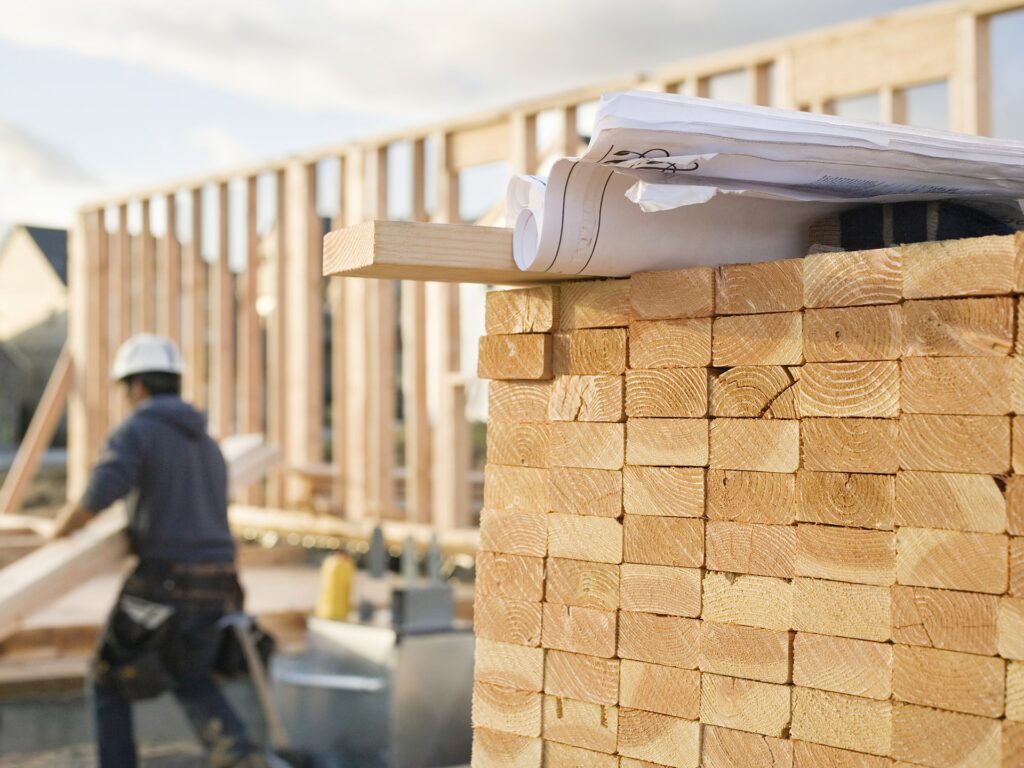
Stacked structural timber on an Australian residential building site with a partly framed house behind.
AFPA estimates that as many as 15,000 new homes a year could contain Russian timber laundered through China to dodge Australia’s 35 per cent tariff. (Photo Credit: Dreamstime)

Australia had been left exposed because it had done less than its partners to curb rerouting, Hyett argued, pointing to the European Union and the United States as having gone further. “Australia has become a target for Russian products,” Hyett said.

AFPA ties that warning to as much as 100,000 cubic metres of imported timber a year that could carry Russian material. Its submission seeks to extend the 35 per cent tariff to all products containing it, regardless of stated origin. It also presses for country-of-origin labelling and tighter border checks, so rerouted shipments are caught before they clear customs and reach the market. Those steps would bring Australia closer to the controls already operating across the European Union and in the United States.

The ambassador’s intervention follows revelations that Russian timber is being laundered through China into Australian homes, and comes after the industry earlier pressed Albanese over Russia’s shadow timber trade. The submission now sits before a Senate inquiry weighing tougher import controls, with the AFPA warning that as many as 15,000 Australian homes a year could still be built with timber linked to Russia.

The post Ukraine Ambassador Warns Russian Timber in Aussie Supply Chains Funds Putin’s War appeared first on Wood Central.

  •  

Circular11 is Turning Plastic Waste into Composite Timber

Dorset manufacturer Circular11 has raised £2.4 million in equity funding to scale a composite lumber it makes from plastic waste that conventional methods cannot recycle, with the timber substitute aimed at outdoor construction. That is according to Circular 11, which said the round would fund an expansion to recycle an estimated 10,000 tonnes of plastic over the next two years.

Because most plastics cannot be returned to their original purity, they prove too unreliable for conventional manufacturing and are routinely incinerated, a fate Circular11 considers wasted feedstock. The company’s process adapts to variations in that low-quality plastic, turning it into boards it offers as an alternative to sawn timber for outdoor use.

Chief executive Benjamin Gibbons said the funding gave Circular11 the resources to scale manufacturing whilst responding to pressure on the industry to find better uses for plastic waste. “Every tonne of plastic that gets incinerated is a missed opportunity,” Gibbons said.

Led by Vectr7 Investment Partners, with The FSE Group as co-lead, the round raised £630,000 from the British Business Bank’s South West Investment Fund through FSE. The FSE Investor Network, the Oxford Innovation Network, and private investors also took part, alongside an Innovate UK grant.

Vectr7 founder and managing partner Dominic Wilson said tightening supply in timber markets was pushing construction and manufacturing towards substitutes, and that his firm was backing the company’s next stage of growth. “The construction and manufacturing industries need sustainable alternatives,” Wilson said.

Whilst traditional timber remains the sector benchmark, Circular11 says its boards offer longer lifespans, lower maintenance costs, and divert plastic that would otherwise be burned. The company, founded in 2021, has built its model around a feedstock stream that recyclers and manufacturers generally cannot use.

The British Business Bank has backed the company before, with senior investment manager Lizzy Upton saying it supported Circular11 through its Start Up Loans programme in 2024. That earlier funding now sits behind a business the South West Investment Fund has returned to, this time with £630,000 inside the £2.4 million round.

The post Circular11 is Turning Plastic Waste into Composite Timber appeared first on Wood Central.

  •  

Seoul to Build Korea’s First Hybrid Timber Arena on the Han River

The Seoul Metropolitan Government will build Korea’s first large-scale hybrid timber international arena on the Han River waterfront, a 199.9 billion won ($145 million) venue near Gwangnaru Station designed for elite combat sports and year-round public use. That is according to the city government, which on Monday named the winning entry in an international design competition for the Gwangjang-dong Multipurpose Sports Complex.

A joint entry by Gawa Architects & Associates, Iséak Architects and DD Architects won the commission ahead of 27 rival submissions, with a circular arena built around a hybrid timber frame. Such a structure remains a rarity among large-scale public buildings in Korea, where mass timber has been slow to move into civic infrastructure.

The judging panel praised the winning design for balancing public accessibility with professional arena functionality, citing its separation of athlete and spectator circulation and its fit with the surrounding district. The panel reached that view despite complex underground conditions on the site, which lies above a subway line and waste treatment infrastructure.

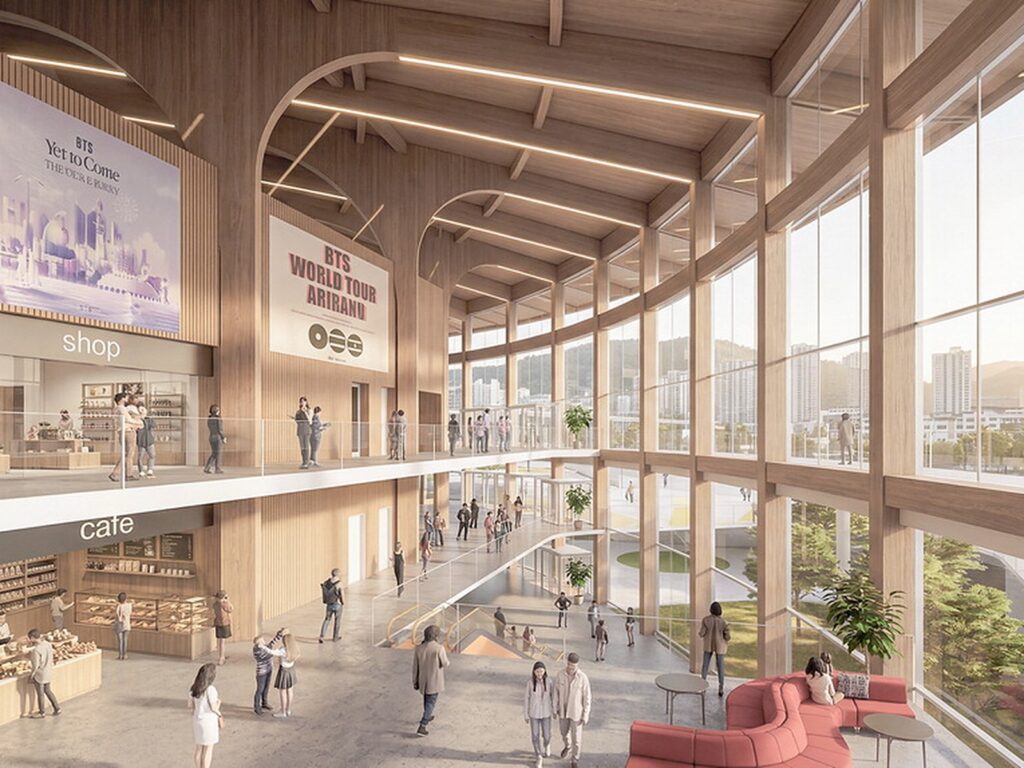
Interior render of the timber arena concourse, with exposed timber beams, a glazed wall, retail and café units, and event signage on an upper level.
Inside the arena, the design pairs an exposed timber frame with a public concourse of shops and cafés, doubling as a cultural venue on non-competition days. (Render courtesy of the Seoul Metropolitan Government)

Designated for urban sports facilities in 1978, the 50,916-square-metre site languished for decades before administrative clearances and central investment reviews were secured in 2025. The master plan will connect the arena with existing local hubs, including the Gwangjin-gu Citizens’ Sports Center, the Seoul Gwangjin Youth Center and the YES24 Live Hall.

Engineered to meet rigorous international regulatory standards, the venue will host premium training camps and global tournaments in combat sports such as taekwondo, judo and wrestling. On non-competition days, it will open to amateur sport, cultural events and public concerts.

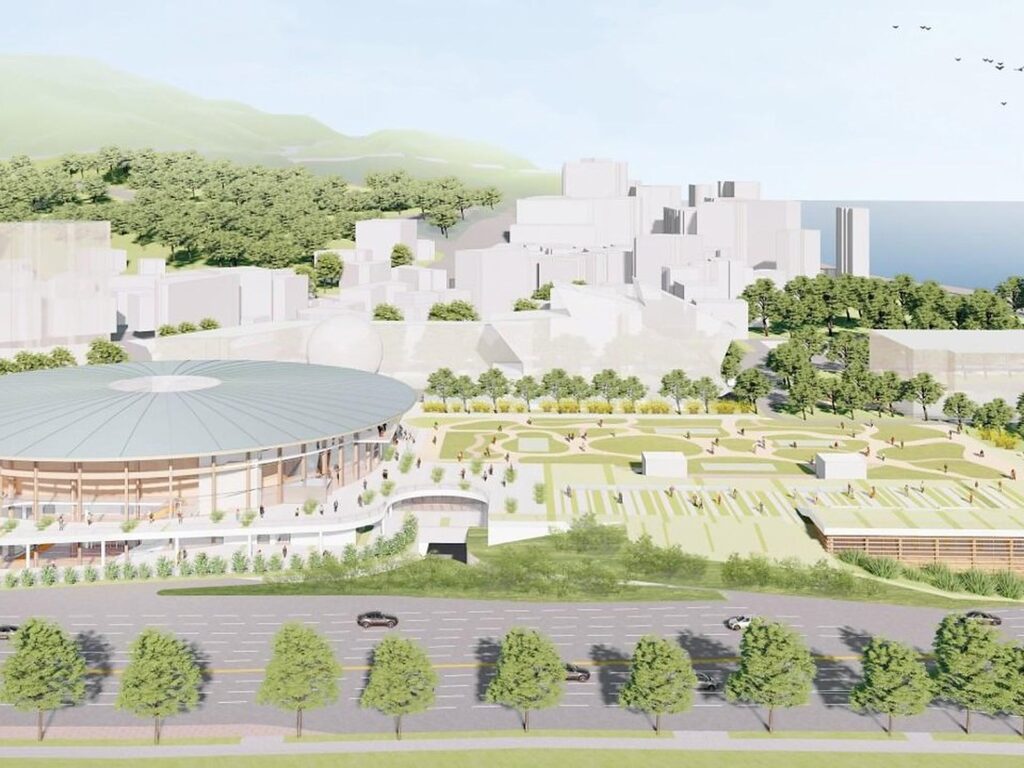
Aerial render of the Gwangjang-dong sports complex showing a circular timber-roofed arena beside landscaped parkland running toward the Han River.
The master plan threads continuous green space between the arena and the Han River, integrating the venue with the Gwangjin-gu Citizens’ Sports Center and YES24 Live Hall. (Render courtesy of the Seoul Metropolitan Government)

Continuous green space will run between the arena and the river at ground level, whilst a public car park below will absorb parking demand around Gwangnaru Station. The design leans on the site’s position as a gateway to Seoul along the Han River, aiming to read as a new urban landmark.

The complex is intended to serve as an open public space where residents’ daily lives coexist with international sport, rather than as a conventional sports venue. That is the stated aim of Kim Yong-hak, the city’s director general for future space planning, who said Seoul would keep delivering public architecture through open, professional design competitions.

The city will finalise the contract with the winning consortium this month, ahead of an 18-month detailed design phase. Construction is scheduled to break ground in April 2028, with the arena due to open in August 2031.

The post Seoul to Build Korea’s First Hybrid Timber Arena on the Han River appeared first on Wood Central.

  •  

The Russian Timber Hiding Behind Australia’s Plasterboard

Russian timber is slipping into Australian homes hidden behind plasterboard and flooring after being laundered through China and other third countries, evading the tariffs imposed after Moscow’s invasion of Ukraine. That is according to Mark Corrigan, a chemical engineer who has tracked Russian-origin imports and reported in Nine Media mastheads today. With birch plywood and Siberian larch entering under the cover of paperwork that masks their provenance, Corrigan said the trade was both invisible to home builders and difficult to police.

Kateryna Argyrou, chair of the Australian Federation of Ukrainian Organisations, said laundered timber and refined Russian crude alike entered the country under clean documentation, leaving the Kremlin free to keep collecting its cut. “It all arrives here legally, with a clean bill of origin,” Argyrou said.

The Australian Forest Products Association (AFPA) estimates up to 100,000 cubic metres of annual imports could carry Russian-origin wood, in a submission to a Senate inquiry into the effectiveness of sanctions on Russia. As reported by the Sydney Morning Herald, acting chief executive Richard Hyett warns that as many as 15,000 new homes built each year could contain it.

In their submission to the Senate Foreign Affairs, Defence and Trade References Committee, Hyett pressed the federal government to close what has been described as Russia’s shadow trade through Chinese and Southeast Asian supply chains. AFPA’s submission points to clear evidence that large volumes of Russian timber are being transferred and transformed through China, sidestepping the 35 per cent tariff Australia placed on Russian goods in 2022. Domestic producers were losing ground to cheap imports, the association said, warning that “Russian timber is coming into Australia rerouted through third-party countries.”

Before the war, Russia held more than a fifth of the world’s forests and supplied up to half the local market for laminated veneer lumber, a share that collapsed once the tariff took hold and Chinese shipments surged. The submission follows mounting pressure on Canberra, which has been pressed to close Russia’s conflict-timber loophole amid accelerating third-country rerouting.

Russian President Vladimir Putin meets businessman Alexey Mordashov at the Kremlin
Russian President Vladimir Putin meets Alexey Mordashov, whose business empire controls Sveza, one of the world’s largest plywood producers. (Photo Credit: Wikimedia Commons, CC BY 4.0)

The campaign extends an earlier push by the federation, which pressed Albanese on Russia’s shadow timber trade and demanded sanctions reach all products derived from Russian materials wherever they are processed.

The European Union warned last year that plywood purchases posed a major risk of breaching its ban on wood originating in Russia or Belarus, whilst the United Kingdom has prohibited any direct or indirect purchase of Russian timber products. Australia has taken no equivalent step, the association noted, leaving it a growing destination for rerouted exports.

A Department of Agriculture report released under freedom-of-information laws last year found the provenance of more than half of all sampled timber products could not be accurately verified. The assessment, prepared by verification firm Source Certain, warned that the risk of sourcing conflict timber could be managed only through due diligence.

Timber NSW said in its submission that it believed huge volumes of imported timber may have originated in Russia, urging the government to add both directly and indirectly sourced Russian products to the national sanctions list. The state body wants country-of-origin testing tightened alongside any extension of the tariff regime.

A Department of Foreign Affairs and Trade spokesperson said Australia remained steadfast in supporting Ukraine and that its 35 per cent tariff applied to timber of Russian origin, adding that importers were expected to conduct due diligence on their supply chains.

The post The Russian Timber Hiding Behind Australia’s Plasterboard appeared first on Wood Central.

  •  

Just 17 Per Cent of BC’s Secondary Processors Are ‘Fully Efficient’

Most of British Columbia’s value-added wood manufacturers operate well below best-practice efficiency levels, and the sector’s productivity has lagged behind that of the province’s sawmills and panel makers since before the 2007–2009 financial crisis. That is according to a new study by Lili Sun, Rico Chan and Bryan Bogdanski of Natural Resources Canada’s Pacific Forestry Centre, published in Forest Policy and Economics, which measures firm-level efficiency alongside a long-run productivity index.

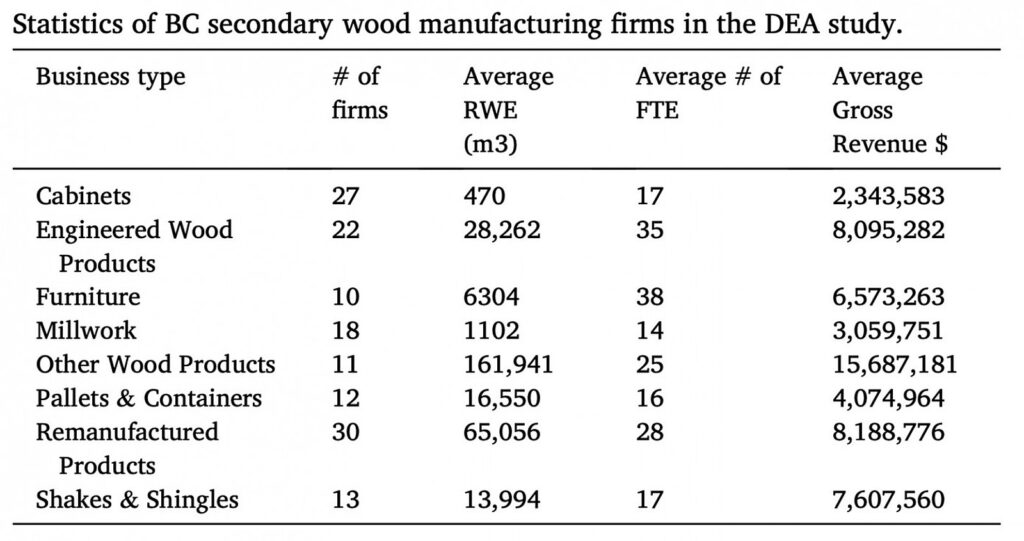
Of the 143 British Columbia firms in the sample, only 17 per cent are fully efficient on the study’s aggregate measure, and the technical-efficiency scores suggest most could cut their use of wood and labour by anywhere from 14 to 49 per cent without producing any less, a gap that points to slack across the sector rather than a handful of laggards.

The finding cuts against a long-running policy bet, because secondary manufacturing has been promoted for decades as the way to diversify British Columbia’s forest economy away from declining commodity lumber, a case that has sharpened as US import duties and shrinking timber supply force mill closures across the province. The study effectively tests whether the value-added sector that policymakers have relied on is itself operating efficiently and finds that it largely is not.

The study defines secondary manufacturing as the further processing of lumber into intermediate and finished goods, spanning Cabinets, Engineered Wood Products, Furniture, Millwork, Other Wood Products, Pallets and Containers, Remanufactured Products, and Shakes and Shingles, whilst excluding veneer and panels. A Canada-wide survey cited in the paper estimates the broader sector at $19 billion in sales and 92,000 jobs, whilst British Columbia alone accounts for 680 firms, an estimated 16,888 full-time equivalent workers, and $4.46 billion in sales in 2016.

Drawing on the 2016/2017 survey, the researchers run Data Envelopment Analysis that treats labour and wood use as inputs and sales as the single output, a reasonable lens given that wood purchases and labour together account for 79 per cent of sector costs.

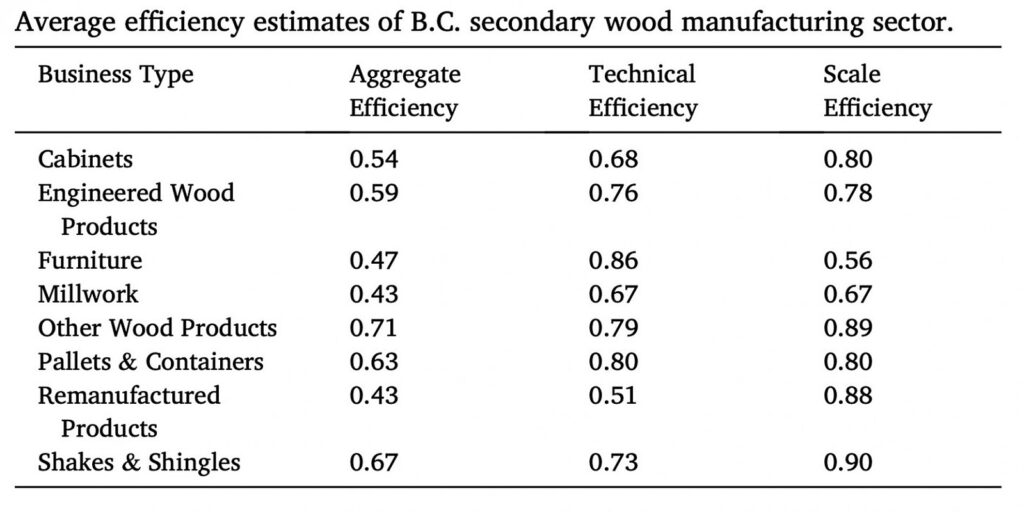
Table of average aggregate, technical and scale efficiency scores by business type in BC secondary wood manufacturing, with Millwork and Remanufactured Products lowest on aggregate efficiency at 0.43
Average aggregate, technical and scale efficiency estimates by business type in the BC secondary wood manufacturing sector. (Source: Sun, Chan and Bogdanski / Forest Policy and Economics)

The inefficiency varies sharply by business type, with Furniture firms posting the strongest technical efficiency and Remanufactured Products the weakest, whilst Other Wood Products leads on aggregate efficiency at 55 per cent of firms fully efficient, compared with just 6 to 7 per cent in Millwork and Cabinets.

Table of the 143 BC secondary wood manufacturing firms in the DEA study, showing firm counts, average roundwood-equivalent wood use, full-time-equivalent workers and gross revenue by business type
Firm counts, average roundwood-equivalent wood use, full-time-equivalent workers and gross revenue for the 143 BC firms in the DEA study. (Source: Sun, Chan and Bogdanski / Forest Policy and Economics)

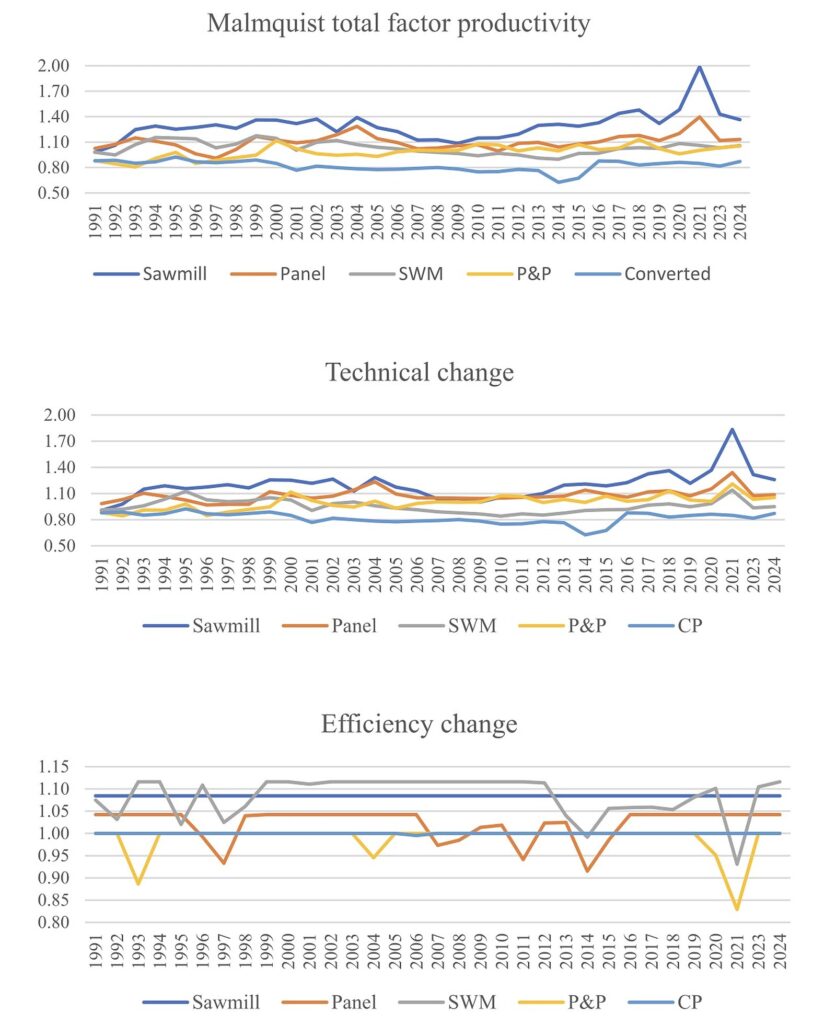
To connect firm-level efficiency with long-run performance, the authors build a chained Malmquist productivity index from Statistics Canada data running through 2024, which shows sawmills and panel products pulling steadily ahead of secondary manufacturing, with the gap widening after the 2007–2009 financial crisis.

Three line charts tracking Malmquist total factor productivity, technical change and efficiency change for BC sawmill, panel, secondary wood manufacturing, pulp and paper and converted paper sectors from 1991 to 2024, with sawmills pulling ahead
Malmquist total factor productivity, technical change and efficiency change for BC forest manufacturing sectors, 1991-2024. (Source: Sun, Chan and Bogdanski / Forest Policy and Economics)

The authors caution that the long-run series is an imperfect proxy, since Furniture and Cabinets drop out of the industry data and engineered wood producers cannot be cleanly separated, meaning the productivity gap is indicative rather than exact.

The combined picture points to a sector with room to raise output from the wood and labour it already uses, and on the study’s logic the larger prize lies in closing the technical-efficiency gap, improving how firms turn inputs into product, rather than chasing scale, which most categories already manage reasonably well.

For more information: Sun, L., Chan, R., & Bogdanski, B. (2026). Efficiency and productivity analysis of the secondary wood manufacturing sectors in British Columbia. Forest Policy and Economics, [volume], [article no.]. https://www.sciencedirect.com/science/article/pii/S1389934126001176

The post Just 17 Per Cent of BC’s Secondary Processors Are ‘Fully Efficient’ appeared first on Wood Central.

  •  

Bipartisan Bill Gives Mass Timber First Crack at Federal Building Contracts

Timber and forest products companies would gain a direct route to compete for federal construction, renovation and military building contracts under bipartisan legislation introduced in the United States House of Representatives, where mass timber would carry a two-tier contracting preference. That is according to Glenn “GT” Thompson, the Pennsylvania Republican who introduced the Mass Timber Federal Buildings Act alongside Oregon Democrat Andrea Salinas.

Structured across two tiers, the bill puts mass timber made in the United States and responsibly sourced from state, federal, private and Tribal forestlands first in line for federal work. An optional second tier extends to products drawn from restoration practices, fire mitigation projects and forest owners, while a whole-building lifecycle assessment requirement would gather evidence on the environmental performance of wood in federal buildings.

For Thompson, whose district includes the Allegheny National Forest, the measure aims to expand markets for the timber that Pennsylvania’s foresters and mills are already ready to supply. “Timber and forest products have long been an important economic engine,” Thompson said.

Tying the bill to Oregon’s mass timber industry and to construction costs, Salinas argued that federal demand would expand the sector, support jobs and help bring down building costs amid the housing crisis. “Our wood products are sustainable and cost-effective building materials,” Salinas said.

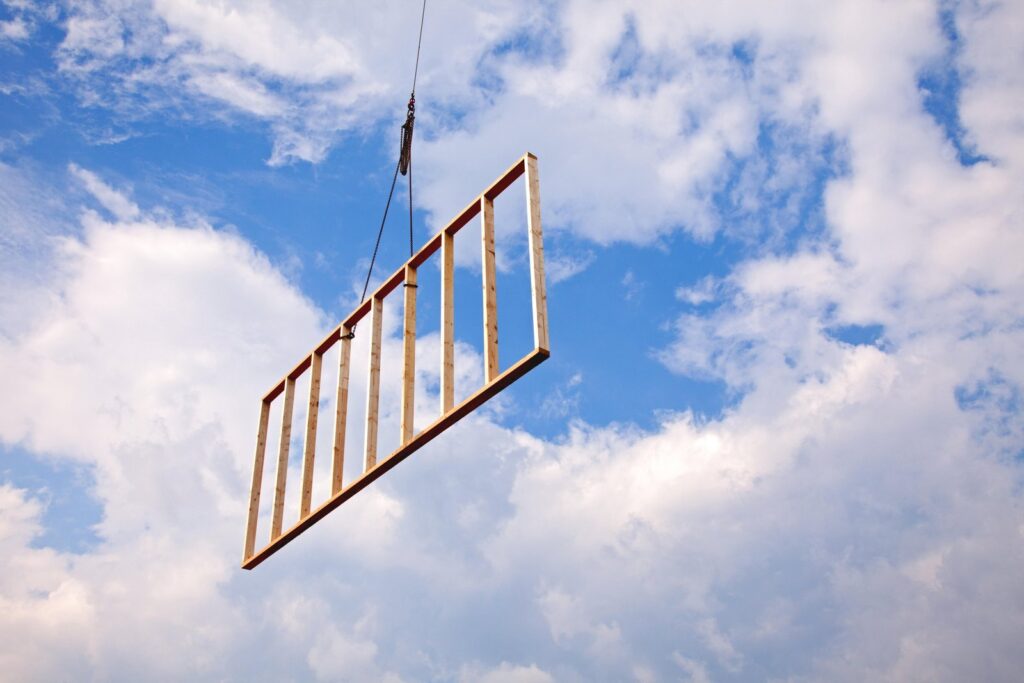
A prefabricated timber wall frame suspended from a crane cable against a blue, partly cloudy sky.
The United States has emerged as one of the fastest-growing markets for mass timber, with thousands of multi-family, commercial and institutional projects completed or under way nationwide. (Photo Credit: Alamy Stock Images)

The push comes as US softwood demand remains weak, with imports across the largest markets falling almost 2 million cubic metres in the first quarter under steep duties on Canadian supply and a weak homebuilding market. National Alliance of Forest Owners president and chief executive Dave Tenny welcomed the bill as a lever for rural communities and domestic manufacturing.

“Strong markets for innovative wood products like mass timber help sustain rural communities,” Tenny said. The American Forest Resource Council and the Forest Landowners Association also endorsed the measure, alongside Pennsylvania’s Allegheny Hardwood Utilization Group and the Pennsylvania Forest Products Association.

On the Senate side, Oregon Democrat Jeff Merkley and Idaho Republican James Risch lead a companion bill, giving the legislation a path in both chambers. Mass timber — the engineered material made by bonding wood panels, beams and columns into structural components — can carry mid- to high-rise buildings.

For now, Thompson and Salinas are advancing a measure that puts American-made, responsibly sourced mass timber first in line for federal construction, renovation and military building work.

The post Bipartisan Bill Gives Mass Timber First Crack at Federal Building Contracts appeared first on Wood Central.

  •  

FWPA Sets the Standard for Timber Fastener and Connector Testing

A new national testing standard for mechanical fasteners and connectors holding timber buildings together gives manufacturers, laboratories, and engineers a single, repeatable method for measuring how those joints carry load. That is according to FWPA Standard T01, the FWPA-funded Industry Standard developed by the ARC Advance Timber Hub at the University of Queensland in collaboration with the Engineered Wood Products Association of Australasia.

Aimed at manufacturers, testing laboratories, universities, engineers and certifiers, the standard sets out consistent methods for measuring strength, stiffness, ductility and slip behaviour across both sawn timber and engineered wood products, including glue-laminated timber, laminated veneer lumber, cross-laminated timber and plywood. It covers lateral and axial loading, along with testing of individual fasteners and full connection assemblies, generating characteristic design values suitable for structural design under AS 1720.1.

Rather than replacing existing Australian Standards, T01 is built to sit alongside them, offering an alternative route to the characteristic capacities of commonly used timber connection types until AS 1649, revised in 2025, undergoes a further comprehensive overhaul. The standard fills a working gap, providing usable test data to the sector for modern timber systems, whilst the formal benchmark catches up.

For Forest and Wood Products Australia, the value lies in comparability, with a single shared method enabling laboratories, researchers and manufacturers to measure the same connection consistently. “Improves transparency and comparability of test results,” FWPA said.

Released as a 2026 first edition covering Category A and B fasteners, T01 marks the opening part of the series, and Forest and Wood Products Australia has built it to run alongside the Australian Standards until AS 1649 clears its next full revision.

The post FWPA Sets the Standard for Timber Fastener and Connector Testing appeared first on Wood Central.
  •  

Billionaire Developer Floats 25-Story Plyscraper Over West Palm Beach

Billionaire developer Jeff Greene has put forward a 25-story, 399-apartment tower for a downtown West Palm Beach block that, if built in the prefabricated timber described by its design team, would stand as the tallest wood-framed building in Florida. That is according to the South Florida Business Journal, which first detailed the proposal for 120 South Dixie Highway under the state’s Live Local Act.

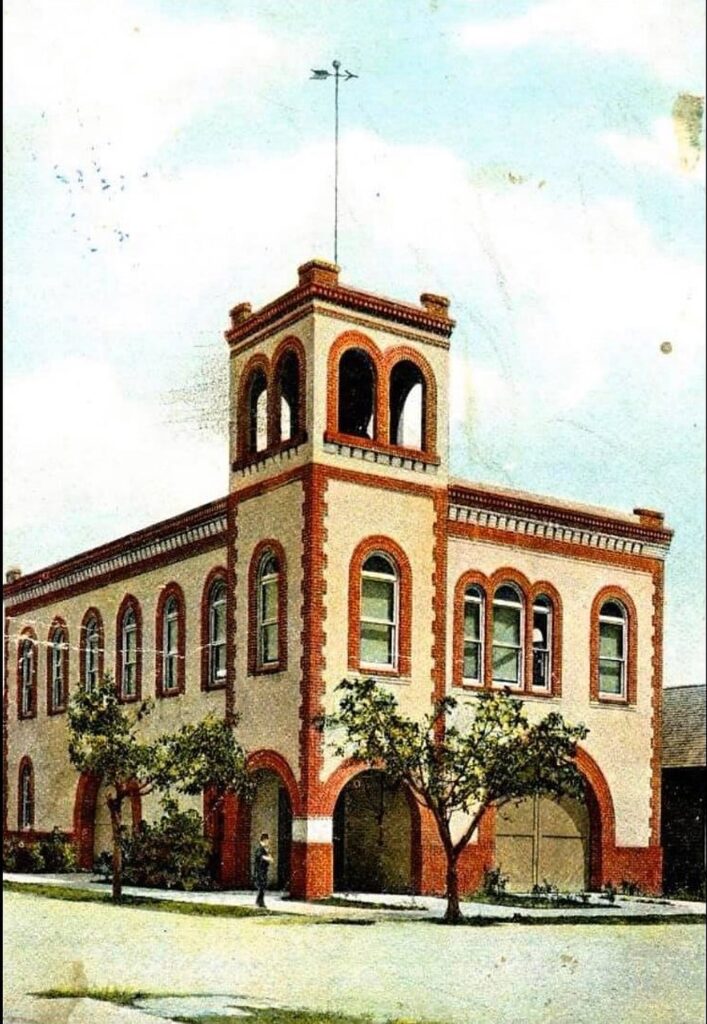
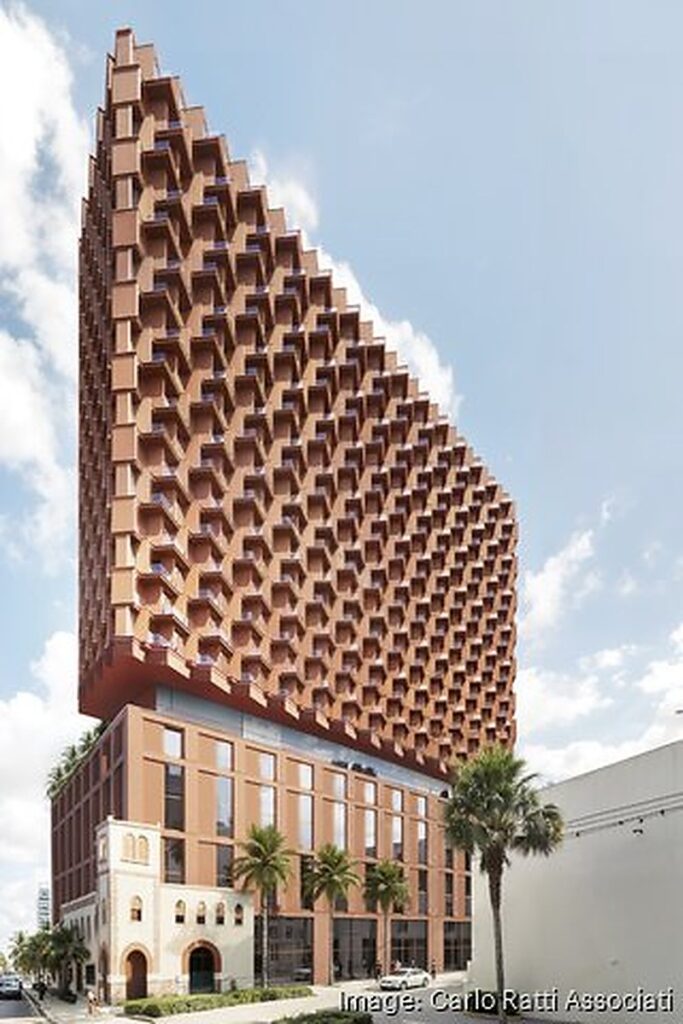
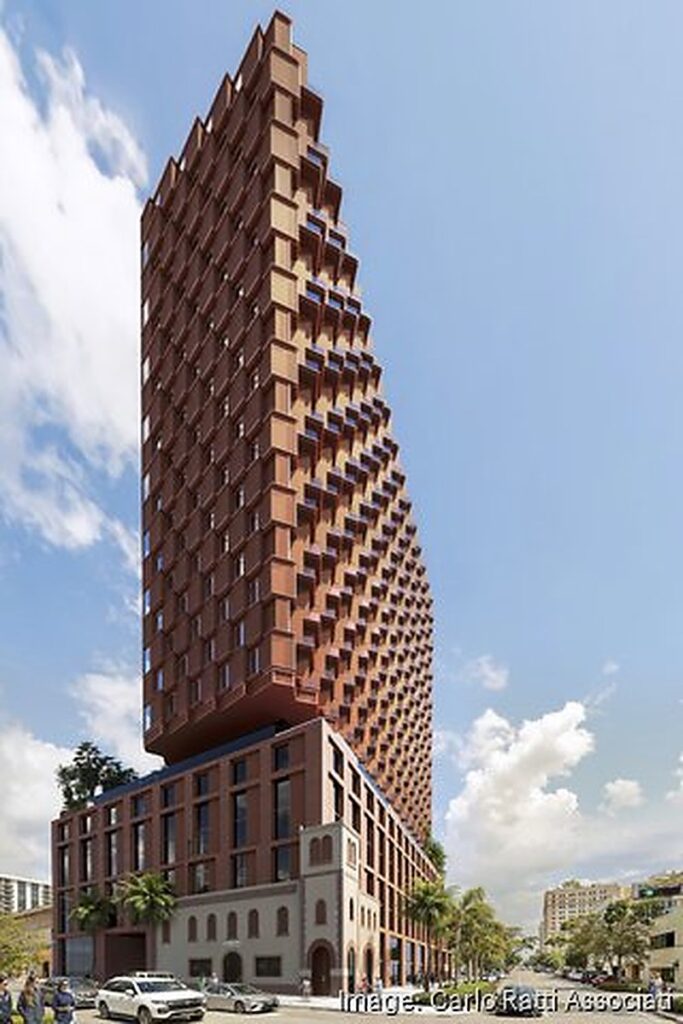
The tower is the work of Carlo Ratti Associati, the Turin and New York practice whose founder curated the 2025 Venice Architecture Biennale, with a tapering faceted facade rising above a brick podium. Its design would fold a turn-of-the-century firehouse on the site into the building’s frontage, keeping the masonry landmark within a modern high-rise.

Colourised vintage postcard of a two-storey brick-and-stucco firehouse with an arched bell tower and weathervane in early-1900s West Palm Beach.
The high-rise would incorporate part of this turn-of-the-century firehouse into its facade. (Image from Facebook)

Carlo Ratti Associati and development partner Nexus Systems intend to build the tower from prefabricated timber modules, a method the team says would speed construction and keep costs down. The developers argue that off-site timber fabrication and the material’s lower embodied carbon would deliver a faster, cleaner build than a conventional concrete frame.

Frontal render of the proposed West Palm Beach timber tower, its faceted facade narrowing to a sculptural peak above a brick base.
Three-quarter render of the proposed West Palm Beach timber tower showing its stepped, tapering timber facade and street-level podium.
Carlo Ratti Associati’s design tapers to a faceted timber peak above a brick podium. (Image: Carlo Ratti Associati)

The Live Local Act lets qualifying projects bypass some local zoning limits and pursue administrative approval in return for long-term workforce housing. About 160 of the 399 apartments, roughly 40 per cent, would be reserved for households earning at or below 120 per cent of the area median income, which Palm Beach County sets at $104,000.

Plans describe studios through three-bedroom units of 505 to 1,320 square feet, with workforce homes set on floors two to four and six to 11 and market-rate apartments above. The scheme also carries about 7,550 square feet of retail and 236 parking spaces, alongside shared amenities including a pool and gym on the fifth floor.

The West Palm Beach Plans and Plats Review Committee reviewed the proposal on 14 May and returned it for changes the developer must make before construction can begin. That early municipal scrutiny sits at the front of a Live Local approval path that can otherwise move administratively once a filing meets the statutory checklist.

Tall-wood towers have won global support for faster assembly and lower carbon, yet they continue to raise engineering, fire-safety and insurance questions, particularly in hurricane-exposed markets such as South Florida. Whether a 25-story timber building can meet Florida’s wind codes and insurers’ requirements remains the central technical test for the design.

The 25-story Ascent tower in Milwaukee, completed in 2022 as the world’s tallest mass-timber building at the time, is routinely cited as proof that high-rise timber is achievable. Its example also shows how approval processes and insurance standards shift sharply from one jurisdiction to the next.

Greene is pressing ahead with the twin-tower One West Palm development downtown and holds extensive land across the city, a portfolio that has repeatedly drawn him into disputes with West Palm Beach over height and zoning. The new timber proposal arrives as those tensions continue, with the developer and the city already at odds over a separate Currie Park scheme.

For now the proposal rests with the West Palm Beach Plans and Plats Review Committee, which will decide whether a 25-story timber tower holding 160 affordable apartments clears the changes it has demanded before construction.

The post Billionaire Developer Floats 25-Story Plyscraper Over West Palm Beach appeared first on Wood Central.
  •  

Canberra Backs Plug-and-Play Fix for Australia’s Housing Crisis

The Albanese government has committed $39.3 million to a trial of System 600, an open-source prefabricated housing platform that standardises components such as wall panels, bathroom pods and facades, enabling them to be manufactured off-site and assembled on-site at speed. It comes as Housing Minister Clare O’Neil pushes modern methods of construction to the centre of the Commonwealth’s housing agenda, drawing on a Swedish model where prefabrication is already standard.

O’Neil used her National Press Club address to argue Australia has been too slow to adopt techniques common overseas, telling delegates she is a committed believer in housing innovation. The funding will flow to states and territories for pilot projects, technical development, training and supply-chain expansion.

“We have to get faster and more efficient,” O’Neil said.

The minister pointed to Scandinavia, telling the Press Club that 80 per cent of homes built in Sweden use some aspect of modern methods of construction, “compared to just 5 per cent in Australia.” She said she would happily live in a home built that way, pushing back on what she cast as lingering Australian scepticism toward prefabrication.

“We do need to change that,” O’Neil said of the gap.

Housing Minister Clare O’Neil told the National Press Club that lifting home building means adopting modern methods of construction at far greater scale. (Video Credit: ABC News via YouTube)

System 600 was developed jointly by Homes NSW and the Building 4.0 Cooperative Research Centre, and its open-source design lets different manufacturers produce compatible parts under common standards rather than locking projects into a single proprietary supplier. The platform breaks a building into repeatable subsystems covering structure, external envelope, services and interior finishes, applying manufacturing logic to construction while preserving design flexibility.

“We have standard parts, not standard designs,” Building 4.0 CRC Director Mathew Aitchison said.

The program starts with medium-density buildings of four to six storeys, using a standardised kit of parts manufactured off-site — bathrooms, kitchens and balconies among them — that is then assembled on-site through systems built to meet tenant needs, speed delivery and drive down cost. The system takes its name from a 600 by 600 millimetre grid that coordinates component size and connection, with roughly 80 per cent of each building standardised and the remaining 20 per cent tailored to its site.

Homes NSW and the CRC put the approach on show last year with a fully built two-bedroom demonstration apartment at a Mascot showcase that drew more than 1,000 attendees across its run. Because the platform is open-source and supplier-agnostic, any manufacturer that builds to the shared rules can supply parts to any project, with the first deployment running through the Homes NSW social-housing program.

That program has been underway since May 2024, with $2 million each from Homes NSW and the CRC, targets a 20 per cent cut in construction time and cost, and underpins a NSW commitment of $6.6 billion toward 8,400 new homes and 30,000 repairs. Professor Daryl Patterson, who leads the platform’s technical development, said the distributed model was a deliberate answer to the risks of highly centralised modular manufacturing.

“There’s a lot of intelligence in the supply chain,” Patterson said.

The timing matters because productivity is moving in the wrong direction, with Productivity Commission findings showing that Australia builds roughly half as many homes per hour worked as it did in 1995, and residential construction timelines nearly doubled over the past decade. New dwelling prices rose an average of 4.7 per cent in the year to April on Bureau of Statistics figures released on Wednesday, and the Commonwealth Bank expects home-building costs to peak at 8 per cent by September.

National Shelter chief executive Jackson Hills said the funding would help clear one of the most stubborn barriers to the delivery of modern construction methods at scale. The government also wants more social housing built from prefabricated parts, and O’Neil told the Press Club the $40 million kit-of-parts investment could not be better spent, given the wear and tear on ageing public housing stock.

“There is simply no pathway to meeting our future housing needs without the adoption of new and innovative housing,” Hills said.

A walk-through of the two-bedroom demonstrator apartment, Homes NSW, and the Building 4.0 CRC, built to show the System 600 kit-of-parts approach at the Mascot showcase. (Video Credit: Building 4.0 CRC via YouTube)

Timber is among the materials the platform can draw on, with the Building 4.0 CRC naming timber cassettes, cross-laminated timber and pre-nailed timber frames among the panelised parts a kit-of-parts building uses, after industry findings that mid-rise has overtaken detached housing as the typology driving Australia’s housing growth.

This is the precise problem the Future Framing Initiative is testing, with University of Tasmania research lead Professor Louise Wallis confirming the team is identifying where the roadblocks sit and building the evidence to clear them. The work tests the framing system responsible for more than 80 per cent of the country’s current housing stock against a mid-rise future.

“Literally it’s up to 15 metres,” Wallis said of the system’s tested upper bound — roughly four to five storeys.

Four Future Framing Initiative panellists seated on stage at FTMA National Conference, Andrew Dunn speaking with microphone in hand
The Future Framing Initiative panel at FTMA’s National Conference at Twin Waters on the Sunshine Coast, with University of Tasmania research lead Professor Louise Wallis, AFWI Deputy Director Professor Patrick Mitchell, Australian Timber Development Association CEO Andrew Dunn and FWPA Head of Built Environment and Head of the WoodSolutions Programme Kevin Peachey on stage. (Photo Credit: Supplied by FTMA to Wood Central / Central PR Group)

The Initiative is backed by FWPA alongside major timber framing suppliers, including Timberlink, and is working to build trust in timber and strengthen its role in affordable, efficient housing. Australian Timber Development Association chief executive Andrew Dunn has said the Initiative will publish its mid-rise lightweight-framing standard as an FWPA Industry Standard rather than route it through Standards Australia, a means to deliver outcomes to the market in the shortest possible time.

“This is a generational opportunity to fix roadblocks and modernise timber framing,” Dunn said.

The post Canberra Backs Plug-and-Play Fix for Australia’s Housing Crisis appeared first on Wood Central.
  •  

Trump Tariffs Hammer Canadian Lumber — US Builders Face 30% Price Surge

US homebuilders are staring down their sharpest framing lumber squeeze in years, with Canadian softwood imports crashing 24 per cent in the first quarter as Trump-era tariffs and stacked duties hit an effective 45 per cent for many cross-border producers. That is according to fresh trade data published this week, which shows Canada still supplied 84 per cent of the US import market — but at a price gap that has left no cheap substitute on the shelf as Canadian volumes fall.

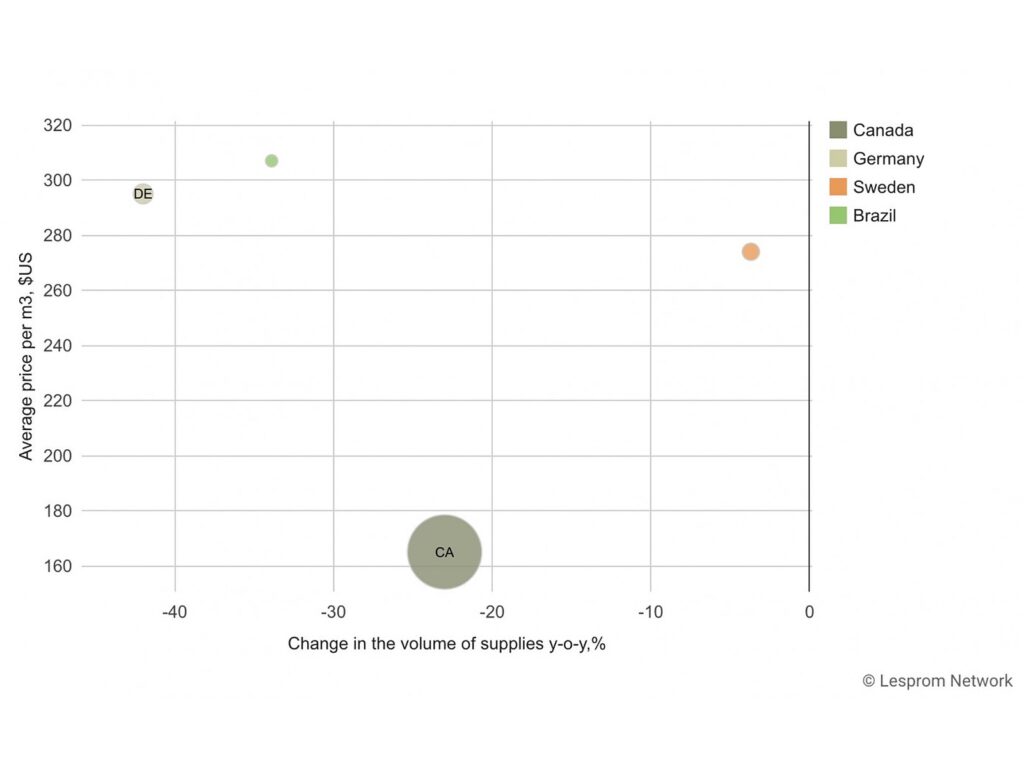
The Random Lengths Framing Lumber Composite has surged more than 30 per cent off December lows, with sawmill closures, falling production and reduced Canadian shipments pushing the rebound. Canadian mills still moved 5.2 million cubic metres into the United States in those three months — almost 16 times Germany’s 330,000 cubic metres, the next-largest source — while Sweden and Brazil sent 213,000 and 78,000 cubic metres respectively.

The price gap underlines what is at stake for US homebuilders, with Canadian softwood lumber clearing the border at about US$165 per cubic metre across the quarter, half the average price of the next-cheapest source. German, Swedish and Brazilian lumber averaged between US$274 and US$307 per cubic metre, leaving the US framing supply without a cheap substitute as Canadian volumes fall under the tariff wall.

Bubble chart showing Canada supplying the largest volume of US softwood lumber imports at the lowest price per cubic metre, with Germany, Sweden and Brazil smaller and higher-priced
US softwood lumber imports fell 24 per cent year on year in the first quarter of 2026 to 6.2 million cubic metres, with Canada supplying 84 per cent of the total at about US$165 per cubic metre, while German, Swedish and Brazilian shipments commanded US$274 to US$307 per cubic metre. (Image Credit: Lesprom Network)

The pain is now showing across the entire US construction input picture, with Anirban Basu, chief economist at Associated Builders and Contractors, telling the Wall Street Journal that the four months to April had outpaced the previous three years combined for cost increases. The National Association of Home Builders separately reported that 70 per cent of respondents to its April builder-confidence survey were struggling to price new homes amid the uncertainty over material costs.

“Market conditions remain challenging,” the NAHB’s Buddy Hughes said.

A woman hammers a metal bracket onto a timber-framed wall on a residential construction site under a blue sky
A US framer fastens a metal hanger to a timber stud wall, with the NAHB reporting that 70 per cent of builders were struggling to price new homes in April amid stacked tariffs on Canadian softwood lumber. (Photo Credit: Alamy Stock Images)

The 45 per cent effective rate stacks long-running antidumping and countervailing duties on Canadian softwood lumber on top of Trump-era tariffs, with a recent US Department of Commerce preliminary determination signalling that combined duties will fall to about 25 per cent from about 35 per cent later in the year. Builders are not banking on relief — the cut is expected to come too late to ease pressure on the current building season.

For Canada, the squeeze has hardened into an industrial-policy problem, with Energy and Natural Resources Minister Tim Hodgson telling the Empire Club of Canada that the country’s forest sector was “really the canary in the coalmine when it comes to American tariffs.” Ottawa’s new national Forest Strategy now commits to pivoting export strategy away from the United States and toward Asia after five separate tariff wars hammered cross-border lumber flows.

PulteGroup executives told investors that higher wood and metal prices would carry through to the cost of homes the company sells later this year, with the builder also resisting fuel surcharges from suppliers after diesel prices climbed about 50 per cent since the Iran war began at the end of February. Wood Central understands the surcharge pressure now stretches across the US homebuilder logistics chain, with materials margins eroding before the peak of the current building season.

The squeeze on building materials runs far wider than lumber, with copper at record prices on artificial-intelligence data-centre demand and ongoing disruption at Freeport-McMoRan’s Grasberg mine in Indonesia. Aluminium prices sit near records on a US tariff premium, whilst Persian Gulf war pressure on sulfuric acid for copper processing has added a further constraint, and the conflict has cut about 20 per cent of global oil supply, pushing diesel and freight rates higher and adding to wallboard shipping costs at suppliers including Eagle Materials.

The average rate on a 30-year fixed mortgage reached 6.51 per cent last week, the highest level since August, according to Freddie Mac, even as institutional investors continue buying close to one million acres of US timberland a year on a bet that the long-delayed US housing recovery is finally drawing near.

The post Trump Tariffs Hammer Canadian Lumber — US Builders Face 30% Price Surge appeared first on Wood Central.
  •  

Timber Cathedral Crowns the World’s First Wild Koala Breeding Centre

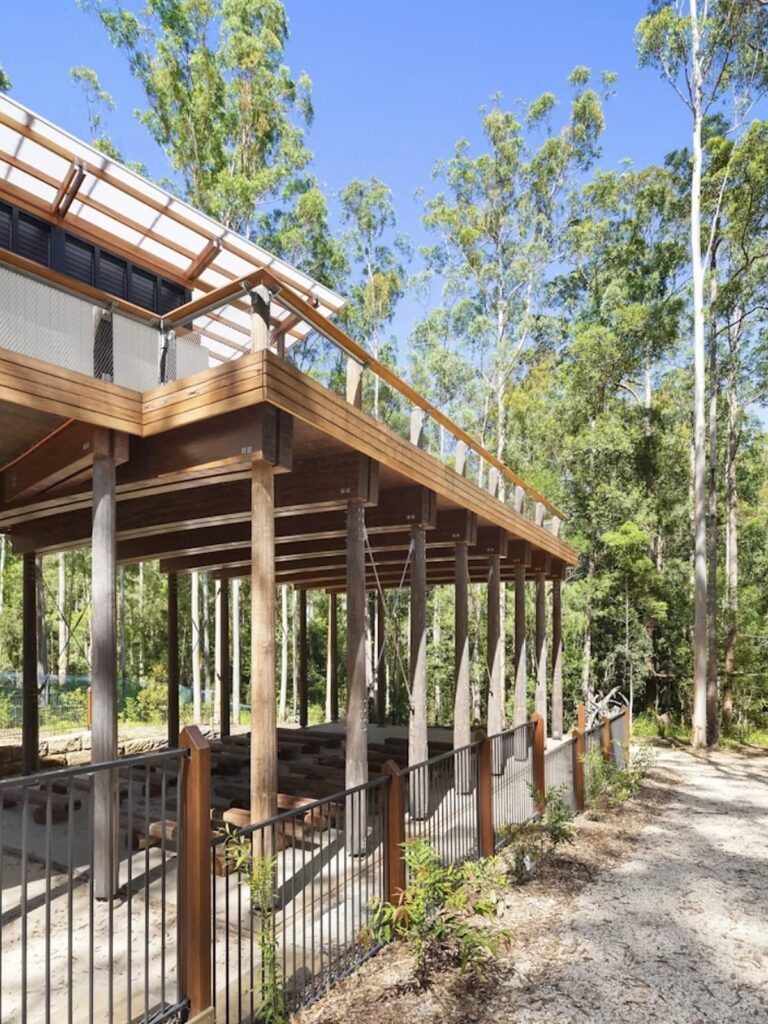
A timber “cathedral” of NSW hardwood columns, rising into a tiered canopy above rows of log benches, is the signature space of the world’s first wild koala breeding centre. Guulabaa, or Place of Koala in the Gathang language of the Biripi people, was built almost entirely from local hardwood and raised in a working state forest as a direct answer to the Black Summer bushfires.

The 25-hectare site breeds koalas for release into the wild, as part of a recovery programme led by Koala Conservation Australia. Its elevated timber decks link a cafe and gallery run by the Bunyah Local Aboriginal Land Council to the rest of the visitor experience.

Its design has drawn international recognition, from the 2025 Urban Land Institute Asia Pacific Awards for Excellence in Hong Kong to a shortlisting in last year’s World Architecture Festival. Guulabaa broke ground in Cowarra State Forest on the NSW Mid North Coast in early 2023, with funding from the Australian and NSW Governments, and reached completion in December 2024.

Construction workers and a crane operator placing a large timber deck onto hardwood poles at the Guulabaa site.
Crews position a mass timber deck during construction of the Guulabaa hub, prefabricated off-site and craned into the working forest. (Photo Credit: Supplied by Forestry Corporation of NSW to the Timber Design Awards as part of the submission)

The hub is a 90 per cent timber structure, with four main decks of mass timber supported on a braced pole system, and traditional framing retained for the stairs, gallery and roofs. Bridge-ply LVL decking spans pairs of large LVL and Stringybark beams, while unseasoned hardwood poles, bolted to concrete foundations with steel brackets, carry the decks clear of the ground.

Each deck was prefabricated off-site under a Design for Manufacturing and Assembly process, then craned into position to limit disturbance to the working forest around it. Even the steel bracing between the poles was set, the award’s entry notes, “to minimise climbing hazards” and keep the ground beneath the decks clear.

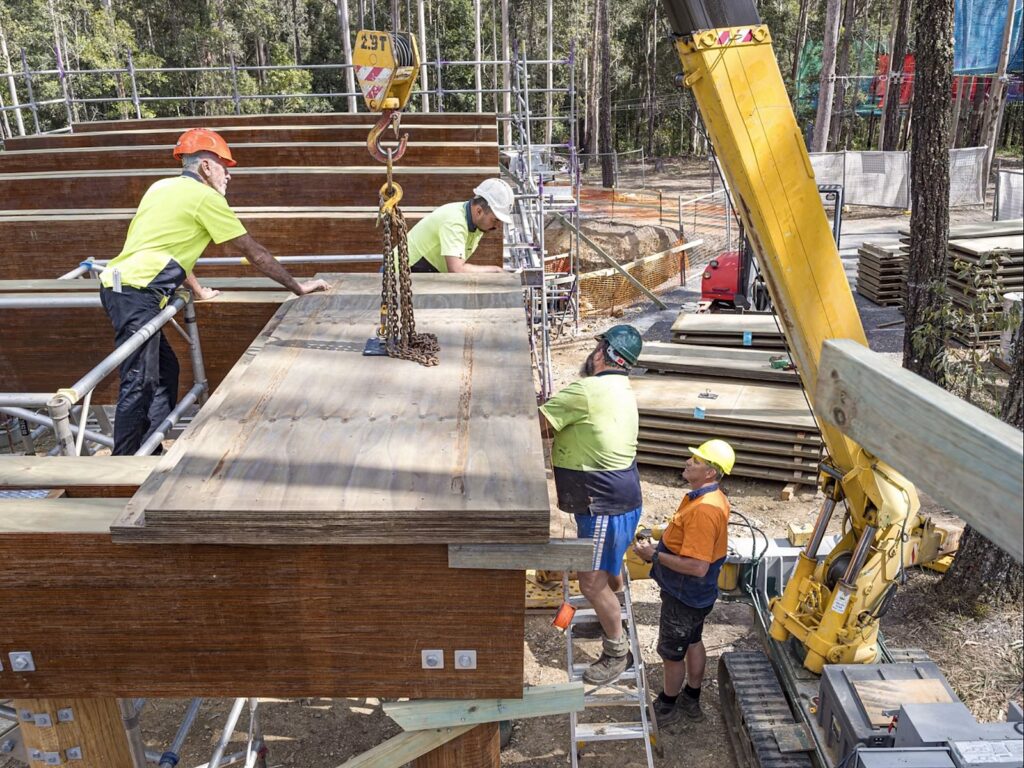
Workers guiding a large laminated veneer lumber panel lifted by crane during construction at Guulabaa.
A prefabricated LVL panel is craned into place at Guulabaa, with stacked bridge-ply decking waiting on the forest floor. (Photo Credit: Supplied by Forestry Corporation of NSW to the Timber Design Awards as part of the submission)

The timber came from eight local hardwood businesses — Ironwood, Coffs Harbour Hardwoods, Hurford Hardwood, Pentarch Forestry, Machins Sawmilling, Hayden Timbers, Weathertex and Big River Group — a local supply chain that, the entry says, “helped revitalise the regional industry.” Weathertex also supplied the cladding, described in the entry as a carbon-positive board made from sawmill waste.

Central to the design was fire-resistant Tallowwood, a native hardwood that, the awards entry argues, proved viable where “sustainable native timber construction was previously considered impossible”. Traditional First Nations cool-burning practices were written into the site’s fire management, drawing on Indigenous knowledge held by the Bunyah Local Aboriginal Land Council.

Elevated timber deck of the finished Guulabaa hub raised on hardwood poles among tall eucalypt trees.
The completed Guulabaa hub steps through the canopy on unseasoned hardwood poles, a 90 per cent timber structure. (Photo Credit: Supplied by Forestry Corporation of NSW to the Timber Design Awards as part of the submission)

The cathedral also serves as the site for cultural awareness training, integrating First Nations culture into the visitor experience. Its awards entry argues that Guulabaa has set “a new precedent for safe, climate-adaptive architecture in bushfire-prone regions”.

Designed by global architecture firm Gensler, with structural engineering by TTW and construction by F & SJ Maione, the hub was shaped in collaboration with Forestry Corporation NSW and the Bunyah Local Aboriginal Land Council. “Guulabaa challenged us to rethink what regenerative architecture should be,” said Ken McBryde, then Design Director at Gensler Australia.

Speaking to the media last year, McBryde said the project was less about a bold architectural statement than about designing with care and respect for Country, crediting the result to long-term thinking shared across the project team and First Nations knowledge holders. It was TTW that entered Guulabaa in the Public Building category of last year’s Australian Timber Design Awards, and projects of its kind help explain a change in this year’s programme.

For the first time, architects, engineers and builders are encouraged to identify the source of their timber, tracing it to the forest region and, in many cases, the sawmill. That is according to awards organiser Kylan Low, who said more than 4,000 Australian projects have entered the awards since 2000. The programme is run by the Timber Development Association and supported by Forest and Wood Products Australia and WoodSolutions.

Headshot of Kylan Low, organiser of the Australian Timber Design Awards, smiling in a dark suit and tie.
Kylan Low, organiser of the Australian Timber Design Awards. (Photo Credit: Supplied)

Early-bird entries for the 27th awards close at 7 pm this Friday, 29 May, with the final submission deadline set for July 3.

“For the first time in its 27-year history, the Australian Timber Design Awards is tracking timber back to its forest region of origin, and in many cases, the sawmill,” Low said. “It’s a milestone for the programme and a powerful statement about the transparency and traceability our industry can offer.”

The post Timber Cathedral Crowns the World’s First Wild Koala Breeding Centre appeared first on Wood Central.
  •  

Firefighters Turn to Timber for Award-Winning Hawke’s Bay Station

Hawke’s Bay Airport’s new fire station has won the Public Architecture category at the 2026 Gisborne and Hawke’s Bay Regional Architecture Awards. That is notable for a 550-square-metre building whose structure is glulam and cross-laminated timber rather than steel — a combustible material, in the one building type meant to fight fire. The award was announced earlier this month in Napier, where RTA Studio won three honours across the evening. The Havelock North practice took the Public Architecture category for the airport station alongside its Hawke’s Bay Museum Research and Archives Centre in Hastings.

A fire station is no ordinary building to attempt in timber. New Zealand’s Building Code classifies fire, rescue and police stations as Importance Level 4, the category for facilities that must keep operating once disaster strikes. Mass timber is combustible, and leaving it exposed increases the fuel load in the rooms it lines, so the station’s timber surfaces were tested against fire-safety criteria before that rating was confirmed.

The win is not the first for a timber fire station in the region. Australia’s first fully mass-timber fire station, the Maryborough Fire and Rescue Station in Queensland, took the global Built by Nature prize for public infrastructure last October, judged the world’s best example of timber use in its category ahead of 400 entries. Designed by Brisbane architect Kim Baber, the two-storey Maryborough complex used about 500 cubic metres of certified mass timber and was independently assessed to have saved roughly 1,742 tonnes of carbon against a conventional build.

A walk through the sustainability thinking behind Hawke’s Bay Airport’s fire station, from its mass timber structure to rooftop solar and rainwater harvesting. (Video: Hawkes Bay Airport).

The brief was written for resilience. Cyclone Gabrielle tore through Hawke’s Bay in February 2023, cut power and water to the airport and left its operations team running a critical transport hub on whiteboards and landlines. RTA Studio designed the replacement to keep working through the next such event, which shaped its structure, power supply, and water storage.

Low-carbon concrete was specified for the foundations, floor slabs, and external works, helping to reduce the building’s embodied emissions, which the airport wanted aligned with its decarbonisation targets. Hawke’s Bay Airport, on land the 1931 earthquake raised from the Ahuriri Lagoon, has held the Airport Carbon Accreditation scheme’s highest tier, Level 4+ ‘Transition’, since 2023 — a standing no other New Zealand airport has matched.

RTA Studio said the project follows “a more-with-less philosophy.” A long plan runs beneath a monopitch roof that rises over a triple-bay garage, then steps down at the far end to an office, kitchen, gym and open-plan workspace beside a separate control room. Sited airside at the south-eastern end of the runway, the garage at last lets the airport keep every fire appliance under cover, where the 1960s kitset shed it replaces could not.

West elevation of Hawke's Bay Airport fire station clad in green-gold corrugated steel with a fire tanker outside the triple-bay garage
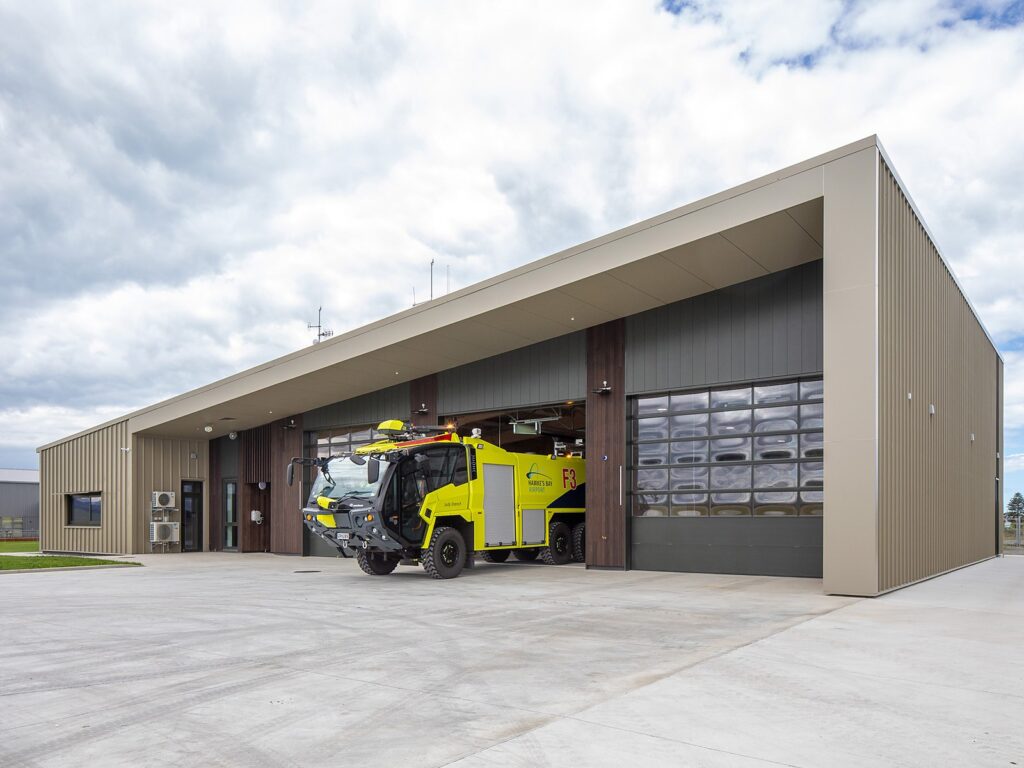
The west elevation of the RTA Studio-designed station, wrapped in green-gold corrugate that echoes the district’s tawny farmland, with the airport tanker Judy Drench at the triple-bay garage. (Photo Credit: Patrick Reynolds)

RTA Studio wrapped the stripped-back rectangular form in green-gold corrugate, a colour chosen to echo the tawny farmland of the district and the nearby Poraiti hills. Vertical slot windows on the rear elevation draw light into the workshop, picked out in bands of Colorsteel in a darker green.

Inside, the lower 2.2 metres of the prefabricated CLT walls have been left visible, under a light whitewash that keeps the timber grain on show. The finish eases vehicle decontamination in the parking bay and carries through as a decorative datum line into the administrative wing.

Roof-mounted solar panels, angled to avoid sunstrike for passing aircraft, generate electricity for the station’s daily operation. Rainwater is harvested from the sloping roof and stored in tanks holding 50,000 litres, drawn on for routine truck washing and, in an emergency, for firefighting. Wood Central understands the airport is weighing a far larger solar array across the wider site.

Hawke’s Bay Airport Chief Executive Nick Flack said at a public open day on 20 May that the station, in service since February, had been built almost entirely by Hawke’s Bay firms, from RTA Studio to lead contractor TW Construction. “All our partners are locals, the build crew’s local,” Flack said.

Napier Mayor Richard McGrath toured the station’s NZ$1.6 million tanker, Judy Drench, at the open day and said the facility had made the region safer and more resilient. “We don’t muck around with lives,” McGrath said, calling the station a sound investment.

Fighting fires is the rarest part of the job, Airport Fire Station Officer Brian Bassett said, with most shifts given over to keeping wildlife clear of a runway ringed by an estuary. Crews use stockwhips, gas guns and fireworks to move birds, deer and the occasional seal off the tarmac, and now cut the surrounding grass to 250 millimetres to keep magpies and plovers away.

Flack said the station has been designed to serve the airport for the next 50 to 60 years — the working life RTA Studio set out to reach in glulam and cross-laminated timber rather than steel.

The post Firefighters Turn to Timber for Award-Winning Hawke’s Bay Station appeared first on Wood Central.
  •  

Engineered Wood Products Find Their Sweet Spot With Mid-Rise Housing

Architects and developers can now test hybrid mass timber systems within minutes rather than weeks of consultant coordination, a shift its backers say is critical to moving engineered wood into mainstream mid-rise housing. That is according to Ricardo Brites, director of engineering and VDC at Mercer Mass Timber, one of North America’s largest mass timber producers, who has built his career on making timber buildings cheap enough to compete with concrete and steel.

BuildSpec, a free digital platform developed by Mercer with ZGF Architects and Fast + Epp, generates real-time structural and carbon-impact data for mid-rise housing projects. Brites told the Vancouver Sun it lets teams compare hybrid systems at the earliest massing stage, work that until now took weeks of consultant coordination to complete.

The barrier BuildSpec aims to remove, Brites says, is timing: project teams rarely have enough information to weigh a timber system before a design has already hardened around conventional concrete and steel. By the time cost estimates and engineering assessments are in hand, many projects are locked into assumptions that leave little room for an engineered wood alternative.

For Brites, the structural case for mass timber is settled, and the open question is now price, the measure he says will decide whether engineered wood becomes a mainstream housing material.

What drives me is cost competitiveness, he said.

Engineered products such as cross-laminated timber, or CLT, are made by layering wood panels into components strong enough for multi-storey buildings, increasingly built alongside steel or concrete, where each material performs best.

Brites is candid that the strongest projects rarely rely on timber alone, with each material used for what it does best rather than treated as an all-or-nothing structural choice. That thinking has pushed Mercer toward hybrid systems, which draw on timber’s speed and warmth while leaning on the proven economics of steel and concrete.

Beyond the calm of exposed-wood interiors, Brites points to prefabrication as engineered timber’s decisive advantage, with structural components manufactured off-site through precise digital modelling and delivered ready for installation. That moves problem-solving away from the building site, resolving co-ordination issues digitally before fabrication begins and cutting both construction timelines and costly on-site surprises.

The City of Vancouver estimates that mass timber can cut a building’s embodied carbon by 25 to 45 per cent compared to conventional concrete and steel, one of the metrics BuildSpec is built to surface while a project is still on the drawing board. That carbon performance has become central to the material’s appeal in jurisdictions tightening emissions rules for new construction.

Canada, and British Columbia in particular, has become one of North America’s most active mass timber markets, a result Brites attributes to acute housing pressure and supportive policy, backed by expanding manufacturing capacity. Demonstration projects such as the University of British Columbia’s Brock Commons Tallwood House helped establish early confidence in tall timber construction, whilst newer policies are encouraging more standardised mid-rise development.

Brites sees North America moving through a stage Europe passed years earlier, having worked in the United Kingdom on projects for Lendlease, Mace and Berkeley Homes as mass timber shifted there from a niche product toward a near-commodity. The current phase, he says, is a transition from early demonstration projects toward broader market adoption.

Brites argues the housing shortage will not be solved by better-designed individual buildings, but by repeatable delivery systems that produce good housing predictably and at a workable cost, a benchmark for the construction sector now expected to help deliver the 430,000 to 480,000 new homes a year that the Canada Mortgage and Housing Corporation says the country needs by 2035.

The post Engineered Wood Products Find Their Sweet Spot With Mid-Rise Housing appeared first on Wood Central.
  •  

Finnish Sawmills Says Finland Fails to Capture the Value of Its Timber

Finland’s sawmill industry wants the country’s next government to make wood construction a pillar of industrial policy, arguing that Finland is failing to capture enough value from its own timber. That is according to the Finnish Sawmill Industry Association, which made the case in a submission to a government consultation shaping the coming parliamentary term, and which says wood use in building has fallen sharply over the past 20 years.

The association represents around 30 family-owned mills that account for roughly half of the national sawn timber output. It wants the Ministry of Economic Affairs and Employment to take charge of a national wood-construction programme and to appoint a high-level steering group spanning several government arms.

It argues that the growth of the wood-construction market should be treated as part of Finland’s competitiveness and industrial policy, not solely as part of its climate effort, and that wood building is one concrete way to tie emissions targets to growth, investment and regional vitality. The submission says wood construction has been promoted across successive government programmes and strategies, yet the practical measures and their impact have stayed fragmented.

Finland already has a strong international profile in wood construction, with showcase developments such as Helsinki’s Wood City quarter drawing global attention, yet the association says the wider market is growing too slowly to meet national climate, growth and export goals. The submission repeatedly returns to the conditions for investment, arguing that the sector will commit capital and develop higher-value wood products only where the policy environment is stable and predictable.

“A long-term, predictable operating environment is a precondition for investment,” the association said.

Among the association’s central proposals is the introduction of life-cycle carbon limit values for buildings, alongside construction guidance that accounts for climate impacts across a building’s full lifespan. It also wants the climate effects of material choices and material substitutions reflected in how building rules are applied.

Public procurement features heavily in the submission, with the association calling for more wood construction in publicly funded projects and for procurement to be used deliberately to develop the market. It also wants research, development and innovation funding steered towards wood-construction innovation and new building solutions.

On skills, the association is pressing for stronger wood-construction education at every level of the system and closer cooperation between universities, vocational schools and companies. It also wants assurance that skilled labour will be available as the market grows, warning that slow market development is itself holding back jobs and investment.

Finnish Minister of Agriculture and Forestry Sari Essayah, pictured ahead of her four-day trade mission to Morocco in March 2026.
Finnish Minister of Agriculture and Forestry Sari Essayah led a four-day trade mission to Rabat in March 2026, courting Morocco’s sawmill and bioeconomy sectors as the government looked to open new markets for Finnish wood. (Photo Credit: Yabiladi)

The submission comes as wood construction draws unusually close political attention in Helsinki, with Finance Minister Riikka Purra telling February’s Wood from Finland conference that policymakers should widen wood use rather than curb it. It follows a Finnish ministerial trade mission to Morocco targeting fresh sawmill markets, underlining a government keen to back the sector abroad even as domestic wood use in building slides.

“The task of decision-makers is to enable wood construction, not curb it,” Purra said.

The post Finnish Sawmills Says Finland Fails to Capture the Value of Its Timber appeared first on Wood Central.

  •  

Windmill Backs Mass Timber for All Projects up to 18 Storeys

One of Canada’s best-known affordable-housing developers will design almost every new building up to 18 storeys, using mass timber, betting its forward pipeline on engineered wood and off-site manufacturing. That is according to Windmill Developments’ new chief executive, Jeremy Reeds, who told Connect CRE Canada that cross-laminated timber and prefabricated systems will account for a large share of the company’s future portfolio.

Reeds, who Windmill appointed as chief executive in April, said any project up to 18 storeys is now being designed with mass timber in mind, with cross-laminated timber set to feature across much of the affordable-housing specialist’s pipeline. The shift extends a prefabricated building approach that the company has developed with British Columbia’s Intelligent City.

Working with Intelligent City, Windmill has built prefabricated floor and exterior wall systems that integrate structural, electrical and HVAC components off-site before the modules reach the construction site. Reeds said the method can sharply shorten construction timelines whilst cutting embodied carbon, improving operational efficiency and trimming costs tied to scheduling and delivery.

The clearest example to date is in Toronto, where Windmill’s nine-storey, 60-unit rental building at 230 Royal York is scheduled to begin occupancy in August. Reeds pointed to the project as a marker of the company’s growing reliance on engineered timber. Another marker is taking shape in Ottawa, where Windmill is redeveloping a former Korean church site into a roughly 200,000-square-foot project with 296 rental units, about 25 per cent of which are designated affordable housing. The development will retain portions of the church facade and fold them into the new podium structure.

Reeds said the church redevelopment reflects a longstanding Windmill approach of partnering with churches and non-profit organisations to draw value from ageing properties whilst keeping community uses intact.

A second Ottawa-area project, Parkway House, is a partnership with a non-profit supporting adults with disabilities, with the first phase carrying 266 units that local non-profit Nesting Ground will own and operate. The two developments point to a delivery model Windmill wants to take national.

Reeds, who joined Windmill in 2019 as finance director and has since served as partner, chief financial officer and chief operating officer, was promoted to president in 2024 under the company’s succession plan. He succeeded founder Jonathan Westeinde as chief executive in April, with Westeinde moving to the role of executive chair.

Reeds said his longer-term goal is to build on Windmill’s two-decade record in sustainable development and widen its national operations, with the developer “looking very closely at other key markets” beyond Ontario over the next five to 10 years.

Mass timber will carry much of that expansion, with Windmill planning to specify engineered wood and cross-laminated timber on developments well beyond its Ontario base. Reeds said the company measures its progress less by what it delivers alone than by how far it can shift the wider sector.

The post Windmill Backs Mass Timber for All Projects up to 18 Storeys appeared first on Wood Central.
  •  

Autonomous Drone Harvests its First Tree in World First for Forestry

An electric drone has felled a tree and flown it clear of a working forest without a single ground machine, completing every step of the harvest on its own. That is according to Norrsken Evolve general partner Alex Bakir, whose firm backs AirForestry, the Uppsala-based green technology company developing the airborne thinning system, and who confirmed the result at the weekend.

Bakir, who has watched the drone move from prototype to a working stand, did not understate the moment, calling the autonomous harvest the first of its kind anywhere. AirForestry says its drone felled trees in a working production forest and, separately, completed an end-to-end harvest without human control — each a first for the airborne thinning method it has built since 2020.

Conventional thinning relies on machines weighing 20 tonnes or more, driven deep into the stand to fell trees that themselves weigh as little as 80 kilograms. AirForestry estimates that more than 20 per cent of the forest floor is damaged simply to move that machinery into position, with forest owners worldwide spending around €14 billion a year on the operation.

Built to avoid all of it, the company’s drone flies above the canopy on an electric powertrain that leaves no wheel tracks, no soil compaction and no root damage. Its 6.2-metre carbon-fibre airframe carries a purpose-built harvesting tool that grips a tree from the top, delimbs it on the way down, cuts it close to the ground and carries the trunk out to the nearest road.

Two AirForestry technicians positioning the yellow harvesting tool in a thinned forest stand.
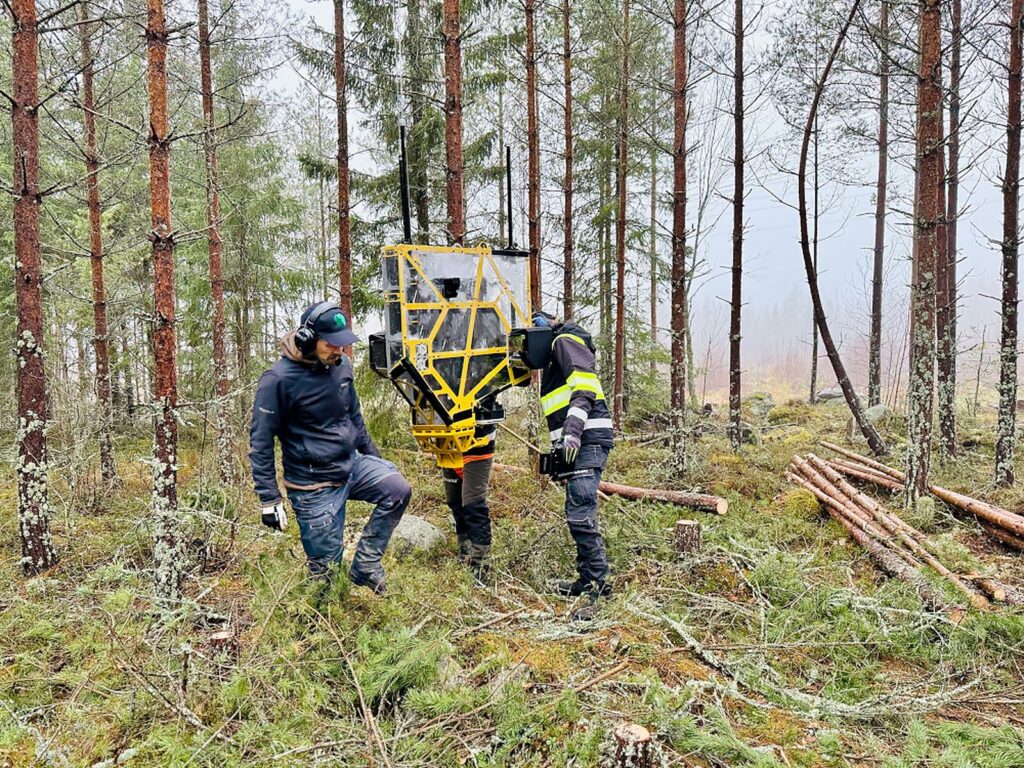
AirForestry technicians set the harvesting tool in a thinned stand, with felled stems stacked at right. (Photo Credit: AirForestry)

The system is designed to work in temperatures as low as minus 20 degrees, through rain and snow and in wind gusts of 13 metres a second, the conditions that define a Nordic thinning season. The drone can carry 200 kilograms, comfortably above the 40-140 kilogram range of the thinning-grade trees it is designed to remove.

AirForestry’s drone runs a full-cycle harvest, gripping a tree from the top, delimbing and felling it, then carrying the trunk clear of the stand. (Video Credit: AirForestry)

AirForestry puts hard figures behind the method. It estimates that the approach yields around 8 per cent more timber across a full harvest cycle, and that removing ground machinery from Swedish thinning alone would keep 23 million tonnes of carbon dioxide stored in standing trees. For Bakir, whose firm has followed the drone from a one-metre prototype in 2020 to a working production stand, the result marks a structural break rather than a one-off test. “The forest floor is no longer where forestry happens,” Bakir said.

Founded in 2020 by Olle Gelin, Mauritz Andersson, Markus Romar and Caroline Walerud, the company has since drawn backing from several of Europe’s largest forest owners. Walerud, who became chief executive in December 2025, has moved AirForestry into a scale-up phase after a €10.3 million seed round led by Northzone late in 2024.

Walerud has set the company an unusually large target, arguing that drone thinning can take a substantial share out of forestry’s carbon emissions against what she describes as almost unlimited customer demand. “I believe that AirForestry could become one of the world’s most important companies,” Walerud said.

Four members of the AirForestry team holding a felled tree trunk in front of the company's harvesting drone.
The AirForestry team with a drone-felled trunk and the harvesting drone behind, at the company’s base outside Uppsala. (Photo Credit: AirForestry)

The production-forest result also follows AirForestry’s first move beyond Sweden, a project opened in January with the Norwegian state forestry body Statskog in terrain near Trondheim. Statskog manages close to one-fifth of Norway’s forest area, and the trial is testing whether drone thinning can work on the steeper, more rugged terrain that conventional machinery struggles with.

Co-founder Olle Gelin, who led the company through that expansion, says the Norwegian project points to demand well beyond AirForestry’s home market. “This collaboration with Statskog is a significant step in that direction,” Gelin said.

Six aircraft thinning a single stand at once, each flying autonomously, is the operation AirForestry is now building toward. The company has said that fleet configuration is the point at which the cost of airborne thinning matches the ground-based machinery it intends to replace, and it forms the basis for the commercial rollout it is now preparing.

The drone is one front in a far wider shift. Forestry now ranks among the industries most exposed to artificial intelligence — Goldman Sachs analysts have estimated the technology could disrupt 28 per cent of work across the sector, and a recent international summit produced a pledge to put AI to work across the world’s forests.

The post Autonomous Drone Harvests its First Tree in World First for Forestry appeared first on Wood Central.
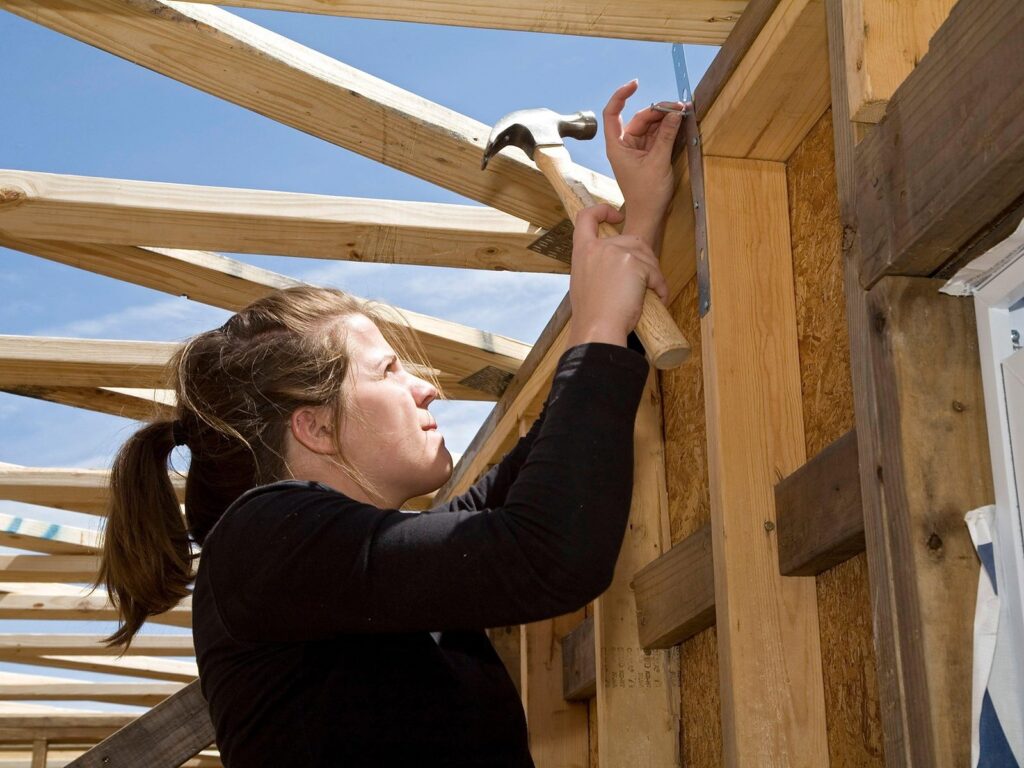
  •  

Timberland Investors Wager on a US Housing Recovery in 2026

Institutional investors have kept buying US timberland at close to one million acres a year through a soft patch for lumber, a wager that the long-delayed recovery in US housing construction is finally drawing near. That is according to Bank of America’s Specialty Asset Management 2026 Insights, a research report that maps the year ahead for commercial real estate, farmland, timberland and energy markets.

That conviction is anchored in a three-year run of heavy dealmaking from 2023 to 2025, and the report expects a comparable pace to hold through 2026. Prospective transactions are already underway across the Pacific Northwest and the Southeast, it said.

Regional concentration has been the defining feature of that activity, and the US South commanded the deal map through 2025. More than 560,000 acres changed hands across the South, some 56 per cent of national volume, whilst the North and West regions each accounted for a further 22 per cent.

Timberland Investment Management Organisations accounted for the bulk of the buying, taking 55 per cent of all acres acquired in 2025 against just 15 per cent of acres sold. That gap points to managers adding to forest holdings rather than cashing out, even as appreciation returns ease from the highs of recent years.

Those returns had been running hot, with US timberland delivering robust appreciation since 2021 on the back of a strong job market and supportive fiscal policy. National Council of Real Estate Investment Fiduciaries data cited in the report shows the pace cooled through 2025 after four consecutive years of substantial land value growth, with income returns softening as construction activity eased.

timberland investors us housing recovery 2026 ncreif timberland returns 1600x1200
NCREIF timberland returns cooled through 2025 after four consecutive years of substantial appreciation, with income returns now carrying a larger share of the total. (Source: NCREIF, reproduced from Bank of America’s Specialty Asset Management 2026 Insights)

The investor optimism runs some way ahead of the homebuilders’ own reading, however, with the National Association of Home Builders forecasting housing starts will be flat to slightly down in 2026 before rising modestly in 2027. Bank of America takes the more bullish line, expecting demand for timber products to strengthen as inflation moderates and interest rates ease.

timberland investors us housing recovery 2026 nahb housing starts forecast 1600x1200
US housing starts are forecast to climb only modestly through 2027, with single-family construction carrying the gains whilst multifamily activity eases. (Source: National Association of Home Builders, reproduced from Bank of America’s Specialty Asset Management 2026 Insights)

The longer arc, as reported, is decisively positive, with the mixed conditions of the past year doing little to dent timberland’s intrinsic appeal. “The long-term outlook for investment in US timberland is increasingly constructive,” the report said, citing biological growth and land appreciation as the forces that preserve value through cyclical swings.

Production momentum has shifted firmly towards the US South, where sustained sawmill and bioenergy investment continues to draw substantial capital. Lower labour costs, comparatively low land costs, and longer growing and harvesting seasons reinforce what the report ranks as “one of North America’s most attractive timber markets.”

The pulp side has firmed alongside sawtimber, as renewable energy programmes raise demand for wood pellets even as newsprint and traditional paper output decline. US wood pellet exports rose two per cent year on year through July, whilst Canadian shipments climbed 10 per cent through August, bound mainly for the UK and Japan respectively.

A sharper divide has opened across the border, with Canadian housing starts rising over the year as more favourable financing conditions took hold. US starts went the other way, and the resulting slide in residential activity fed what the report describes as a slight downward adjustment in lumber prices, with combined single-family and multifamily starts down 0.7 per cent on the year.

Selling has become more tactical as well, with managers increasingly willing to release partial tracts or whole assets to lock in value gains rather than holding indefinitely. The report describes an “active, opportunistic stance” on land sales over a passive “hold-forever” strategy, and notes that partial-sale assumptions are now written directly into deal underwriting.

The sector enters 2026 on what the report calls “a strong and active investment opportunity framework,” and the housing-led demand case rests on lower borrowing costs feeding back into residential construction. Disciplined market monitoring and proactive asset management, it concludes, will stay essential for investors chasing the next round of opportunities.

The post Timberland Investors Wager on a US Housing Recovery in 2026 appeared first on Wood Central.
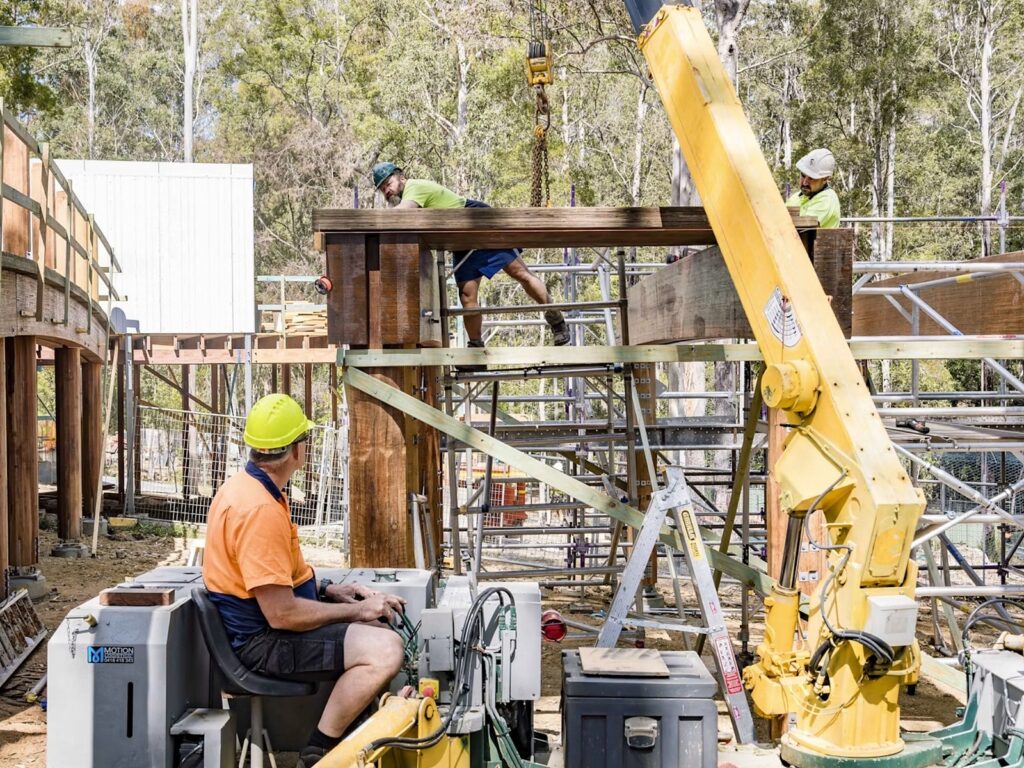
  •  
❌