
THE 1929 SHOP
This Maryland woodworking shop has a passion for Old Iron.
SHOP OWNER: Thomas Brown
LOCATION: Baltimore, MD
WEBSITE: http://thomasbrownwoodwright.com
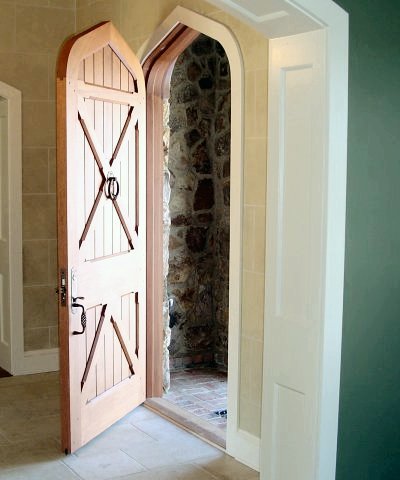
My business does custom and match-existing architectural millwork and some cabinetry and other miscellaneous work. Right now it consists of two full-time assistants and myself. We can make pretty much anything out of wood, and have made a bewildering variety of items. This Modern/Gothic entrance is an example of our more typical work.
But the plan is to eventually ditch any and all machines, tools, and gear built after about 1929; we refer to this as the '1929 shop'. I've got maybe 90% of what it'd take... a lot of it needs restoration, but much is usable or in use now. So when you walk in, the carts, clamps, machines, hand tools, lights, fans, telephone, pencils, and even the delivery truck are those that could have been found in a working shop in 1929. Such a shop might well have included items, which were already antiques.
Here is a list of antique tools I currently have:
- Band Saw - 35" C. M. Baxter "#2" ~1845
- Band Saw - 33" J. A Fay ~1876
- Band Saw - 20" Crescent ~1910
- Band Saw - 36" Tannewitz "GH" ~1927
- Chisel Mortiser - American Sawmill "No. 20" ~1913
- Cutoff Saw 12" - Heston & Anderson ~1928
- Disc/Drum Sander 26" - J. A. Fay & Egan ~1929
- Dowel Maker - W. S. Hawker "Challenger" ~1915
- Dovetailer - Dodds "SE15" ~1892
- Drill Press - Burke ~1910
- Drill Press - J. E. Snyder ~1895
- Drum Sander 36" - Egan & Co. ~1882
- Jig Saw 24" - Empire ~1886
- Jointer 6" - Oliver "133" ~1925
- Jointer 8" - J. A. Fay & Egan "502" ~1929
- Jointer 12" - J. A. Fay & Egan "61" ~1912
- Jointer 20" - Fay & Egan/M.B.Tidey "Number 195" ~1908
- Lathe 4' - American Sawmill ~1928
- Lathe 5' - Oliver "155" ~1916
- Louver/Groover - Rowley-Hermance ~1880
- Planer 16" - Walker Bros. ~1868
- Planer 24" - Newman "No. 600" ~1927
- Planer 20" - American/Monarch "Jewel" ~1932
- Rounder - Pettingell "109" ~1876
- Scroll Saw 36" - Oliver "61" ~1929
- Stroke Sander - Mattison "No. 138" ~1895
- Table Saw 20" - M. B. Tidey "Superior" ~1877
- Table Saw 12" - Pettingell ~1910
- Table Saw 16" - Tannewitz ~1919
- Variety Machine - Hutchinson "Beaver" ~1924
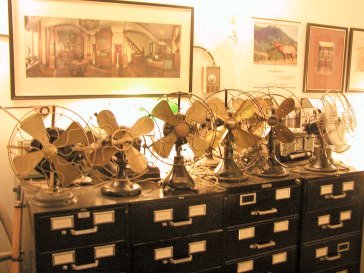
These electric fans are for eventual use in the shop.
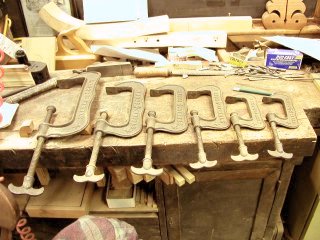
Six out of a hundred or more clamps we have on hand.
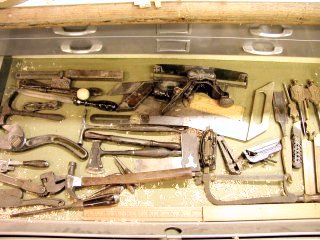
A drawer of old hand tools in the shop.
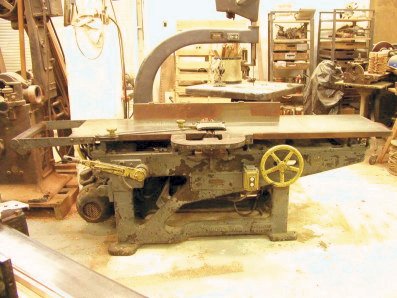
This is possibly the only known example of a prototype jointer by M. B. Tidey.
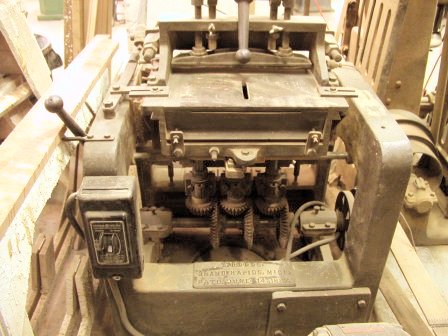
Dodds Dovetailer - "SE15" ~1892:
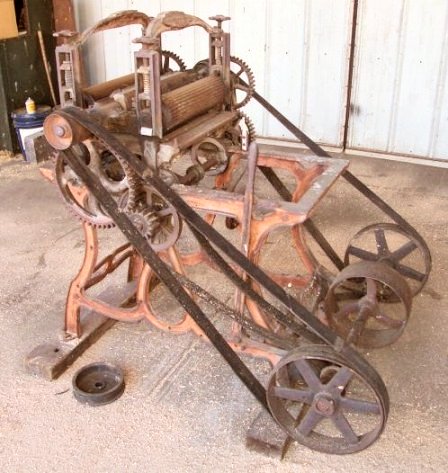
This Walker planer is a recent acquisition.
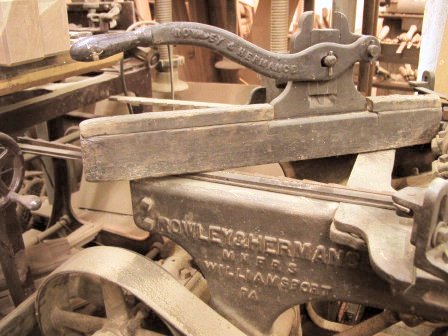
I got this 1880's Rowley & Hermance louver/groover from Bill Kerfoot, and then located a matching contemporary Rowley & Hermance miter-chopper on eBay.
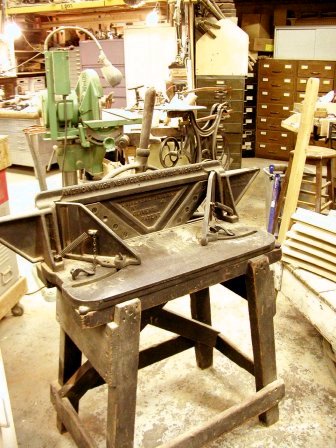
In the foreground is an Oliver's Patent, American Sawmill miter-chopper, #4, patented - 1896. In the background is an Empire scroll saw, patents - 1877 and 1886.
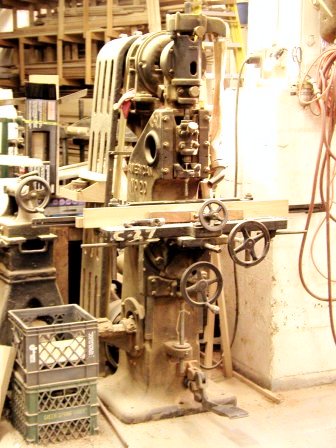
An American Sawmill mortiser ~1911.
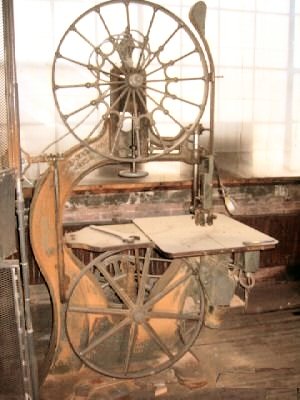
J. A. Fay 32-inch Bandsaw, last patent - 1874.
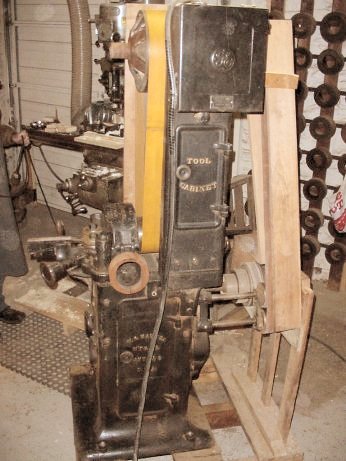
Dowel Maker - W. S. Hawker "Challenger" ~1915.
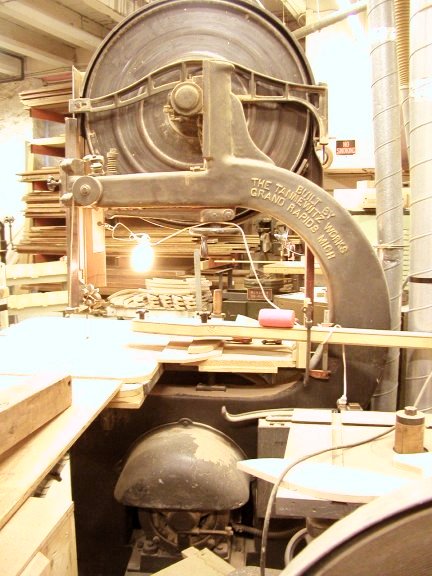
Our workhorse bandsaw is this Tannewitz GB 36" patented in 1927.
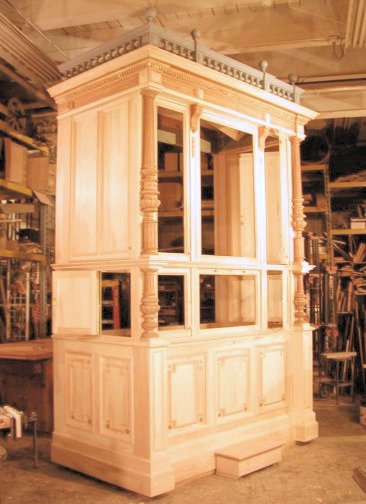
This is one of our grander projects, a Welte Orchestrion cabinet restoration. Only about five percent of the original cabinet was salvageable. Here it is in our shop during restoration. The darker parts are salvaged original elements. The gallery is new; almost all of the spindles survived. It stands 13-feet from its bottom to the top of the finials.
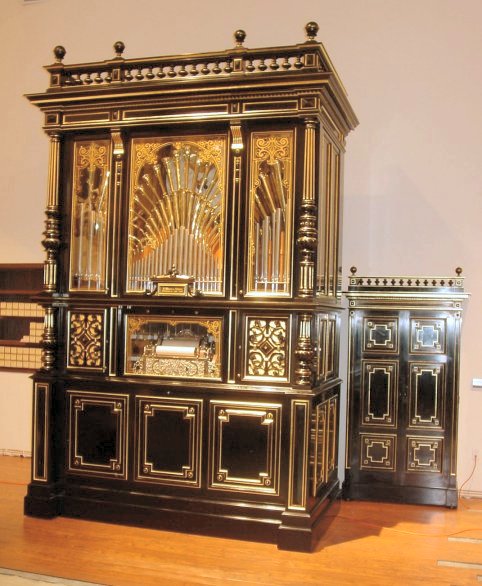
We only fabricated the cabinet... all ebonizing, gilding, etc. was performed by others. Durward Center, the best living Welte restorer, did the organ itself. I designed the matching roll cabinet to the right and at over 6' tall, it's still dwarfed by the instrument itself. Guys from Manhattan have said, "I've rented apartments smaller than that!"
Comments (0)
No comments yet. Be the first!
Leave a Comment