Purpleheart…can you keep it purple?
Excerpts from The Messageboards
Tom Mullane: The heat from turning and sanding will make purpleheart turn brown. Usually a couple of hours in the bright lights of the shop will turn it purple again. However, it is sensitive to UV and will eventually start to brown. This is just the nature of the wood. If you use muriatic acid to fume the wood, or wipe it down after sanding, it will turn kind of a purple-cranberry color that is colorfast. If you don't like working with acid (I don't), I have heard that vinegar—a mild acetic acid—also works, but not so well.
To maintain the color on pens, I just give them a wiping with some chestnut dye I mix to the color I want, let them dry, and then finish. I have not yet had a piece come back brown with that technique.
Russ Fairfield: A wipe or dip in muriatic acid will give it a cranberry color that is reasonably colorfast. Muriatic acid is dilute hydrochloric acid, so use it with caution and adequate ventilation. It is available from swimming pool shops and in the paint department at Home Depot. Some folks claim that citric acid will do the same thing. I tried that, in the form of vinegar, and it did nothing at all to the wood except make it wet.
Jeremy: I've done the chestnut thing to save paduak from a similar fate, and to my knowledge (I sold them) these pieces are still a nice orangey-red. I'm going to try mixing some up and see what I get for colors. I've seen the acid advice in one magazine relating to shipbuilding, but didn't know that it made that color stick around longer.
Jim King: As a producer of purpleheart lumber for 20 plus years I can tell you that it is one of the most over-rated woods in the world. If you want to make a dock, park bench or other utility project where long life is important, it is a good choice. If you want to make a bowl that is a beautiful purple for a year and then turns black, have at it. Purpleheart when freshly cut is a brownish-cream color that oxidizes within hours to purple, and then simply goes darker and darker. You can use all the treatments you want and end up with an almost black ugly wood. If you want a cranberry colored wood as suggested by many with chemical treatments why not just buy a cranberry colored wood ?
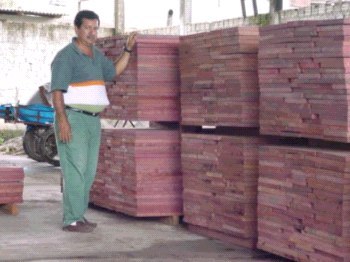
Sorry to be scrooge but I have no idea why people buy purpleheart when there are so many beautiful tropical woods available including others that stay purple for years. In the last few years lots of information on tropical woods has become available on to the internet.
Comments (0)
No comments yet. Be the first!
Leave a Comment