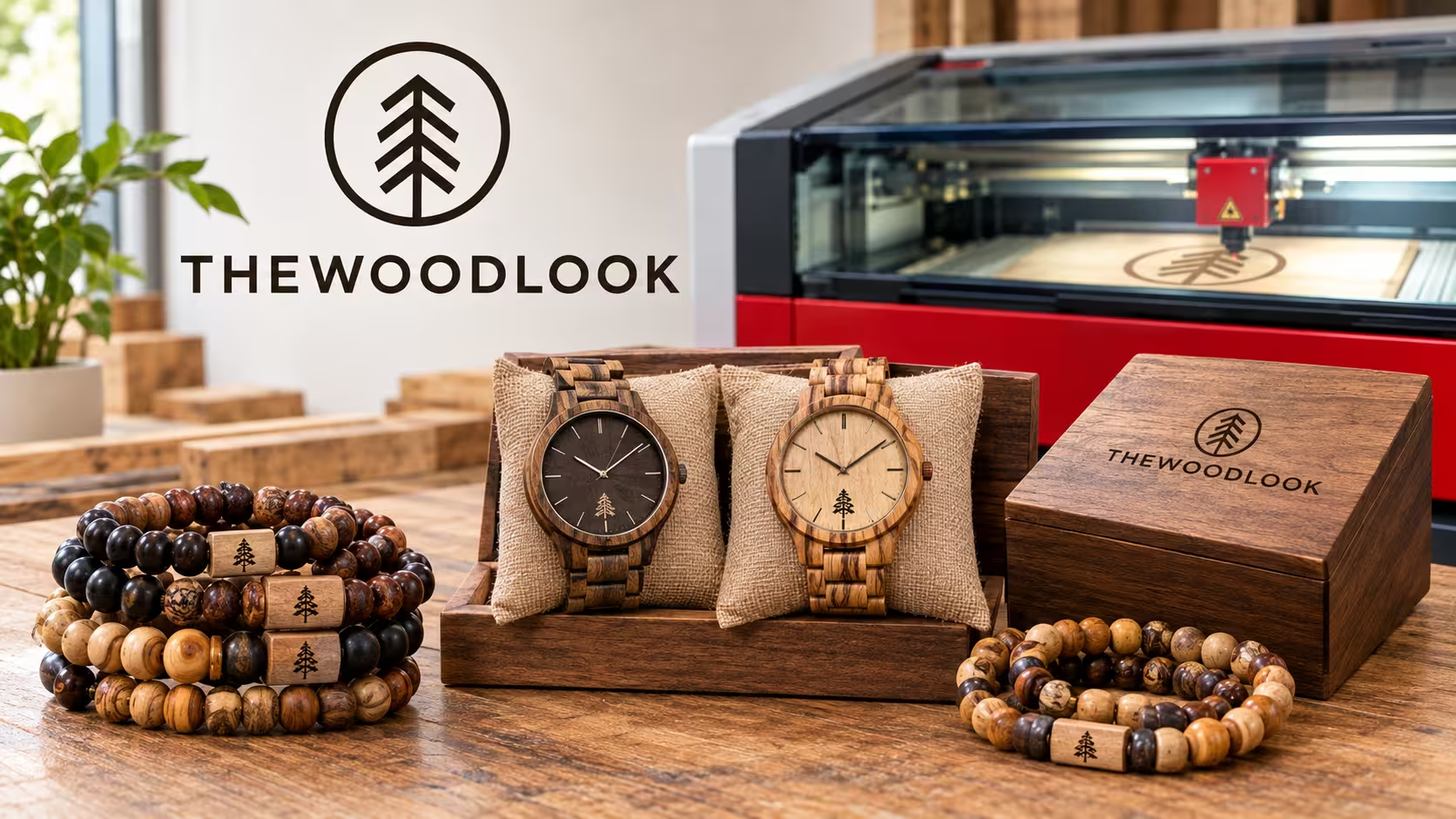
I’m not a furniture maker. Most of what I know about wood comes from staring at it through the window of a laser, usually at something no bigger than the palm of your hand. Sam and I started The Wood Look in 2017, and these days most of our work is engraving names, dates and messages onto wooden watches, bracelets and keepsakes on a Trotec Speedy 300 in our workshop in Stourbridge, England.
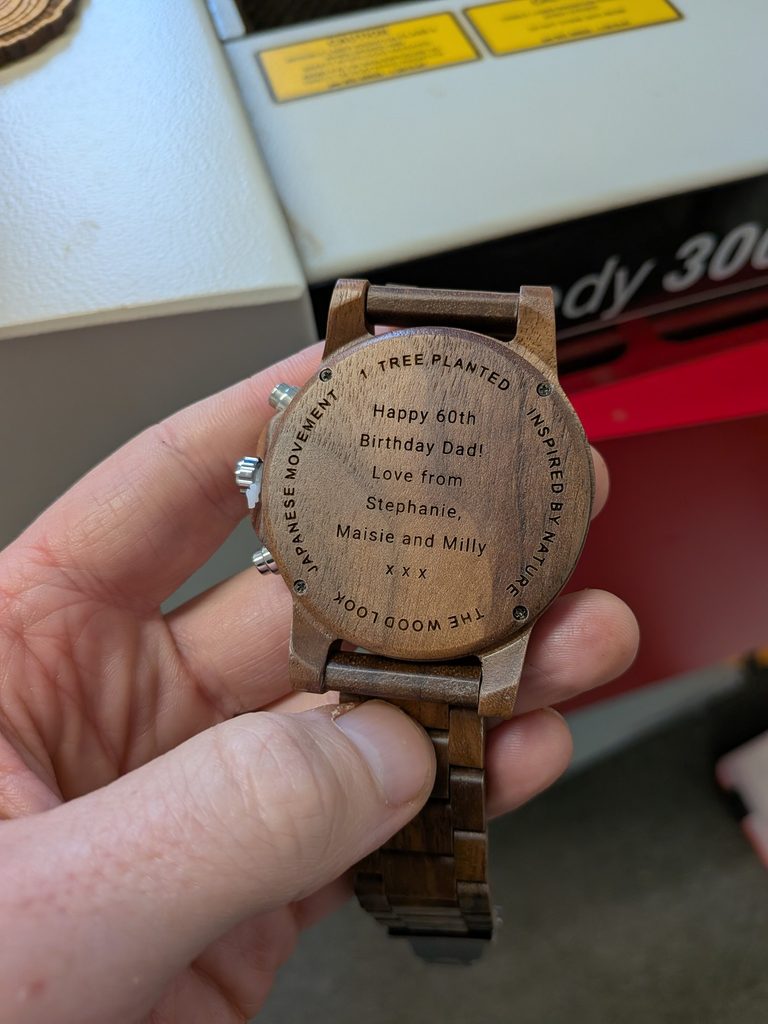
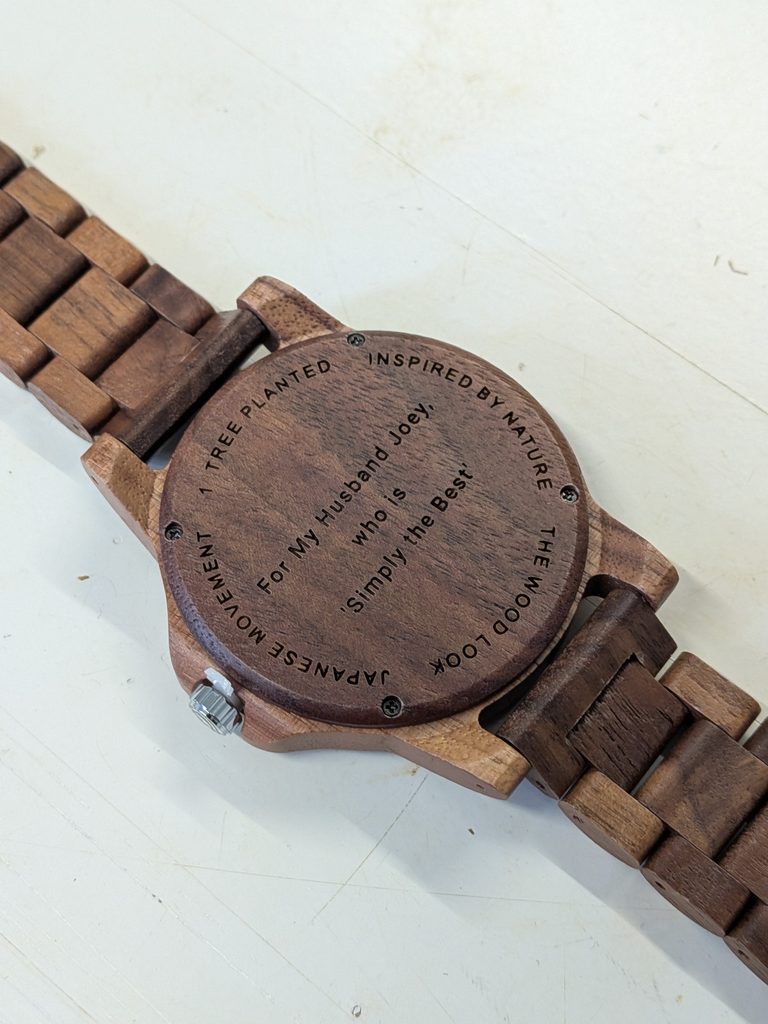
Small pieces are unforgiving. On a tabletop, a slightly scorched letter disappears into the grain. On the back of a watch, where someone has asked for “Happy 60th Birthday Dad!” with three names underneath, it’s the only thing anyone looks at. So here’s what we’ve learned, mostly the hard way.
1. Every species engraves differently, so stop expecting consistency
We work mainly with five woods: walnut, oak, ebony, sandalwood and olive. Same machine, same file, five quite different results.
- Walnut is the easy one. It’s dense enough to hold fine detail, and the engraved area goes a rich dark brown that reads well against the natural colour. If you’re new to laser work, practise on walnut.
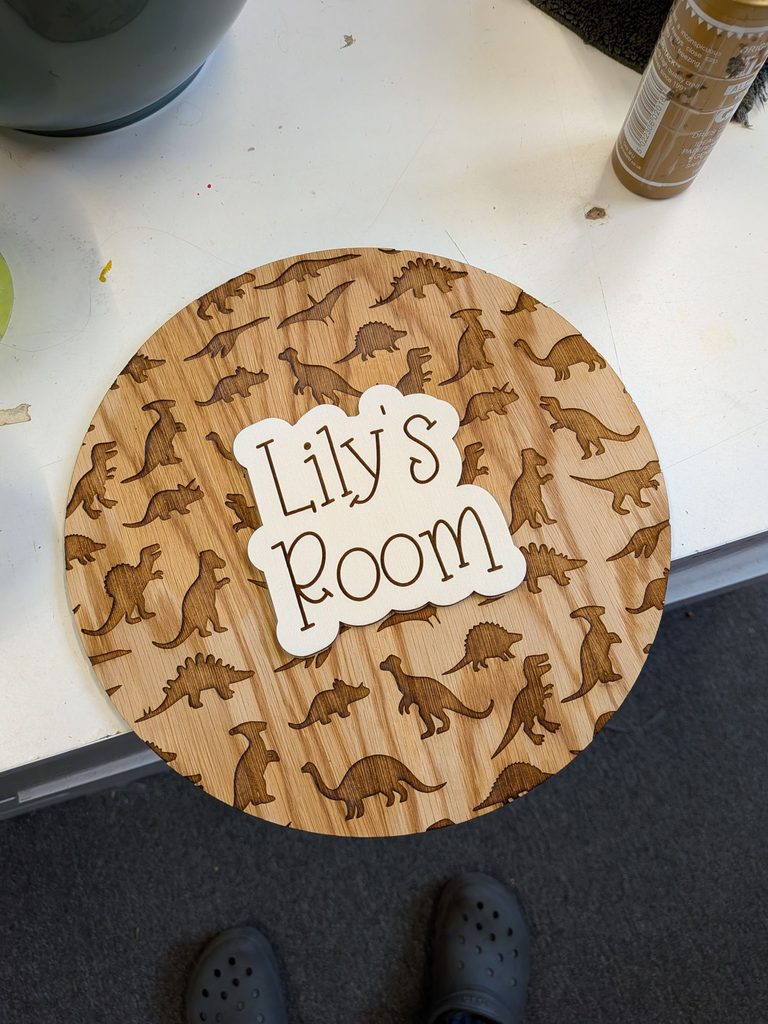
- Oak has big open pores and strong grain. Text that crosses a band of hard latewood and then soft earlywood can look uneven, because the laser removes the softer wood faster. We run oak slower than walnut to get a darker, more even burn, so the lettering doesn’t get lost in the grain.
- Ebony is very dense and very dark, which gives you crisp edges but low contrast. The engraving shows up more as a change in texture and sheen than as a darker colour. We tell customers this before they order, because “it’s quite subtle” is better heard up front than after it arrives.
- Sandalwood has a lovely warm colour and engraves cleanly, with no surprises.
- Olive has wild, swirling grain, which is half its charm. The catch is that a name engraved across a dark streak and a pale streak can look like two different depths. Placement matters more with olive than with any other wood we use.
The lesson: if you’re selling engraved pieces, show customers a real photo of the engraving on that exact species, not a mock-up on a flat beige background.
2. Test, then commit
Two pieces of the same species can behave differently depending on moisture, density and where in the tree they came from. Before a new batch goes near a finished item, we run tests on an offcut at several different settings and pick the one that looks best, rather than guessing.
For most of our work we end up at 100% power and bring the speed down, often to around 20%, to get a deep, dark engraving. People sometimes worry that running at full power wears the machine out, but ours isn’t a traditional glass CO2 tube, so it doesn’t suffer in the same way. If you’re on a glass tube, check what your manufacturer recommends before copying us.
Testing feels like a waste of five minutes. It’s much less of a waste than re-making a piece someone has paid for.
3. Smoke is the enemy of small text
A laser burns, and burning wood makes smoke and sticky resin. On big pieces you sand it off. On a watch caseback with tiny text, sanding isn’t really an option.
What works for us:
- Air assist on, and a working extractor. Clearing smoke away from the beam keeps the edges of letters sharp and stops a brown halo forming around them.
- Tape on the underside, not the top. We used to mask the top surface, but peeling the tape off by hand could damage the surface we’d just engraved, and it added a lot of time to every piece. Now we tape the underside to protect the back from marks, and deal with the top afterwards.
- Soap and water to clean up. We’ve tried plenty of things, and a little soap and water works best for lifting residue. It leaves the wood a tiny shade darker, which on most species just looks like a richer finish.
4. Air assist isn’t optional
This one we learned with a fright. Our air assist once failed to come on during a job, and without air blowing across the cutting point, the wood caught and a small flame started. We caught it early and nothing was damaged, but it showed us how quickly a fire can start.
Since then:
- We check the air assist is actually running before every job, not just that it’s switched on.
- Nobody walks away from the machine while it’s running.
- There’s a fire extinguisher within arm’s reach of the laser.
Small, dense pieces of hardwood don’t feel like a fire risk. They are.
5. Fonts that look lovely on screen can fall apart in wood
Thin script fonts are popular for messages, and they’re the hardest thing to engrave well on small pieces. Hairline strokes either vanish into the grain or burn into a blob where two strokes meet.
What works for us:
- Keep the minimum stroke width sensible for the size. A font that looks elegant at 30 point on a sign can be unreadable at 9 point on a watch.
- Watch the letter spacing. Grain makes letters look closer together than they are, so a touch more space than you’d use in print helps.
- Let the customer see their actual text on the actual product before anything is engraved. It catches a surprising number of typos, usually in the customer’s own spelling of a name they’ve known for years.
6. Mistakes are permanent, so build in a check
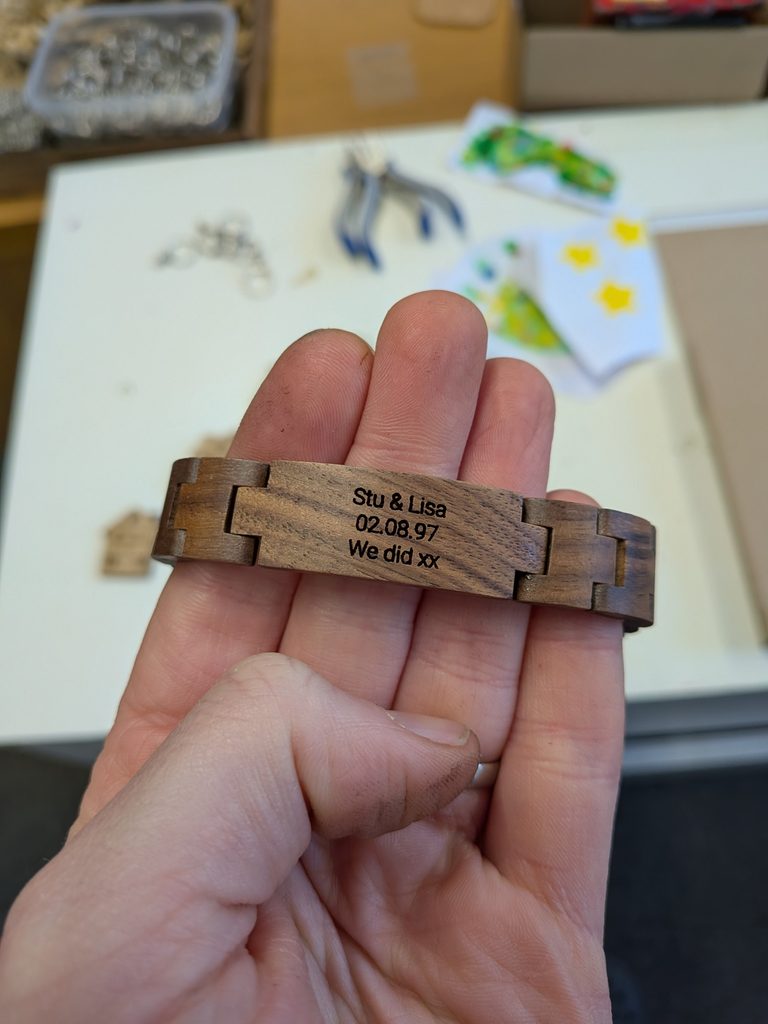
You can’t undo a laser. Our process is: the customer types the message, sees exactly how it will look on the piece, and confirms it when they order. Only then does it go on the machine. We still double-check dates against the order before pressing go, because “2017” and “2071” look very similar when you’ve been staring at text all afternoon.
7. Respect the wood’s character
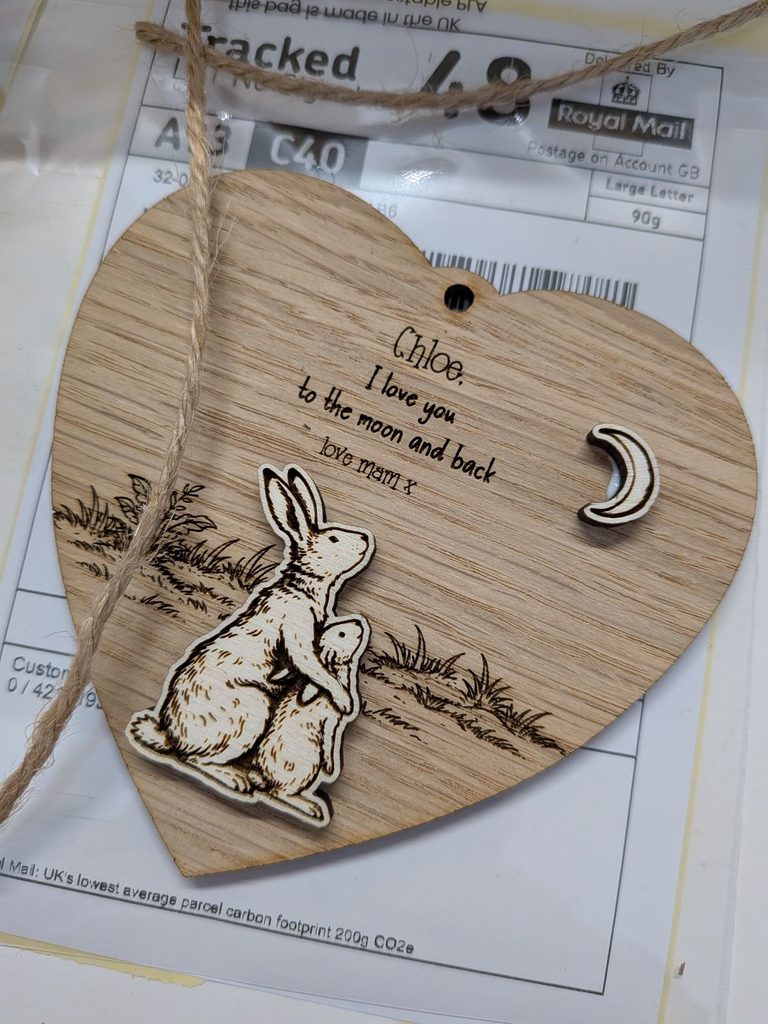
The best engraved pieces we make aren’t the ones where the text is perfectly uniform. They’re the ones where the message sits naturally in the grain, so it looks like it belongs there. That means choosing where to place text on each piece, not just centring it by default.
The short version
Test on offcuts. Learn each species. Keep smoke away from your letters. Never run without air assist. Choose fonts for the size you’re engraving, not for how they look on screen. And always, always check the date.
I’d love to hear what other people have found, especially anyone engraving exotic species I haven’t tried yet. Leave a comment and tell me where I’m going wrong.
About the author
James Micklewright co-founded The Wood Look in 2017 with Sam, a family business in Stourbridge, England, that engraves personalised wooden watches and bracelets on a Trotec Speedy 300 laser. He’s spent years learning how walnut, oak, ebony, sandalwood and olive each take a laser, usually one test offcut at a time. thewoodlook.com


