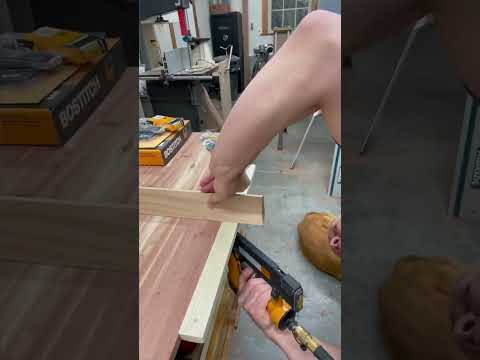
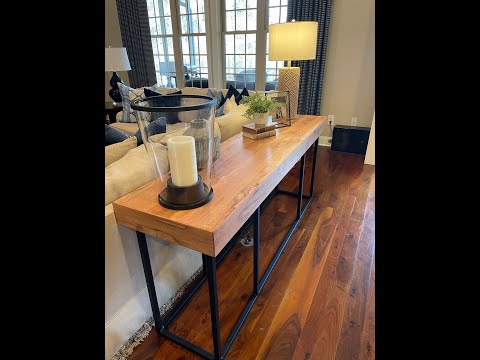
First time experiment for me on having 2 pieces of table come together on a curve. Watched a lot of great content to learn, but it really comes down to the radius math involved on a router bit. I may do a separate video on just that topic alone. Loved the learning involved and now have a unique table to sell.
Some clients know EXACTLY what they want (oak, no knots, exactly 2" thick, rounded edge, 64 1/2" long, etc.) but many just want to see what's possible. So how do you stay client-focused (go to THEM vs. them to YOU), but also show them many options, demonstrate your level of craftsmanship (you can't see or feel how smooth something is by looking at a website), and have them leave with a sense of what's possible? Well, here's A way (as makers, we know there are LOTS of ways). I hope this inspires others - how do you want to stand out?
4' x 8' Plantation Teak, bronze powder coated steel frame table. 3" square legs and 2" frame rails designed to maximize seating space at this gathering space.
Sometimes you need to make your own dowel in order to match the species of your project. Maybe so it blends in, perhaps you want to ensure wood movement is the same in the dowel as the project pieces. Or maybe you just need a handful of pieces and don't want to make a trip to the store. Whatever your reason, this is the easiest way I know. This video shows me making 3/8" dowel out of Teak.
 Login
Login